Beef Rib Roast Recipe Bone In Oven: The Ultimate Guide to Juicy Perfection
👩🍳 The Home Chef's Essential Kitchen
Consistently cooking incredible, healthy meals at home is so much easier when you aren't fighting with cheap tools. These are the 5 absolute powerhouse kitchen essentials that professional chefs and serious home cooks rely on every single day to get perfect results.
🍳 Lodge 10.25" Cast Iron Skillet
The single greatest value in all of cookware. It retains heat infinitely better than cheap non-stick pans, allowing you to get a restaurant-quality crust on steaks or perfect crispy edges on cornbread. With proper care, this $20 pan will literally outlive you.
🔪 Victorinox Fibrox Pro 8" Chef's Knife
A dull knife makes cooking a frustrating chore. This specific blade is the undisputed champion of the culinary world—it holds a terrifyingly sharp edge, features a comfortable non-slip grip, and performs identical to German knives that cost quadruple the price.
🌡️ ThermoPro Instant Read Thermometer
Never serve dry chicken or undercooked pork again. An instant-read thermometer is the secret difference between amateur cooks who 'guess' when protein is done, and professionals who know exactly when to pull meat off the heat for maximum juiciness.
🍲 Lodge Enameled Cast Iron Dutch Oven
The ultimate workhorse for soups, stews, braised short ribs, and baking crusty artisanal bread. The enameled interior provides incredible heat distribution for slow-cooking while eliminating the intense seasoning maintenance required by bare cast iron.
🥄 Bpa-Free Silicone Utensil Set
Throw away those melting plastic spatulas and bacteria-harboring wooden spoons. This pure silicone set is heat-resistant up to 600°F, won't scratch your expensive pans, and features seamless designs that make cleaning out thick sauces and batters effortless.
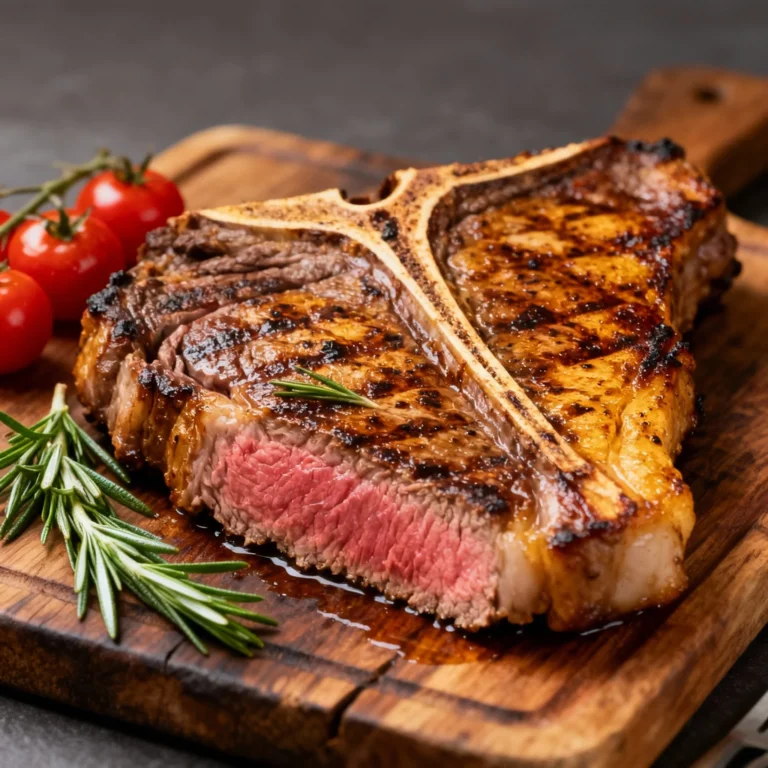
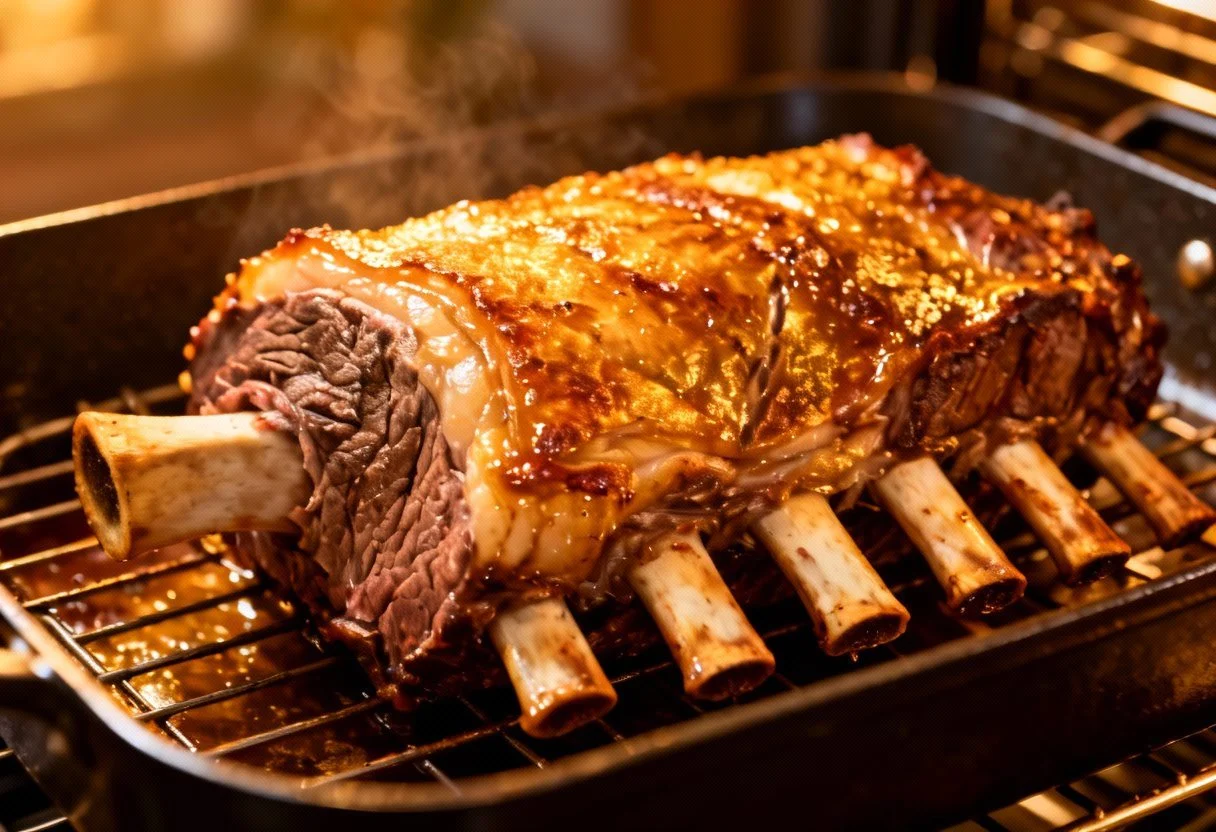
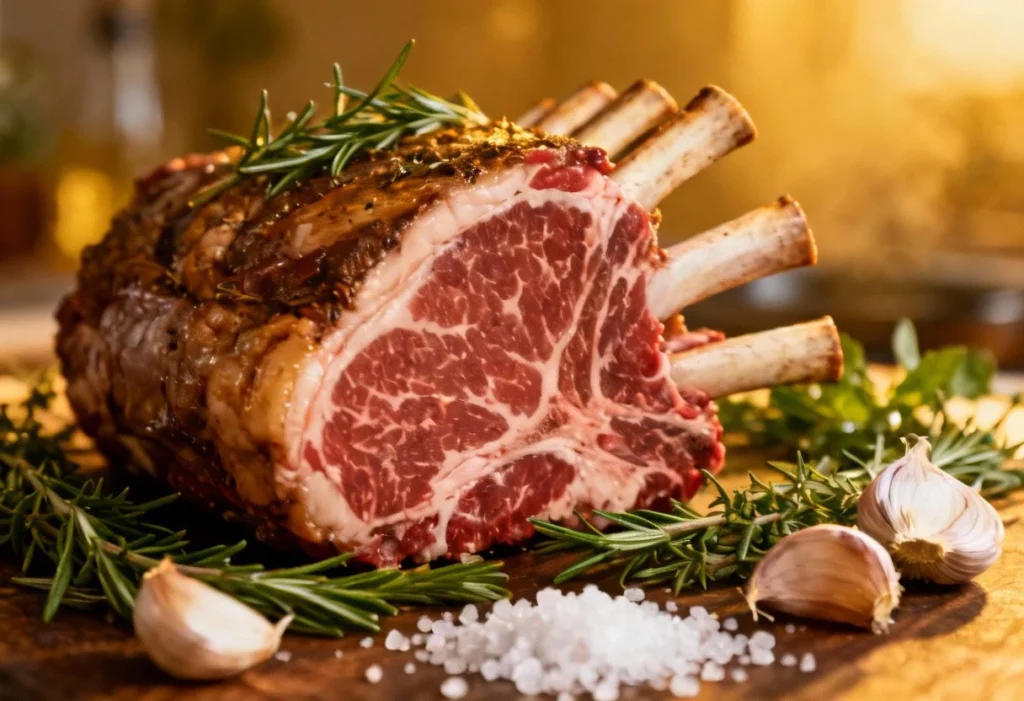
The holidays are fast approaching, and what better way to impress your guests than with a stunning, perfectly cooked bone-in beef rib roast? This isn’t just a meal; it’s an experience. The succulent, flavorful meat, the crispy, browned exterior, the aroma that fills your home – it’s all part of the magic. While a rib roast might seem intimidating, this recipe breaks down the process into simple, manageable steps, guaranteeing a show-stopping centerpiece that will have everyone asking for seconds (and the recipe!). We’ll walk you through everything from selecting the perfect roast to achieving that coveted medium-rare doneness, ensuring a truly memorable dining experience. Get ready to become the roast master!
Why This Recipe Works
This recipe isn’t just a list of instructions; it’s a carefully crafted method designed for consistent, delicious results. Here’s why it works:
- The Dry Brine: Salting the roast generously well in advance (at least 24 hours, ideally 48) is crucial. This process, known as dry brining, not only seasons the meat deeply but also draws moisture to the surface, which then evaporates during cooking, leading to a beautiful, crispy crust.
- High-Heat Sear: Starting with a high-heat sear locks in the juices and creates a flavorful Maillard reaction (the browning magic!) on the exterior of the roast. This initial sear is key to that gorgeous, restaurant-quality crust.
- Low-Temperature Roasting: After the initial sear, we lower the oven temperature significantly. This slow roasting method ensures even cooking throughout the roast, preventing the outer layers from overcooking before the center reaches the desired doneness.
- Resting Period: Perhaps the most important step! Resting the roast for at least 30 minutes (ideally longer) allows the juices to redistribute throughout the meat, resulting in a more tender and flavorful final product. Cutting into a roast immediately after cooking will result in a flood of juices escaping, leaving you with dry, less flavorful meat.
- Thermometer is Key: We rely on a reliable meat thermometer to ensure accurate doneness. Visual cues can be misleading, especially with a large roast. A thermometer takes the guesswork out of the equation.
Ingredients
- Bone-In Beef Rib Roast (Standing Rib Roast): 4-7 pounds, depending on the number of servings. Look for good marbling (flecks of fat within the muscle) for the best flavor and tenderness.
- Kosher Salt: 2 tablespoons per 5 pounds of roast. (Don’t skimp on the salt!)
- Freshly Ground Black Pepper: 1 tablespoon
- Garlic: 4-6 cloves, minced
- Fresh Rosemary: 2 tablespoons, chopped (or 2 teaspoons dried)
- Fresh Thyme: 2 tablespoons, chopped (or 2 teaspoons dried)
- Olive Oil: 2 tablespoons
- Optional: 1 cup beef broth or red wine (for pan sauce, if desired)
Instructions
- Dry Brine (24-48 hours in advance): Pat the rib roast completely dry with paper towels. This is crucial for a good sear. In a small bowl, combine the kosher salt, black pepper, minced garlic, rosemary, and thyme. Rub the mixture all over the roast, ensuring it’s evenly coated. Place the roast, uncovered, on a wire rack set inside a baking sheet. Refrigerate for 24-48 hours. The longer it sits, the better the flavor and crust will be.
- Bring to Room Temperature: Remove the roast from the refrigerator 3-4 hours before cooking. This allows the meat to cook more evenly.
- Preheat the Oven: Preheat your oven to 450°F (232°C).
- Sear the Roast: Drizzle the roast with olive oil. Place the roast, bone-side down, in a roasting pan. Sear in the preheated oven for 15 minutes.
- Reduce Oven Temperature: Reduce the oven temperature to 325°F (163°C).
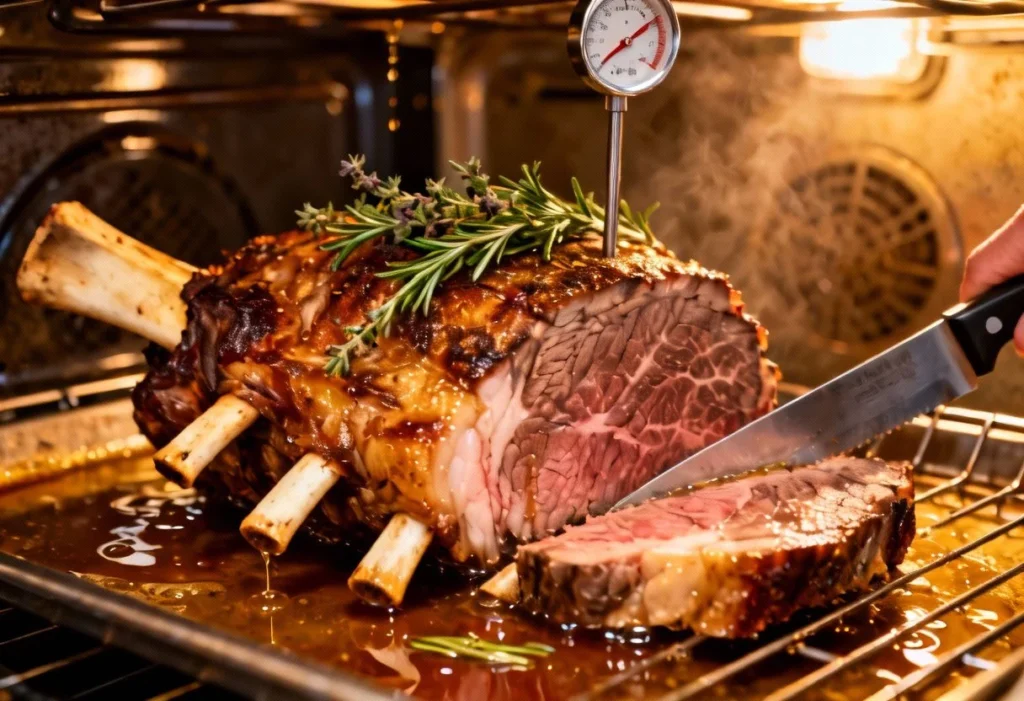
- Roast to Desired Doneness: Continue roasting until the internal temperature reaches your desired doneness, using a meat thermometer inserted into the thickest part of the roast, avoiding the bone. See the temperature guide below:
- Rare: 120-125°F (49-52°C)
- Medium-Rare: 125-130°F (52-54°C) – Recommended
- Medium: 130-140°F (54-60°C)
- Medium-Well: 140-150°F (60-66°C)
- Well Done: 150°F+ (66°C+) – Not recommended
The roasting time will vary depending on the size of your roast and your oven. As a general guideline, estimate about 13-15 minutes per pound for medium-rare. Start checking the temperature after about an hour.
- Resting Period: Remove the roast from the oven and transfer it to a cutting board. Tent loosely with foil and let it rest for at least 30 minutes, or up to an hour. This is crucial for allowing the juices to redistribute. The internal temperature will continue to rise slightly during resting.
- Make a Pan Sauce (Optional): While the roast is resting, you can make a simple pan sauce. Place the roasting pan on the stovetop over medium heat. Add 1 cup of beef broth or red wine to the pan and scrape up any browned bits from the bottom. Simmer until the sauce has reduced slightly and thickened. Strain the sauce before serving, if desired.
- Carve and Serve: After resting, carve the roast against the grain. Serve immediately with your favorite sides.
Tips for Success
- Choose the Right Roast: Look for a roast with good marbling (flecks of fat within the muscle). This will ensure a more tender and flavorful roast. A prime rib roast will have more marbling than a choice rib roast.
- Don’t Skip the Dry Brine: This is key to a flavorful and crispy crust.
- Use a Reliable Meat Thermometer: This is the best way to ensure accurate doneness. An instant-read thermometer is helpful for checking the temperature in multiple spots.
- Let it Rest: Do not skip the resting period! This allows the juices to redistribute, resulting in a more tender and flavorful roast.
- Carve Against the Grain: This will make the meat easier to chew.
- Don’t Overcook: Err on the side of undercooking, as the roast will continue to cook during the resting period.
- Bone Side Down: Roasting bone side down helps to protect the meat and keep it moist.
Storage Instructions
Leftover rib roast can be stored in an airtight container in the refrigerator for up to 3-4 days. Reheat gently in a low oven (250°F) or slice thinly and use for sandwiches or salads.
FAQ
- Can I use a boneless rib roast? While you can, a bone-in roast is recommended for better flavor and moisture retention. The bones help to insulate the meat during cooking.
- What if I don’t have 24-48 hours to dry brine? Even a few hours of dry brining is better than none. Aim for at least 4 hours if possible.
- Can I use different herbs? Absolutely! Feel free to experiment with your favorite herbs, such as oregano, sage, or parsley.
- How do I know if my meat thermometer is accurate? You can test your meat thermometer by placing it in a pot of boiling water. It should read 212°F (100°C).
- My roast is browning too quickly. What should I do? If the roast is browning too quickly, tent it loosely with foil to prevent it from burning.
🍰 The Master Baker & Prep Kit
Baking is a science, and meal prep requires efficiency. If you want consistently flaky pie crusts, perfectly risen cakes, and healthy meals ready for the week, these are the 5 upgrade tools that take your execution to the next level.
⚖️ OXO Good Grips 11lb Food Scale
The secret to why bakery bread and cookies are always perfect while home batches vary wildly. Measuring by weight (grams) instead of volume (cups) guarantees precise hydration and flawlessly consistent results every single time you bake.
🧑🍳 KitchenAid Classic Stand Mixer
The undisputed holy grail of the kitchen. From aggressively kneading heavy pizza doughs to whipping meringues into stiff peaks, this powerful motor saves your arms from exhaustion and cuts your hands-on prep time in half.
🍪 Silpat Premium Silicone Baking Mats
Stop wasting money on rolls of parchment paper or agonizing over cookies permanently fused to your metal pans. These reusable, professional-grade silicone mats ensure completely even heat distribution and instantly release even the stickiest caramel.
🌪️ Braun MultiQuick Immersion Blender
The ultimate shortcut tool for creamy tomato soups, lump-free gravies, and rapid smoothies. Avoid the burns and mess of dangerously transferring boiling liquids in batches to a traditional blender by simply blending right inside your cooking pot.
🍱 Premium Glass Meal Prep Containers
If you want to bake and cook healthier, batch preparation is required. These durable glass containers transition safely from freezer to microwave, never absorb tomato sauce stains, and feature airtight seals to keep your hard work fresh all week.
Conclusion
With this recipe and a little patience, you can create a truly unforgettable bone-in beef rib roast that will impress your family and friends. The key is to follow the steps carefully, use a reliable meat thermometer, and don’t skip the resting period. Enjoy the process and savor the delicious results! This isn’t just dinner; it’s a celebration.