Grape Jam Recipe Homemade: From Vine to Delicious in Your Kitchen!
👩🍳 The Home Chef's Essential Kitchen
Consistently cooking incredible, healthy meals at home is so much easier when you aren't fighting with cheap tools. These are the 5 absolute powerhouse kitchen essentials that professional chefs and serious home cooks rely on every single day to get perfect results.
🍳 Lodge 10.25" Cast Iron Skillet
The single greatest value in all of cookware. It retains heat infinitely better than cheap non-stick pans, allowing you to get a restaurant-quality crust on steaks or perfect crispy edges on cornbread. With proper care, this $20 pan will literally outlive you.
🔪 Victorinox Fibrox Pro 8" Chef's Knife
A dull knife makes cooking a frustrating chore. This specific blade is the undisputed champion of the culinary world—it holds a terrifyingly sharp edge, features a comfortable non-slip grip, and performs identical to German knives that cost quadruple the price.
🌡️ ThermoPro Instant Read Thermometer
Never serve dry chicken or undercooked pork again. An instant-read thermometer is the secret difference between amateur cooks who 'guess' when protein is done, and professionals who know exactly when to pull meat off the heat for maximum juiciness.
🍲 Lodge Enameled Cast Iron Dutch Oven
The ultimate workhorse for soups, stews, braised short ribs, and baking crusty artisanal bread. The enameled interior provides incredible heat distribution for slow-cooking while eliminating the intense seasoning maintenance required by bare cast iron.
🥄 Bpa-Free Silicone Utensil Set
Throw away those melting plastic spatulas and bacteria-harboring wooden spoons. This pure silicone set is heat-resistant up to 600°F, won't scratch your expensive pans, and features seamless designs that make cleaning out thick sauces and batters effortless.
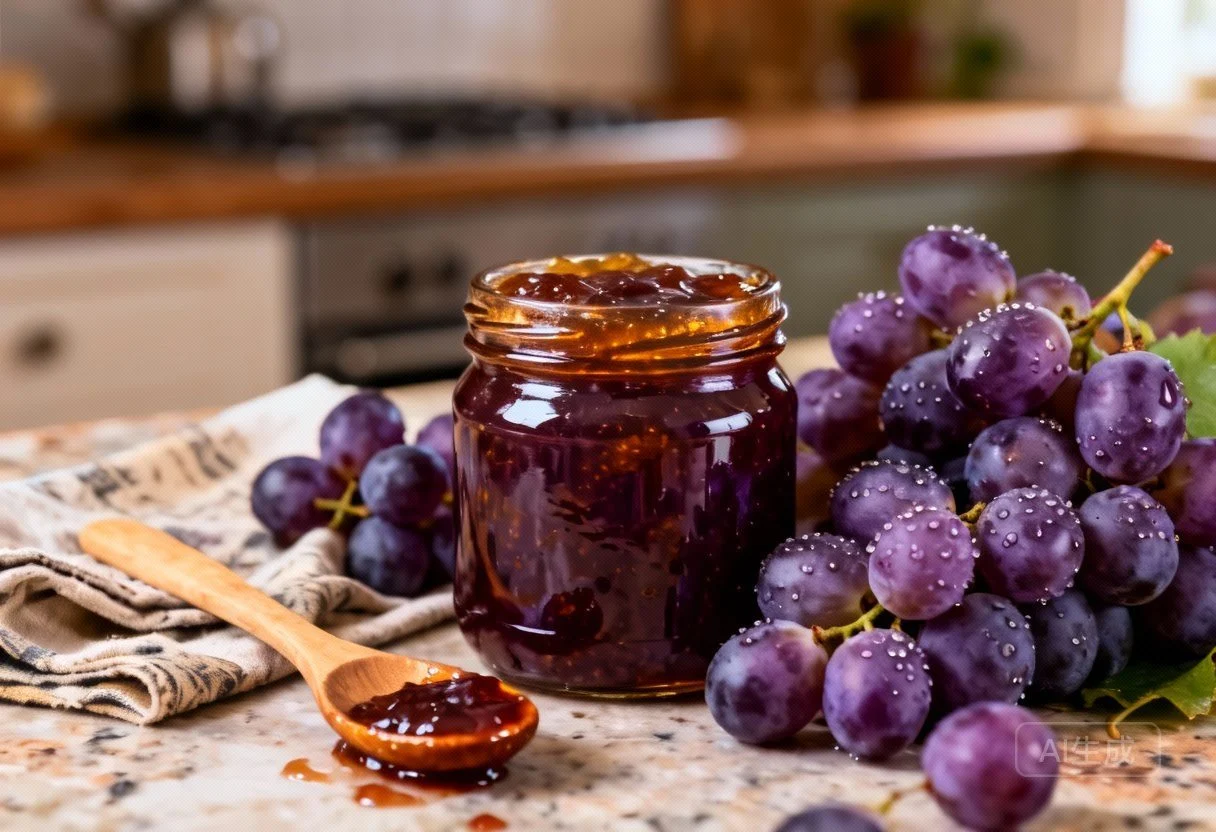
Imagine the sweet, tangy burst of sun-ripened grapes captured in a jar, ready to brighten your morning toast or elevate a simple cheese board. Making homemade grape jam is easier than you think, and the taste is infinitely superior to anything you can buy in a store. This recipe walks you through every step, from selecting the perfect grapes to achieving that perfect jam consistency. Get ready to experience the joy of homemade goodness with this simple and rewarding recipe!
Why This Recipe Works
This recipe is designed for both novice and experienced jam makers. Here’s why it’s a winner:
- Simple Ingredients: We use readily available ingredients – grapes, sugar, lemon juice, and a touch of pectin (optional, but recommended for a reliable set).
- Clear Instructions: The step-by-step instructions are detailed and easy to follow, ensuring a successful batch every time.
- Pectin Option: We offer guidance on using pectin for a guaranteed set, but also provide tips for making jam without pectin, allowing you to choose the method that best suits your preferences and grape variety.
- Tried and Tested: This recipe has been perfected over time, ensuring a delicious and consistent result.
- Customizable Sweetness: The recipe allows you to adjust the sugar level to your liking, depending on the sweetness of your grapes.
Ingredients
- 4 pounds Grapes: Concord grapes are classic for grape jam, but other varieties like Niagara or even a mix can be used. Make sure they are ripe and in good condition.
- 4 cups Granulated Sugar: Adjust based on the sweetness of your grapes. Taste as you go!
- 1/4 cup Lemon Juice: Adds acidity, which helps with the setting process and enhances the flavor.
- 1 box (1.75 oz) Pectin (Optional): Use powdered pectin for best results. Low-sugar pectin can also be used if you prefer a less sweet jam, but follow the package instructions for sugar adjustments.
- 1/2 cup Water (If using Pectin): Added to dissolve the pectin.
Instructions
- Prepare the Jars: Sterilize your jars and lids. You can do this by boiling them in a large pot of water for 10 minutes. Keep them hot until ready to use. Alternatively, you can run them through a hot cycle in your dishwasher.
- Prepare the Grapes: Wash the grapes thoroughly. Remove the stems and any damaged grapes.
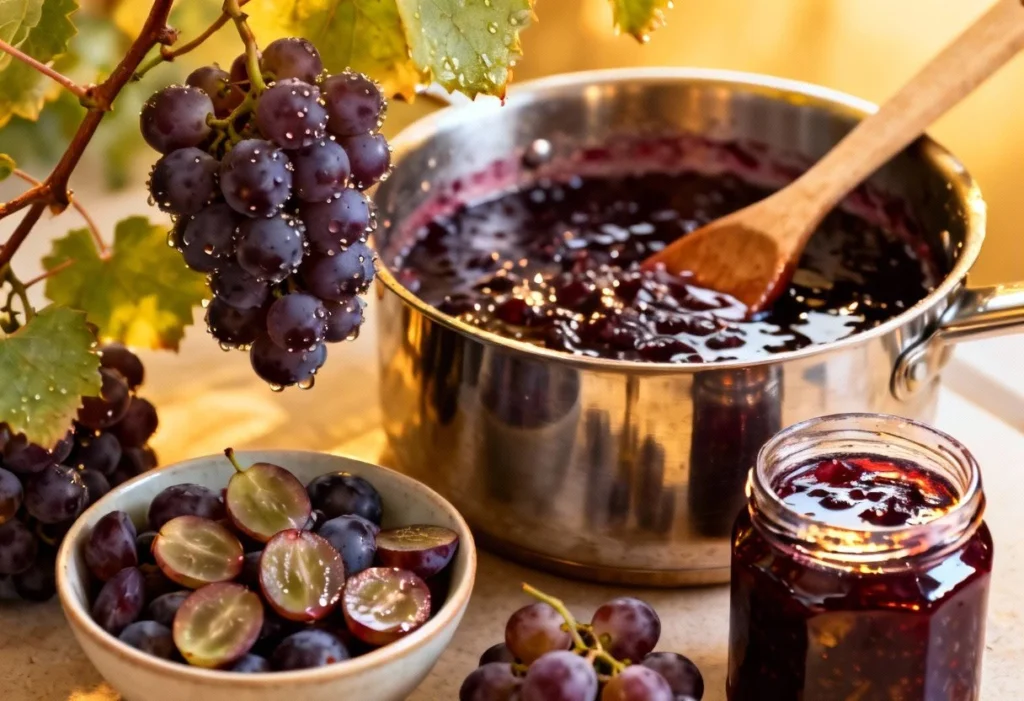
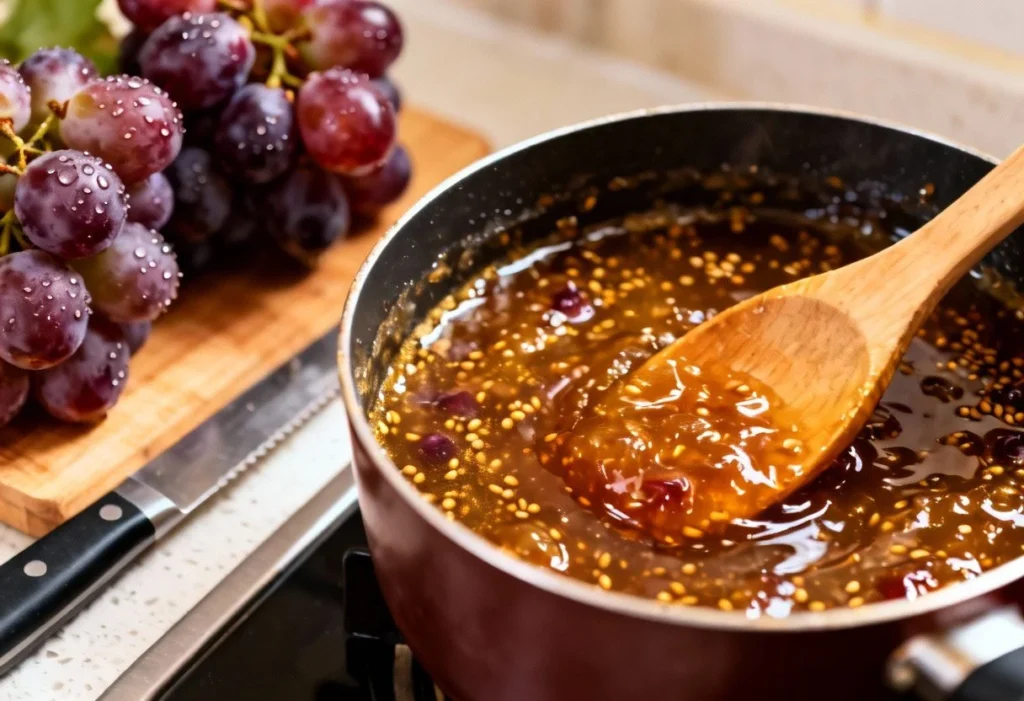
- Cook the Grapes: Place the grapes in a large, heavy-bottomed pot. Crush the grapes slightly with a potato masher or the back of a spoon.
- Cook Until Soft: Bring the grapes to a boil over medium-high heat. Reduce the heat and simmer for 15-20 minutes, or until the grapes are very soft and have released their juices. Stir occasionally to prevent sticking.
- Strain the Grape Juice (Optional): For a smoother jam, strain the grape mixture through a jelly bag or cheesecloth-lined colander. Let the juice drip through on its own; do not squeeze the bag, as this can make the jam cloudy. If you prefer a chunkier jam, skip this step.
- Add Pectin (Optional): If using pectin, combine the pectin with 1/2 cup of water in a small bowl. Whisk until smooth. Add this mixture to the grape juice in the pot. Bring to a boil, stirring constantly.
- Add Sugar: Gradually add the sugar to the grape mixture, stirring constantly until the sugar is completely dissolved.
- Add Lemon Juice: Stir in the lemon juice.
- Boil Vigorously: Bring the mixture to a rolling boil that cannot be stirred down. Boil for 1 minute (if using pectin) or until the jam reaches the setting point (see “Tips for Success” below if not using pectin). Stir constantly to prevent scorching.
- Test for Setting Point: To test if the jam is ready, place a small spoonful of jam on a chilled plate. Return the plate to the freezer for 1 minute. Push the jam with your finger. If it wrinkles, it’s ready. If it’s still runny, continue to boil for a few more minutes and test again.
- Remove from Heat: Once the jam has reached the setting point, remove it from the heat. Skim off any foam that has formed on the surface.
- Fill the Jars: Carefully ladle the hot jam into the sterilized jars, leaving about 1/4 inch of headspace.
- Remove Air Bubbles: Gently tap the jars on the counter to release any trapped air bubbles. You can also use a clean utensil to gently run around the inside of the jar.
- Wipe the Rims: Wipe the rims of the jars with a clean, damp cloth.
- Place Lids and Rings: Place the lids on the jars and screw on the rings fingertip tight.
- Process in a Water Bath Canner (Recommended): Place the jars in a boiling water bath canner. Make sure the water covers the jars by at least 1 inch. Bring the water to a boil and process for 10 minutes for half-pint or pint jars. Adjust processing time for altitude (add 1 minute for every 1,000 feet above sea level).
- Cool and Check Seals: Carefully remove the jars from the canner and place them on a towel-lined surface to cool completely. As the jars cool, you should hear a popping sound, which indicates that the jars have sealed properly. After the jars have cooled, check the seals by pressing down on the center of the lid. If the lid doesn’t flex, it’s sealed. If the lid flexes, the jar didn’t seal properly and should be refrigerated and used within a few weeks.
Tips for Success
- Use Ripe Grapes: Ripe grapes have the best flavor and pectin content.
- Don’t Overcrowd the Pot: Use a large enough pot to prevent the jam from boiling over.
- Stir Constantly: Stirring prevents the jam from sticking and burning.
- Test for Setting Point: If you’re not using pectin, the setting point can be tricky to determine. Besides the chilled plate test, you can also use a candy thermometer. The jam should reach 220°F (104°C).
- No Pectin? No Problem! If you’re not using pectin, you’ll need to cook the jam longer to achieve a set. Be patient and keep testing until it reaches the desired consistency. Some grape varieties are naturally higher in pectin than others.
- Adjust Sweetness: Taste the grape mixture before adding the sugar and adjust the amount to your liking. Remember that the jam will become sweeter as it cooks.
- Proper Canning is Key: Following proper canning procedures ensures that your jam is safe to store at room temperature.
Storage Instructions
Sealed jars of grape jam can be stored in a cool, dark place for up to 1 year. Once opened, refrigerate the jam and use it within a few weeks.
FAQ
- Can I use frozen grapes? Yes, you can use frozen grapes. Thaw them slightly before cooking.
- Can I use a different type of sugar? While granulated sugar is recommended, you can experiment with other types of sugar, such as cane sugar or brown sugar, but be aware that this may affect the flavor and color of the jam.
- My jam is too runny. What can I do? If your jam is too runny, you can try recooking it. Add a little more pectin (if you didn’t use it initially) and boil for a few more minutes, testing frequently. Alternatively, you can simply use the runny jam as a sauce or syrup.
- My jam is too thick. What can I do? If your jam is too thick, you can add a little water or grape juice to thin it out. Heat gently until the desired consistency is reached.
- Why is my jam cloudy? Cloudy jam can be caused by squeezing the jelly bag or cheesecloth when straining the grape juice. It can also be caused by overcooking.
🍰 The Master Baker & Prep Kit
Baking is a science, and meal prep requires efficiency. If you want consistently flaky pie crusts, perfectly risen cakes, and healthy meals ready for the week, these are the 5 upgrade tools that take your execution to the next level.
⚖️ OXO Good Grips 11lb Food Scale
The secret to why bakery bread and cookies are always perfect while home batches vary wildly. Measuring by weight (grams) instead of volume (cups) guarantees precise hydration and flawlessly consistent results every single time you bake.
🧑🍳 KitchenAid Classic Stand Mixer
The undisputed holy grail of the kitchen. From aggressively kneading heavy pizza doughs to whipping meringues into stiff peaks, this powerful motor saves your arms from exhaustion and cuts your hands-on prep time in half.
🍪 Silpat Premium Silicone Baking Mats
Stop wasting money on rolls of parchment paper or agonizing over cookies permanently fused to your metal pans. These reusable, professional-grade silicone mats ensure completely even heat distribution and instantly release even the stickiest caramel.
🌪️ Braun MultiQuick Immersion Blender
The ultimate shortcut tool for creamy tomato soups, lump-free gravies, and rapid smoothies. Avoid the burns and mess of dangerously transferring boiling liquids in batches to a traditional blender by simply blending right inside your cooking pot.
🍱 Premium Glass Meal Prep Containers
If you want to bake and cook healthier, batch preparation is required. These durable glass containers transition safely from freezer to microwave, never absorb tomato sauce stains, and feature airtight seals to keep your hard work fresh all week.
Conclusion
Making homemade grape jam is a rewarding experience that allows you to enjoy the fresh, vibrant flavor of grapes all year round. This recipe provides a simple and reliable method for creating delicious jam that is sure to impress. So gather your grapes, grab your jars, and get ready to enjoy the sweet taste of homemade goodness!