The Only Parker House Rolls Recipe You’ll Ever Need: Fluffy, Buttery, and Outrageously Addictive
👩🍳 The Home Chef's Essential Kitchen
Consistently cooking incredible, healthy meals at home is so much easier when you aren't fighting with cheap tools. These are the 5 absolute powerhouse kitchen essentials that professional chefs and serious home cooks rely on every single day to get perfect results.
🍳 Lodge 10.25" Cast Iron Skillet
The single greatest value in all of cookware. It retains heat infinitely better than cheap non-stick pans, allowing you to get a restaurant-quality crust on steaks or perfect crispy edges on cornbread. With proper care, this $20 pan will literally outlive you.
🔪 Victorinox Fibrox Pro 8" Chef's Knife
A dull knife makes cooking a frustrating chore. This specific blade is the undisputed champion of the culinary world—it holds a terrifyingly sharp edge, features a comfortable non-slip grip, and performs identical to German knives that cost quadruple the price.
🌡️ ThermoPro Instant Read Thermometer
Never serve dry chicken or undercooked pork again. An instant-read thermometer is the secret difference between amateur cooks who 'guess' when protein is done, and professionals who know exactly when to pull meat off the heat for maximum juiciness.
🍲 Lodge Enameled Cast Iron Dutch Oven
The ultimate workhorse for soups, stews, braised short ribs, and baking crusty artisanal bread. The enameled interior provides incredible heat distribution for slow-cooking while eliminating the intense seasoning maintenance required by bare cast iron.
🥄 Bpa-Free Silicone Utensil Set
Throw away those melting plastic spatulas and bacteria-harboring wooden spoons. This pure silicone set is heat-resistant up to 600°F, won't scratch your expensive pans, and features seamless designs that make cleaning out thick sauces and batters effortless.
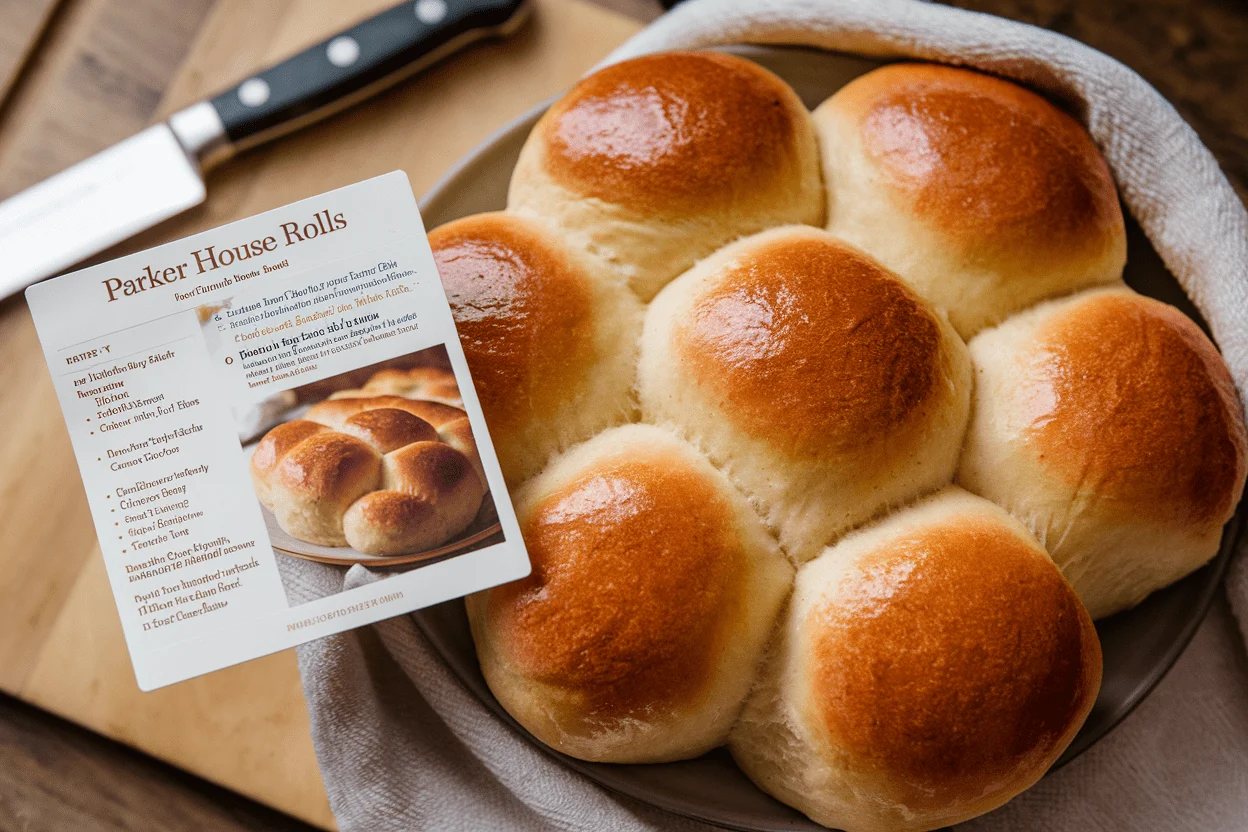
You want rolls that bring the silence to the dinner table—the kind where people stop talking mid-sentence because they’re too busy reaching for seconds. That’s this Parker House rolls recipe. Flaky folds, buttery layers, and a golden crust that shatters just enough.
You don’t need a bakery; you need 90 minutes and a clear mission. These are the rolls people remember—and yes, they’ll ask you for the recipe like it’s a family secret.
What Makes This Recipe So Good
- Signature fold for buttery layers: The classic Parker House fold creates a soft interior and a lightly crisp edge. You get flaky layers without messing with laminated dough.
- Supremely soft texture: Milk, butter, and a touch of sugar make a tender, enriched dough that bakes up cloud-soft.
- Foolproof and fast for yeast dough: Two short rises and a straightforward method.
If you can stir and fold, you can win at dinner rolls.
- Buttery finish: Brushing before and after baking locks in moisture and delivers that iconic glossy top.
- Make-ahead friendly: The dough and shaped rolls can be refrigerated, making holiday timing way less chaotic.
Shopping List – Ingredients
- Whole milk – 1 cup, warmed to 105–110°F
- Active dry yeast – 2 1/4 teaspoons (1 packet)
- Granulated sugar – 3 tablespoons
- Unsalted butter – 8 tablespoons (1/2 cup), melted and slightly cooled, plus extra for brushing
- Egg – 1 large
- All-purpose flour – 3 to 3 1/2 cups (start with 3 cups)
- Kosher salt – 1 1/2 teaspoons
- Flaky sea salt – for finishing (optional but recommended)
Let’s Get Cooking – Instructions
- Proof the yeast: In a large bowl or stand mixer bowl, combine warm milk (105–110°F), yeast, and 1 tablespoon sugar. Let sit 5–8 minutes until foamy. If it doesn’t foam, your yeast ghosted you—start over with fresh yeast.
- Mix the wet ingredients: Whisk in remaining 2 tablespoons sugar, 4 tablespoons melted butter, and the egg until smooth.
- Add the dry stuff: Add 3 cups flour and the kosher salt.
Mix with a dough hook on low (or stir with a sturdy spoon) until a shaggy dough forms. Add up to 1/2 cup additional flour, 1 tablespoon at a time, until the dough is soft and slightly tacky but not sticky.
- Knead: Knead with the mixer on medium-low for 6–8 minutes (or by hand 8–10 minutes) until smooth, elastic, and springy. It should stretch without tearing.
If it’s wet, dust lightly with flour; if it’s stiff, add a teaspoon or two of milk.
- First rise: Shape into a ball, place in a lightly greased bowl, cover, and let rise in a warm spot until doubled, about 45–60 minutes.
- Prepare the pan: Generously butter a 9×13-inch baking pan. Melt the remaining 4 tablespoons butter for brushing.
- Shape the classic fold: Turn the dough onto a lightly floured surface and roll into a rectangle about 12×16 inches and 1/4-inch thick. Using a knife or bench scraper, cut into 3×4-inch rectangles (about 12 pieces), or smaller for more rolls.
- Butter and fold: Brush each piece lightly with melted butter.
Fold each rectangle just off-center (like closing a wallet so one flap is shorter) and press the edge gently so it sticks but still puffs when baked.
- Pan and proof: Arrange folds seam-side down in the pan with a little space between them. Cover and let rise until puffy, 25–35 minutes.
- Preheat: While they proof, heat the oven to 350°F (175°C).
- Bake: Brush the tops with more butter and bake 18–22 minutes until golden brown on top and 195°F in the center. Rotate the pan once for even color if your oven runs hot on one side.
- Finish strong: Immediately brush with more melted butter and sprinkle flaky sea salt.
Cool 5–10 minutes, then serve warm. Try not to eat four in a row. Try.
Storage Instructions
- Room temperature: Store cooled rolls in an airtight container up to 2 days.
Rewarm at 300°F for 8–10 minutes.
- Refrigerator: Not ideal for baked rolls (can dry them out), but fine for dough. Refrigerate shaped rolls up to 24 hours; bake straight from the fridge and add 3–5 minutes.
- Freezer (baked): Freeze fully cooled rolls up to 2 months. Thaw at room temp, then warm at 300°F for 10–12 minutes.
- Freezer (make-ahead): Freeze shaped, unbaked rolls on a sheet until firm, then bag for up to 2 months.
Thaw in the pan, proof until puffy, then bake.
Nutritional Perks
- Reasonable calories for a roll: About 180–220 calories per roll depending on size and butter brushing. It’s a roll, not a salad—manage expectations.
- Protein and calcium: Milk and egg add a small boost of protein and calcium compared to water-only doughs.
- Lower sodium control: Making them at home lets you manage salt levels versus store-bought dinner rolls.
- No weird additives: Just real flour, milk, butter, and yeast. Simple, clean ingredients go a long way.
Pitfalls to Watch Out For
- Milk too hot: Over 115°F can kill yeast.
Aim for warm bath water vibes, not lava.
- Too much flour: Heavy rolls usually come from over-flouring. Dough should be soft and slightly tacky. Trust the feel more than the exact cup count.
- Under-proofing: If the rolls don’t get puffy before baking, they’ll bake dense.
Give them time—proofing is where the magic happens.
- Skipping the butter brush: That pre- and post-bake butter isn’t optional if you want authentic flavor and shine. Consider it the finishing move.
- Oven hot spots: Uneven browning? Rotate halfway.
Also, shiny pans brown slower; dark pans brown faster—adjust accordingly.
Variations You Can Try
- Garlic herb: Add 1 teaspoon garlic powder to the dough and brush with butter mixed with chopped parsley, chives, and a pinch of oregano.
- Honey butter rolls: Replace 1 tablespoon sugar with honey and whisk 2 tablespoons honey into the finishing butter. Sweet, glossy, incredible.
- Sourdough twist: Replace 1/2 cup milk with 1/2 cup active sourdough starter and reduce flour slightly. Slight tang, same pillowy texture.
- Cheddar-jalapeño: Fold in 1 cup finely shredded sharp cheddar and 1 minced jalapeño (seeded).
Brush with butter and sprinkle a little more cheddar on top.
- Whole wheat blend: Swap 1 cup all-purpose for white whole wheat flour. Add 1–2 teaspoons extra milk if dough feels stiff.
- Everything bagel topping: Brush with butter and sprinkle everything seasoning before baking. Breakfast meets dinner roll—10/10.
FAQ
Can I use instant yeast instead of active dry?
Yes.
Use the same amount, skip the proofing step, and mix instant yeast directly with the flour. Still keep the milk at 105–110°F for best rise.
How do I make them extra fluffy?
Use room-temp ingredients, don’t over-flour, and let the dough fully double on the first rise. Also, bake until just golden and not a minute longer—overbaking dries them out.
What if I don’t have a stand mixer?
No problem.
Stir with a sturdy spoon until shaggy, then knead by hand for 8–10 minutes. It’s a little arm workout, but the dough is cooperative.
Can I make smaller cocktail-size rolls?
Totally. Cut into smaller rectangles, fold, and bake 2–4 minutes less.
Watch for color and internal temp around 195°F.
Why did my rolls bake dense?
Likely culprits: milk too hot (yeast died), too much flour (stiff dough), or under-proofing before baking. Also, cold kitchens slow yeast—be patient or use a warm, draft-free spot.
Can I add an egg wash for shine?
You can, but classic Parker House shine comes from butter. If you want extra gloss, do a light egg wash before baking and still finish with melted butter.
Because butter wins, IMO.
How far ahead can I prep for holidays?
Shape the rolls the day before and refrigerate covered. Pull out 45–60 minutes before baking to finish proofing until puffy, then bake as directed. Stress level: lowered.
🍰 The Master Baker & Prep Kit
Baking is a science, and meal prep requires efficiency. If you want consistently flaky pie crusts, perfectly risen cakes, and healthy meals ready for the week, these are the 5 upgrade tools that take your execution to the next level.
⚖️ OXO Good Grips 11lb Food Scale
The secret to why bakery bread and cookies are always perfect while home batches vary wildly. Measuring by weight (grams) instead of volume (cups) guarantees precise hydration and flawlessly consistent results every single time you bake.
🧑🍳 KitchenAid Classic Stand Mixer
The undisputed holy grail of the kitchen. From aggressively kneading heavy pizza doughs to whipping meringues into stiff peaks, this powerful motor saves your arms from exhaustion and cuts your hands-on prep time in half.
🍪 Silpat Premium Silicone Baking Mats
Stop wasting money on rolls of parchment paper or agonizing over cookies permanently fused to your metal pans. These reusable, professional-grade silicone mats ensure completely even heat distribution and instantly release even the stickiest caramel.
🌪️ Braun MultiQuick Immersion Blender
The ultimate shortcut tool for creamy tomato soups, lump-free gravies, and rapid smoothies. Avoid the burns and mess of dangerously transferring boiling liquids in batches to a traditional blender by simply blending right inside your cooking pot.
🍱 Premium Glass Meal Prep Containers
If you want to bake and cook healthier, batch preparation is required. These durable glass containers transition safely from freezer to microwave, never absorb tomato sauce stains, and feature airtight seals to keep your hard work fresh all week.
In Conclusion
These Parker House rolls bring soft, buttery drama to any table without drama in the kitchen.
The fold gives texture, the butter gives soul, and the method is friendly enough for first-time bakers. Make them plain, make them herby, make them sweet—just make enough. FYI, leftovers make elite mini sandwiches, if they survive the night.