Dinner Rolls Recipe Homemade: The Fluffy, Buttery Crowd-Pleaser You’ll Brag About
👩🍳 The Home Chef's Essential Kitchen
Consistently cooking incredible, healthy meals at home is so much easier when you aren't fighting with cheap tools. These are the 5 absolute powerhouse kitchen essentials that professional chefs and serious home cooks rely on every single day to get perfect results.
🍳 Lodge 10.25" Cast Iron Skillet
The single greatest value in all of cookware. It retains heat infinitely better than cheap non-stick pans, allowing you to get a restaurant-quality crust on steaks or perfect crispy edges on cornbread. With proper care, this $20 pan will literally outlive you.
🔪 Victorinox Fibrox Pro 8" Chef's Knife
A dull knife makes cooking a frustrating chore. This specific blade is the undisputed champion of the culinary world—it holds a terrifyingly sharp edge, features a comfortable non-slip grip, and performs identical to German knives that cost quadruple the price.
🌡️ ThermoPro Instant Read Thermometer
Never serve dry chicken or undercooked pork again. An instant-read thermometer is the secret difference between amateur cooks who 'guess' when protein is done, and professionals who know exactly when to pull meat off the heat for maximum juiciness.
🍲 Lodge Enameled Cast Iron Dutch Oven
The ultimate workhorse for soups, stews, braised short ribs, and baking crusty artisanal bread. The enameled interior provides incredible heat distribution for slow-cooking while eliminating the intense seasoning maintenance required by bare cast iron.
🥄 Bpa-Free Silicone Utensil Set
Throw away those melting plastic spatulas and bacteria-harboring wooden spoons. This pure silicone set is heat-resistant up to 600°F, won't scratch your expensive pans, and features seamless designs that make cleaning out thick sauces and batters effortless.
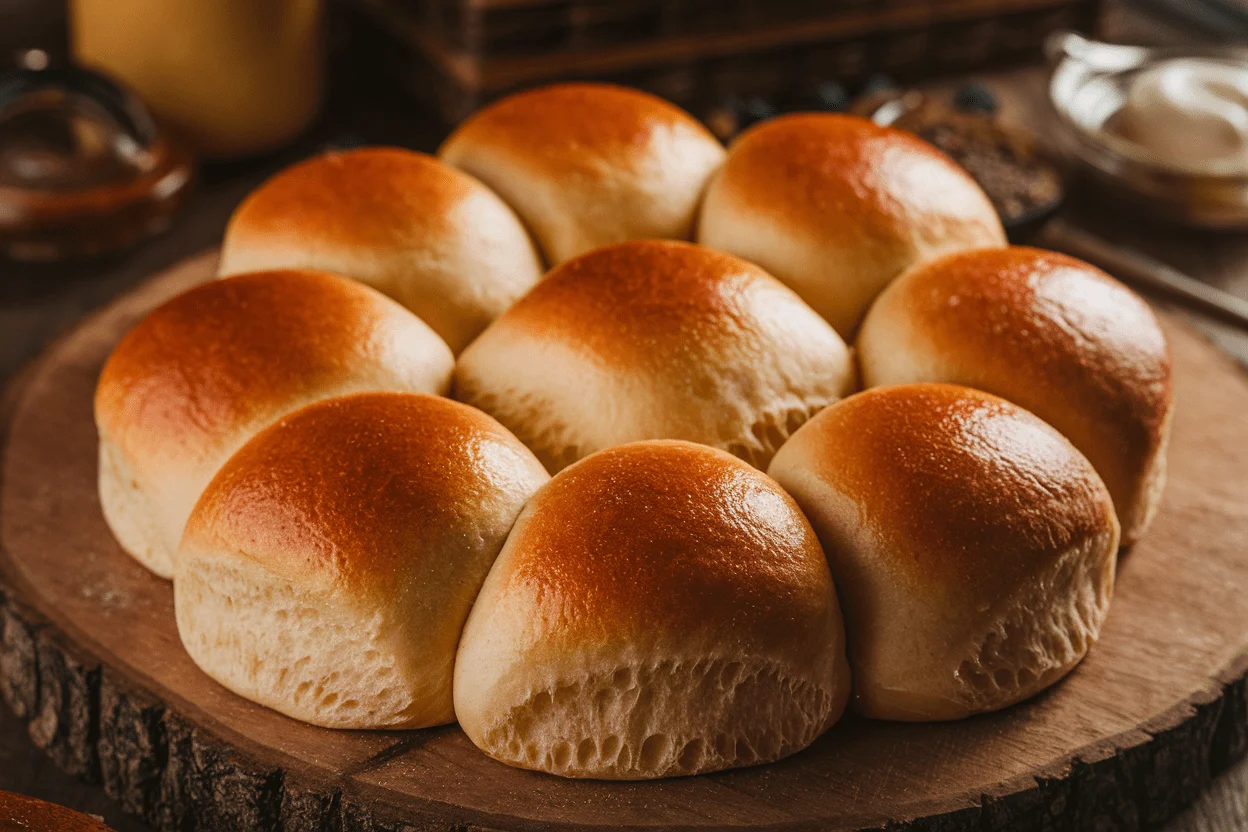
You know those rolls that make people stop mid-sentence and nod silently like they’ve seen the light? That’s what we’re making. These aren’t “meh” dinner rolls; they’re pillowy, golden, and unapologetically addictive.
They’ll turn simple soup into a feast and basic weeknights into “who catered this?” moments. If you can stir, knead, and wait a little, you can bake these—and yes, they’ll taste like your kitchen secretly hired a bakery.
The Secret Behind This Recipe
The magic is in the balance: a touch of sugar to feed the yeast, milk and butter for richness, and a slow rise for flavor. We also use a slightly enriched dough that stays tender but still forms a gorgeous crust.
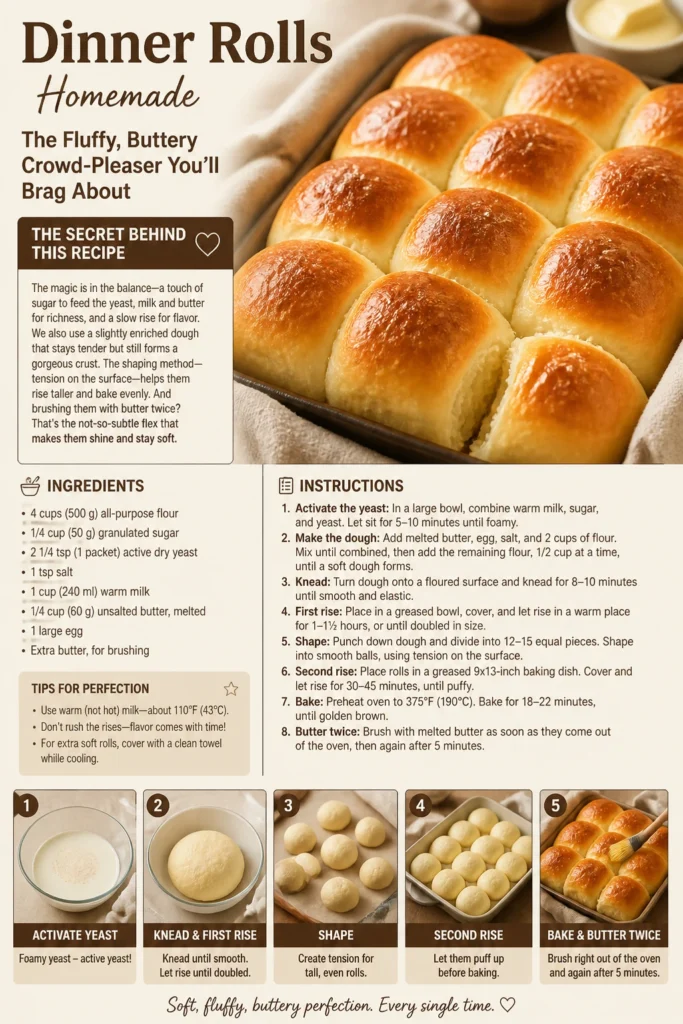
The shaping method—tension on the surface—helps them rise taller and bake evenly. And brushing them with butter twice? That’s the not-so-subtle flex that makes them shine and stay soft.
Shopping List – Ingredients
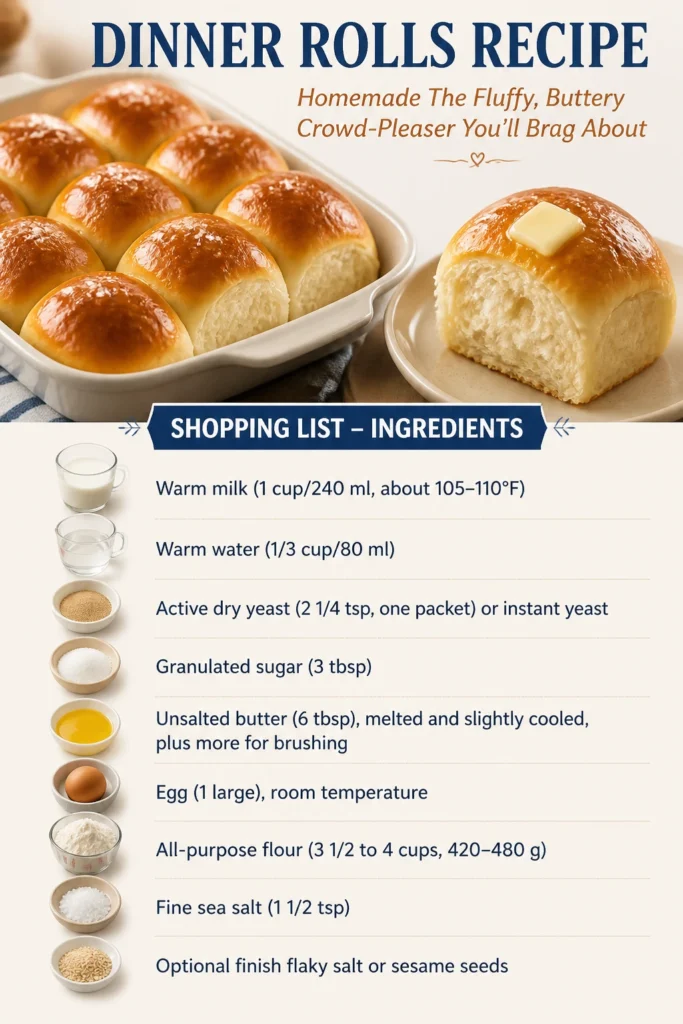
- Warm milk (1 cup/240 ml, about 105–110°F)
- Warm water (1/3 cup/80 ml)
- Active dry yeast (2 1/4 tsp, one packet) or instant yeast
- Granulated sugar (3 tbsp)
- Unsalted butter (6 tbsp), melted and slightly cooled, plus more for brushing
- Egg (1 large), room temperature
- All-purpose flour (3 1/2 to 4 cups, 420–480 g)
- Fine sea salt (1 1/2 tsp)
- Optional finish: flaky salt or sesame seeds
Let’s Get Cooking – Instructions
- Proof the yeast. In a large bowl, combine warm milk, warm water, sugar, and yeast.
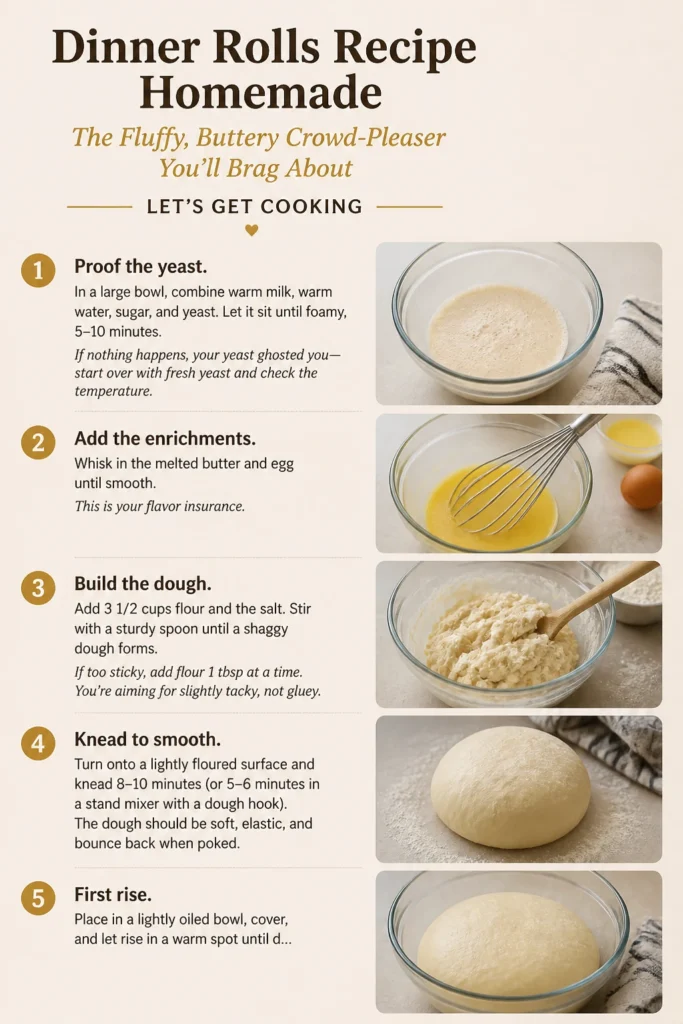
Let it sit until foamy, 5–10 minutes. If nothing happens, your yeast ghosted you—start over with fresh yeast and check the temperature.
- Add the enrichments. Whisk in the melted butter and egg until smooth. This is your flavor insurance.
- Build the dough. Add 3 1/2 cups flour and the salt.
Stir with a sturdy spoon until a shaggy dough forms. If too sticky, add flour 1 tbsp at a time. You’re aiming for slightly tacky, not gluey.
- Knead to smooth. Turn onto a lightly floured surface and knead 8–10 minutes (or 5–6 minutes in a stand mixer with a dough hook).
The dough should be soft, elastic, and bounce back when poked.
- First rise. Place in a lightly oiled bowl, cover, and let rise in a warm spot until doubled, 60–90 minutes. A clear bowl lets you flex on the progress.
- Divide and shape. Punch down gently. Turn out and divide into 12 equal pieces for standard rolls (or 15 for smaller dinner rolls).
Cup your hand and roll each piece against the counter to create surface tension and a smooth top.
- Second rise. Arrange in a greased 9×13-inch pan, spaced evenly. Cover and let rise until puffy and touching, 35–50 minutes. They should look like little pillows ready for nap time.
- Preheat and glaze. Heat oven to 375°F (190°C).
Brush tops lightly with melted butter for color and flavor.
- Bake. Bake 15–20 minutes, until golden brown on top and 195°F (90°C) internal temperature. Rotate the pan once if your oven has “personality.”
- Finish like a pro. Brush again with melted butter right out of the oven. Sprinkle flaky salt if you want that “chef’s kiss.” Cool 10 minutes before serving so the crumb sets.
How to Store
- Room temperature: Store in an airtight container for 2–3 days.
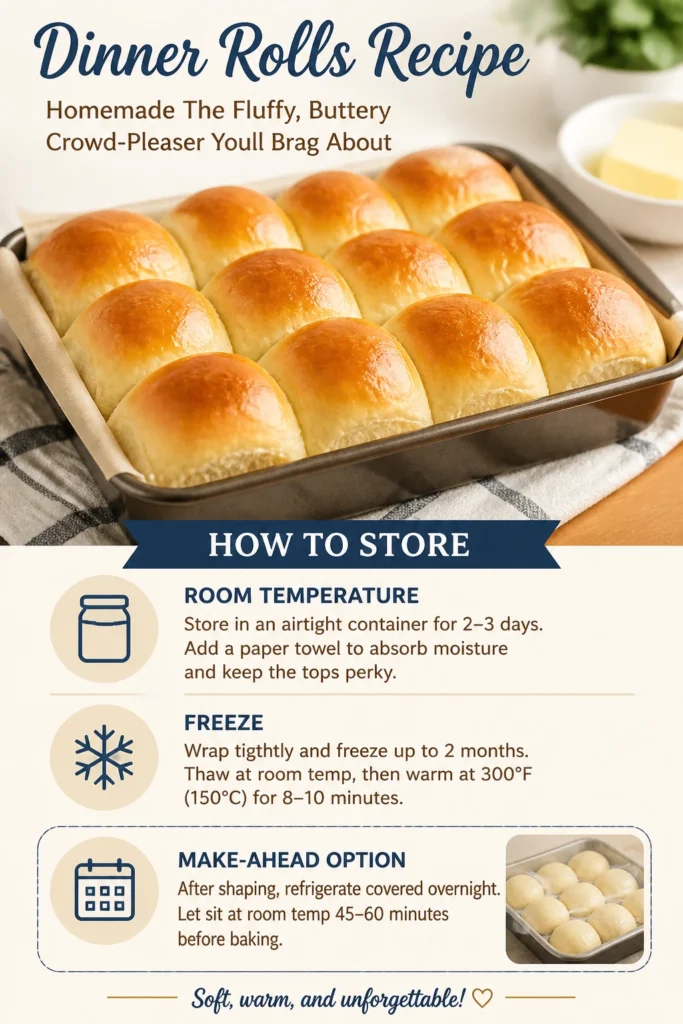
Add a paper towel to absorb moisture and keep the tops perky.
- Freeze: Wrap tightly and freeze up to 2 months. Thaw at room temp, then warm at 300°F (150°C) for 8–10 minutes.
- Make-ahead option: After shaping, refrigerate covered overnight. Let sit at room temp 45–60 minutes before baking.
Nutritional Perks
- Energy-smart carbs: Perfect for pairing with protein-rich mains—keeps you satisfied without the post-meal crash (assuming you stop at two… maybe three).
- Protein from milk and egg: Modest, but it matters.
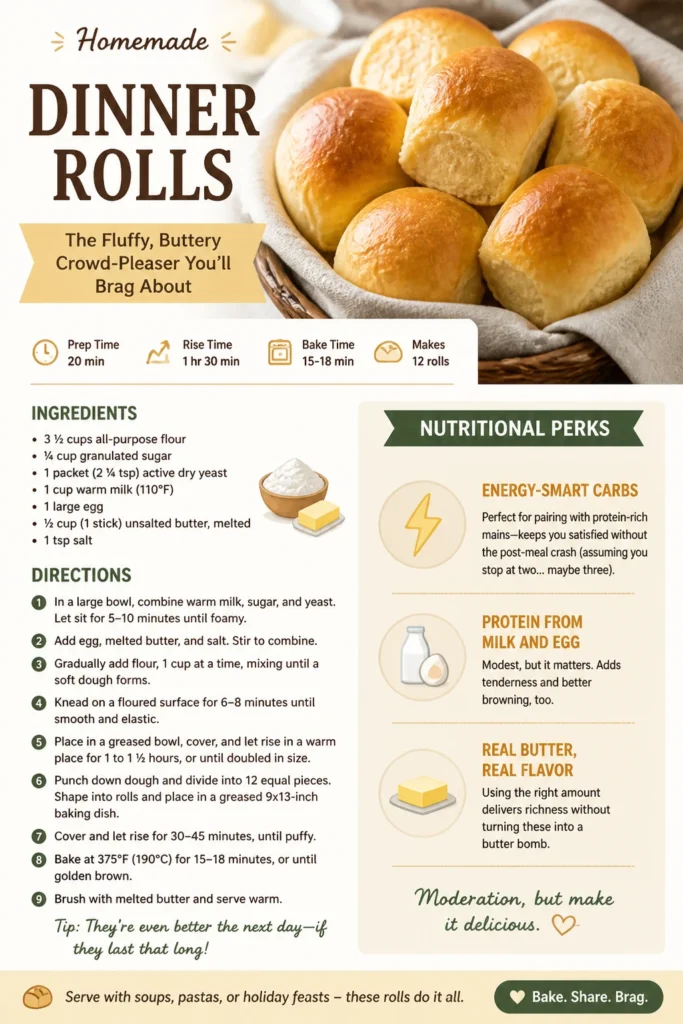
Adds tenderness and better browning, too.
- Real butter, real flavor: Using the right amount delivers richness without turning these into a butter bomb. Moderation, but make it delicious.
Common Mistakes to Avoid
- Overheating the liquids. Anything hotter than 115°F can KO your yeast. Lukewarm is your friend.
- Adding too much flour. Sticky isn’t bad; sticky is normal.
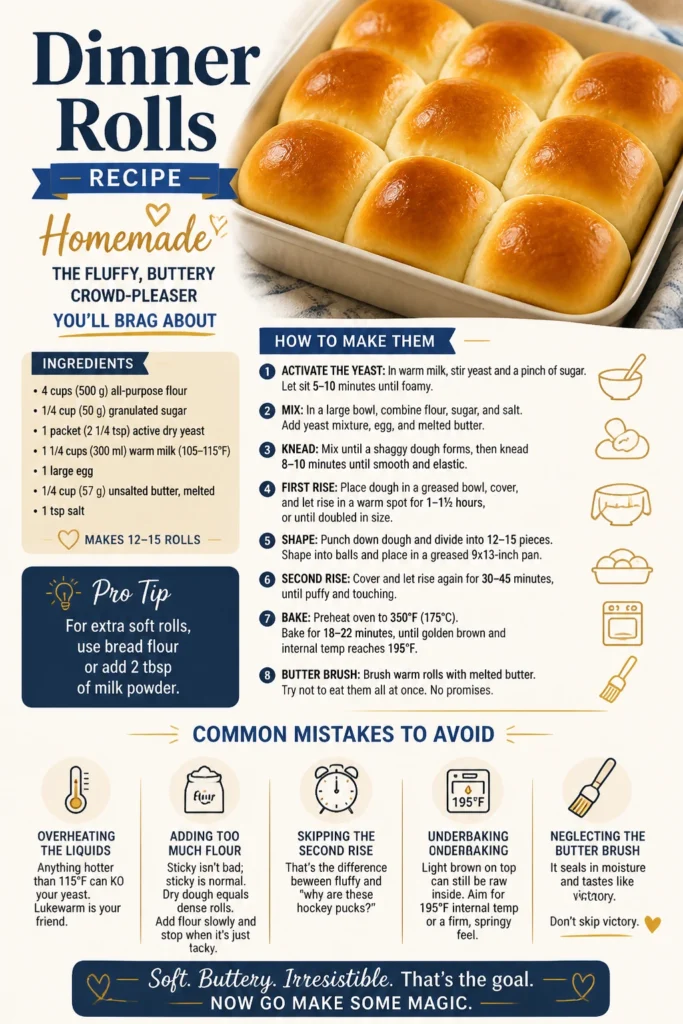
Dry dough equals dense rolls. Add flour slowly and stop when it’s just tacky.
- Skipping the second rise. That’s the difference between fluffy and “why are these hockey pucks?”
- Underbaking. Light brown on top can still be raw inside. Aim for 195°F internal temp or a firm, springy feel.
- Neglecting the butter brush. It seals in moisture and tastes like victory.
Don’t skip victory.
Different Ways to Make This
- Garlic-herb rolls: Stir 1 tsp garlic powder and 2 tsp mixed dried herbs into the dough. Finish with garlic butter and parsley.
- Honey butter upgrade: Swap 1 tbsp sugar for 2 tbsp honey. Brush baked rolls with honey butter.
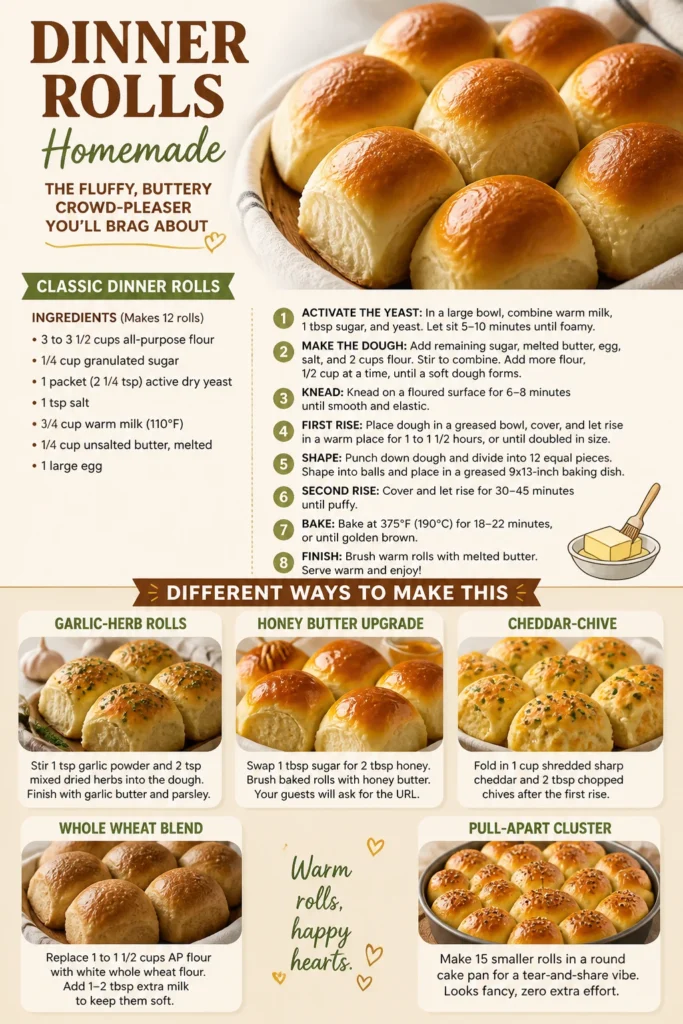
Your guests will ask for the URL.
- Cheddar-chive: Fold in 1 cup shredded sharp cheddar and 2 tbsp chopped chives after the first rise.
- Whole wheat blend: Replace 1 to 1 1/2 cups AP flour with white whole wheat flour. Add 1–2 tbsp extra milk to keep them soft.
- Pull-apart cluster: Make 15 smaller rolls in a round cake pan for a tear-and-share vibe. Looks fancy, zero extra effort.
FAQ
Can I use instant yeast instead of active dry?
Yes.
Use the same amount and skip the proofing step—just mix instant yeast with the flour and salt. Still warm the liquids and proceed as usual.
How do I know I’ve kneaded enough?
The dough should be smooth, elastic, and slightly tacky. When you poke it, it should spring back slowly.
If it tears easily when stretched, keep kneading.
What if my dough isn’t rising?
Check the temperature (too cold = slow). Make sure your yeast is fresh. Also, give it time—sometimes it just needs an extra 20–30 minutes.
FYI, a warm oven (turned off) with a cup of hot water inside creates a great proofing environment.
Can I make these dairy-free?
Use oat or almond milk and swap butter for a neutral oil or vegan butter. Texture will still be soft; flavor will be slightly different but solid.
How do I reheat without drying them out?
Wrap rolls in foil and warm at 300°F (150°C) for 8–10 minutes. Add a tiny pat of butter inside the foil if you want them extra plush.
You’re welcome.
Can I double the recipe?
Absolutely. Use two pans to avoid overcrowding. Keep an eye on rise times; larger batches can run slightly slower, but your oven time stays similar.
Why are my rolls dense?
Most likely too much flour, under-kneading, or a rushed rise.
Next time, keep the dough slightly tacky, knead until elastic, and let it double fully. Patience pays—like, literally delicious dividends.
Do I need a stand mixer?
Nope. It helps, but your hands work great and build gluten just fine.
IMO, hand-kneaded dough gives you better feel and control.
🍰 The Master Baker & Prep Kit
Baking is a science, and meal prep requires efficiency. If you want consistently flaky pie crusts, perfectly risen cakes, and healthy meals ready for the week, these are the 5 upgrade tools that take your execution to the next level.
⚖️ OXO Good Grips 11lb Food Scale
The secret to why bakery bread and cookies are always perfect while home batches vary wildly. Measuring by weight (grams) instead of volume (cups) guarantees precise hydration and flawlessly consistent results every single time you bake.
🧑🍳 KitchenAid Classic Stand Mixer
The undisputed holy grail of the kitchen. From aggressively kneading heavy pizza doughs to whipping meringues into stiff peaks, this powerful motor saves your arms from exhaustion and cuts your hands-on prep time in half.
🍪 Silpat Premium Silicone Baking Mats
Stop wasting money on rolls of parchment paper or agonizing over cookies permanently fused to your metal pans. These reusable, professional-grade silicone mats ensure completely even heat distribution and instantly release even the stickiest caramel.
🌪️ Braun MultiQuick Immersion Blender
The ultimate shortcut tool for creamy tomato soups, lump-free gravies, and rapid smoothies. Avoid the burns and mess of dangerously transferring boiling liquids in batches to a traditional blender by simply blending right inside your cooking pot.
🍱 Premium Glass Meal Prep Containers
If you want to bake and cook healthier, batch preparation is required. These durable glass containers transition safely from freezer to microwave, never absorb tomato sauce stains, and feature airtight seals to keep your hard work fresh all week.
In Conclusion
This dinner rolls recipe homemade is your new secret weapon: easy to master, wildly versatile, and guaranteed to make any meal feel special. With a few simple techniques—gentle heat, proper kneading, and patient rising—you’ll get bakery-level results without a PhD in bread. Brush with butter, serve warm, accept compliments graciously (or not).
Bake a batch tonight and watch your table go quiet in the best possible way.