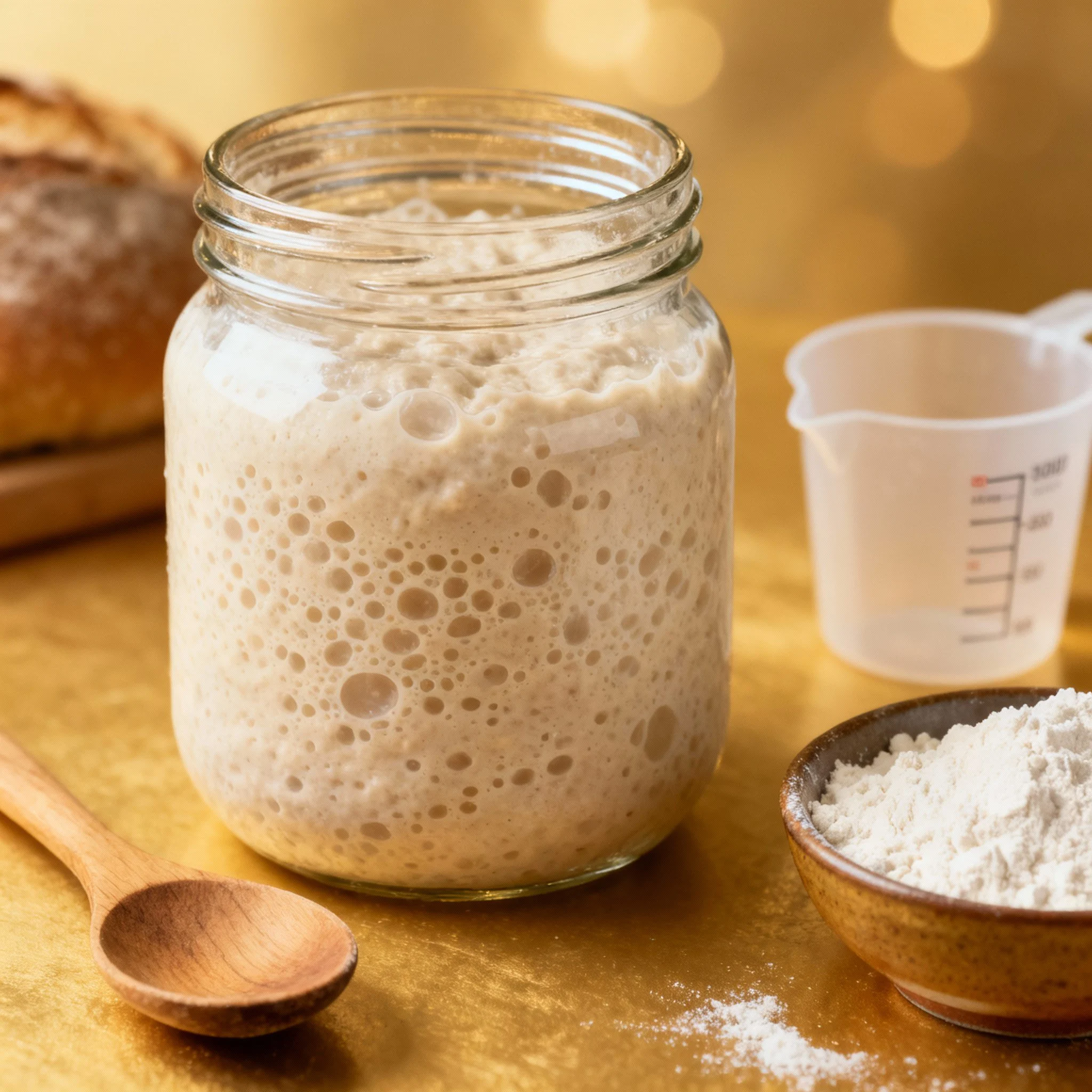
Easy Sourdough Starter Recipe: Your Foolproof Guide to Baking Bliss
👩🍳 The Home Chef's Essential Kitchen
Consistently cooking incredible, healthy meals at home is so much easier when you aren't fighting with cheap tools. These are the 5 absolute powerhouse kitchen essentials that professional chefs and serious home cooks rely on every single day to get perfect results.
🍳 Lodge 10.25" Cast Iron Skillet
The single greatest value in all of cookware. It retains heat infinitely better than cheap non-stick pans, allowing you to get a restaurant-quality crust on steaks or perfect crispy edges on cornbread. With proper care, this $20 pan will literally outlive you.
🔪 Victorinox Fibrox Pro 8" Chef's Knife
A dull knife makes cooking a frustrating chore. This specific blade is the undisputed champion of the culinary world—it holds a terrifyingly sharp edge, features a comfortable non-slip grip, and performs identical to German knives that cost quadruple the price.
🌡️ ThermoPro Instant Read Thermometer
Never serve dry chicken or undercooked pork again. An instant-read thermometer is the secret difference between amateur cooks who 'guess' when protein is done, and professionals who know exactly when to pull meat off the heat for maximum juiciness.
🍲 Lodge Enameled Cast Iron Dutch Oven
The ultimate workhorse for soups, stews, braised short ribs, and baking crusty artisanal bread. The enameled interior provides incredible heat distribution for slow-cooking while eliminating the intense seasoning maintenance required by bare cast iron.
🥄 Bpa-Free Silicone Utensil Set
Throw away those melting plastic spatulas and bacteria-harboring wooden spoons. This pure silicone set is heat-resistant up to 600°F, won't scratch your expensive pans, and features seamless designs that make cleaning out thick sauces and batters effortless.
Embarking on the sourdough journey can feel daunting, filled with mysterious bubbling jars and tales of finicky starters. But fear not! This recipe demystifies the process, providing a simple, straightforward guide to creating a vibrant sourdough starter from scratch. Forget complicated techniques and obscure ingredients. We’ll walk you through each step, ensuring your success and setting you on the path to delicious, tangy sourdough bread, pancakes, and so much more. Get ready to nurture your own little ecosystem and unlock a world of flavor!
Why This Recipe Works
This recipe is designed for simplicity and reliability. Here’s why it works:
- Equal Parts Flour and Water: The 1:1 ratio of flour to water is easy to remember and provides the ideal environment for yeast and bacteria to thrive.
- Unbleached Flour: Unbleached flour contains more of the natural wild yeast and bacteria that are essential for sourdough fermentation. Bleached flour can hinder the process.
- Consistent Feeding Schedule: Regular feedings provide the starter with a consistent food source, promoting healthy growth and activity.
- Room Temperature: Maintaining a consistent room temperature (around 70-75°F or 21-24°C) is crucial for optimal fermentation.
- Visual Cues: We focus on visual cues like bubbling, rising, and falling to help you understand the starter’s progress and know when it’s ready to bake with.
Ingredients
- Unbleached All-Purpose Flour: 1 cup (120g)
- Filtered Water: 1 cup (240ml), non-chlorinated
Instructions
Day 1: The Beginning
- In a clean, wide-mouth glass jar or container (at least 1 quart in size), combine 1/2 cup (60g) of unbleached all-purpose flour and 1/2 cup (120ml) of filtered water.
- Stir vigorously with a fork or spoon until no dry flour remains and you have a thick, pasty mixture.
- Scrape down the sides of the jar to keep it clean.
- Loosely cover the jar with a lid or plastic wrap. If using plastic wrap, poke a few holes for ventilation.
- Place the jar in a warm place (around 70-75°F or 21-24°C) and let it sit for 24 hours.
Day 2-7: Feeding Time
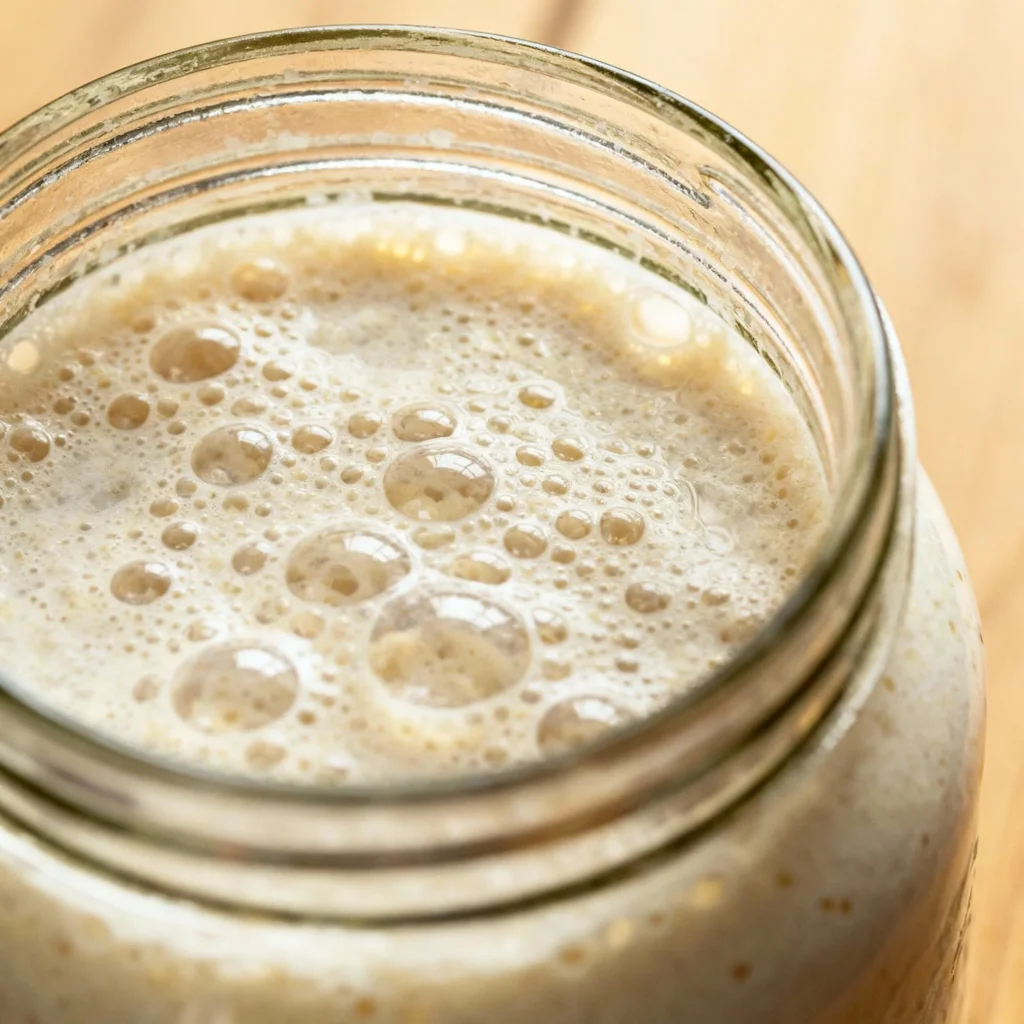
- Observe: After 24 hours, you might see some small bubbles forming. Don’t worry if you don’t see anything yet – it’s still early!
- Discard: Discard half of the starter. This is important to prevent the starter from becoming too acidic and to control its growth. You can discard it in the trash or find creative ways to use it (see FAQ).
- Feed: Add 1/2 cup (60g) of unbleached all-purpose flour and 1/2 cup (120ml) of filtered water to the remaining starter in the jar.
- Stir: Stir vigorously until no dry flour remains.
- Cover: Loosely cover the jar and place it back in a warm place for another 24 hours.
- Repeat: Repeat this discard and feed process every 24 hours for the next 5-7 days.
Day 8+: Monitoring Activity and Adjusting Feedings
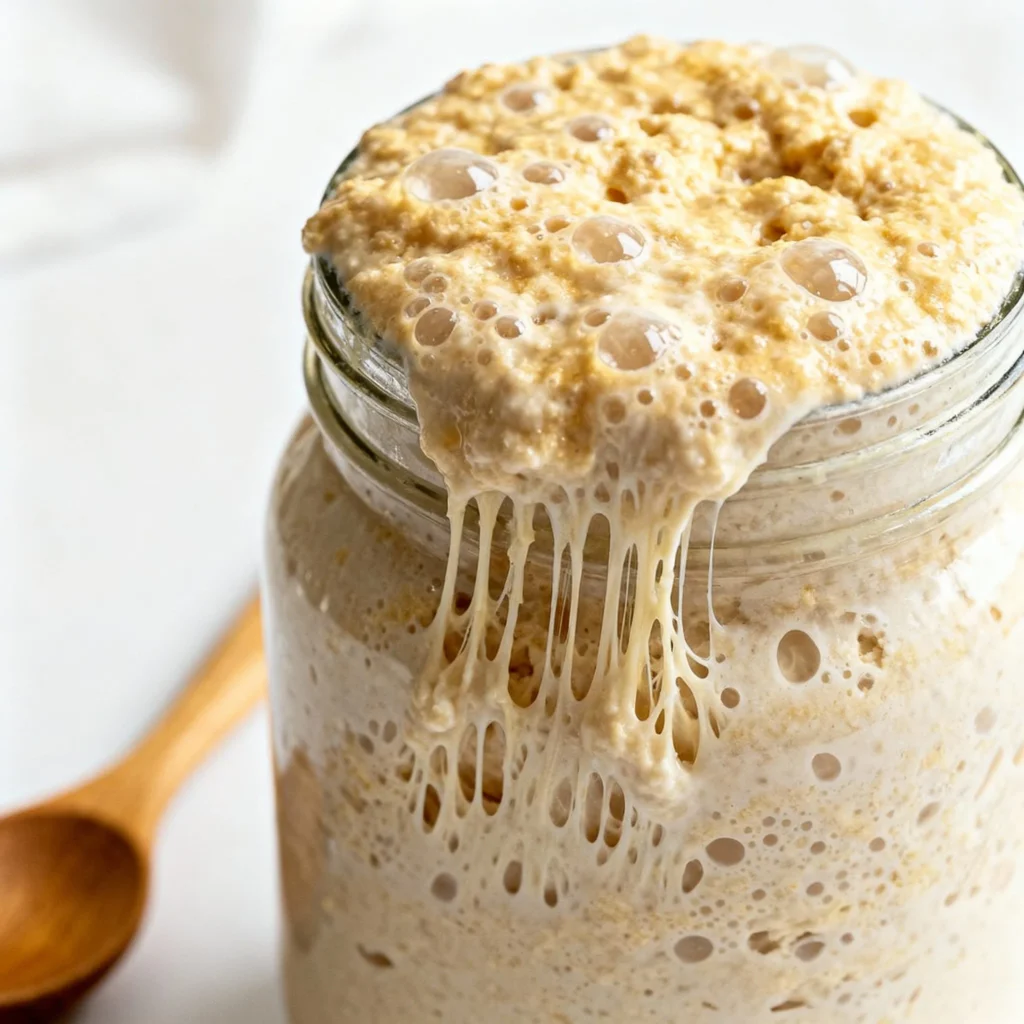
- Observe: By day 8, you should start seeing more significant activity – a noticeable rise in the starter after feeding, followed by a gradual fall. You’ll also notice more bubbles throughout the mixture. The starter should have a pleasant, slightly tangy aroma.
- Change to 12-hour Feedings (Optional): If your starter is very active (doubling in size within 4-6 hours after feeding), you can switch to feeding it every 12 hours. This will provide it with a more consistent food supply and keep it at its peak.
- Float Test: To test if your starter is ready to bake with, perform the float test. Take a small spoonful of starter and gently drop it into a glass of water. If it floats, it’s ready! If it sinks, continue feeding it every 12 or 24 hours until it passes the float test.
Tips for Success
- Use a Kitchen Scale: For consistent results, using a kitchen scale to measure your flour and water is highly recommended.
- Warmth is Key: A warm environment is essential for fermentation. If your kitchen is cold, try placing the starter in a slightly warmer spot, such as near the oven (but not on top!) or inside a turned-off oven with the light on.
- Be Patient: Sourdough starter development takes time. Don’t get discouraged if you don’t see immediate results. Just keep feeding it consistently, and it will eventually come to life.
- Observe and Adjust: Pay attention to your starter’s activity and adjust the feeding schedule as needed. If it’s doubling quickly, feed it more frequently. If it’s sluggish, try moving it to a warmer spot.
- Use Good Quality Water: Avoid using tap water that contains chlorine or chloramine, as these can inhibit the growth of yeast and bacteria. Filtered water is best.
- Cleanliness Matters: Always use clean utensils and jars to prevent contamination.
- Don’t Give Up! Sometimes, a starter can take longer to develop than others. Persistence is key!
Storage Instructions
For Regular Baking:
- Keep your starter at room temperature and feed it regularly (every 12-24 hours) if you plan to bake frequently (several times a week).
For Infrequent Baking:
- Store your starter in the refrigerator. This will slow down its activity and reduce the need for frequent feedings.
- Feed the starter once a week, even when refrigerated.
- Before baking, take the starter out of the refrigerator and feed it for 1-2 days to revive it and increase its activity.
FAQ
What do I do with the discard?
Don’t throw it away! Sourdough discard can be used in a variety of recipes, such as:
- Sourdough pancakes or waffles
- Sourdough crackers
- Sourdough pizza dough
- Sourdough biscuits
- Sourdough discard bread
My starter smells bad. Is that normal?
In the early stages, it’s common for the starter to have a slightly unpleasant odor, such as a cheesy or vinegar-like smell. This is usually due to the presence of different types of bacteria. As the starter matures and the beneficial yeast and bacteria take over, the smell should become more pleasant and tangy.
My starter isn’t bubbling. What should I do?
Make sure your starter is in a warm place and that you’re using unbleached flour and filtered water. Be patient and continue feeding it regularly. It may take a few days or even a week for the bubbling to start.
Can I use a different type of flour?
While unbleached all-purpose flour is the easiest to use for beginners, you can experiment with other types of flour, such as whole wheat flour or rye flour. These flours contain more nutrients and can add unique flavors to your starter. However, they may also require adjustments to the feeding schedule.
How do I know if my starter is ready to bake with?
The best way to tell if your starter is ready to bake with is to perform the float test. It should also have doubled in size within 4-6 hours after feeding and have a pleasant, tangy aroma.
🍰 The Master Baker & Prep Kit
Baking is a science, and meal prep requires efficiency. If you want consistently flaky pie crusts, perfectly risen cakes, and healthy meals ready for the week, these are the 5 upgrade tools that take your execution to the next level.
⚖️ OXO Good Grips 11lb Food Scale
The secret to why bakery bread and cookies are always perfect while home batches vary wildly. Measuring by weight (grams) instead of volume (cups) guarantees precise hydration and flawlessly consistent results every single time you bake.
🧑🍳 KitchenAid Classic Stand Mixer
The undisputed holy grail of the kitchen. From aggressively kneading heavy pizza doughs to whipping meringues into stiff peaks, this powerful motor saves your arms from exhaustion and cuts your hands-on prep time in half.
🍪 Silpat Premium Silicone Baking Mats
Stop wasting money on rolls of parchment paper or agonizing over cookies permanently fused to your metal pans. These reusable, professional-grade silicone mats ensure completely even heat distribution and instantly release even the stickiest caramel.
🌪️ Braun MultiQuick Immersion Blender
The ultimate shortcut tool for creamy tomato soups, lump-free gravies, and rapid smoothies. Avoid the burns and mess of dangerously transferring boiling liquids in batches to a traditional blender by simply blending right inside your cooking pot.
🍱 Premium Glass Meal Prep Containers
If you want to bake and cook healthier, batch preparation is required. These durable glass containers transition safely from freezer to microwave, never absorb tomato sauce stains, and feature airtight seals to keep your hard work fresh all week.
Conclusion
Creating your own sourdough starter is a rewarding experience that opens up a world of delicious possibilities. With this easy-to-follow recipe and a little patience, you’ll be baking tangy, flavorful sourdough bread in no time. Embrace the journey, experiment with different flours and techniques, and most importantly, have fun! Happy baking!