Aloo Recipe Indian Dishes: From Simple Side to Star of the Show!
Aloo, the humble potato, reigns supreme in Indian cuisine. From crispy, spiced snacks to comforting curries, this versatile vegetable finds its way into countless dishes. But with so many variations, knowing where to start can feel overwhelming. Fear not! This article provides a comprehensive guide to mastering the art of Indian potato dishes, focusing on a foundational, flavorful, and adaptable recipe that you can customize to your taste.
Why This Recipe Works
This recipe focuses on creating a versatile “Aloo Sabzi” (potato vegetable) base. It’s designed to be:
- Flavorful: The use of aromatic spices like cumin, coriander, turmeric, and garam masala creates a complex and deeply satisfying flavor profile.
- Adaptable: This recipe serves as a blank canvas. You can add other vegetables, adjust the spice levels, and even transform it into different dishes like aloo gobi or aloo matar.
- Easy to Make: The steps are straightforward and require minimal cooking expertise, making it perfect for beginners.
- Quick: It’s a relatively quick dish to prepare, ideal for busy weeknights.
- Vegan and Gluten-Free: This recipe is naturally vegan and gluten-free, catering to a wide range of dietary needs.
Ingredients
- Potatoes: 1 lb, peeled and cubed (about 1-inch cubes). Use starchy potatoes like Russet or Yukon Gold for a good texture.
- Oil: 2 tablespoons, vegetable oil or any neutral cooking oil.
- Cumin Seeds: 1 teaspoon
- Asafoetida (Hing): A pinch (optional, but adds a unique savory flavor)
- Onion: 1 medium, finely chopped
- Ginger-Garlic Paste: 1 tablespoon (or 1 inch ginger and 2 cloves garlic, minced)
- Green Chilies: 1-2, finely chopped (adjust to your spice preference)
- Turmeric Powder: ½ teaspoon
- Coriander Powder: 1 teaspoon
- Red Chili Powder: ½ teaspoon (adjust to your spice preference)
- Garam Masala: ½ teaspoon
- Amchur Powder (Dry Mango Powder): ½ teaspoon (optional, adds a tangy flavor)
- Salt: To taste
- Fresh Cilantro: 2 tablespoons, chopped, for garnish
- Water: ½ cup

Instructions
- Prepare the Potatoes: Peel the potatoes and cut them into approximately 1-inch cubes. Rinse them under cold water to remove excess starch.
- Heat the Oil: In a medium-sized pot or pan, heat the oil over medium heat.
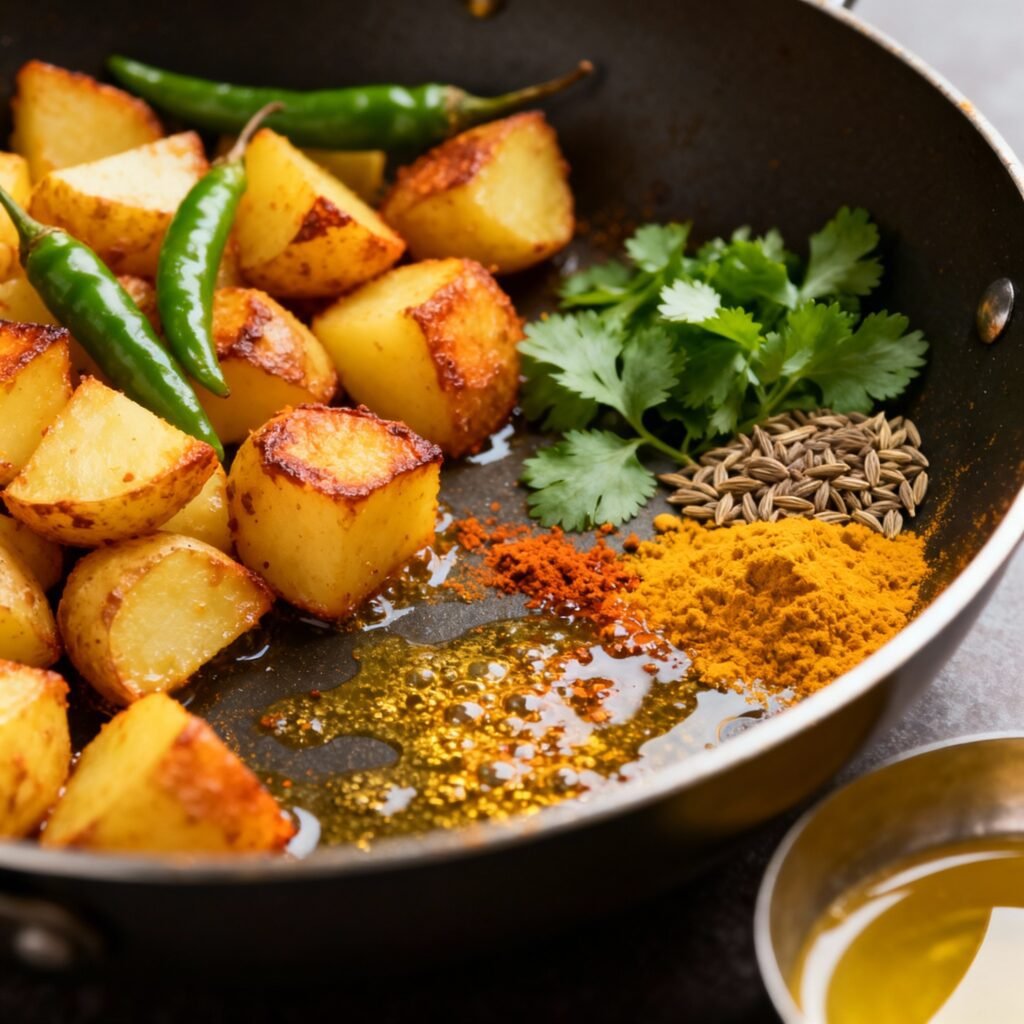
- Temper the Spices: Once the oil is hot, add the cumin seeds. Let them sizzle for a few seconds until they release their aroma. Add a pinch of asafoetida (hing) if using.
- Sauté the Aromatics: Add the chopped onion and sauté until golden brown, about 5-7 minutes.
- Add Ginger-Garlic Paste and Green Chilies: Add the ginger-garlic paste and chopped green chilies. Sauté for another minute until the raw smell disappears.
- Add the Dry Spices: Lower the heat and add the turmeric powder, coriander powder, and red chili powder. Sauté for 30 seconds, stirring constantly, to prevent the spices from burning. Add a splash of water if needed to prevent burning.
- Add the Potatoes: Add the cubed potatoes to the pan and mix well, ensuring they are coated with the spice mixture.
- Add Water and Simmer: Add ½ cup of water, salt to taste, and bring the mixture to a simmer. Cover the pot and cook for 15-20 minutes, or until the potatoes are tender and easily pierced with a fork.
- Finish with Garam Masala and Amchur (Optional): Once the potatoes are cooked, stir in the garam masala and amchur powder (if using).
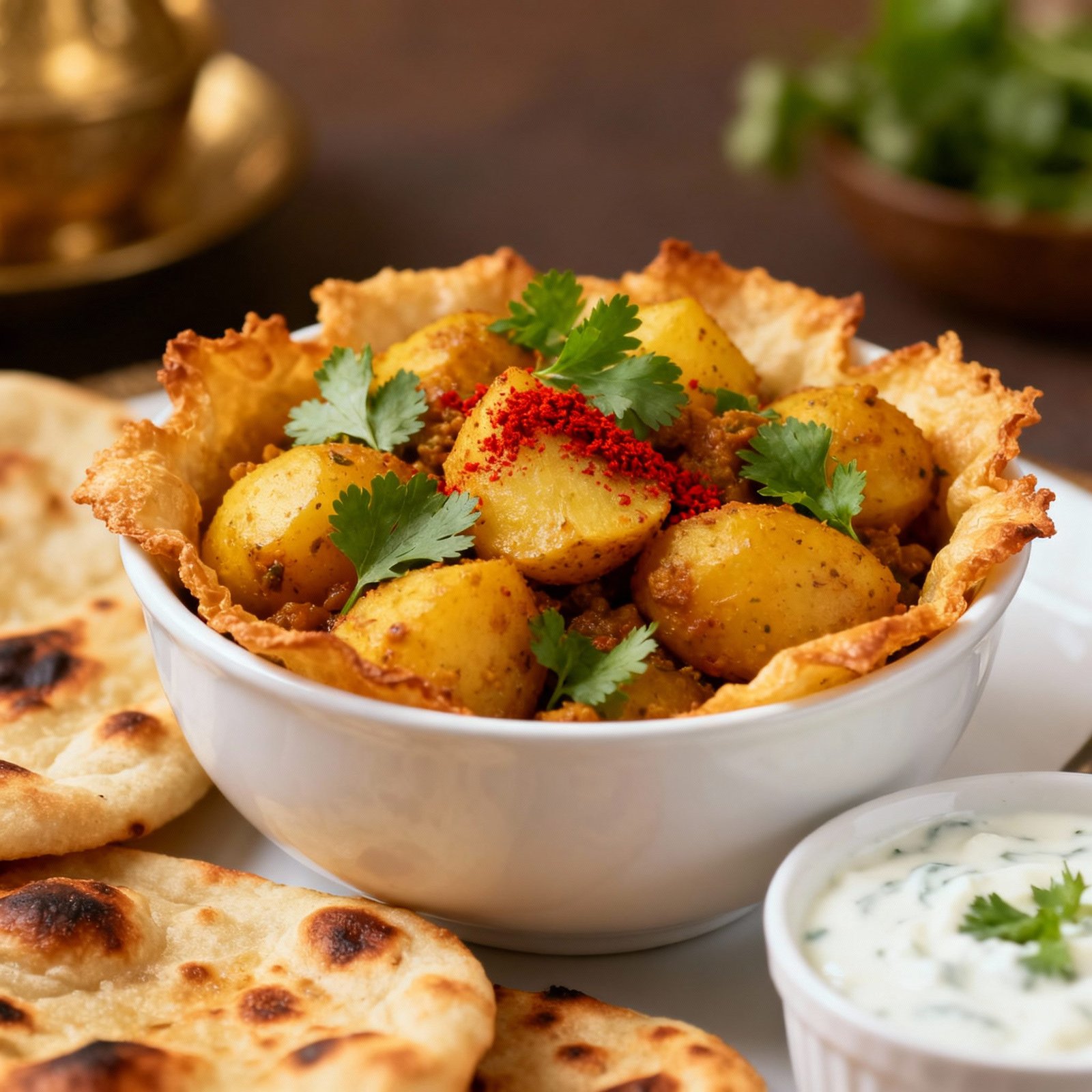
- Garnish and Serve: Garnish with fresh cilantro and serve hot with roti, naan, rice, or as a side dish.
Tips for Success
- Don’t Overcook the Potatoes: Aim for tender potatoes that hold their shape. Overcooked potatoes will become mushy.
- Adjust Spice Levels: Feel free to adjust the amount of green chilies and red chili powder to suit your spice preference.
- Use Fresh Spices: Freshly ground spices will give the best flavor.
- Don’t Burn the Spices: Lower the heat when adding the dry spices to prevent them from burning, which can make the dish bitter.
- Add Other Vegetables: This recipe is a great base for adding other vegetables like cauliflower (aloo gobi), peas (aloo matar), spinach (aloo palak), or fenugreek leaves (aloo methi).
- For a Drier Sabzi: Cook uncovered for the last few minutes to evaporate any excess moisture.
- For a Creamier Sabzi: Mash a few of the potatoes while cooking to create a thicker sauce.
Storage Instructions
Allow the aloo sabzi to cool completely before storing it in an airtight container in the refrigerator. It can be stored for up to 3-4 days. Reheat in a pan on the stovetop or in the microwave until heated through.
FAQ
Q: Can I use boiled potatoes for this recipe?
A: Yes, you can use boiled potatoes. However, adjust the cooking time accordingly. Add the boiled potatoes after the spice mixture is sautéed and simmer for just a few minutes to allow the flavors to meld together.
Q: Can I make this recipe without onion and garlic?
A: Absolutely! Simply omit the onion and garlic. You may want to add a bit more ginger or asafoetida to compensate for the lost flavor.
Q: What can I serve with this aloo sabzi?
A: Aloo sabzi is incredibly versatile! It pairs well with roti, naan, paratha, rice, and even bread. It can also be served as a side dish with dal (lentil soup) or other Indian curries.
Q: Can I freeze aloo sabzi?
A: Yes, you can freeze aloo sabzi. However, the texture of the potatoes may change slightly upon thawing. To freeze, allow the sabzi to cool completely, then transfer it to a freezer-safe container. It can be stored in the freezer for up to 2-3 months. Thaw in the refrigerator overnight before reheating.
Conclusion
This simple aloo sabzi recipe is a fantastic starting point for exploring the world of Indian potato dishes. Its adaptability and ease of preparation make it a perfect weeknight meal. So, gather your ingredients, follow the steps, and get ready to enjoy a flavorful and satisfying taste of India!