Best Prime Rib Recipe Ever: The Foolproof Guide to Holiday Perfection
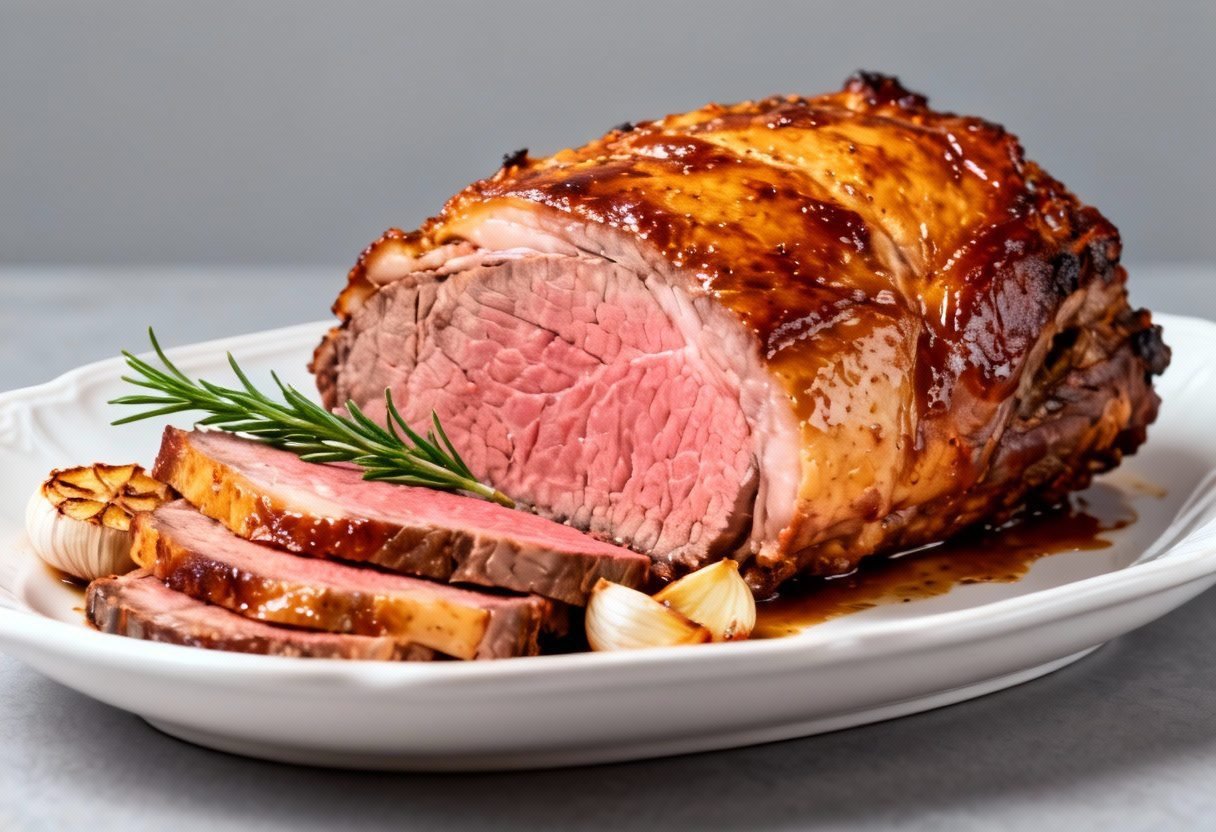
Prime rib. The king of roasts. The centerpiece of countless holiday celebrations. The very mention of it conjures images of crackling crusts, juicy, tender interiors, and the satisfied sighs of happy diners. But the thought of cooking one can also be intimidating. Fear not, aspiring roastmasters! This recipe is your foolproof guide to achieving prime rib perfection every single time. We’re talking restaurant-quality results, without the restaurant price tag. Get ready to impress your family and friends with the best prime rib they’ve ever tasted!
Why This Recipe Works
This isn’t just another prime rib recipe. We’ve meticulously crafted and tested this method to ensure consistent, mouthwatering results. Here’s why it works:
- The Dry Brine Secret: We use a dry brine, or salt rub, applied well in advance. This allows the salt to penetrate deep into the meat, drawing out moisture and then reabsorbing it, resulting in a more flavorful and tender roast. It also helps create that coveted crispy crust.
- Reverse Sear Magic: The reverse sear method involves slow-roasting the prime rib at a low temperature until it reaches the desired internal temperature, then blasting it with high heat at the end to achieve that beautiful, browned exterior. This prevents overcooking and ensures a perfectly even doneness throughout the roast.
- Temperature is Key: We provide precise internal temperature guidelines for different levels of doneness. Using a reliable meat thermometer is crucial for success.
- Resting is Essential: Allowing the prime rib to rest after cooking is just as important as the cooking process itself. This allows the juices to redistribute throughout the meat, resulting in a more tender and flavorful roast.
- Simple, Flavorful Seasoning: We focus on enhancing the natural flavor of the beef with a simple yet impactful blend of herbs and spices. No complicated ingredients or techniques required.
Ingredients
- 1 (4-6 pound) bone-in prime rib roast (also known as standing rib roast)
- 2 tablespoons kosher salt
- 1 tablespoon freshly ground black pepper
- 1 tablespoon garlic powder
- 1 tablespoon onion powder
- 1 tablespoon dried rosemary, crushed
- 1 tablespoon dried thyme
- 2 tablespoons olive oil
Instructions
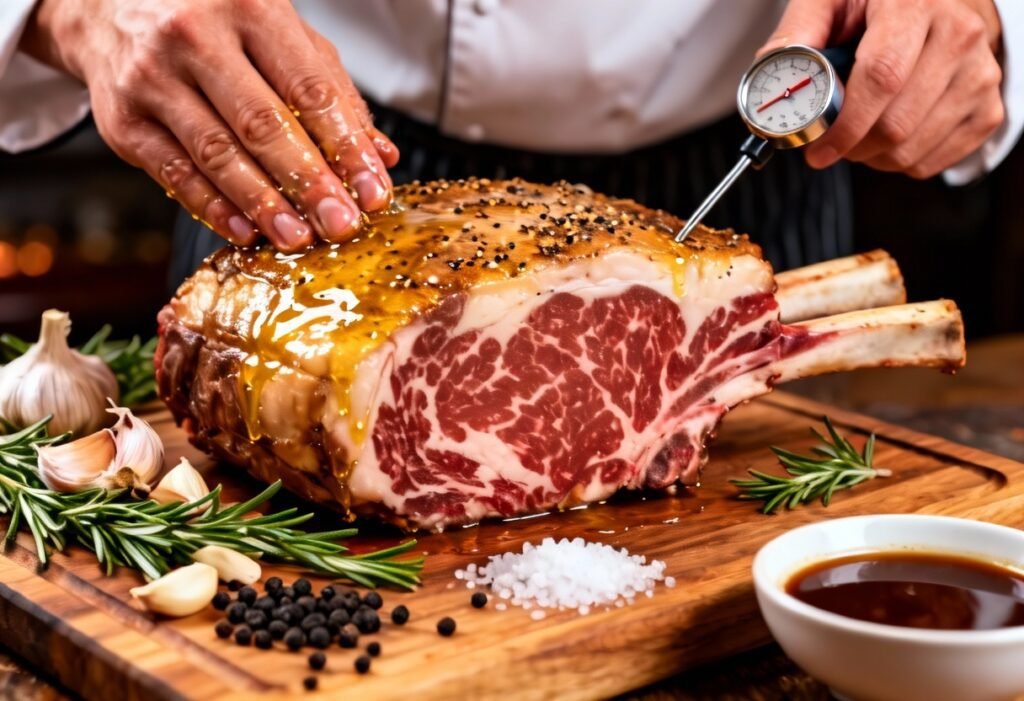
- Dry Brine (24-48 hours in advance): Pat the prime rib roast dry with paper towels. In a small bowl, combine the kosher salt, black pepper, garlic powder, onion powder, rosemary, and thyme. Rub the mixture generously all over the roast, ensuring every surface is covered.
- Refrigerate: Place the seasoned roast on a wire rack set inside a baking sheet. This allows air to circulate around the roast. Refrigerate, uncovered, for 24-48 hours. This is crucial for the dry brining process.
- Bring to Room Temperature: Remove the roast from the refrigerator 3-4 hours before cooking. This allows the roast to cook more evenly.
- Preheat Oven: Preheat your oven to 250°F (120°C).
- Slow Roast: Place the roast, still on the wire rack and baking sheet, in the preheated oven.
- Monitor Temperature: Use a meat thermometer to monitor the internal temperature of the roast. Insert the thermometer into the thickest part of the roast, avoiding the bone.
- Roast to Desired Doneness: Roast until the internal temperature reaches:
- Rare: 120-125°F (49-52°C)
- Medium-Rare: 125-130°F (52-54°C)
- Medium: 130-135°F (54-57°C)
- Medium-Well: 135-140°F (57-60°C)
- Well-Done: 140°F+ (60°C+) (Not recommended)
Note: The cooking time will vary depending on the size of your roast and your oven. Use the internal temperature as your guide, not just the time. A 4-pound roast will take approximately 2-3 hours, while a 6-pound roast may take 3-4 hours.
- Reverse Sear: Once the roast reaches your desired internal temperature, remove it from the oven. Increase the oven temperature to 500°F (260°C).
- Sear the Roast: Return the roast to the oven and sear for 5-10 minutes, or until the crust is deeply browned and crispy. Watch carefully to prevent burning.
- Rest: Remove the roast from the oven and transfer it to a cutting board. Tent loosely with foil and let it rest for at least 30 minutes, or up to 1 hour. This is crucial for allowing the juices to redistribute.
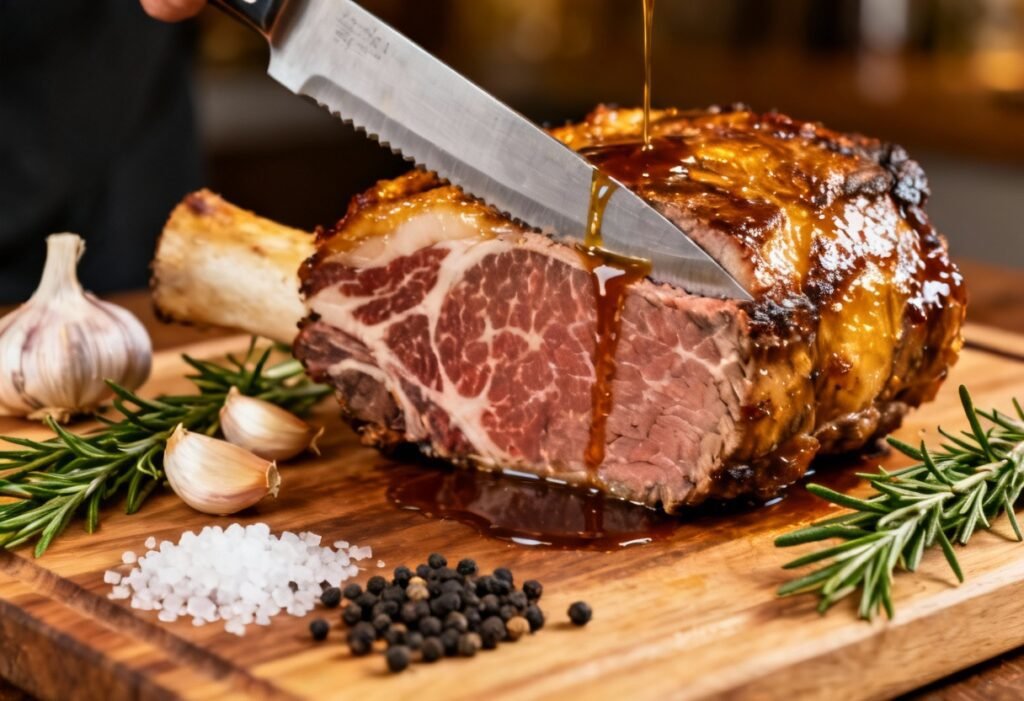
- Carve and Serve: Carve the prime rib against the grain into slices about 1/2 inch thick. Serve immediately and enjoy!
Tips for Success
- Invest in a Good Meat Thermometer: A reliable meat thermometer is the most important tool for cooking prime rib. Don’t rely on guesswork!
- Don’t Overcrowd the Oven: Make sure the roast has plenty of space in the oven for air to circulate.
- Adjust Cooking Time: Cooking times are estimates. Always use the internal temperature as your guide.
- Use a Roasting Pan with a Rack: The rack allows air to circulate around the roast, promoting even cooking.
- Don’t Skip the Dry Brine: This is a game-changer! It significantly improves the flavor and tenderness of the prime rib.
- Trust the Process: The reverse sear method may seem unconventional, but it’s the key to a perfectly cooked prime rib.
Storage Instructions
Store leftover prime rib in an airtight container in the refrigerator for up to 3-4 days. Reheat gently in the oven or microwave. Prime rib also freezes well. Wrap tightly in plastic wrap and then aluminum foil and freeze for up to 2-3 months. Thaw in the refrigerator overnight before reheating.
FAQ
Q: Can I use a boneless prime rib roast?
A: Yes, you can use a boneless prime rib roast, but bone-in roasts tend to be more flavorful and retain more moisture during cooking. If using a boneless roast, you may need to reduce the cooking time slightly.
Q: Can I add vegetables to the roasting pan?
A: Yes, you can add vegetables like potatoes, carrots, and onions to the roasting pan during the last hour of cooking. Just be sure to cut them into large pieces so they don’t overcook.
Q: What should I serve with prime rib?
A: Classic side dishes for prime rib include mashed potatoes, roasted vegetables, Yorkshire pudding, au jus, and horseradish sauce.
Q: What if I don’t have time to dry brine for 24-48 hours?
A: While the 24-48 hour dry brine is ideal, even a few hours will make a difference. If you’re short on time, dry brine for at least 4 hours.
Q: My prime rib is smoking during the searing process! What do I do?
A: A little smoke is normal during the searing process due to the high heat. However, if it’s excessive, reduce the oven temperature slightly or crack the oven door open a bit. Make sure your oven is clean to prevent excessive smoking.
Conclusion
With this recipe and a little patience, you can confidently create a prime rib that will rival any restaurant. The dry brining, reverse sear method, and careful attention to temperature are the keys to success. So, gather your ingredients, follow these instructions, and prepare to impress your guests with the best prime rib they’ve ever had. Happy cooking!