Best Turkey Brine Recipe: The Secret to a Juicy, Flavorful Bird
Thanksgiving. The word conjures images of family, friends, and, of course, a magnificent roasted turkey taking center stage. But let’s be honest, achieving that perfectly juicy, flavorful turkey can be a daunting task. Dry, bland turkey is a Thanksgiving tragedy we all want to avoid. The solution? Brining. And not just any brine, but the best turkey brine. This recipe is your secret weapon for a turkey that will have everyone singing your praises.
Why This Recipe Works
This brine isn’t just about adding salt; it’s about infusing your turkey with layers of flavor and ensuring maximum moisture retention. Here’s why it stands out:
- Salt: The foundation of any good brine. Salt denatures the proteins in the turkey, allowing them to absorb more water and stay juicy during cooking.
- Sugar: Balances the saltiness and adds a subtle sweetness that caramelizes beautifully during roasting, creating a gorgeous, flavorful skin.
- Aromatics: We use a blend of classic Thanksgiving flavors like rosemary, thyme, sage, and bay leaves to create a complex and aromatic base. These herbs penetrate the turkey, adding depth and character.
- Citrus: Orange and lemon zest brighten the flavor profile and add a touch of acidity, which helps to tenderize the meat.
- Garlic & Peppercorns: These add a subtle savory note and a hint of spice.
- The Right Ratio: We’ve perfected the salt-to-water ratio to ensure optimal moisture absorption without making the turkey overly salty.
Ingredients
- 1 gallon cold water
- 1 cup kosher salt (Diamond Crystal preferred)
- ¾ cup granulated sugar
- 1 large orange, zested and quartered
- 1 lemon, zested and quartered
- 4 cloves garlic, crushed
- 2 tablespoons black peppercorns
- 4 sprigs fresh rosemary
- 4 sprigs fresh thyme
- 4 fresh sage leaves
- 3 bay leaves
- 1 (12-14 pound) turkey, thawed completely
Instructions
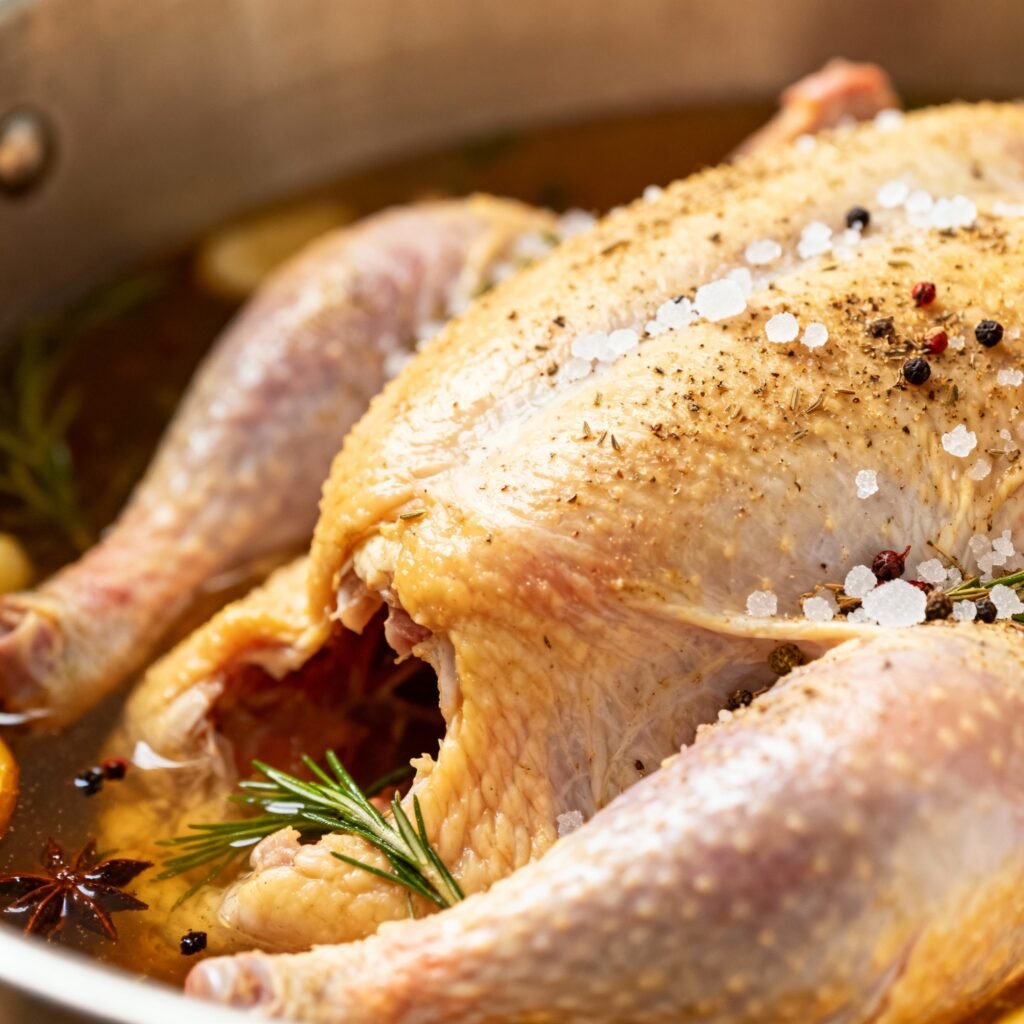
- Combine the Brine: In a large stockpot (stainless steel or food-grade plastic), combine the water, salt, and sugar. Stir until the salt and sugar are completely dissolved. This is crucial to prevent grainy, undissolved salt from settling on the turkey.
- Add Aromatics: Add the orange zest, orange quarters, lemon zest, lemon quarters, crushed garlic, peppercorns, rosemary, thyme, sage, and bay leaves to the brine. Stir well to combine all the ingredients.
- Cool the Brine: This is a critical step. The brine MUST be completely cooled before adding the turkey. Adding the turkey to warm brine can encourage bacterial growth. You can speed up the cooling process by adding ice cubes to the brine, but make sure to adjust the water amount accordingly to maintain the correct salinity. Alternatively, prepare the brine the day before and refrigerate it overnight.
- Submerge the Turkey: Place the thawed turkey in a large brining bag or a food-grade container (like a cooler). Pour the cooled brine over the turkey, ensuring it is completely submerged. If necessary, weigh the turkey down with a heavy plate or a sealed bag filled with ice water to keep it submerged.
- Refrigerate: Place the turkey in the refrigerator for 12-18 hours. Do not brine for longer than 18 hours, as the turkey can become too salty and the texture can become mushy.
- Remove and Rinse: After brining, remove the turkey from the brine and discard the brine. Rinse the turkey thoroughly inside and out with cold water. This removes excess salt from the surface.
- Pat Dry: Pat the turkey completely dry with paper towels, inside and out. A dry turkey skin is essential for achieving crispy skin during roasting.
- Rest (Optional): Place the turkey, uncovered, on a wire rack set over a baking sheet in the refrigerator for at least 4 hours, or preferably overnight. This allows the skin to dry out even further, resulting in even crispier skin.
- Roast as Usual: Roast the turkey according to your favorite roasting recipe. Because the turkey is already seasoned from the brine, you may need to reduce the amount of salt you typically use in your roasting recipe. Use a meat thermometer to ensure the turkey reaches an internal temperature of 165°F (74°C) in the thickest part of the thigh.
Tips for Success
- Use Kosher Salt: Kosher salt dissolves more easily than table salt and doesn’t contain iodine, which can impart a metallic taste to the turkey. Diamond Crystal is preferred because its flakes are larger and less dense than other brands, resulting in a more consistent salinity. If using Morton’s kosher salt, reduce the amount by about 25%.
- Thaw the Turkey Completely: This is crucial for even brining and cooking. Allow ample time for thawing in the refrigerator (approximately 24 hours for every 5 pounds of turkey).
- Don’t Over-Brine: Brining for too long can result in a salty, mushy turkey. Stick to the recommended 12-18 hour brining time.
- Adjust Roasting Time: Brined turkeys tend to cook faster than unbrined turkeys, so monitor the internal temperature closely and adjust the roasting time accordingly.
- Consider Air-Chilling (Optional): Some butchers offer air-chilled turkeys, which have naturally drier skin. If you can find one, it’s an excellent choice for achieving exceptionally crispy skin.
Storage Instructions
The brined turkey should be roasted immediately after rinsing and drying. Do not store the raw, brined turkey for an extended period. Cooked turkey should be stored in an airtight container in the refrigerator for up to 3-4 days.

FAQ
Q: Can I use this brine for a smaller turkey?
A: Yes, you can use this brine for a smaller turkey. However, you may need to reduce the brining time to prevent it from becoming too salty. For a smaller turkey (8-10 pounds), brine for 8-12 hours.
Q: Can I use this brine for other poultry, like chicken or duck?
A: Yes, this brine can be adapted for other poultry. However, you’ll need to significantly reduce the brining time. For chicken, brine for 4-6 hours. For duck, brine for 6-8 hours.
Q: Can I reuse the brine?
A: No, never reuse brine that has been in contact with raw poultry. This poses a serious food safety risk.
Q: What if I don’t have fresh herbs?
A: You can substitute dried herbs for fresh herbs. Use about 1 teaspoon of dried herbs for every tablespoon of fresh herbs.
Q: My turkey is already pre-brined. Can I still use this recipe?
A: No, do not use this brine on a pre-brined turkey. It will likely result in an overly salty bird.
Conclusion
This turkey brine recipe is a game-changer. It’s the key to unlocking a Thanksgiving turkey that is incredibly juicy, flavorful, and unforgettable. Follow these instructions carefully, and you’ll be rewarded with a bird that will impress your family and friends. So, ditch the dry turkey woes and embrace the magic of brining! Happy Thanksgiving!