Brioche French Toast Recipe: The Golden Standard
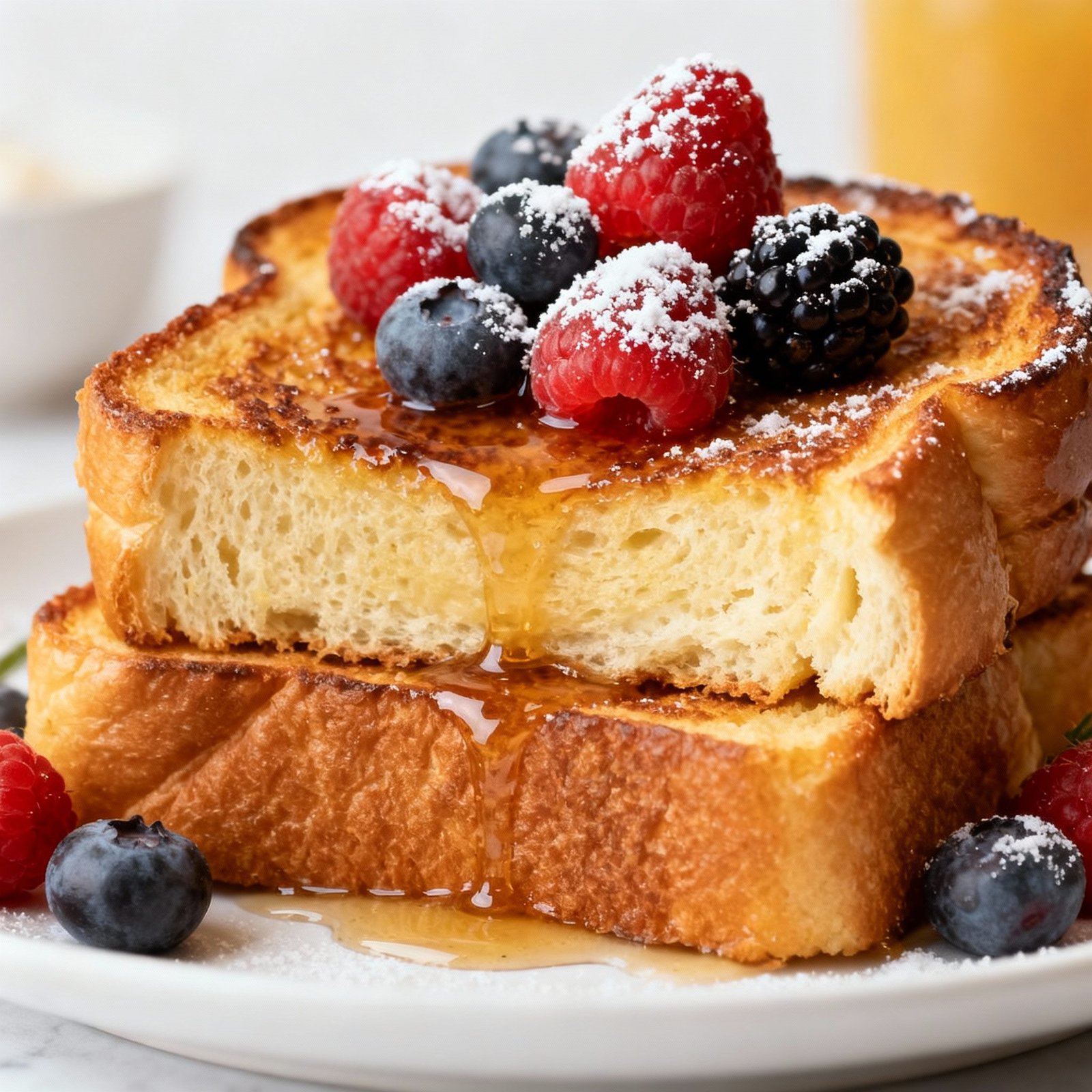
French toast. It’s a breakfast classic, a brunch staple, and a comforting treat any time of day. But let’s be honest, not all French toast is created equal. Some is soggy, some is bland, and some is just…forgettable. This recipe, however, elevates French toast to a whole new level. We’re talking about Brioche French Toast, and we’re not just dipping and frying. We’re crafting a culinary masterpiece, a symphony of textures and flavors that will have you craving it every weekend (and maybe even during the week!). Get ready to experience French toast like never before – golden brown, custardy soft on the inside, and utterly irresistible.
Why This Recipe Works
This recipe isn’t just about using brioche (although that’s a HUGE part of it!). It’s about understanding the science behind perfect French toast. Here’s why this recipe consistently delivers exceptional results:
- Brioche is Key: Brioche bread, with its rich, buttery flavor and tender crumb, is the ideal canvas for French toast. It soaks up the custard beautifully without becoming overly soggy.
- The Custard Ratio: We’ve perfected the ratio of eggs to milk to cream. This ensures a luscious, creamy custard that coats the brioche evenly and cooks to a perfectly soft consistency.
- Flavor Infusion: Vanilla extract and a hint of cinnamon add warmth and depth to the custard, complementing the buttery flavor of the brioche.
- Gentle Cooking: Cooking the French toast over medium-low heat allows the custard to cook through completely without burning the outside. Patience is key!
- The Right Pan: Using a non-stick skillet or griddle ensures that the French toast doesn’t stick and browns evenly.
- Resting Period: Allowing the soaked brioche to rest for a few minutes before cooking allows the custard to fully penetrate the bread, resulting in a more flavorful and tender French toast.
Ingredients
- 6 slices of brioche bread, about 1 inch thick
- 3 large eggs
- 1/2 cup whole milk
- 1/4 cup heavy cream
- 1 teaspoon vanilla extract
- 1/2 teaspoon ground cinnamon
- 2 tablespoons unsalted butter
- Pinch of salt
- Optional toppings: maple syrup, fresh berries, powdered sugar, whipped cream

Instructions
- Prepare the Custard: In a shallow dish or baking pan (large enough to fit a slice of brioche), whisk together the eggs, milk, heavy cream, vanilla extract, cinnamon, and salt until well combined.
- Soak the Brioche: Gently place each slice of brioche into the custard mixture, making sure both sides are fully submerged. Let the brioche soak for about 2-3 minutes per side. Don’t overcrowd the pan; soak the slices in batches if necessary. The brioche should be saturated but not falling apart.
- Rest (Important!): After soaking, place the brioche slices on a wire rack for 5-10 minutes. This allows the custard to fully penetrate the bread and helps prevent sogginess during cooking.
- Cook the French Toast: Melt 1 tablespoon of butter in a non-stick skillet or griddle over medium-low heat. Once the butter is melted and the pan is hot, carefully place 2-3 slices of soaked brioche into the pan (again, don’t overcrowd).
- Cook to Golden Brown: Cook the French toast for about 3-4 minutes per side, or until golden brown and cooked through. Gently flip the slices using a spatula.
- Repeat: Repeat steps 4 and 5 with the remaining butter and brioche slices.
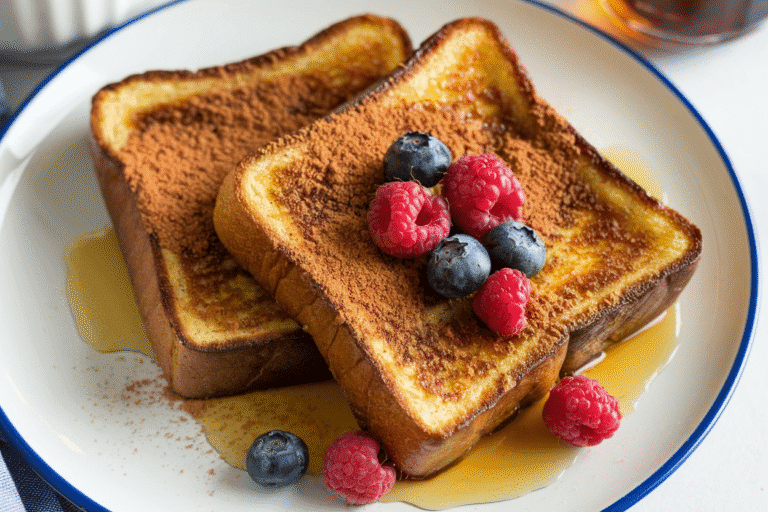
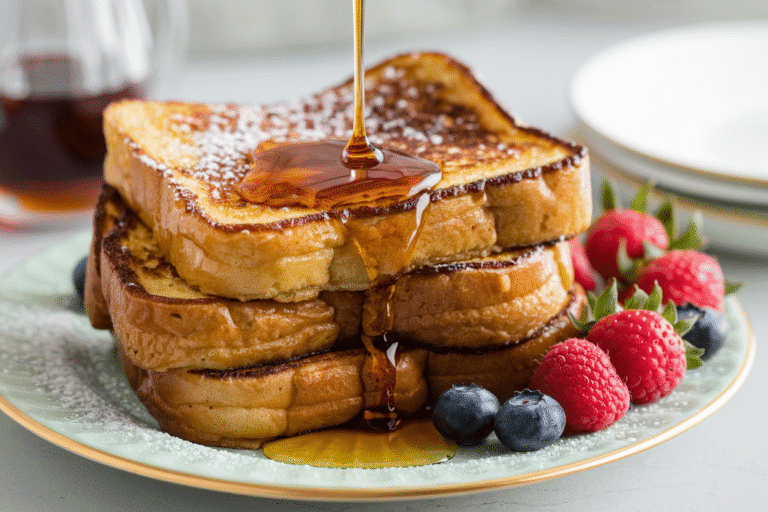
- Serve Immediately: Serve the Brioche French Toast immediately with your favorite toppings. Maple syrup, fresh berries, powdered sugar, and whipped cream are all excellent choices.
Tips for Success
- Use Stale Brioche: Slightly stale brioche will soak up the custard better than fresh brioche. If your brioche is very fresh, you can leave it out overnight to dry out a bit.
- Don’t Oversoak: Oversoaking the brioche will result in soggy French toast. Pay attention to the soaking time and gently remove the slices from the custard when they are saturated but still holding their shape.
- Low and Slow: Cooking the French toast over medium-low heat is crucial for even cooking and preventing burning. Be patient and let the custard cook through completely.
- Adjust the Sweetness: If you prefer a sweeter French toast, you can add a tablespoon of sugar to the custard mixture.
- Experiment with Flavors: Feel free to experiment with different flavorings. A splash of orange zest, a pinch of nutmeg, or a dash of almond extract can add a unique twist to your French toast.
- Keep it Warm: If you’re making a large batch, keep the cooked French toast warm in a preheated oven (200°F) until ready to serve.
- Pan Prep is Key: Make sure your pan is properly heated before adding the French toast. The butter should be melted and shimmering, but not smoking.
Storage Instructions
While Brioche French Toast is best enjoyed fresh, leftovers can be stored in the refrigerator for up to 2 days. To reheat, you can use a toaster oven, a skillet over low heat, or a microwave (although the microwave may make it slightly soggy). For best results, reheat in a toaster oven or skillet until warmed through and slightly crispy.

FAQ
Q: Can I use a different type of bread?
A: While brioche is highly recommended for its rich flavor and texture, you can use other types of bread, such as challah, Texas toast, or even sourdough. However, the results may vary.
Q: Can I make this recipe vegan?
A: Yes! You can substitute the eggs with a flax egg (1 tablespoon of ground flaxseed mixed with 3 tablespoons of water, let sit for 5 minutes). Use plant-based milk and cream, and a vegan butter alternative. The brioche itself will need to be a vegan version.
Q: My French toast is burning on the outside but still soggy on the inside. What am I doing wrong?
A: Your heat is likely too high. Reduce the heat to medium-low and cook the French toast for a longer period of time. Make sure you’re also allowing the custard to fully penetrate the bread by soaking it properly and letting it rest before cooking.
Q: Can I freeze French toast?
A: Yes, you can freeze cooked French toast. Let it cool completely, then wrap each slice individually in plastic wrap and place them in a freezer-safe bag or container. Frozen French toast can be stored for up to 2 months. To reheat, thaw in the refrigerator overnight or in the microwave, then toast or heat in a skillet.
Q: Do I need to add sugar to the custard?
A: The recipe doesn’t include sugar in the custard because the brioche and the toppings (like maple syrup) provide plenty of sweetness. However, if you prefer a sweeter French toast, you can add a tablespoon or two of sugar to the custard.
Conclusion
This Brioche French Toast recipe is more than just a breakfast dish; it’s an experience. The combination of the rich, buttery brioche, the creamy custard, and the endless topping possibilities makes it a truly special treat. So, ditch the ordinary and embrace the extraordinary. Gather your ingredients, follow these simple steps, and prepare to indulge in the golden standard of French toast. Your taste buds will thank you!