
Burnt Basque Cheesecake Recipe: Effortless Elegance!
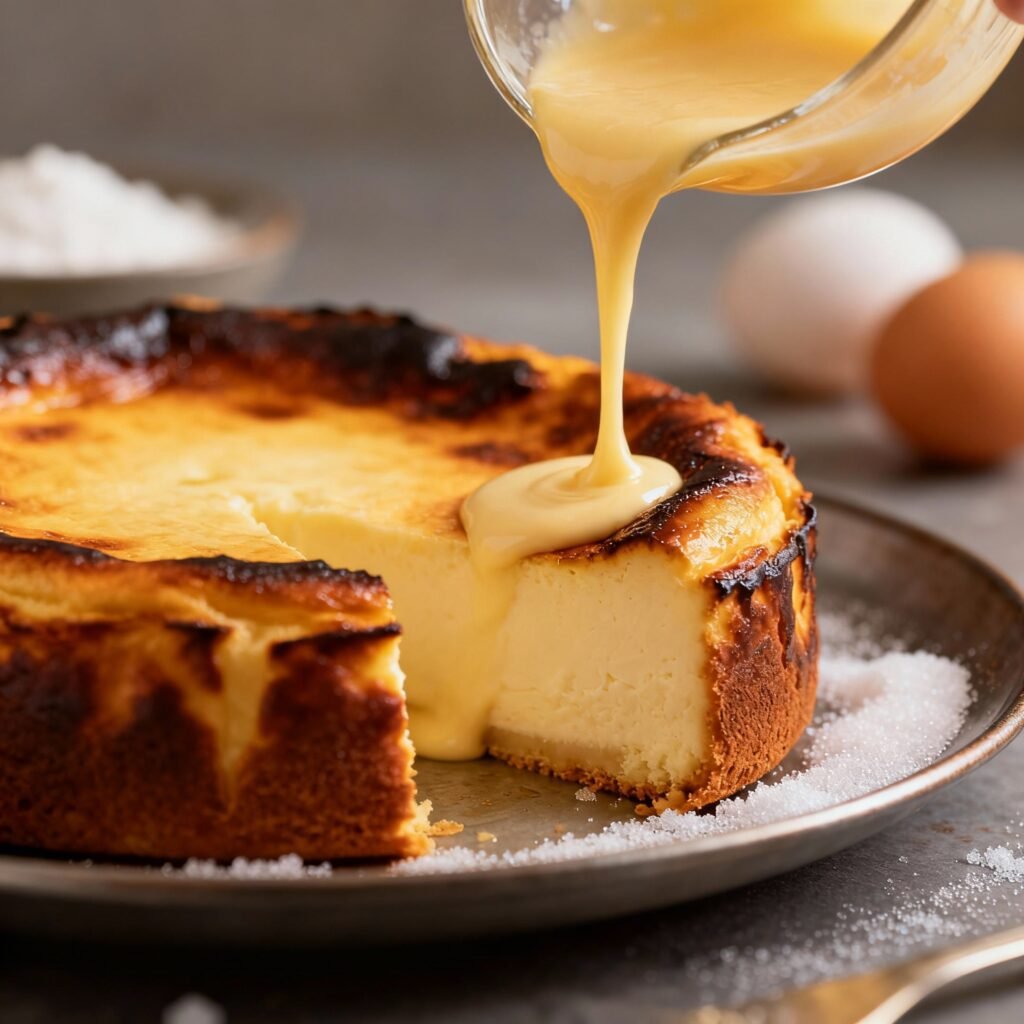
Imagine a cheesecake that’s intentionally, beautifully imperfect. A cheesecake that laughs in the face of cracks and imperfections, embracing a deeply caramelized, almost burnt exterior that hides a creamy, custardy interior. This, my friends, is the magic of Burnt Basque Cheesecake. Originating from La Viña restaurant in San Sebastián, Spain, this rustic beauty has taken the dessert world by storm, and for good reason. It’s incredibly easy to make, shockingly forgiving, and delivers a flavor profile that’s both sophisticated and comforting. Forget fussy water baths and meticulous decorating; this cheesecake is all about embracing the deliciousness of simplicity. Get ready to impress with this effortlessly elegant dessert!
Why This Recipe Works
This recipe works because it relies on a few key principles:
- High Heat: Baking at a high temperature is crucial for achieving the signature burnt exterior while keeping the inside creamy and molten. The intense heat rapidly caramelizes the sugars on the surface, creating that distinctive flavor and color.
- Simple Ingredients: The ingredient list is short and sweet, focusing on quality rather than complexity. This allows the flavors of the cream cheese, sugar, and eggs to truly shine.
- No Crust: The absence of a crust simplifies the process and contributes to the cheesecake’s unique texture. The lack of a crust allows the cheesecake to puff up dramatically during baking and then gently collapse as it cools, resulting in a slightly sunken, rustic appearance.
- Embracing Imperfection: Unlike traditional cheesecakes, cracks and uneven browning are not only acceptable but desirable! This makes it incredibly forgiving for even novice bakers.
- Ratios: The ratios of cream cheese, sugar, and eggs are carefully balanced to ensure a creamy, custard-like center that contrasts perfectly with the deeply caramelized exterior.
Ingredients
- Cream Cheese: 2 pounds (900g), full-fat, softened to room temperature. Using full-fat cream cheese is essential for achieving the right texture and flavor. Low-fat cream cheese will result in a less creamy and potentially drier cheesecake.
- Granulated Sugar: 1 1/2 cups (300g). The sugar not only sweetens the cheesecake but also contributes to the caramelization process.
- Large Eggs: 6. Room temperature eggs incorporate more easily and help create a smoother batter.
- Heavy Cream: 2 cups (480ml). Heavy cream adds richness and moisture, contributing to the creamy, custardy texture.
- All-Purpose Flour: 2 tablespoons (15g). Just a touch of flour helps to bind the ingredients together and provides a bit of structure.
- Vanilla Extract: 1 teaspoon (5ml), optional. Vanilla extract enhances the flavor of the cheesecake, but it can be omitted if desired.
- Pinch of Salt: Enhances the sweetness and balances the flavors.
Instructions
- Prepare the Oven and Pan: Preheat your oven to 400°F (200°C). Line a 9-inch springform pan with two layers of parchment paper, ensuring the paper extends several inches above the rim of the pan. This is crucial, as the cheesecake will rise significantly during baking and the parchment paper will prevent it from sticking and help create its signature rustic shape. Don’t worry about making it perfect; wrinkles and creases in the parchment paper are part of the charm.
- Mix the Cream Cheese and Sugar: In a large bowl, beat the softened cream cheese and sugar together until smooth and creamy. Use an electric mixer (stand mixer or hand mixer) for best results, but you can also do this by hand with a whisk. Make sure there are no lumps of cream cheese remaining.
- Add the Eggs: Add the eggs one at a time, mixing well after each addition. Be careful not to overmix, as this can incorporate too much air into the batter.
- Incorporate the Heavy Cream: Gradually pour in the heavy cream, mixing on low speed until just combined.
- Add the Flour and Vanilla: Sift in the flour and add the vanilla extract (if using). Mix until just combined. Again, avoid overmixing.
- Pour into the Pan: Pour the batter into the prepared springform pan.
- Bake: Bake for 50-60 minutes, or until the top is deeply browned and almost burnt-looking. The center should still be slightly jiggly. Don’t be afraid of the dark color; that’s what we’re aiming for!
- Cool Completely: Turn off the oven and leave the cheesecake in the oven with the door slightly ajar for about an hour. This allows the cheesecake to cool gradually and prevents it from cracking too much.
- Chill: Remove the cheesecake from the oven and let it cool completely at room temperature. Then, cover it loosely and refrigerate for at least 4 hours, or preferably overnight. This chilling period is essential for the cheesecake to set properly and develop its full flavor.
- Serve: Carefully remove the cheesecake from the springform pan and peel away the parchment paper. Slice and serve chilled.
Tips for Success
- Use Room Temperature Ingredients: Softened cream cheese and room temperature eggs are essential for creating a smooth and even batter.
- Don’t Overmix: Overmixing can incorporate too much air into the batter, which can cause the cheesecake to puff up too much and then collapse, resulting in a cracked surface.
- Parchment Paper is Key: The double layer of parchment paper not only prevents the cheesecake from sticking but also helps to create its signature rustic shape.
- Don’t Be Afraid of the “Burnt” Top: The deeply caramelized, almost burnt exterior is what makes this cheesecake special. Don’t be tempted to take it out of the oven too early.
- Chill Thoroughly: Chilling the cheesecake for at least 4 hours (or preferably overnight) is crucial for it to set properly and develop its full flavor.
- Experiment with Flavors: While the classic Burnt Basque Cheesecake is delicious on its own, you can experiment with adding other flavors, such as lemon zest, orange zest, or a splash of liquor.
Storage Instructions
Store leftover Burnt Basque Cheesecake in an airtight container in the refrigerator for up to 3-4 days. The cheesecake will continue to soften slightly as it sits, but it will still be delicious.

FAQ
- Can I use low-fat cream cheese? No, full-fat cream cheese is essential for achieving the right texture and flavor. Low-fat cream cheese will result in a less creamy and potentially drier cheesecake.
- Can I use a different size pan? A 9-inch springform pan is recommended for this recipe. Using a smaller pan may result in the cheesecake overflowing, while using a larger pan may result in a thinner cheesecake.
- Why did my cheesecake crack? Cracking is normal for Burnt Basque Cheesecake and is part of its rustic charm. However, to minimize cracking, avoid overmixing the batter and let the cheesecake cool gradually in the oven.
- Can I freeze Burnt Basque Cheesecake? While technically you can freeze it, the texture may change slightly upon thawing. It’s best enjoyed fresh.
Conclusion
The Burnt Basque Cheesecake is a testament to the idea that sometimes, the most delicious things in life are the simplest and most imperfect. Its ease of preparation and unique flavor profile make it a crowd-pleaser that’s perfect for any occasion. So, embrace the “burnt” exterior, the cracks, and the rustic charm, and get ready to enjoy a truly unforgettable dessert. Happy baking!