Chinese Pork Belly Recipe: Melt-in-Your-Mouth Perfection!
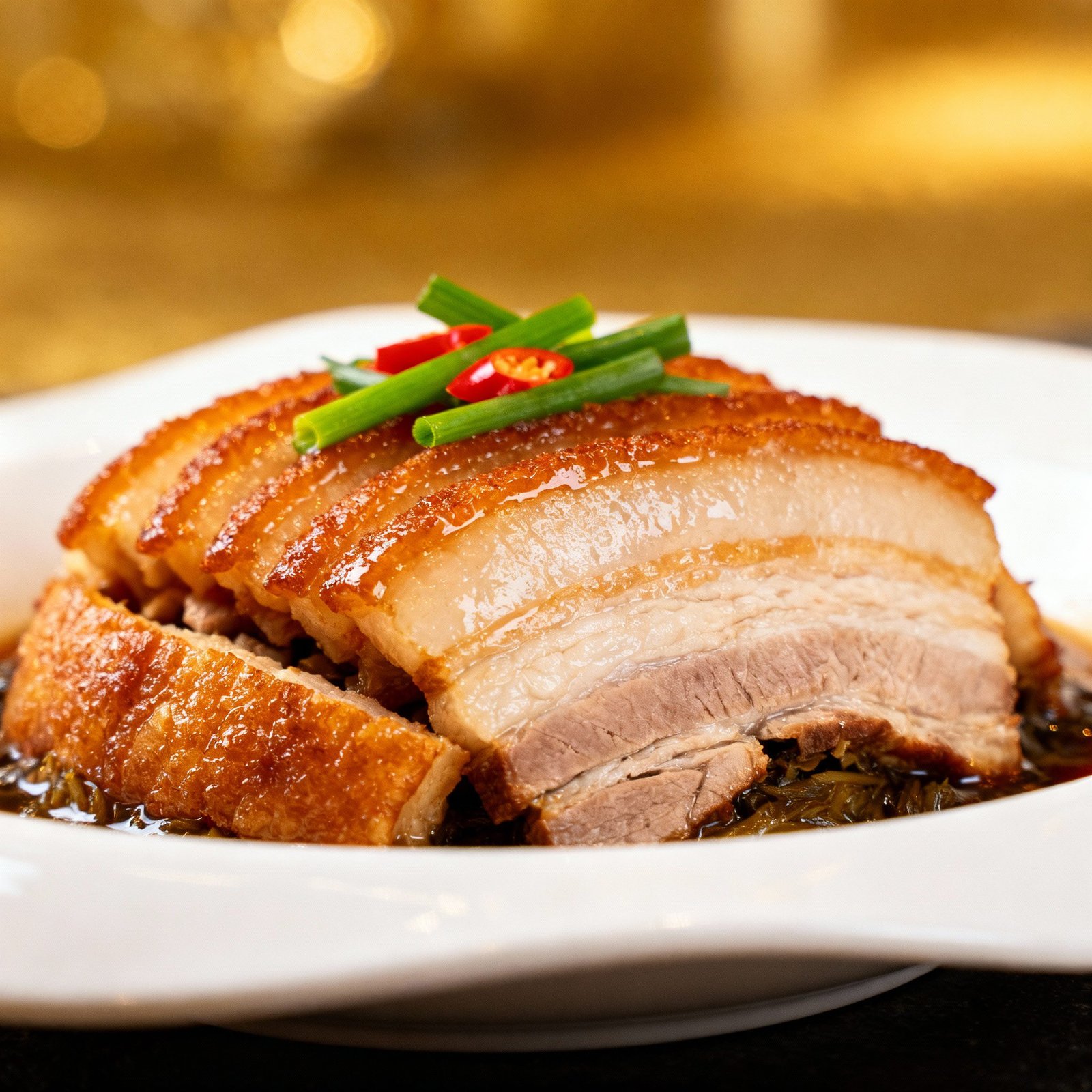
Chinese braised pork belly, or hong shao rou (红烧肉), is a dish that transcends mere sustenance. It’s a culinary hug, a symphony of sweet, savory, and umami flavors that dance on your palate. The tender, almost dissolving, pork belly, glistening with a rich, mahogany-colored sauce, is a testament to the magic that happens when simple ingredients are treated with patience and care. This isn’t just a recipe; it’s an experience. And while it might seem intimidating, this recipe breaks down the process into manageable steps, guaranteeing you’ll achieve restaurant-quality results in your own kitchen. Get ready to impress your family and friends with this unforgettable classic!
Why This Recipe Works
This recipe focuses on achieving the perfect balance of flavors and textures. Here’s why it’s a winner:
- The Blanching Process: Blanching the pork belly removes impurities and excess fat, resulting in a cleaner, richer flavor.
- The Sear: Searing the pork belly creates a beautiful caramelized crust, adding depth and complexity to the final dish.
- The Braising Liquid: The combination of soy sauce, Shaoxing wine, sugar, and aromatics creates a deeply flavorful braising liquid that tenderizes the pork and infuses it with incredible taste.
- The Long Braise: Slow and low braising is key! This allows the collagen in the pork belly to break down, resulting in that melt-in-your-mouth texture we all crave.
- The Reduction: Reducing the sauce at the end concentrates the flavors and creates a glossy, irresistible glaze.
Ingredients
- Pork Belly: 2 pounds, skin-on, cut into 1.5-inch cubes
- Water: For blanching and braising
- Shaoxing Wine: 1/4 cup (Chinese rice wine, can substitute with dry sherry)
- Soy Sauce: 1/4 cup (regular or light soy sauce)
- Dark Soy Sauce: 2 tablespoons (for color and deeper flavor)
- Rock Sugar: 2 tablespoons (can substitute with granulated sugar, but rock sugar provides a smoother sweetness)
- Ginger: 4 slices, about 1/4 inch thick
- Garlic: 4 cloves, smashed
- Star Anise: 2-3 whole
- Cinnamon Stick: 1 small (about 2 inches)
- Scallions: 2, white parts only, bruised
- Cooking Oil: 1 tablespoon (vegetable or canola oil)
- Optional: Hard-boiled eggs (added during the last hour of braising)
Instructions
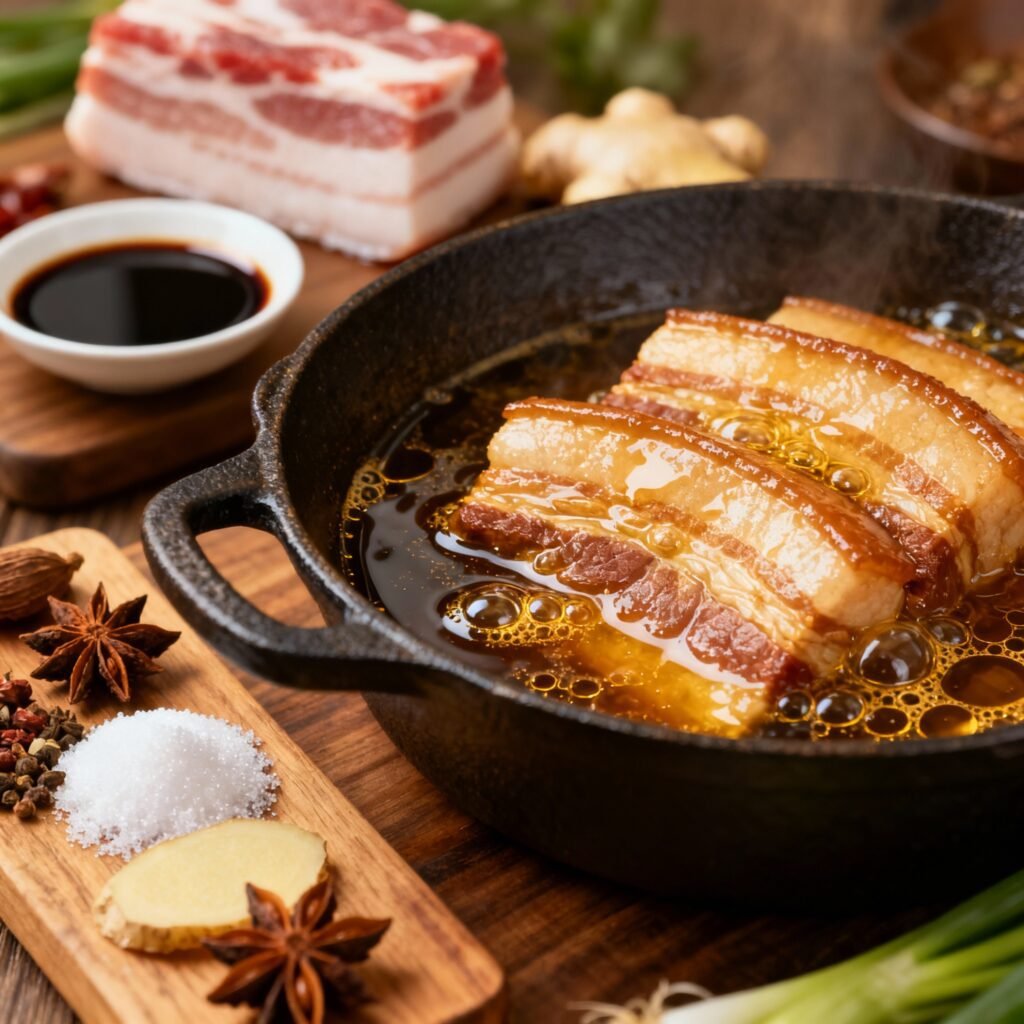
- Blanch the Pork Belly: Place the pork belly cubes in a large pot and cover with cold water. Bring to a boil over high heat. Once boiling, cook for 5-7 minutes, skimming off any scum that rises to the surface. Drain the pork belly and rinse thoroughly under cold water. This removes impurities and tightens the pork.
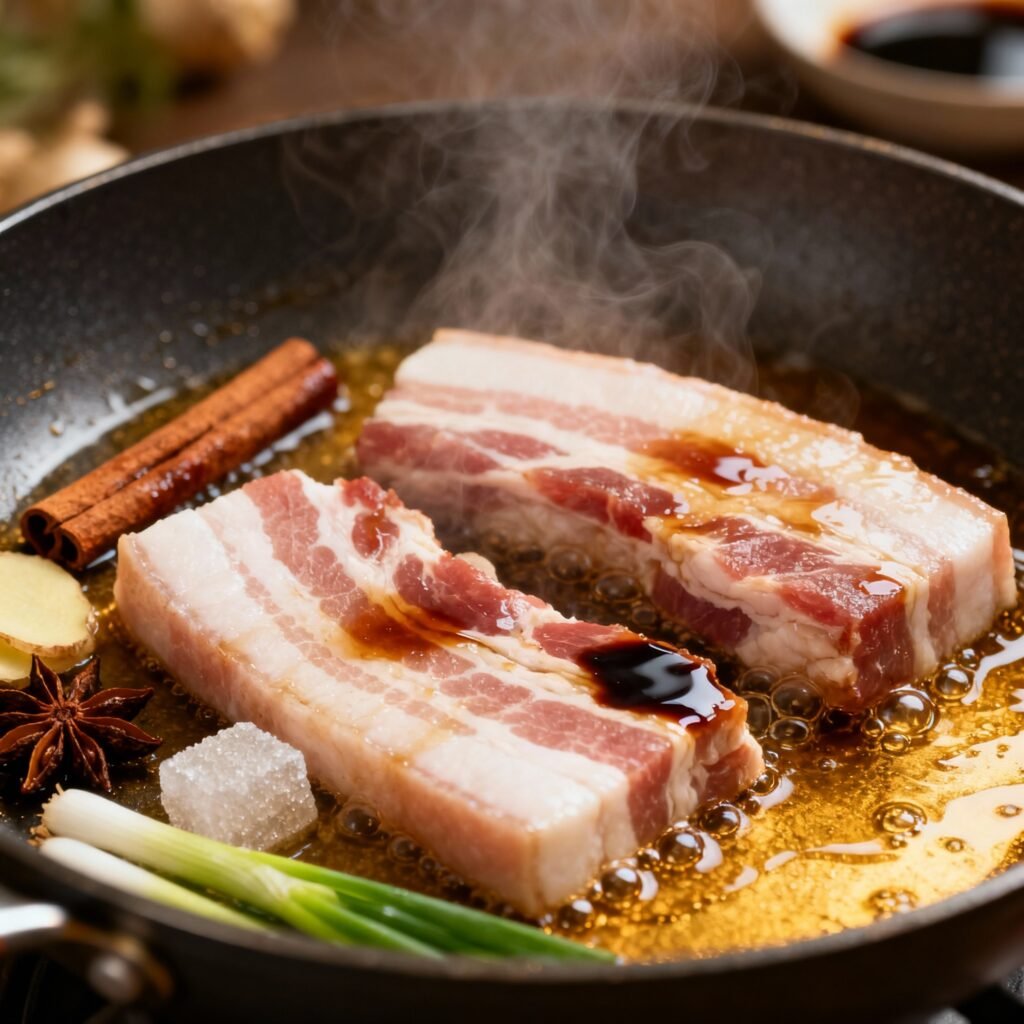
- Sear the Pork Belly: Heat the cooking oil in a large pot or Dutch oven over medium-high heat. Add the pork belly and sear on all sides until golden brown. This creates a flavorful crust. Be careful not to overcrowd the pot; sear in batches if necessary.
- Add Aromatics and Sauces: Remove the pork belly from the pot and set aside. Add the ginger, garlic, and scallions to the pot and sauté for 1-2 minutes until fragrant. Pour in the Shaoxing wine and scrape up any browned bits from the bottom of the pot.
- Return Pork and Braise: Return the pork belly to the pot. Add the soy sauce, dark soy sauce, rock sugar, star anise, and cinnamon stick. Pour in enough water to completely cover the pork belly.
- Bring to a Boil, Then Simmer: Bring the mixture to a boil, then reduce the heat to low, cover, and simmer for at least 2 hours, or up to 3 hours. The longer it simmers, the more tender the pork will become. Check the liquid level occasionally and add more water if needed to keep the pork submerged.
- Add Eggs (Optional): If using hard-boiled eggs, add them during the last hour of braising.
- Reduce the Sauce: Remove the lid and increase the heat to medium. Continue to simmer, allowing the sauce to reduce and thicken. This will take about 15-20 minutes. Stir occasionally to prevent sticking. The sauce should be thick and glossy, coating the pork belly.
- Serve: Remove the star anise, cinnamon stick, ginger, garlic, and scallions before serving. Serve the pork belly hot, spooning the sauce over the top. It’s delicious served with steamed rice and your favorite Asian vegetables.
Tips for Success
- Choose the Right Pork Belly: Look for pork belly with a good ratio of meat to fat. The skin should be smooth and firm.
- Don’t Skip the Blanching: This step is crucial for removing impurities and achieving a cleaner flavor.
- Be Patient with the Braising: The longer you braise the pork belly, the more tender it will become.
- Taste and Adjust: During the braising process, taste the sauce and adjust the seasoning as needed. You may want to add a pinch more sugar or soy sauce to achieve the perfect balance of flavors.
- Don’t Overcrowd the Pot: When searing the pork belly, sear in batches if necessary to ensure that each piece browns evenly.
- Skim the Scum: When blanching and braising, skim off any scum that rises to the surface. This will help to keep the sauce clear and flavorful.
Storage Instructions
Leftover Chinese braised pork belly can be stored in an airtight container in the refrigerator for up to 3-4 days. Reheat gently on the stovetop or in the microwave. The sauce will thicken as it cools, so you may need to add a little water or broth when reheating.
For longer storage, you can freeze the pork belly in an airtight container for up to 2-3 months. Thaw in the refrigerator overnight before reheating.
FAQ
Q: Can I use a different type of sugar?
A: While rock sugar is traditionally used, you can substitute it with granulated sugar or brown sugar. However, rock sugar provides a smoother, less intense sweetness.
Q: Can I use a different type of alcohol?
A: Shaoxing wine is the preferred alcohol for this dish, but you can substitute it with dry sherry or even a dry white wine in a pinch.
Q: Can I make this in a slow cooker?
A: Yes, you can adapt this recipe for a slow cooker. After searing the pork belly and sautéing the aromatics, transfer everything to a slow cooker. Cook on low for 6-8 hours, or on high for 3-4 hours. Reduce the sauce on the stovetop after the slow cooking process.
Q: What should I serve with Chinese braised pork belly?
A: Steamed rice is the classic accompaniment. You can also serve it with stir-fried vegetables, such as bok choy, gai lan (Chinese broccoli), or spinach.
Q: Can I use pork shoulder instead of pork belly?
A: While pork belly is the traditional cut, you can use pork shoulder as a substitute. However, the texture will be different. Pork shoulder is leaner and will not be as melt-in-your-mouth tender as pork belly.
Conclusion
This Chinese braised pork belly recipe is a labor of love, but the results are well worth the effort. The tender, flavorful pork, bathed in a rich, glossy sauce, is a culinary masterpiece that will impress your family and friends. So, gather your ingredients, put on some music, and embark on this delicious culinary journey. You’ll be rewarded with a dish that is both comforting and unforgettable. Enjoy!