Cuban Ropa Vieja Recipe: The Ultimate Comfort Food
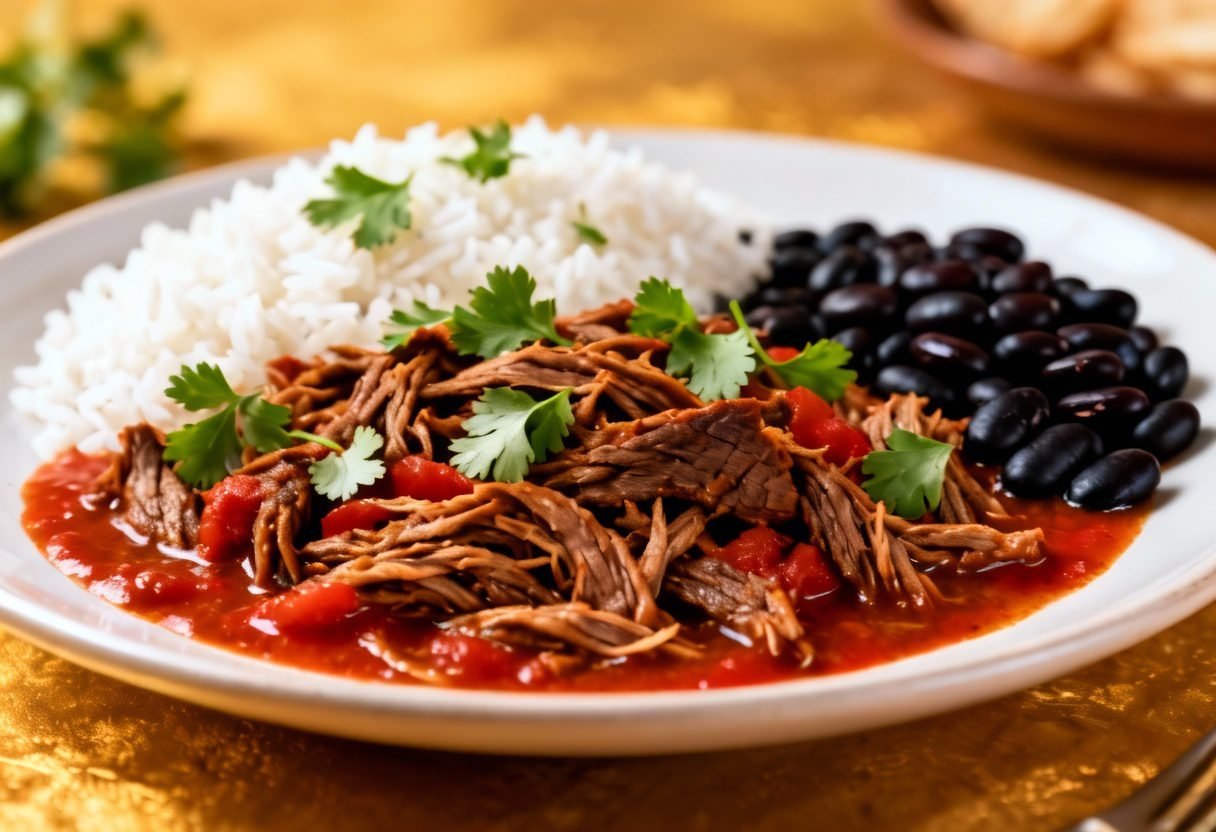
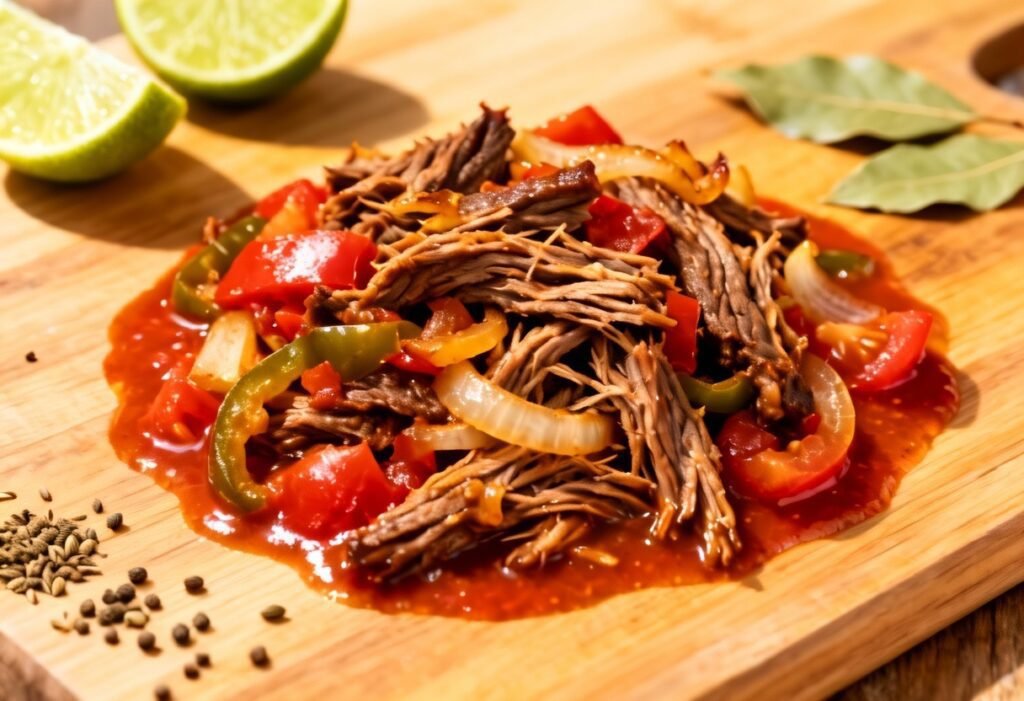
Ropa Vieja, meaning “old clothes” in Spanish, is a quintessential Cuban dish that’s as comforting as it is flavorful. This slow-cooked shredded beef is simmered in a rich tomato-based sauce with peppers, onions, and olives, creating a dish that’s both hearty and deeply satisfying. While it might seem intimidating, our recipe breaks down the process into manageable steps, ensuring you can recreate this iconic Cuban classic in your own kitchen. Get ready to experience a taste of Cuba with every bite!
Why This Recipe Works
This recipe focuses on building layers of flavor. Here’s why it delivers authentic Ropa Vieja:
- Tender Beef: We use flank steak, which, when slow-cooked, becomes incredibly tender and easy to shred. The slow cooking process allows the connective tissue to break down, resulting in a melt-in-your-mouth texture.
- Rich Sofrito: The foundation of the flavor comes from a carefully crafted sofrito – a base of onions, peppers, and garlic cooked slowly in olive oil. This aromatic base infuses the entire dish with depth and complexity.
- Authentic Spices: Cumin, oregano, and bay leaves are essential for that authentic Cuban flavor profile. Don’t skip them!
- Wine & Olives: Dry red wine adds acidity and richness, while the olives contribute a salty, briny counterpoint to the sweetness of the tomatoes and peppers.
- Tomato Paste Boost: Adding tomato paste helps to deepen the tomato flavor and thicken the sauce to the perfect consistency.
Ingredients
- Beef: 2 pounds flank steak
- Olive Oil: 2 tablespoons
- Onion: 1 large, chopped
- Bell Peppers: 2 (1 red, 1 green), seeded and chopped
- Garlic: 4 cloves, minced
- Tomato Paste: 2 tablespoons
- Crushed Tomatoes: 28 ounces
- Dry Red Wine: 1/2 cup (such as Merlot or Cabernet Sauvignon)
- Beef Broth: 1 cup
- Cumin: 1 teaspoon
- Dried Oregano: 1 teaspoon
- Bay Leaves: 2
- Pitted Green Olives: 1/2 cup, sliced
- Capers: 2 tablespoons (optional)
- Salt and Pepper: To taste
- Fresh Cilantro: Chopped, for garnish (optional)
- Cooked White Rice: For serving
Instructions
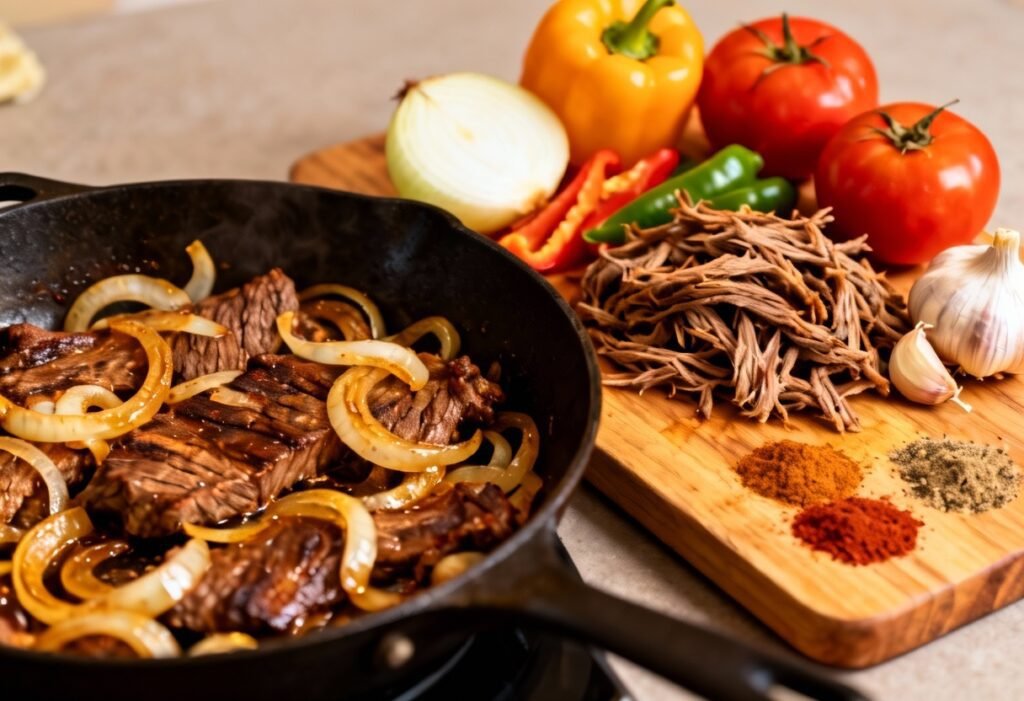
- Sear the Beef: Heat olive oil in a large Dutch oven or heavy-bottomed pot over medium-high heat. Season the flank steak generously with salt and pepper. Sear the beef on all sides until browned, about 3-4 minutes per side. This step is crucial for developing flavor. Remove the beef from the pot and set aside.
- Sauté the Sofrito: Add the chopped onion and bell peppers to the pot and cook over medium heat until softened, about 5-7 minutes. Add the minced garlic and cook for another minute until fragrant. Be careful not to burn the garlic.
- Build the Sauce: Stir in the tomato paste and cook for 1 minute, stirring constantly. Add the crushed tomatoes, red wine, beef broth, cumin, oregano, and bay leaves. Bring the mixture to a simmer, scraping up any browned bits from the bottom of the pot.
- Slow Cook the Beef: Return the seared flank steak to the pot, making sure it’s mostly submerged in the sauce. Cover the pot and reduce the heat to low. Simmer for 3-4 hours, or until the beef is incredibly tender and easily shreds with a fork. Alternatively, you can transfer the mixture to a slow cooker and cook on low for 6-8 hours.
- Shred the Beef: Remove the beef from the pot and let it cool slightly. Using two forks, shred the beef into thin strands. Discard the bay leaves.
- Combine and Simmer: Return the shredded beef to the pot with the sauce. Add the sliced olives and capers (if using). Stir to combine and simmer for another 15-20 minutes, allowing the flavors to meld together. Taste and adjust seasoning with salt and pepper as needed.
- Serve: Serve the Ropa Vieja hot over cooked white rice. Garnish with fresh cilantro, if desired. A side of sweet plantains is also a classic accompaniment.
Tips for Success
- Don’t Rush the Searing: A good sear on the beef is essential for developing deep, rich flavor. Make sure the pan is hot enough before adding the beef and don’t overcrowd the pan.
- Low and Slow is Key: Slow cooking is crucial for tenderizing the flank steak. Be patient and allow the beef to cook until it’s easily shredded.
- Adjust the Sauce: If the sauce becomes too thick, add a little more beef broth or water. If it’s too thin, simmer uncovered for a longer period to allow some of the liquid to evaporate.
- Taste and Season: Taste the Ropa Vieja throughout the cooking process and adjust the seasoning as needed. Don’t be afraid to add more salt, pepper, cumin, or oregano to suit your taste.
- Make it Ahead: Ropa Vieja is even better the next day! The flavors have more time to meld together.
Storage Instructions
Store leftover Ropa Vieja in an airtight container in the refrigerator for up to 3-4 days. You can also freeze it for up to 2-3 months. Thaw overnight in the refrigerator before reheating. Reheat gently on the stovetop over medium heat, adding a little water or beef broth if needed to prevent it from drying out.
FAQ
Q: Can I use a different cut of beef?
A: While flank steak is traditional, you can also use brisket or chuck roast. These cuts will also require slow cooking to become tender.
Q: Can I make this in an Instant Pot?
A: Yes! Sear the beef using the sauté function, then follow the recipe instructions up to step 4. Add all ingredients to the Instant Pot, seal the lid, and cook on high pressure for 45 minutes, followed by a natural pressure release for 15 minutes. Shred the beef and continue with step 6.
Q: Can I add other vegetables?
A: Absolutely! Some variations include carrots, potatoes, or celery. Add them along with the onions and peppers in step 2.
Q: What can I serve with Ropa Vieja besides rice?
A: Ropa Vieja is also delicious with mashed potatoes, quinoa, or crusty bread for soaking up the flavorful sauce.
Q: Can I make this vegetarian?
A: While not traditional, you can adapt this recipe using jackfruit or seitan as a meat substitute. Adjust the cooking time accordingly.
Conclusion
Ropa Vieja is more than just a dish; it’s a taste of Cuban heritage and a symbol of family gatherings. With its rich flavors and comforting texture, it’s a dish that’s sure to impress. We hope you enjoy making this recipe and sharing it with your loved ones. ¡Buen provecho!