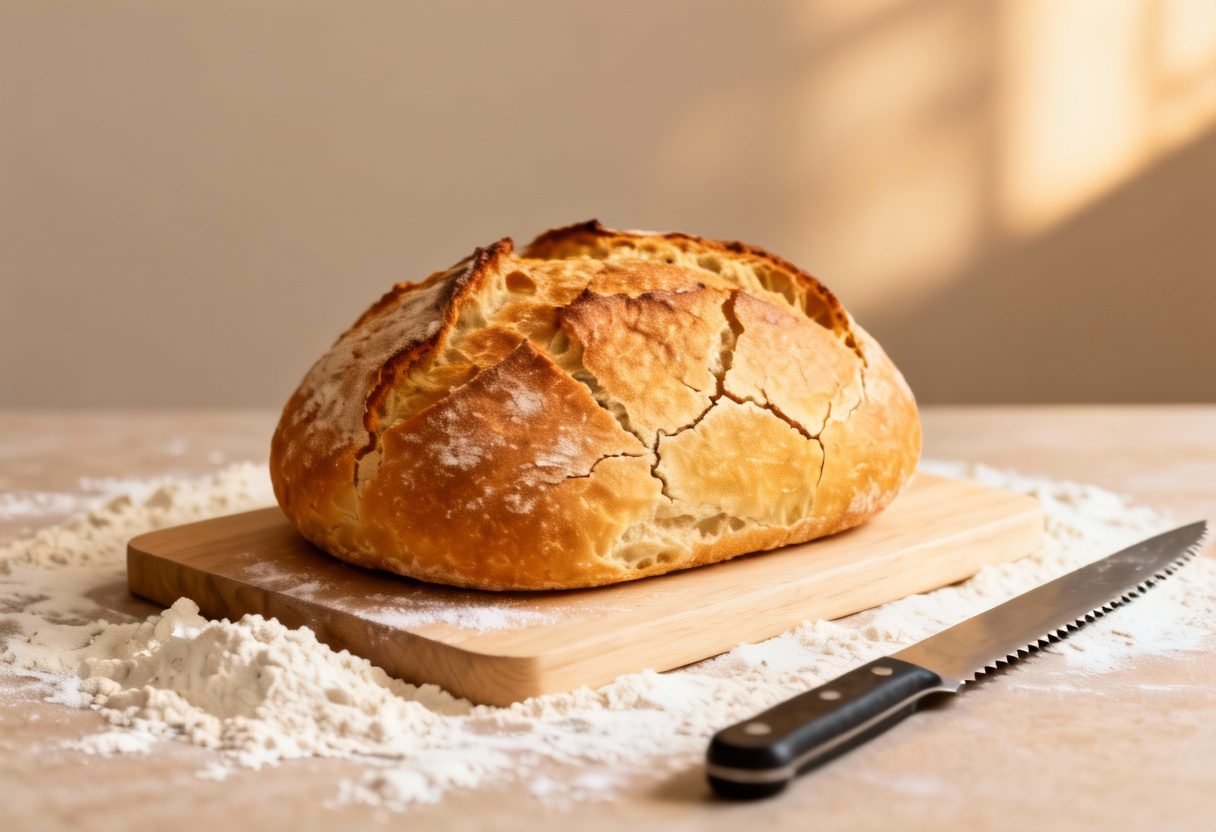
Easy Sourdough Loaf Bread Recipe: Your No-Fail Guide to Artisan Baking
Sourdough baking can feel intimidating. All the talk of starters, hydration percentages, and scoring techniques can leave even seasoned bakers feeling overwhelmed. But what if I told you that you could bake a beautiful, crusty, and delicious sourdough loaf at home without needing a PhD in microbiology? This recipe is designed to simplify the process, making sourdough bread accessible to everyone, from complete beginners to experienced bakers looking for a reliable everyday loaf.
Forget fussy techniques and complicated measurements. This recipe focuses on clear, concise instructions and readily available ingredients, guiding you step-by-step to a perfect sourdough loaf. Get ready to fill your kitchen with the irresistible aroma of freshly baked bread and impress your family and friends with your newfound sourdough skills!
Why This Recipe Works
This recipe prioritizes simplicity and reliability. Here’s why it’s so effective:
- Simplified Starter Management: We use a method that doesn’t require precise feeding schedules. As long as your starter is active and bubbly, you’re good to go.
- Lower Hydration: A slightly lower hydration level (around 70%) makes the dough easier to handle, especially for beginners. This reduces the risk of a flat, pancake-like loaf.
- Autolyse Step: This crucial step allows the flour to fully hydrate, developing gluten strength and improving the final texture of the bread.
- Minimal Kneading: We rely on stretch and folds to develop gluten, minimizing the need for extensive kneading, which can be tiring and inconsistent.
- Oven Spring Enhancement: Using a Dutch oven or covered baking dish creates a steamy environment in the oven, promoting maximum oven spring and a beautiful crust.
Ingredients
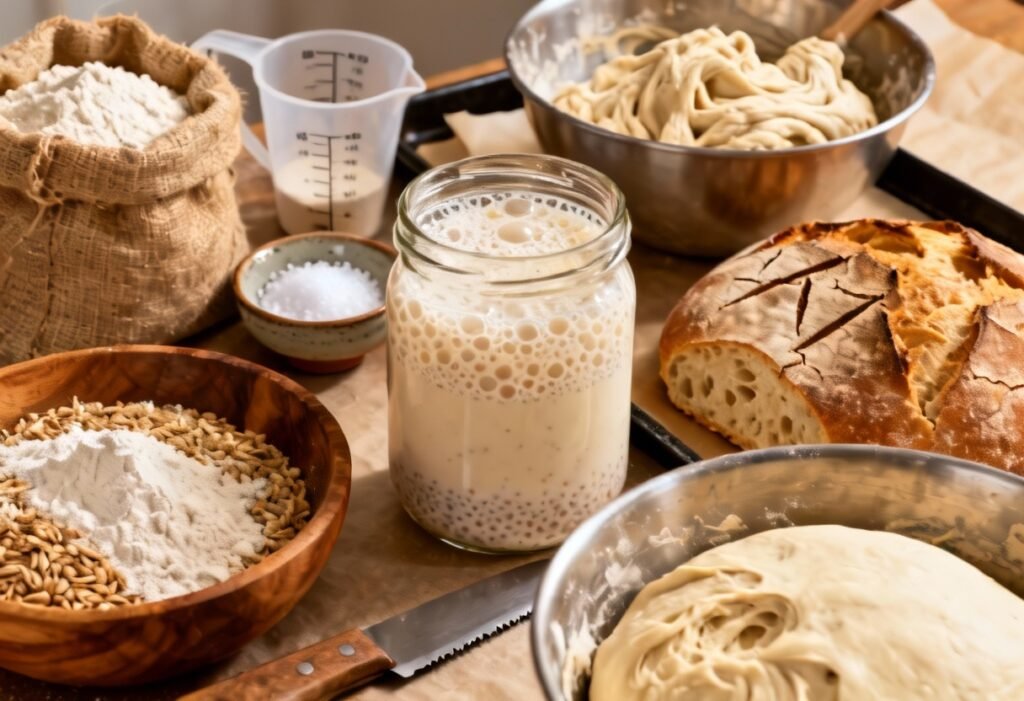
- Sourdough Starter (Active & Bubbly): 100g (Approximately 1/2 cup). Make sure your starter has doubled in size after feeding.
- Bread Flour: 450g (Approximately 3 3/4 cups). Bread flour has a higher protein content, which is essential for developing strong gluten.
- Water (Lukewarm): 315g (Approximately 1 1/3 cups). Lukewarm water helps activate the yeast in the starter.
- Salt: 10g (Approximately 2 teaspoons). Salt controls the yeast activity and adds flavor.
Instructions
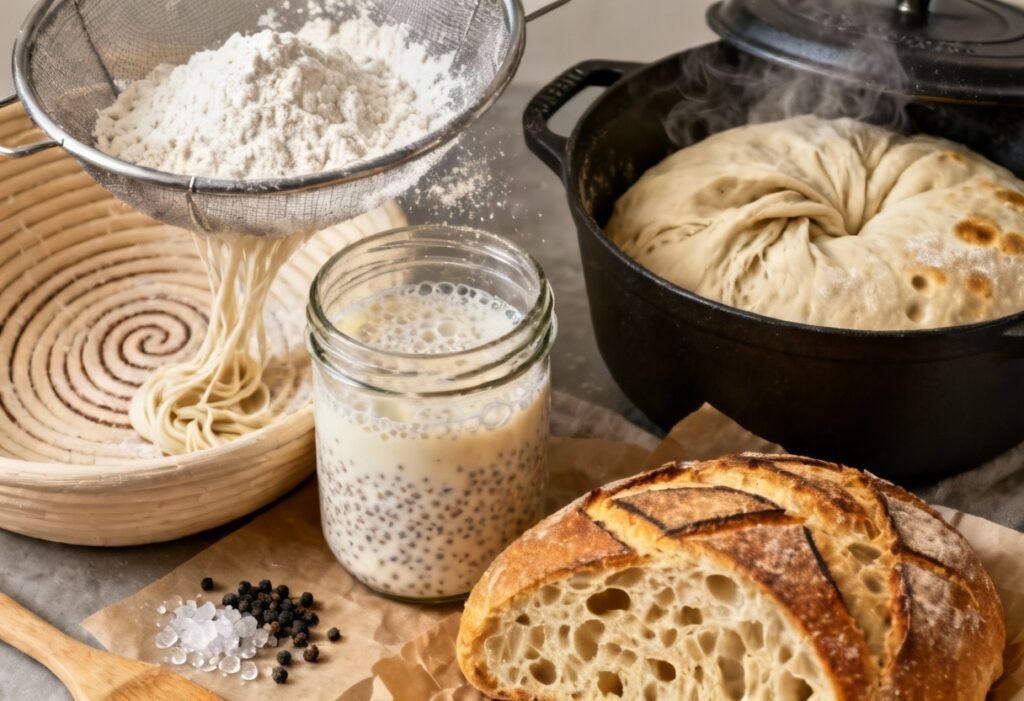
- Autolyse: In a large bowl, combine the bread flour and water. Mix until just combined, ensuring there are no dry pockets of flour. Cover the bowl and let it rest for 30-60 minutes. This step is crucial for gluten development.
- Incorporate Starter: Add the active sourdough starter to the autolysed dough. Mix thoroughly until the starter is evenly distributed. You can use your hands or a dough scraper for this.
- Add Salt: Sprinkle the salt over the dough and mix it in thoroughly. The dough will initially feel shaggy and a bit sticky.
- Bulk Fermentation (First Rise): Cover the bowl and let the dough rest for 30 minutes. Then, perform a set of stretch and folds. To do this, gently grab one side of the dough, stretch it upwards, and fold it over the center. Rotate the bowl and repeat this process 3-4 times. Cover the bowl and repeat the stretch and folds every 30 minutes for a total of 2-3 hours. The dough should increase in volume and become more elastic. Look for small bubbles on the surface.
- Shape the Dough: Lightly flour your work surface. Gently turn the dough out onto the floured surface. Shape the dough into a round or oval loaf. Be careful not to deflate the dough too much.
- Proofing (Second Rise): Place the shaped dough in a well-floured banneton basket (or a bowl lined with a floured kitchen towel). Cover the basket and let the dough proof in the refrigerator for 12-24 hours. This slow, cold proof develops flavor and improves the texture of the bread.
- Preheat Oven: Preheat your oven to 450°F (232°C) with a Dutch oven (or covered baking dish) inside. It’s crucial that the Dutch oven is very hot before you bake the bread. Allow at least 30 minutes for the oven and Dutch oven to preheat.
- Score the Dough: Carefully remove the hot Dutch oven from the oven. Gently invert the proofed dough into the Dutch oven. Use a sharp knife or lame to score the top of the loaf. Scoring allows the dough to expand properly during baking and creates a beautiful crust. A simple slash down the center is a good starting point.
- Bake: Cover the Dutch oven and bake for 20 minutes. Then, remove the lid and bake for another 25-30 minutes, or until the crust is a deep golden brown and the internal temperature reaches 205-210°F (96-99°C).
- Cool: Carefully remove the bread from the Dutch oven and let it cool completely on a wire rack before slicing. This is crucial! Slicing the bread while it’s still warm will result in a gummy texture.
Tips for Success
- Use a Kitchen Scale: For consistent results, use a kitchen scale to measure your ingredients. Baking is a science, and precise measurements are key.
- Active Starter is Key: A weak or inactive starter will result in a flat, dense loaf. Make sure your starter is doubling in size within 4-8 hours after feeding before using it in this recipe.
- Don’t Over-Proof: Over-proofed dough will collapse during baking. If the dough feels very soft and jiggly, it’s likely over-proofed.
- Experiment with Scoring: Scoring is not just for aesthetics; it also controls how the bread expands in the oven. Experiment with different scoring patterns to see what works best for you.
- Be Patient: Sourdough baking takes time and patience. Don’t be discouraged if your first loaf isn’t perfect. Keep practicing, and you’ll get better with each bake.
Storage Instructions
Store your sourdough loaf in a bread bag or airtight container at room temperature. It will stay fresh for 2-3 days. For longer storage, you can slice the bread and freeze it. To thaw, simply remove the slices from the freezer and let them come to room temperature.
FAQ
Q: My starter isn’t doubling. What should I do?
A: Your starter may need more time or warmer temperatures. Try feeding it more frequently (every 12 hours) and keeping it in a warm place (around 75-80°F/24-27°C). It may also need a few days to “wake up” after being stored in the refrigerator.
Q: My dough is too sticky to handle. What should I do?
A: Slightly lower hydration doughs are easier to handle, but sometimes stickiness is unavoidable. Lightly flour your hands and work surface when handling the dough. You can also use a dough scraper to help you shape the loaf.
Q: My loaf is flat and dense. What went wrong?
A: Several factors can contribute to a flat loaf, including a weak starter, over-proofing, under-proofing, or not enough gluten development. Make sure your starter is active, proof the dough for the correct amount of time, and perform the stretch and folds properly.
Q: Can I use a different type of flour?
A: Bread flour is recommended for this recipe, but you can experiment with other types of flour, such as whole wheat or rye. Keep in mind that using different flours may affect the texture and flavor of the bread.
Conclusion
Congratulations! You’ve taken the first step towards mastering the art of sourdough baking. This easy sourdough loaf bread recipe provides a solid foundation for your sourdough journey. Don’t be afraid to experiment with different flours, scoring patterns, and baking times to create your own unique sourdough masterpiece. Happy baking!