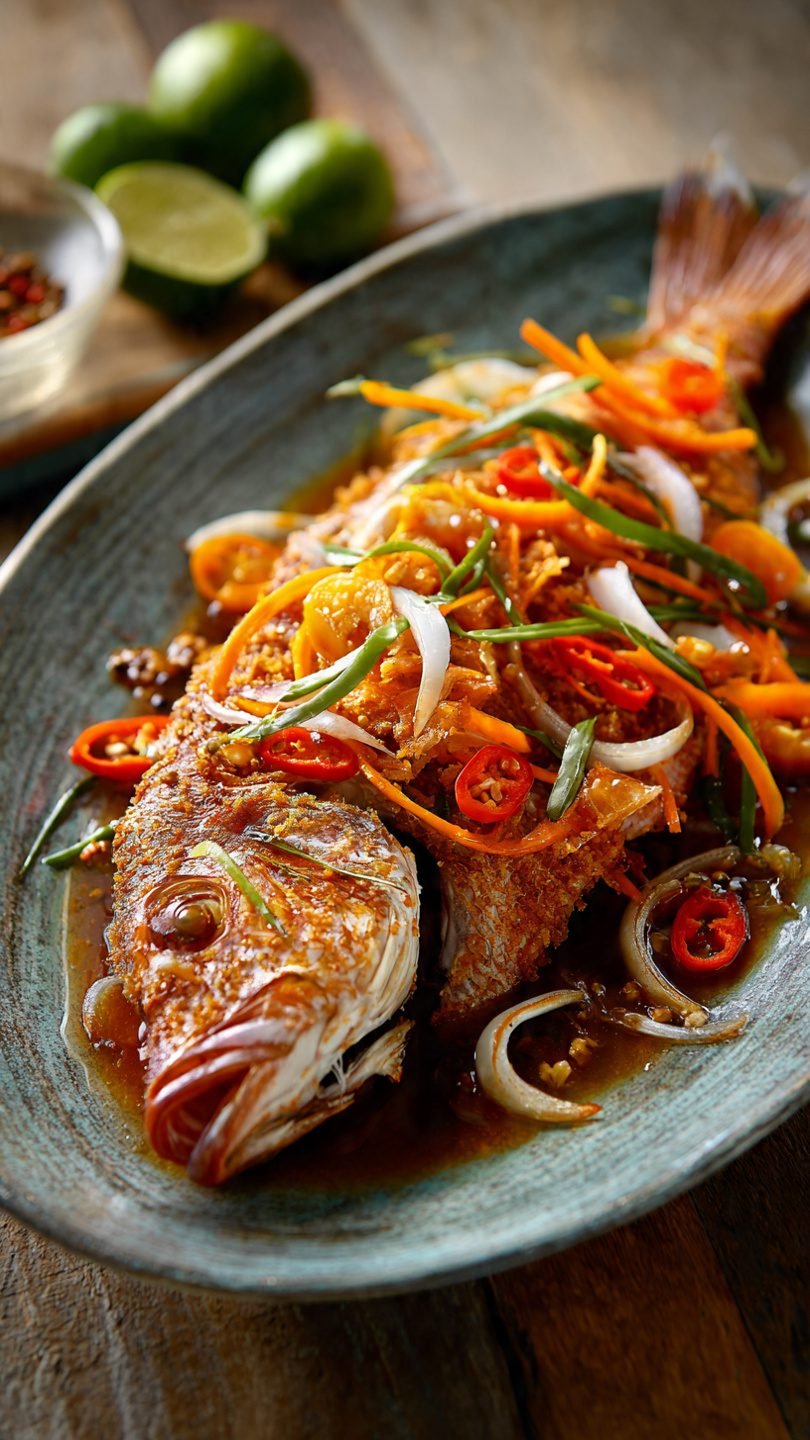
🇯🇲 Authentic Escovitch Fish Jamaica Recipe
So you’re sitting there, staring at a frozen fillet of fish, wondering how to make it taste like something other than, well… sad, wet cardboard. Or maybe you’re craving that specific burn-so-good spice you had on a vacation in Montego Bay and you’re too lazy to book a flight back. Same here.
Welcome to the holy grail of Caribbean seafood: Escovitch Fish.
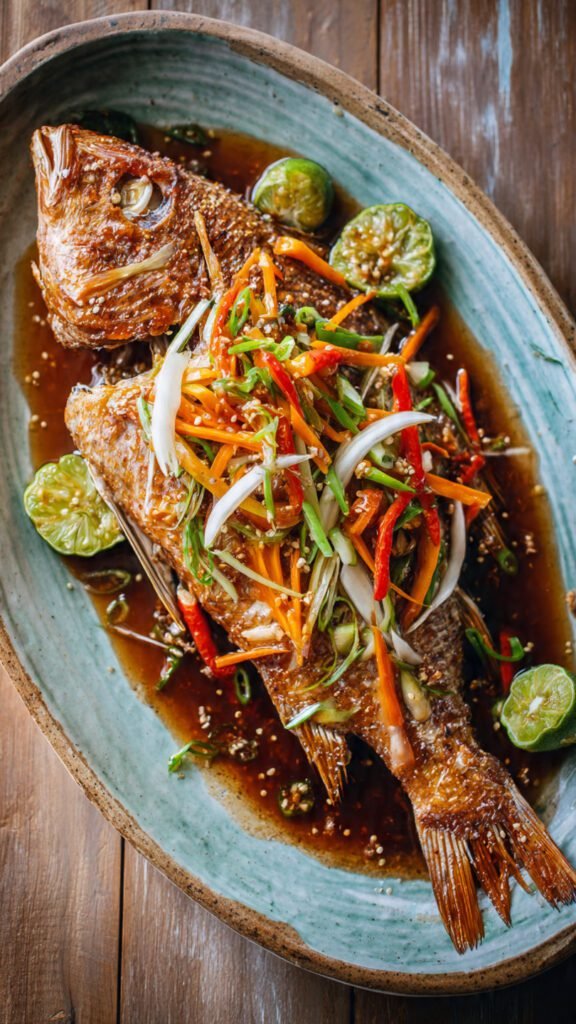
If you’ve never had it, imagine a perfectly fried, crispy whole fish that has been drowned—lovingly—in a spicy, vinegary, peppery pickle sauce that seeps into every crack and crevice. It is not subtle. It is not “mild.” It is a flavor bomb that wakes up your palate and possibly clears your sinuses. This Escovitch Fish Jamaica recipe is the real deal, and we’re going to make it together. Put on some reggae, pour a drink, and let’s get cooking.
Why This Recipe is Awesome
Okay, let’s get one thing straight: this isn’t just “fried fish.” This is a preservation technique turned into a culinary masterpiece.
It’s Texture Heaven The magic here lies in the contrast. You have the fish, which we are going to fry until it is unapologetically crispy. I’m talking tap-it-with-a-fork crunchy. Then, you have the “Escovitch sauce”—a medley of onions, carrots, and peppers that have been flash-pickled. They stay crunchy, but the vinegar softens the blow of the heat. When that wet, tangy sauce hits the dry, crispy fish? Fireworks.
The Flavor Profile is Complex (But the Cooking Isn’t) Escovitch is the Jamaican cousin of the Spanish Escabeche. It’s acidic, spicy, salty, and slightly earthy thanks to the all-important Pimento seeds (Allspice). It hits every single taste bud. The vinegar cuts through the oiliness of the fried fish, making it feel surprisingly light even though we deep-fried it.
It Actually Tastes Better Later Here’s a fun science fact for you food nerds: acid breaks down proteins and marries flavors over time. Most fried foods die a sad, soggy death after 20 minutes. Escovitch? It’s a vampire. It thrives in the dark of your fridge. If you make this Escovitch Fish Jamaica recipe and let it sit overnight, the vinegar penetrates the meat to the bone. It’s the best leftover breakfast you will ever have. Yes, we eat fish for breakfast in Jamaica. Don’t knock it ’til you try it.
It’s Customizable Heat You control the Scotch Bonnet. Want to cry tears of joy? Leave the seeds in. Want just the flavor without calling the fire department? Remove the seeds. It’s entirely up to your tolerance level (and bravery).
Ingredients You’ll Need
Don’t be intimidated. The list looks long, but half of it is just veggies you probably have rotting in your crisper drawer right now.
The Star:
- Red Snapper: Ideally whole. IMO, bone-in fish has way more flavor and stays juicier. If you are terrified of fish heads staring at you, you can use fillets, but you’re missing out on the authentic vibe.
- Lime & Vinegar: For washing the fish. We don’t do “fishy” fish here.
The Seasoning Rub:
- Salt & Black Pepper: The basics.
- Garlic Powder & Onion Powder: Flavor boosters.
- All-Purpose Seasoning: Your favorite brand (Maggi or similar works wonders).
The Escovitch Pickle (The Sauce):
- Scotch Bonnet Peppers: The King of Caribbean heat. Do not substitute with a bell pepper and expect the same result.
- Onion: Yellow or white, sliced into rings.
- Carrot: Julienne them (cut into matchsticks). It adds sweetness and crunch.
- Pimento Seeds (Allspice Berries): These are non-negotiable. They provide that signature woody, clove-like Jamaican aroma.
- Vinegar: White cane vinegar or malt vinegar. Malt gives a darker, richer sauce; white is sharper.
- Sugar: Just a pinch to balance the aggressive acid.
- Oil: Vegetable or Canola for frying. You need something with a high smoke point because we are getting hot.
Step-by-Step Instructions
Alright, apron on. Let’s do this.
Phase 1: The Prep (Don’t Skip This)
1. Clean that fish. Wash your snapper with water and juice from a fresh lime (or vinegar). This removes the slime and “raw” smell. Pat it dry. Seriously, pat it dry. If the fish is wet when it hits the hot oil, your kitchen will turn into a grease-splattering war zone.
2. Score the flesh. Take a sharp knife and cut 3 diagonal slashes across the thickest part of the fish on both sides. This helps it cook evenly and lets the seasoning get deep inside.
3. Season generously. Mix your salt, pepper, garlic powder, and all-purpose seasoning in a small bowl. Rub this mix everywhere. Inside the belly, inside the cuts, on the head. Treat the fish like it’s at a spa.
4. The Dusting (Optional but recommended). Some people fry it naked. I prefer to lightly dust the fish in flour. It creates a barrier that guarantees extra crispiness and prevents the fish from sticking to the pan. Shake off the excess—we want a thin coating, not a winter coat.
Phase 2: The Fry
5. Heat the oil. Pour about an inch of oil into a large frying pan. Heat it up until it shimmers. If you drop a piece of onion in and it sizzles aggressively, you’re ready.
6. Fry the beast. Gently lay the fish into the oil away from you (unless you like oil burns). Do not crowd the pan. If you put too many fish in, the oil temp drops, and you get greasy, soggy sadness.
7. The Golden Rule: Patience. Do not touch the fish. Do not poke it. Do not try to flip it after 2 minutes. Let it fry for about 5–7 minutes per side (depending on size). It will release from the pan naturally when it’s crispy. Flip it once. You want a deep, golden-brown color. It should sound hollow when you tap it with a fork.
8. Drain. Remove the fish and place it on a wire rack or paper towels to drain the excess oil.
Phase 3: The Escovitch Sauce
9. Sauté the aromatics. Pour out most of the oil from the pan, leaving about 2–3 tablespoons of that flavorful fish oil. Toss in your carrots, onions, pimento seeds, and Scotch Bonnet peppers. Sauté for just 2 minutes. We want them to sweat, not turn into mush. They should still have a “snap.”
10. The Sizzle. Pour in the vinegar (about 1 cup) and add the pinch of sugar. Let it come to a violent boil for 1 minute. The smell will hit you immediately—it’s pungent, spicy, and amazing.
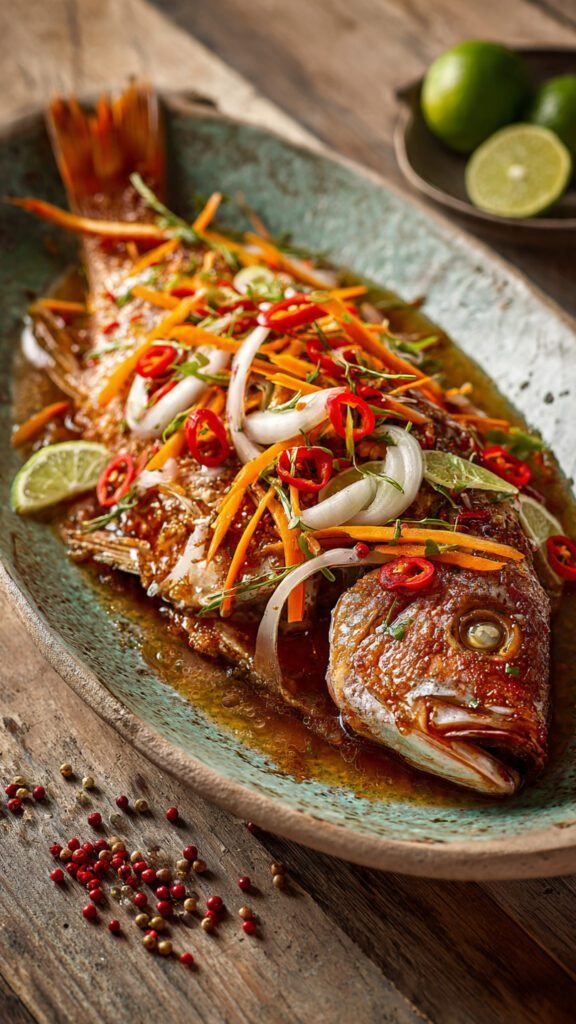
11. Marriage. Place your fried fish on a serving platter. Pour the hot, boiling sauce and veggies directly over the fish. Make sure you spoon the onions and peppers on top so it looks pretty.
Common Mistakes to Avoid
- The “Wet Fish” Explosion: I mentioned this, but I’m mentioning it again. Water and hot oil are enemies. If you don’t dry your fish properly, you will get burned, and your crust will be patchy.
- The “Soggy Veggie” Syndrome: Don’t overcook the carrots and onions in the sauce. This isn’t a soup. The vegetables should be al dente (crisp-tender). They need to provide a texture contrast to the tender fish meat.
- Touching Your Eyes: If you handle Scotch Bonnet peppers and then touch your eyes (or other sensitive areas… yikes), you will regret every life choice that led you to this moment. Wear gloves or wash your hands with soap immediately.
- Eating It Too Fast: Look, I know it smells good. But Escovitch is best after it sits for at least an hour. The vinegar needs time to soak into the crispy skin. If you can wait, wait.
Alternatives & Substitutions
- Can’t find Red Snapper? No stress. You can use Kingfish (wahoo), Parrotfish (very traditional), or really any firm white fish that can stand up to frying. Tilapia works if you’re on a budget, but it’s softer.
- Can’t find Scotch Bonnet? This is a tragedy, but I understand. Habaneros are the closest relative in terms of heat and flavor. In a pinch, use fresh jalapeños for less heat, but you’ll miss that fruity Caribbean flavor profile.
- Vegetarian? Believe it or not, this method works incredibly well with thick slices of Eggplant or even fried Tofu. The sauce does all the heavy lifting.
- Air Fryer? Sigh. Look, technically you can. Rub the fish with oil and air fry at 400°F (200°C) for 15-20 mins. It won’t have that same deep-fried soul, but it’s healthier.
FAQ (Frequently Asked Questions)
1. Is Escovitch fish spicy? Does a bear live in the woods? Yes. But you control the heat. If you use the pepper whole without cutting it, you get the flavor without the fire. If you slice it up, buckle up.
2. How long does this keep in the fridge? Because of the vinegar (which is a natural preservative), Escovitch fish can last 3 to 5 days in the fridge. In fact, FYI, it’s the traditional dish for Good Friday in Jamaica because people would cook it on Thursday to avoid cooking on the holy day.
3. What do I serve this with? To keep it authentic: Bammy (cassava flatbread), Festival (sweet fried dough), or Rice and Peas. Hard dough bread is also acceptable for mopping up that vinegar sauce.
4. Can I use frozen fish? Yes, just make sure it is completely thawed and dried. If it’s still frozen in the middle, the outside will burn before the inside cooks.
5. Why is my fish sticking to the pan? Your oil wasn’t hot enough, or you moved it too soon. The fish will tell you when it’s ready to let go. Trust the fish.
Final Thoughts
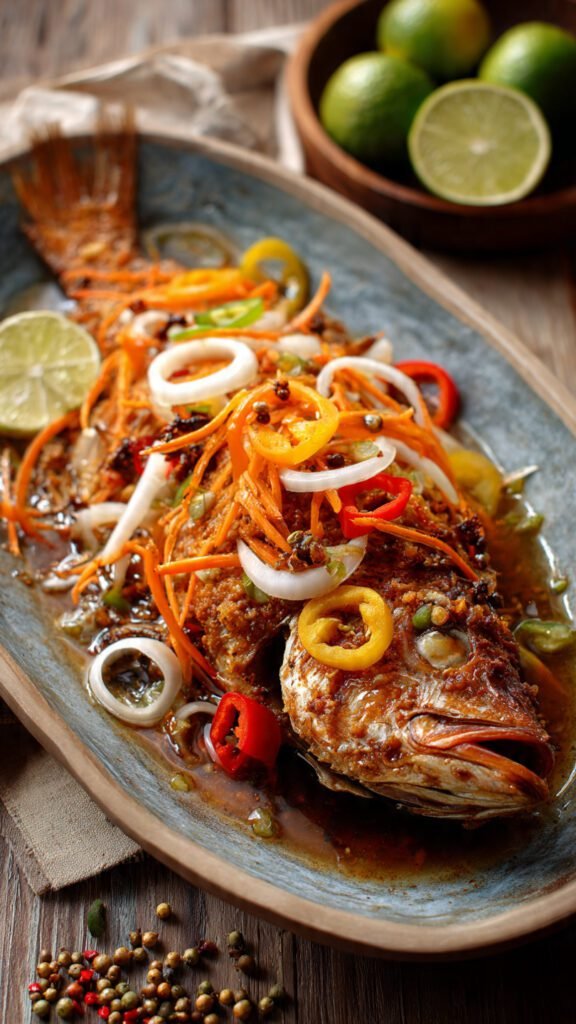
There you have it. You have successfully navigated the spicy, crispy waters of the Caribbean. This Escovitch Fish Jamaica recipe is one of those dishes that looks incredibly impressive on a dinner table—bright reds, oranges, and golden browns—but is secretly just a “fry and pour” situation.
So, invite some friends over (the ones who can handle spice), fry up some plantains on the side, and enjoy the taste of the island. Now go impress someone—or yourself—with your new culinary skills. You’ve earned it!