Flax Seed Bread Recipe: The Hearty, Healthy Loaf You’ll Crave
Are you looking for a bread recipe that’s both delicious and packed with nutrients? Tired of store-bought bread that lacks flavor and substance? Look no further! This flax seed bread recipe is your answer. It’s a hearty, wholesome loaf that’s perfect for sandwiches, toast, or simply enjoying on its own with a smear of butter. The nutty flavor of flax seeds adds a delightful depth, and the added fiber and omega-3s make it a guilt-free indulgence. Get ready to bake a bread that will nourish your body and delight your taste buds!
Why This Recipe Works
This recipe isn’t just about throwing ingredients together and hoping for the best. It’s carefully crafted to ensure a perfect loaf every time. Here’s why it works:
- Flax Seed Power: The flax seeds are key. We use both ground flaxseed (flax meal) and whole flax seeds. The flax meal acts as a binder and adds moisture, while the whole flax seeds provide texture and visual appeal. Using both maximizes the benefits and flavor.
- Hydration is Key: The right amount of liquid is crucial for a soft, chewy crumb. This recipe uses a precise ratio of liquid to flour to ensure the dough is properly hydrated.
- Yeast Activation: We take the guesswork out of yeast activation by providing clear instructions on how to proof the yeast. This ensures the yeast is active and ready to leaven the bread.
- Patience is Rewarded: Allowing the dough to rise properly is essential for a light and airy texture. We recommend two rises – one for bulk fermentation and another after shaping the loaf.
- Oven Temperature: The oven temperature is carefully calibrated to ensure the bread is cooked through without burning the crust.
Ingredients
- 3 cups (360g) all-purpose flour, plus more for dusting
- 1/2 cup (60g) whole wheat flour
- 1/4 cup (30g) ground flaxseed (flax meal)
- 1/4 cup (35g) whole flax seeds
- 2 1/4 teaspoons (7g) active dry yeast (1 packet)
- 1 tablespoon granulated sugar
- 1 1/2 teaspoons salt
- 1 1/2 cups (360ml) warm water (105-115°F / 40-46°C)
- 2 tablespoons olive oil, plus more for greasing
Instructions
- Proof the Yeast: In a large bowl, combine the warm water and sugar. Sprinkle the yeast over the top and let it sit for 5-10 minutes, or until foamy. This indicates the yeast is active. If the yeast doesn’t foam, it’s likely old and needs to be replaced.
- Combine Dry Ingredients: In a separate bowl, whisk together the all-purpose flour, whole wheat flour, flax meal, whole flax seeds, and salt.
- Mix the Dough: Add the olive oil to the yeast mixture. Gradually add the dry ingredients to the wet ingredients, mixing with a wooden spoon or dough hook until a shaggy dough forms.
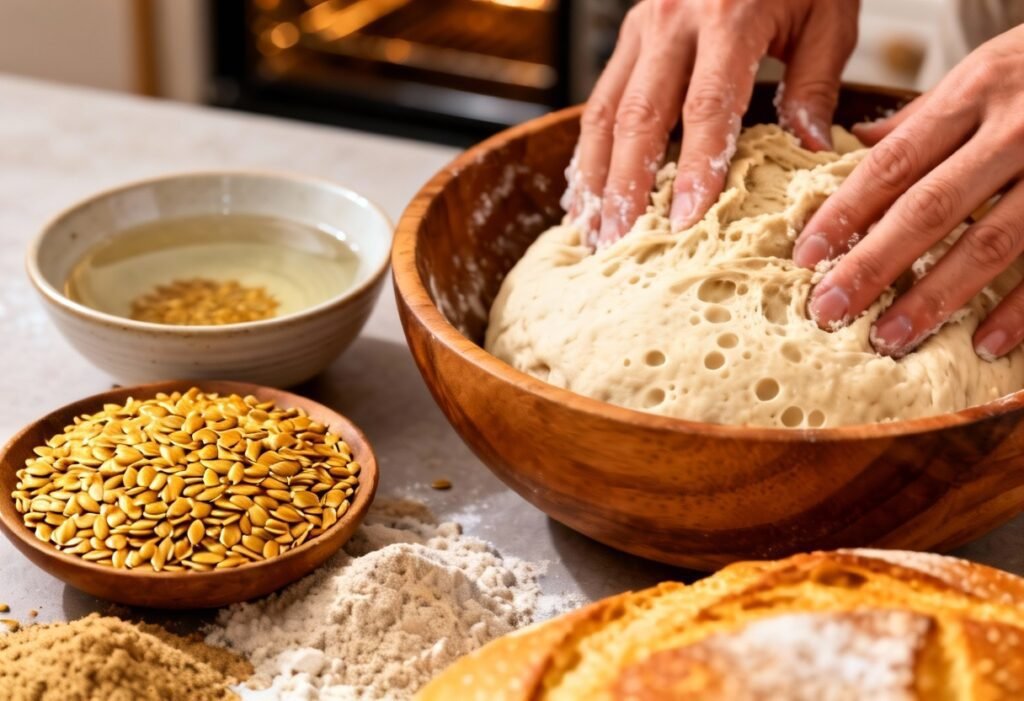
- Knead the Dough: Turn the dough out onto a lightly floured surface and knead for 8-10 minutes, or until smooth and elastic. Alternatively, knead the dough in a stand mixer with a dough hook for 5-7 minutes. The dough should be slightly tacky but not sticky. If it’s too sticky, add a tablespoon of flour at a time until it reaches the right consistency.
- First Rise (Bulk Fermentation): Place the dough in a lightly oiled bowl, turning to coat. Cover the bowl with plastic wrap or a clean kitchen towel and let it rise in a warm place for 1-1.5 hours, or until doubled in size.
- Shape the Loaf: Gently punch down the dough to release the air. Turn the dough out onto a lightly floured surface and shape it into a loaf. You can shape it into a classic rectangular loaf or a round boule.
- Second Rise (Proofing): Place the shaped loaf in a greased 9×5 inch loaf pan. Cover the loaf pan with plastic wrap or a clean kitchen towel and let it rise in a warm place for 30-45 minutes, or until almost doubled in size.
- Preheat the Oven: Preheat the oven to 375°F (190°C).
- Bake the Bread: Bake the bread for 30-35 minutes, or until golden brown and the internal temperature reaches 200-210°F (93-99°C). If the crust is browning too quickly, tent the loaf with aluminum foil.
- Cool the Bread: Remove the bread from the oven and let it cool in the loaf pan for 10 minutes before transferring it to a wire rack to cool completely.
- Slice and Enjoy: Once the bread is completely cool, slice and enjoy!
Tips for Success
- Use a Kitchen Scale: For the most accurate results, use a kitchen scale to measure the ingredients, especially the flour.
- Don’t Over-Knead: Over-kneading can result in a tough bread. Knead the dough until it’s smooth and elastic, but not overly firm.
- Warm Environment for Rising: A warm environment is essential for the dough to rise properly. You can place the dough in a slightly warmed oven (turned off) or near a warm stovetop.
- Check the Internal Temperature: Using a digital thermometer to check the internal temperature of the bread ensures it’s fully cooked.
- Let it Cool Completely: Resist the urge to slice the bread while it’s still warm. Allowing it to cool completely will prevent it from becoming gummy.
- Add-Ins: Feel free to add other seeds or nuts to the dough for extra flavor and texture. Sunflower seeds, pumpkin seeds, or walnuts would be great additions.
Storage Instructions
To store the flax seed bread, wrap it tightly in plastic wrap or place it in an airtight container at room temperature for up to 3 days. For longer storage, slice the bread and freeze it in a freezer-safe bag for up to 2 months. Thaw the bread at room temperature before enjoying.

FAQ
- Can I use a different type of flour? Yes, you can substitute some or all of the all-purpose flour with bread flour for a chewier texture. You can also experiment with other whole grain flours, such as spelt or rye, but you may need to adjust the amount of liquid accordingly.
- Can I make this recipe gluten-free? This recipe is not designed to be gluten-free. To make a gluten-free flax seed bread, you would need to use a gluten-free flour blend and a binding agent like xanthan gum.
- Can I use instant yeast instead of active dry yeast? Yes, you can use instant yeast. You can add it directly to the dry ingredients without proofing it first.
- Why is my bread dense? Dense bread can be caused by several factors, including using old yeast, not kneading the dough enough, or not allowing the dough to rise properly.
- Why is my bread dry? Dry bread can be caused by over-baking or using too much flour. Make sure to check the internal temperature of the bread and avoid over-baking it.
Conclusion
This flax seed bread recipe is a winner for anyone looking to add a healthy and delicious loaf to their baking repertoire. The combination of flax meal and whole flax seeds provides a wonderful nutty flavor and a boost of nutrients. With clear instructions and helpful tips, even novice bakers can achieve a perfect loaf. So, gather your ingredients, preheat your oven, and get ready to enjoy the satisfying aroma and taste of homemade flax seed bread! This recipe is more than just bread; it’s a step towards a healthier and more flavorful life. Happy baking!