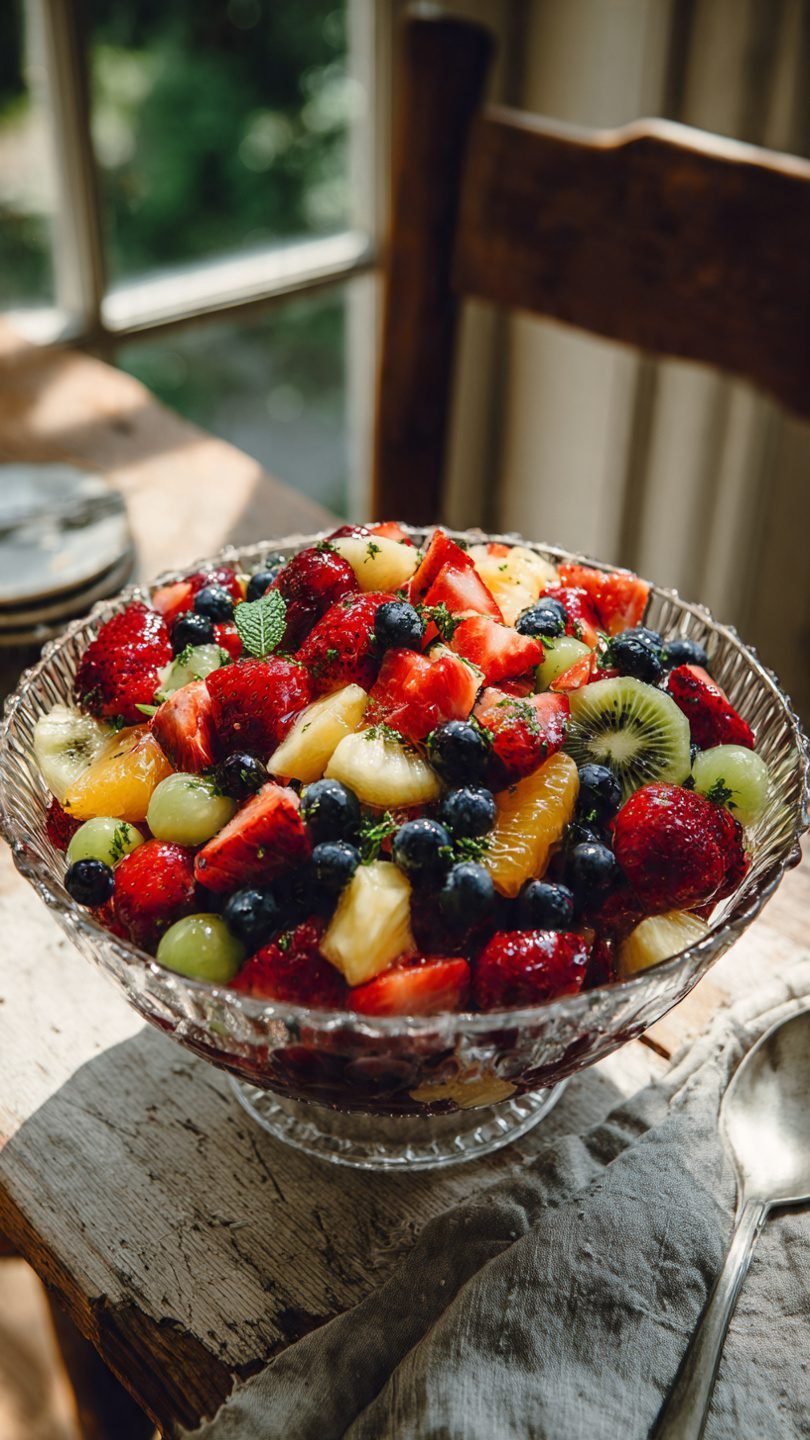
🍓 The Ultimate Fresh Fruit Salad Recipe (No Soggy Melons!)
So, you’re craving something sweet, vibrant, and actually good for you, but the thought of another sad, soggy cantaloupe medley from a grocery store plastic tub makes you want to cry? Same here. Let’s be real: most fruit salads are disappointments. They are the obligatory, neglected side dish at the barbecue that everyone scoops past on their way to the potato salad.
But today? Today we change the narrative. We are making a fresh fruit salad recipe that is actually the star of the show. Put down that can of peaches in heavy syrup. We’ve got work to do.
Why This Recipe is Awesome
Okay, you might be thinking, “It’s fruit salad. How revolutionary can it be?” Oh, honey. There is a massive chasm between throwing random chunks of banana into a bowl and creating a balanced, textural masterpiece.
This recipe isn’t just about chopping; it’s about strategy. It’s about understanding that not all fruits play nicely together in the sandbox. Here’s why this particular approach will ruin you for all other basic bowls of fruit forever:
The “Anti-Sog” Strategy The biggest crime against fruit salad is the dreaded mush factor. You know what I mean—when the watermelon leaks all over the strawberries, and suddenly everything tastes like lukewarm, pink water. This recipe focuses on selecting fruits with complementary textures that hold their own. We are looking for crunch, snap, and burst—not mush.
The Secret “Dressing” (That Isn’t Mayo) Yes, fruit salad needs a dressing. No, it’s not weird cream-based stuff your great-aunt used to make in the 70s. We use a simple, vibrant zing of citrus and a touch of natural sweetener. This does two things: it ties all the disparate flavors together into a cohesive dish, and the acidity actually wakes up your tastebuds, making the sweet fruit taste even sweeter. It’s culinary magic.
It’s Highly Customizable (Within Reason) While I have strong opinions on what shouldn’t go in (looking at you, Red Delicious apples), the beauty of a fresh fruit salad recipe is its adaptability to the seasons. In the summer, it’s berry-heavy. In the winter, citrus takes center stage. This recipe gives you the framework, and you get to paint within the lines with whatever looks amazing at the market.
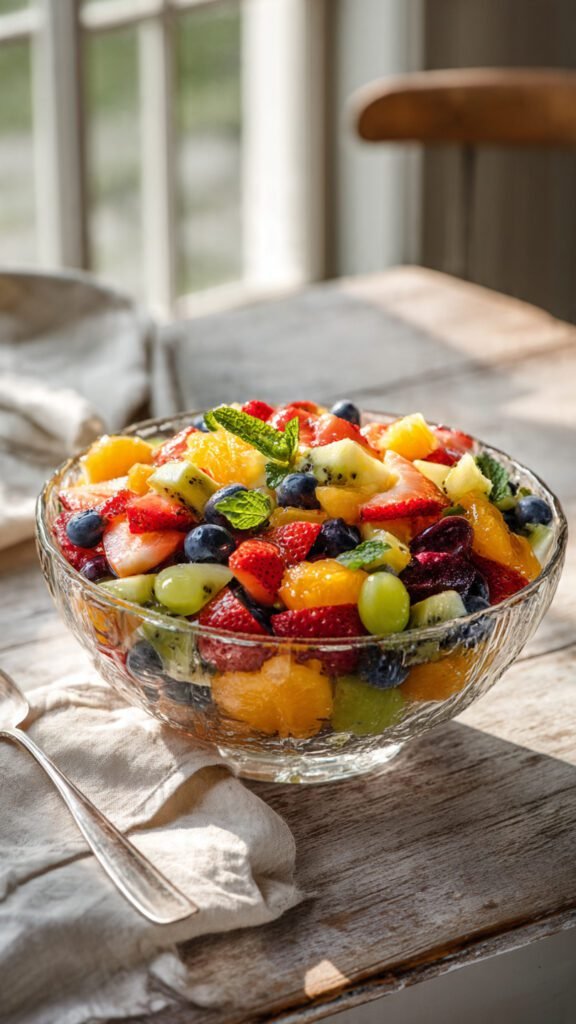
It Looks Like a Jewelry Box We eat with our eyes first. A monochromatic bowl of pale melon and greenish bananas is depressing. We want a riot of color—ruby reds, deep blues, vibrant oranges, and electric greens. This salad is so pretty it basically audits its own Instagram account.
Ingredients You’ll Need
Before you start hacking away at a pineapple, you need the right goods. The most crucial instruction here is this: buy ripe fruit. Your salad is only as good as your ingredients. If the berries taste like sour water and the melon is hard as a rock, no amount of honey will save you.
The Fruit Base (Aim for about 8–10 cups total):
- Strawberries: The crowd-pleaser. Look for bright red berries right up to the stem. If they have white shoulders, they aren’t ready to party yet.
- Blueberries: The little pops of texture. Ensure they are firm and not squishy in the container.
- Grapes (Seedless Green or Red): Essential for crunch. Do not, under any circumstances, use seeded grapes unless you enjoy spitting things out while you eat.
- Pineapple: The tropical punch. Smell the bottom of the pineapple at the store; if it smells sweet and fragrant, it’s ripe. If it smells like nothing, put it back.
- Kiwi: Adds that stunning electric green color and a nice tart flavor. They should give slightly to gentle pressure when ripe.
- Mandarin Oranges (Optional but recommended): These add lovely, juicy segments without the tough membranes of regular oranges. Use fresh (like clementines or “Cuties”), not canned.
The Magic “Dressing”:
- Fresh Limes: You need the juice and maybe a little zest if you’re feeling fancy. Do not use the plastic lime-shaped squeeze bottle juice. That stuff is sadness concentrated.
- Honey or Maple Syrup: Just a tablespoon or two. It acts as the glue that bonds the lime juice to the fruit. Maple syrup is a great vegan option and adds a lovely depth of flavor.
- Fresh Mint Leaves: The game-changer. It adds a burst of fresh, herbal flavor that makes the fruit taste incredibly vibrant. Don’t skip it unless you truly hate joy (or mint).
Step-by-Step Instructions
Alright, let’s assemble this masterpiece. It’s easy, but pay attention to the details. The difference between “meh” and “wow” is in the prep.
1. The Great Wash and Dry Rinse all your berries and grapes thoroughly under cold water. Crucial Tip: You must let them dry completely. Spread them on paper towels if you have to. Wet fruit means the dressing won’t stick, and you’ll end up with watery salad soup at the bottom of the bowl. Nobody wants that.
2. Prepping the “Jewels” (Berries & Grapes) Hull the strawberries (take the green tops off) and slice them. If they are huge, quarter them; if they are small, halve them. You want bite-sized pieces. Leave the blueberries whole. Slice the grapes in half lengthwise—this makes them easier to eat and they absorb the dressing better.
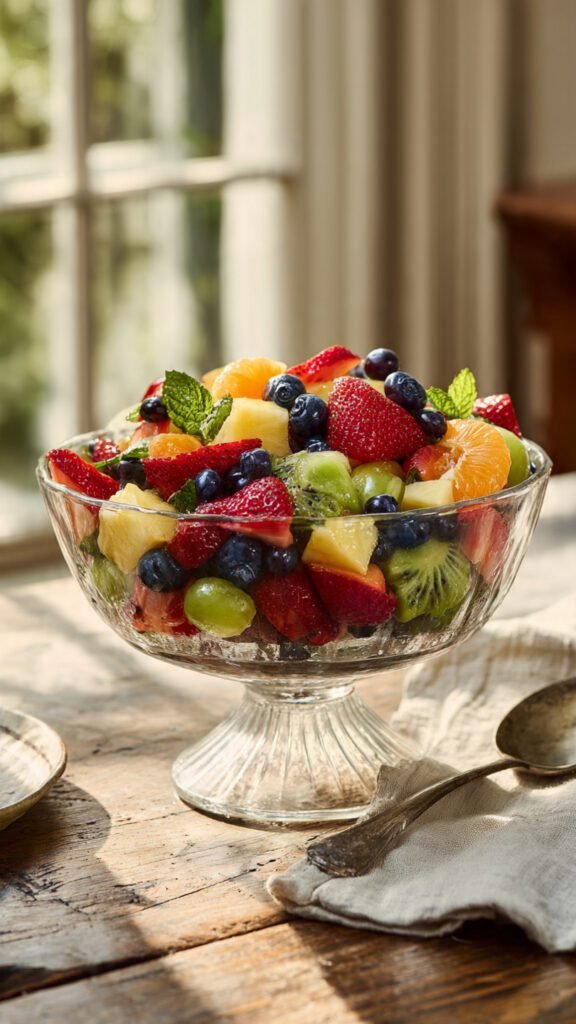
3. Tackling the Tough Guys (Pineapple & Kiwi) Peel and core your fresh pineapple. Cut it into chunks that match the size of your strawberries. Uniformity is key here—you want to be able to get a little bit of everything on one fork without unhinging your jaw. Peel the kiwi and slice it into rounds or half-moons.
4. The Zesty Dressing Whisk In a small bowl or a glass measuring cup, combine the freshly squeezed lime juice and your sweetener of choice (honey or maple syrup). Whisk it vigorously with a fork until the honey is completely dissolved into the juice. It should look like a slightly thickened, golden syrup.
5. The Herbal Finish Take your fresh mint leaves. Stack them on top of each other, roll them up like a tiny cigar, and slice them thinly (this fancy chef technique is called a chiffonade, FYI). This releases the oils and gives you beautiful ribbons of green rather than bruised chunks.
6. The Final Toss Place all your beautiful, dry, chopped fruit into a very large serving bowl. Pour the lime-honey mixture over the top. Sprinkle in the ribboned mint. Now, using a large spoon or rubber spatula, gently fold the fruit. Do not aggressively stir it like you’re mixing concrete. You want to coat everything without crushing the delicate berries. Serve immediately and prepare for compliments.
Common Mistakes to Avoid
Even smart cooks ruin fruit salads. Don’t be like them. Avoid these rookie errors:
- Using Frozen Fruit: Just don’t. Frozen fruit is great for smoothies, but when it thaws in a salad, it turns into a weepy, soggy mess that dyes everything else an unappealing color.
- The Banana Trap: Bananas are delicious, but they are bullies in a fruit salad. They turn brown faster than you can blink, they get slimy, and they overpower the flavor of everything else in the bowl. If you must use them, slice them right before serving on top of individual portions.
- Chopping Way Too Early: You can prep the sturdier fruit (melon, grapes) a few hours ahead, but don’t slice strawberries or add the dressing until just before you plan to eat. The acid in the lime juice will start to break down the berries over time, making them soft.
- Ignoring the “Bite-Size” Rule: Have you ever tried to gracefully eat a gigantic wedge of cantaloupe with a plastic fork at a picnic? It’s not cute. Chop everything into uniform pieces that are easy to chew.
Alternatives & Substitutions
Fruit salad is an art, not an exact science. Feel free to riff on the basic concept based on what’s in season or what you have in the fridge.
- Switch Up the Citrus: Not a lime fan? Lemon juice works perfectly well, though it has a slightly sharper, less floral flavor than lime. Orange juice is okay, but it lacks the acidity needed to really make the flavors pop, so maybe use half orange, half lemon.
- Seasonal Swaps:
- Summer: Add watermelon chunks (just know it gets watery fast), peaches, or nectarines.
- Winter: Lean into citrus segments (grapefruit, blood orange), pomegranate arils (for amazing crunch), and crisp apples (tossed in extra lemon juice to prevent browning).
- The “Crunch” Factor: If you want to get really fancy, sprinkle some poppy seeds or chia seeds over the top right before serving for visual interest and a tiny bit of crunch. Toasted coconut flakes actully pair amazingly with pineapple and kiwi, giving it a piña colada vibe.
- Vegan Sweetener: As mentioned, maple syrup or agave nectar are perfect 1:1 swaps for honey if you’re keeping it vegan.
FAQ (Frequently Asked Questions)
Can I make this the night before? Honestly? I wouldn’t. You can chop the pineapple and melon the night before and store them separately in airtight containers. But don’t wash the berries, chop the soft stuff, or add the dressing until you are ready to serve. Fresh means fresh.
Why did my apples and pears turn brown? Science! It’s called oxidation. When the flesh of certain fruits hits the air, it turns brown. The lime juice dressing helps slow this down significantly because of the citric acid (vitamin C), but it won’t stop it forever. If using apples, toss them in straight lemon juice immediately after cutting before adding them to the main bowl.
Can I use canned fruit in a pinch? Deep sigh. Look, you can, but it’s not going to be a “fresh fruit salad recipe” anymore, is it? Canned fruit is usually cooked and swimming in syrup. It changes the texture entirely. If you absolutely must, drain it incredibly well, rinse it off, and don’t expect the same crisp results.
Is this dressing really necessary? The fruit is sweet enough! Yes, it is necessary. Trust me on this. It’s like adding salt to chocolate cookies; you don’t taste the salt, but it makes the chocolate taste more like chocolate. The lime juice brightens the natural flavors and prevents the whole thing from just tasting “flat” sweet.
How long does leftovers last? This salad is best eaten within a few hours of making it. If you have leftovers, store them in an airtight container in the fridge for up to 24 hours. It will still taste okay the next day, but the strawberries will likely be soft, and there will be a lot of juice at the bottom of the bowl (which, IMO, is excellent poured over yogurt).
Final Thoughts
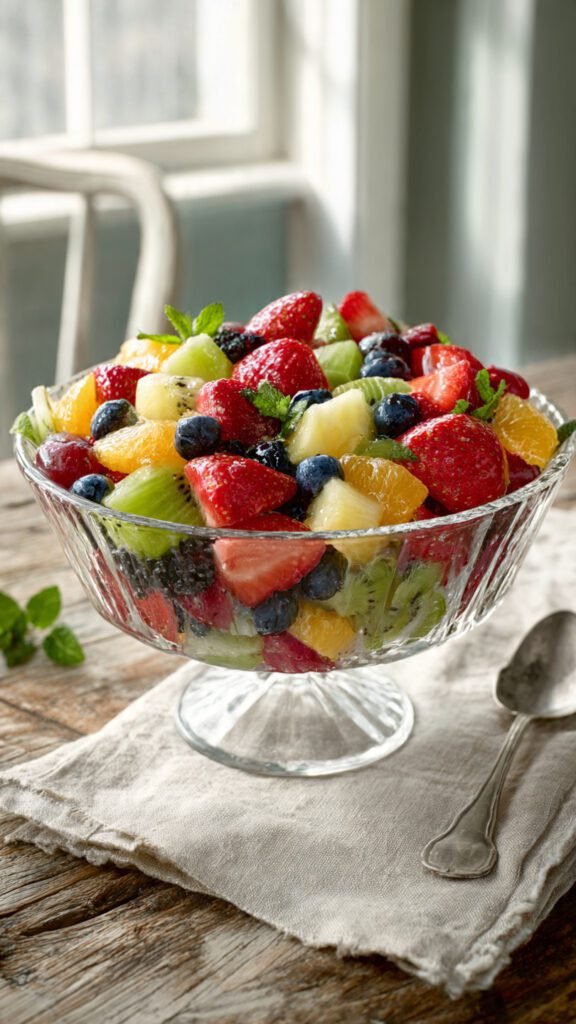
See? That wasn’t so hard. You have successfully created a beautiful, vibrant dish that doesn’t rely on marshmallows or heavy cream to be delicious. This fresh fruit salad recipe is the perfect antidote to heavy barbecue food, a refreshing breakfast option, or just a great way to trick yourself into eating more vitamins.
Now go forth and impress someone—or just yourself—with your new culinary skills. You’ve earned it, and you definitely deserve better than soggy cantaloupe. Cheers!