Fresh Pasta Dough Recipe: Silky Smooth Perfection in Your Kitchen
There’s something truly magical about homemade pasta. The texture, the taste, the sheer satisfaction of creating something so delicious from scratch – it’s an experience that store-bought pasta simply can’t replicate. Forget the pre-packaged stuff; this recipe will guide you through making fresh pasta dough that’s incredibly easy to work with and yields pasta with a delightful, melt-in-your-mouth texture. Get ready to impress yourself, your family, and your friends with pasta that’s bursting with flavor and unparalleled freshness. We’ll walk you through every step, from choosing the right flour to achieving the perfect dough consistency, so you can confidently create restaurant-quality pasta in your own home. So, roll up your sleeves, dust off your work surface, and let’s get started on this culinary adventure!
Why This Recipe Works
This recipe is meticulously crafted to provide consistent and reliable results. Here’s why it stands out:
- Simple Ingredients: We use only a few high-quality ingredients – flour, eggs, and a touch of salt. No unnecessary additives or complicated techniques.
- Precise Ratios: The ingredient ratios are carefully balanced to create a dough that is neither too dry nor too sticky, making it easy to knead and roll out.
- Detailed Instructions: Each step is clearly explained with helpful tips and visual cues to ensure success, even for beginners.
- Versatile Base: This recipe provides a foundation for a wide variety of pasta shapes, from spaghetti and fettuccine to ravioli and tortellini.
- Emphasis on Kneading: Proper kneading is crucial for developing gluten, which gives the pasta its elasticity and prevents it from becoming mushy when cooked. We provide guidance on how to knead effectively.
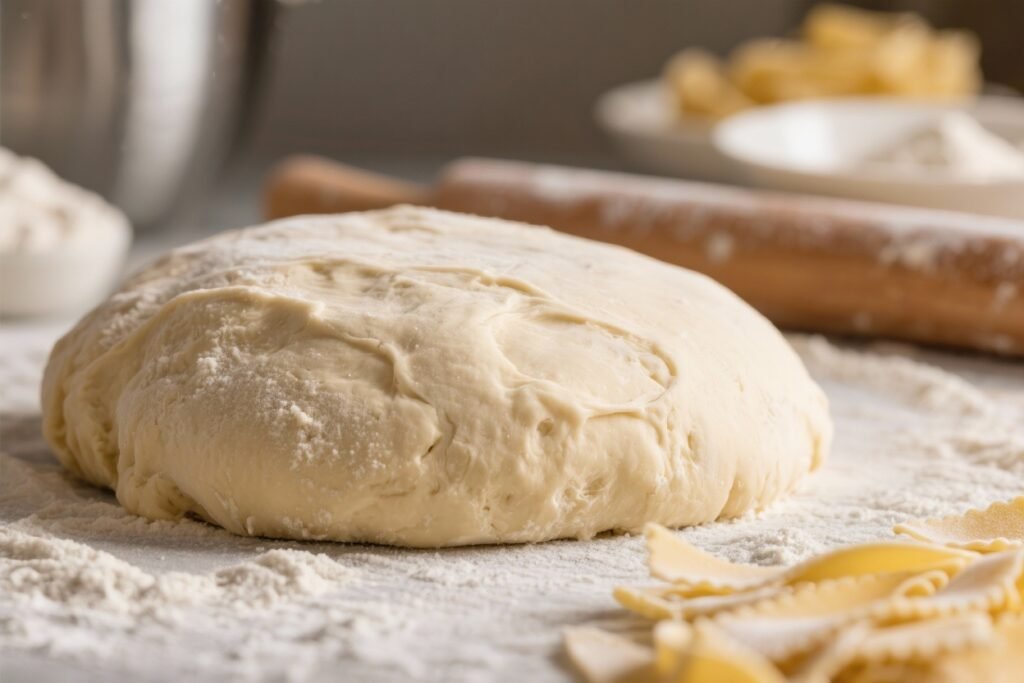
Ingredients
- 2 cups (250g) All-Purpose Flour, plus more for dusting: While semola flour is traditional, all-purpose flour is more accessible and works beautifully for this recipe. Ensure it’s fresh for the best results. Bread flour can also be used for a chewier texture.
- 3 Large Eggs: Use fresh, high-quality eggs for a richer flavor and vibrant color.
- 1/2 teaspoon Salt: Salt enhances the flavor of the pasta and helps to strengthen the gluten structure.
- 1 tablespoon Olive Oil (optional): A touch of olive oil can add a subtle richness and help to create a smoother dough.

Instructions
- Create a Flour Well: On a clean work surface (a wooden board is ideal), mound the flour. Make a large well in the center, large enough to hold the eggs.
- Add Eggs and Salt: Crack the eggs into the well. Add the salt (and olive oil, if using) to the eggs.
- Incorporate the Eggs: Using a fork, gently whisk the eggs together. Gradually start incorporating the flour from the inner walls of the well into the eggs. Continue until the mixture forms a thick, shaggy dough. This is a crucial step; take your time to avoid the eggs running out of the well.
- Knead the Dough: Once the dough is thick enough to handle, begin kneading. Use the heel of your hand to push the dough away from you, then fold it back over itself. Rotate the dough 90 degrees and repeat. Continue kneading for 8-10 minutes, or until the dough is smooth, elastic, and no longer sticky. If the dough is too dry, add a teaspoon of water at a time. If it’s too sticky, add a tablespoon of flour at a time.
- Rest the Dough: Form the dough into a ball, wrap it tightly in plastic wrap, and let it rest at room temperature for at least 30 minutes, or up to 2 hours. This allows the gluten to relax, making the dough easier to roll out.
- Roll Out the Dough: After resting, divide the dough into smaller portions (about 1/4 of the total dough). Flatten one portion into a disc. If using a pasta machine, start with the widest setting and gradually decrease the setting until you reach your desired thickness. If rolling by hand, use a rolling pin to roll the dough as thinly as possible, dusting with flour as needed to prevent sticking.
- Cut the Pasta: Once the dough is rolled out to your desired thickness, cut it into your desired shape. For spaghetti or fettuccine, use a pasta cutter or a sharp knife. For ravioli or tortellini, cut out circles or squares and fill them with your favorite fillings.
- Cook the Pasta: Bring a large pot of salted water to a boil. Add the fresh pasta and cook for 2-4 minutes, or until it floats to the surface and is al dente. Fresh pasta cooks much faster than dried pasta, so be sure to keep a close eye on it.
- Serve Immediately: Drain the pasta and toss it with your favorite sauce. Serve immediately and enjoy!
Tips for Success
- Use High-Quality Ingredients: The better the ingredients, the better the pasta. Fresh eggs and good flour are essential.
- Don’t Overwork the Dough: Over-kneading can result in tough pasta. Knead until the dough is smooth and elastic, but no longer.
- Rest the Dough Properly: Resting the dough allows the gluten to relax, making it easier to roll out. Don’t skip this step!
- Dust Generously: Keep your work surface and the dough well-dusted with flour to prevent sticking.
- Work in Small Batches: Rolling out the dough in small batches helps to prevent it from drying out.
- Adjust for Humidity: On humid days, you may need to add more flour to the dough to prevent it from becoming too sticky.
- Practice Makes Perfect: Don’t be discouraged if your first batch isn’t perfect. With a little practice, you’ll be making restaurant-quality pasta in no time.
Storage Instructions
Uncooked Pasta: Fresh pasta can be stored in several ways:
- Short-Term (up to 24 hours): Arrange the pasta in nests on a lightly floured baking sheet. Cover loosely with plastic wrap and store in the refrigerator.
- Long-Term (up to 2 months): Freeze the pasta in a single layer on a baking sheet. Once frozen, transfer it to a freezer bag. Cook directly from frozen, adding an extra minute or two to the cooking time.
Cooked Pasta: Cooked pasta can be stored in an airtight container in the refrigerator for up to 3 days. Reheat gently in a sauce or in boiling water.
FAQ
- Can I use a stand mixer to make the dough? Yes, you can use a stand mixer with a dough hook attachment. Combine the ingredients in the mixer bowl and knead on low speed for 6-8 minutes, or until the dough is smooth and elastic.
- Can I use semolina flour instead of all-purpose flour? Yes, semolina flour is a traditional choice for pasta dough. It will result in a slightly coarser texture. You may need to adjust the amount of liquid depending on the flour’s absorption.
- My dough is too dry. What should I do? Add a teaspoon of water at a time, kneading until the dough comes together.
- My dough is too sticky. What should I do? Add a tablespoon of flour at a time, kneading until the dough is no longer sticky.
- How do I prevent the pasta from sticking together when cooking? Use a large pot of boiling, salted water. Add the pasta all at once and stir frequently during the first minute of cooking.
- Can I add flavorings to the dough? Absolutely! Herbs, spices, or even vegetable purees can be added to the dough for extra flavor and color.
Conclusion
Congratulations! You’ve now mastered the art of making fresh pasta dough. With this recipe and these tips, you’re well on your way to creating countless delicious pasta dishes. From simple spaghetti aglio e olio to elaborate ravioli filled with ricotta and spinach, the possibilities are endless. So, embrace the joy of homemade pasta, experiment with different shapes and flavors, and enjoy the unparalleled satisfaction of creating something truly special from scratch. Buon appetito!