Healthy Pad Thai Recipe: Guilt-Free Noodles You’ll Crave!
Craving the vibrant flavors of Pad Thai but dreading the calorie bomb that often comes with it? You’re not alone! Pad Thai, with its sweet, sour, and savory notes, is a beloved dish worldwide. However, traditional versions can be laden with excessive oil, sugar, and sodium. But what if you could enjoy all the deliciousness without the guilt? This recipe delivers exactly that – a healthy and satisfying Pad Thai that’s packed with nutrients, lower in calories, and bursting with authentic flavor. Get ready to indulge in a dish that’s both good for you and incredibly delicious!
Why This Recipe Works
This healthy Pad Thai recipe isn’t just about cutting calories; it’s about making smart ingredient choices and using cooking techniques that enhance flavor without compromising your health. Here’s why it works:
- Reduced Sugar: We’ve significantly reduced the amount of sugar compared to traditional recipes by using natural sweeteners like a touch of honey or maple syrup, and relying on the natural sweetness of tamarind paste.
- Lower Sodium: Low-sodium soy sauce (or tamari for gluten-free) and careful seasoning help control the sodium content without sacrificing the savory umami flavor.
- Healthier Noodles: Opting for brown rice noodles or zucchini noodles (zoodles) increases fiber and nutrients while lowering the glycemic index.
- Lean Protein: We use lean protein sources like chicken breast, shrimp, or tofu to keep you feeling full and satisfied.
- Plenty of Vegetables: This recipe is packed with fresh vegetables like bean sprouts, carrots, and scallions, adding essential vitamins, minerals, and fiber.
- Balanced Flavors: We maintain the authentic Pad Thai flavor profile by carefully balancing the sweet, sour, salty, and spicy elements. The key is fresh ingredients and proper seasoning!
Ingredients
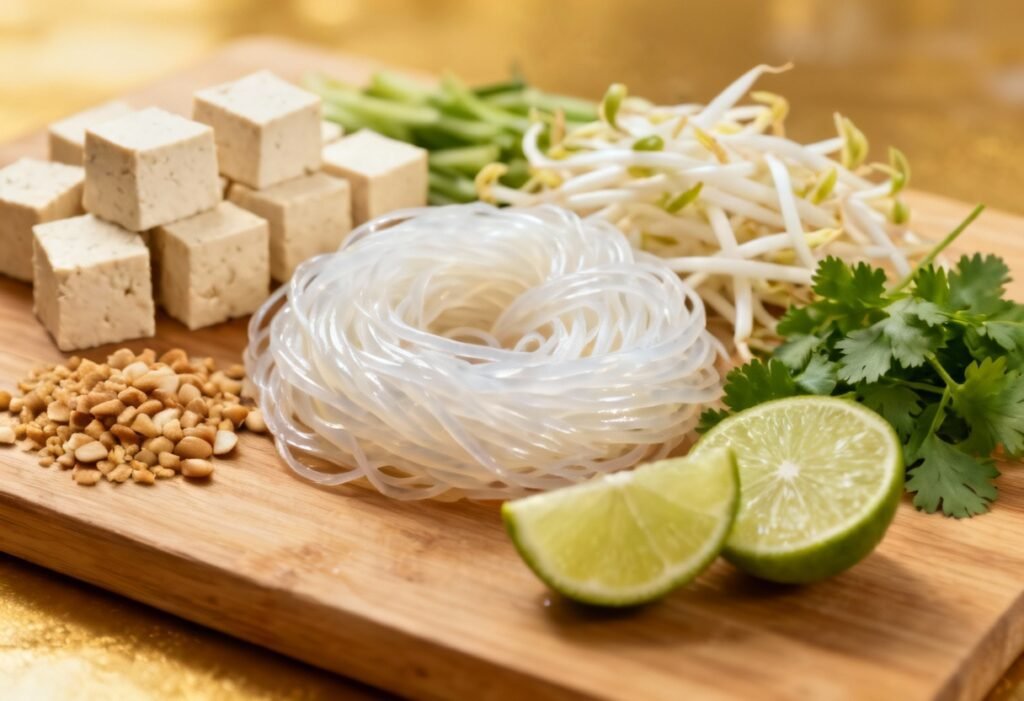
- Noodles: 8 oz brown rice noodles (or zucchini noodles for a low-carb option)
- Protein: 1 lb boneless, skinless chicken breast (cut into bite-sized pieces), shrimp (peeled and deveined), or firm tofu (cubed)
- Vegetables:
- 1 cup bean sprouts
- 1 cup shredded carrots
- 1/2 cup chopped scallions
- 2 cloves garlic, minced
- 1 red bell pepper, thinly sliced (optional)
- Sauce:
- 1/4 cup tamarind paste
- 2 tablespoons low-sodium soy sauce (or tamari for gluten-free)
- 1 tablespoon fish sauce (optional, can substitute with more soy sauce or a dash of seaweed flakes)
- 1 tablespoon honey or maple syrup
- 1 tablespoon lime juice
- 1 teaspoon rice vinegar
- 1/2 teaspoon red pepper flakes (or more, to taste)
- Garnish:
- 1/4 cup chopped peanuts
- Lime wedges
- Fresh cilantro leaves
- Oil: 1 tablespoon sesame oil or avocado oil
Instructions
- Prepare the Noodles: Cook the brown rice noodles according to package directions. Be careful not to overcook them, as they will become mushy. Drain and rinse with cold water to stop the cooking process. If using zucchini noodles, spiralize them and lightly salt them. Let them sit for 10 minutes to draw out excess moisture, then pat them dry with paper towels.
- Prepare the Sauce: In a small bowl, whisk together the tamarind paste, soy sauce (or tamari), fish sauce (if using), honey or maple syrup, lime juice, rice vinegar, and red pepper flakes. Set aside.
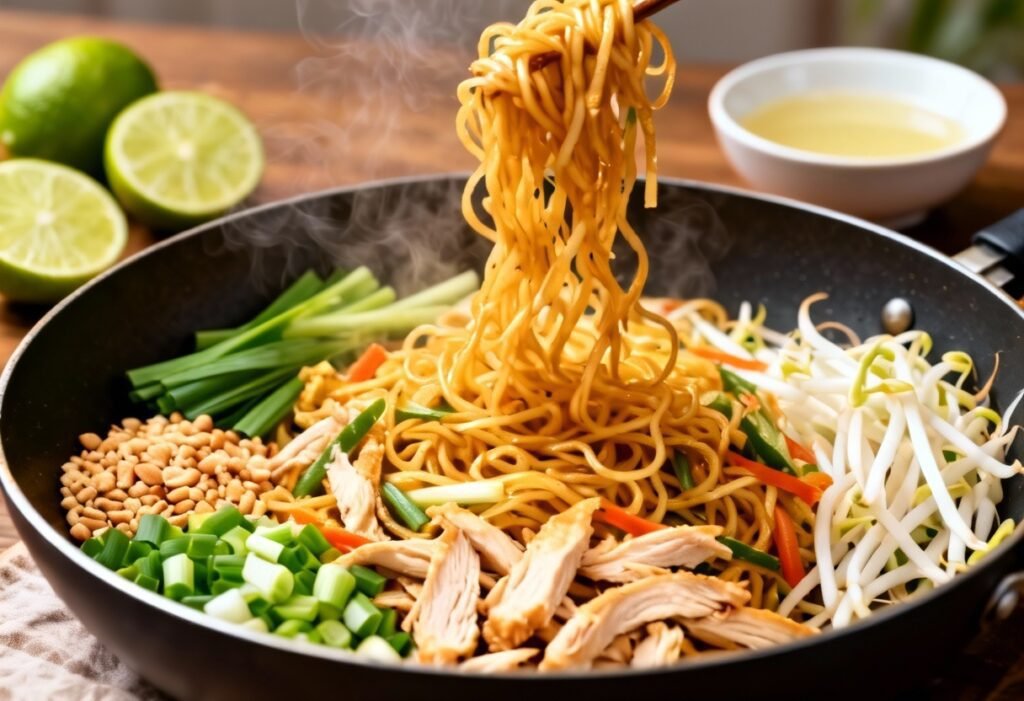
- Cook the Protein: Heat the sesame oil or avocado oil in a large wok or skillet over medium-high heat. Add the chicken, shrimp, or tofu and cook until cooked through. Remove the protein from the wok and set aside.
- Sauté the Vegetables: Add the minced garlic to the wok and sauté for about 30 seconds until fragrant. Add the shredded carrots and red bell pepper (if using) and cook for 2-3 minutes until slightly softened.
- Combine and Toss: Add the cooked noodles (or zucchini noodles) and the cooked protein back to the wok. Pour the sauce over the noodles and toss everything together until well coated.
- Add Bean Sprouts and Scallions: Add the bean sprouts and chopped scallions to the wok and toss for another minute until they are slightly wilted.
- Serve: Serve immediately, garnished with chopped peanuts, lime wedges, and fresh cilantro leaves.
Tips for Success
- Don’t Overcook the Noodles: This is crucial for preventing mushy Pad Thai. Cook the noodles al dente and rinse them in cold water.
- Adjust the Sauce to Your Taste: Taste the sauce and adjust the sweetness, sourness, and spiciness to your liking. Add more honey or maple syrup for sweetness, lime juice for sourness, or red pepper flakes for heat.
- Prepare Ingredients in Advance: This will make the cooking process much faster and easier. Chop the vegetables, cook the protein, and prepare the sauce before you start cooking the noodles.
- Use a Wok or Large Skillet: A wok or large skillet will allow you to toss the ingredients easily and ensure that everything cooks evenly.
- Don’t Overcrowd the Pan: If you’re making a large batch, cook the ingredients in batches to avoid overcrowding the pan, which can lower the temperature and result in soggy Pad Thai.
- Zucchini Noodle Tip: Salting and drying zucchini noodles is essential to prevent a watery dish. Don’t skip this step!
Storage Instructions
Leftover Pad Thai can be stored in an airtight container in the refrigerator for up to 3 days. Reheat in a skillet over medium heat, adding a splash of water or broth if needed to prevent it from drying out. Note that the noodles may become slightly softer upon reheating.
FAQ
- Can I make this recipe vegetarian/vegan? Yes! Simply substitute the chicken or shrimp with firm tofu. For a vegan version, ensure your fish sauce substitute is vegan-friendly (seaweed flakes work well).
- Can I use different vegetables? Absolutely! Feel free to add other vegetables like broccoli florets, snap peas, or mushrooms.
- Can I freeze Pad Thai? Freezing is not recommended as the noodles can become mushy upon thawing. It’s best enjoyed fresh or stored in the refrigerator for a few days.
- Where can I find tamarind paste? Tamarind paste can be found in most Asian grocery stores or in the international aisle of some supermarkets.
- Is fish sauce necessary? No, it adds depth of flavor, but you can substitute it with more soy sauce or a dash of seaweed flakes for a vegetarian/vegan option.
Conclusion
This healthy Pad Thai recipe is a delicious and guilt-free way to enjoy your favorite Thai dish. By making smart ingredient choices and controlling the amount of sugar, sodium, and oil, you can create a satisfying and nutritious meal that’s packed with flavor. So go ahead, whip up a batch of this healthy Pad Thai and enjoy the taste of Thailand without the guilt! You’ll be surprised at how delicious and easy it is to make a healthier version of this classic dish. Bon appétit!