Japanese BBQ Sauce Recipe That Will Make Your Grill Famous (Yes, It’s That Good)
👩🍳 The Home Chef's Essential Kitchen
Consistently cooking incredible, healthy meals at home is so much easier when you aren't fighting with cheap tools. These are the 5 absolute powerhouse kitchen essentials that professional chefs and serious home cooks rely on every single day to get perfect results.
🍳 Lodge 10.25" Cast Iron Skillet
The single greatest value in all of cookware. It retains heat infinitely better than cheap non-stick pans, allowing you to get a restaurant-quality crust on steaks or perfect crispy edges on cornbread. With proper care, this $20 pan will literally outlive you.
🔪 Victorinox Fibrox Pro 8" Chef's Knife
A dull knife makes cooking a frustrating chore. This specific blade is the undisputed champion of the culinary world—it holds a terrifyingly sharp edge, features a comfortable non-slip grip, and performs identical to German knives that cost quadruple the price.
🌡️ ThermoPro Instant Read Thermometer
Never serve dry chicken or undercooked pork again. An instant-read thermometer is the secret difference between amateur cooks who 'guess' when protein is done, and professionals who know exactly when to pull meat off the heat for maximum juiciness.
🍲 Lodge Enameled Cast Iron Dutch Oven
The ultimate workhorse for soups, stews, braised short ribs, and baking crusty artisanal bread. The enameled interior provides incredible heat distribution for slow-cooking while eliminating the intense seasoning maintenance required by bare cast iron.
🥄 Bpa-Free Silicone Utensil Set
Throw away those melting plastic spatulas and bacteria-harboring wooden spoons. This pure silicone set is heat-resistant up to 600°F, won't scratch your expensive pans, and features seamless designs that make cleaning out thick sauces and batters effortless.
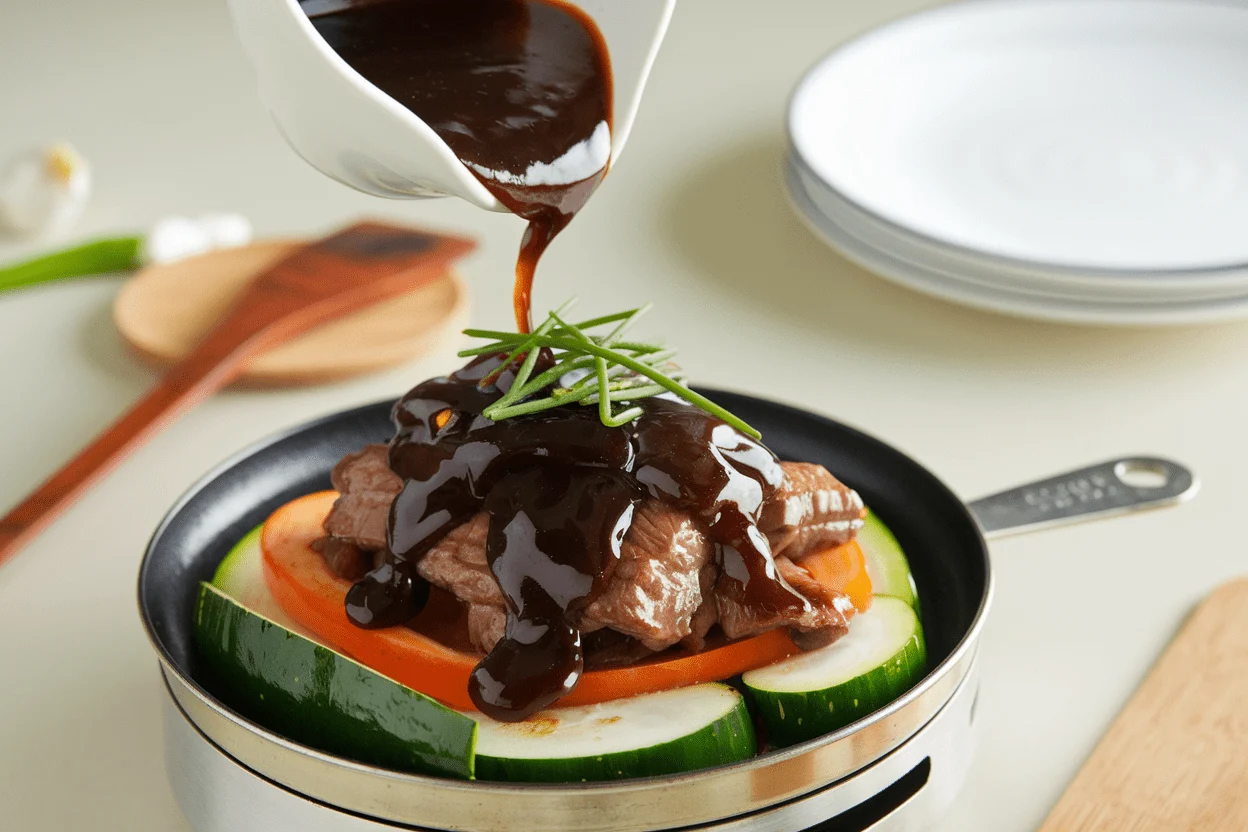
You want a sauce that turns Tuesday chicken into Friday-night-level hype? This Japanese BBQ sauce recipe is the upgrade your taste buds didn’t know they needed. It’s sweet, smoky, savory, with a shiny glaze that makes everything look like a food commercial.
And the best part: it’s ridiculously easy, customizable, and beats anything bottled. Make it once, and your friends will “forget” to give your container back.
Why You’ll Love This Recipe
- Bold, balanced flavor: Sweet from mirin, salty from soy, umami from miso and bonito, heat from ginger and optional chili—everything plays nice.
- Restaurant-quality glaze: The sauce reduces to a glossy finish that clings to grilled meats, tofu, and veggies like it was born for the job.
- Simple pantry-friendly method: Most ingredients are in any decent grocery store; no culinary degree required.
- Versatile: Use as marinade, dipping sauce, stir-fry finisher, or burger glaze. It’s the MVP of weeknights and cookouts.
- Make-ahead friendly: Keeps well, gets better after a day, and saves you from “what’s for dinner?” panic.
Ingredients
- 1/2 cup soy sauce (regular or low-sodium)
- 1/2 cup mirin (sweet rice wine)
- 1/4 cup sake (or extra mirin if avoiding alcohol)
- 3 tablespoons brown sugar (or honey)
- 1 tablespoon rice vinegar
- 1 tablespoon white or red miso paste
- 2 cloves garlic, finely grated
- 1 tablespoon fresh ginger, finely grated
- 1–2 teaspoons toasted sesame oil
- 1 teaspoon cornstarch mixed with 1 tablespoon cold water (optional, for extra gloss)
- 1 small strip kombu (about 2 inches, optional for depth)
- 1 tablespoon bonito flakes (optional, for smoky umami)
- 1–2 teaspoons chili paste (like gochujang or chili crisp, optional heat)
- 1 tablespoon toasted sesame seeds (for finishing, optional)
Instructions
- Combine the base: In a small saucepan, add soy sauce, mirin, sake, brown sugar, and rice vinegar.
Stir to dissolve sugar.
- Add aromatics and umami: Whisk in miso until smooth. Add garlic, ginger, sesame oil, kombu, and bonito flakes if using.
- Simmer gently: Bring to a light simmer over medium-low heat for 6–8 minutes, stirring occasionally. Don’t boil aggressively—you want flavor, not evaporation chaos.
- Strain (optional): Remove kombu.
Strain to catch bonito and any miso bits for a silky sauce, or keep rustic if you like texture.
- Thicken (optional): Return sauce to low heat. Stir in cornstarch slurry and simmer 30–60 seconds until glossy and just thick enough to coat a spoon.
- Heat check: Add chili paste if you want kick. Start with 1 teaspoon, taste, and escalate like a rational adult.
- Cool and finish: Let sauce cool 10–15 minutes.
Sprinkle sesame seeds before serving if desired.
- Use it right: Brush on grilled chicken, steak, salmon, tofu, mushrooms, or even roasted broccoli. Also fantastic as a dip or over rice bowls.
Storage Instructions
- Fridge: Store in a clean, airtight jar up to 2 weeks. Flavor deepens slightly over time.
- Freezer: Freeze in small containers or ice cube trays for up to 3 months.
Thaw in the fridge overnight.
- Reheat: Warm gently on low heat. If it thickens too much, loosen with a splash of water or sake.
- Food safety: If used as a marinade for raw meat, discard that portion after marinating. Use a separate clean batch for brushing and dipping.
Health Benefits
- Lower sugar than many bottled sauces: You control the sweetness.
Swap brown sugar for honey or reduce by a tablespoon to trim it further.
- Umami from whole foods: Miso, kombu, and bonito add savory depth, which can help you use less salt overall while keeping flavor high.
- Ginger and garlic bonuses: They’re not miracles, but they do bring antioxidants and anti-inflammatory compounds.
- Good fats in moderation: Sesame oil adds flavor and a bit of healthy fat—no need to drown the sauce in it.
Pitfalls to Watch Out For
- Over-reduction: Boiling hard will make it salty and thick too fast. Keep it to a gentle simmer and stir.
- Unmixed miso lumps: Whisk the miso fully or dissolve it in a little warm liquid before adding to avoid grainy sauce.
- Too salty: If using regular soy and you overshoot saltiness, add a splash of water and a touch more sugar or mirin to rebalance.
- Burnt garlic/ginger: Don’t cook aromatics on dry heat; let them simmer in the liquid to avoid bitterness.
- Cross-contamination: If you brush meat on the grill, don’t put that brush into your clean dipping sauce. Use a separate bowl or spoon.
FYI, this matters.
Recipe Variations
- Gluten-free: Use tamari or certified GF soy sauce, ensure miso is GF, and you’re set.
- Vegan: Skip bonito flakes and add 1/2 teaspoon mushroom powder or a small piece of dried shiitake during simmering.
- No alcohol: Replace sake with more mirin and add 1–2 teaspoons extra rice vinegar for brightness.
- Teriyaki-leaning: Increase sugar/honey to 4 tablespoons and reduce a bit longer for a stickier glaze.
- Yakiniku-style: Add 1 tablespoon grated onion and 1 teaspoon apple puree for fruity depth; great with beef.
- Spicy upgrade: Stir in 1 teaspoon gochujang plus 1/2 teaspoon chili flakes. It slaps on wings, IMO.
- Smoky notes: Add a tiny drop (seriously tiny) of liquid smoke or char a scallion and simmer it in the sauce.
FAQ
Can I use this as a marinade?
Yes. Marinate chicken, beef, pork, tofu, or mushrooms for 30 minutes to 2 hours.
Pat the surface dry before grilling for better browning, then glaze during the last few minutes.
Is this the same as teriyaki sauce?
Not exactly. It overlaps with teriyaki but leans more toward yakiniku-style BBQ with extra umami from miso, kombu, and sometimes bonito. Think richer and slightly smokier.
How do I make it thicker without cornstarch?
Reduce it longer over low heat.
Alternatively, whisk in 1/2 teaspoon potato starch or a tiny knob of butter at the end for sheen.
What if I don’t have mirin?
Use 1/2 cup apple juice plus 1 tablespoon rice vinegar and 1 additional tablespoon sugar as a quick stand-in. It’s not identical, but it works.
Can I bottle this for gifting?
You can refrigerate in clean jars for friends, but this isn’t a tested canning recipe. For shelf-stable gifting, follow certified canning guidelines—safety first, hero later.
How do I use it beyond grilling?
Toss with stir-fried noodles, drizzle on sushi bowls, brush on roasted eggplant, or mix with mayo for a next-level burger spread.
Also elite on crispy tofu bowls.
Is it high in sodium?
It can be. Use low-sodium soy sauce and dilute with a few tablespoons of water if needed. Balance with acid (rice vinegar) and sweetness so flavor stays big without salt overload.
My Take
This Japanese BBQ sauce hits that rare sweet spot: minimal effort, maximum bragging rights.
The miso and ginger make it taste “chef-y” without adding complexity you don’t have time for. I keep a jar in the fridge and it rescues bland leftovers, questionable weeknight meats, and even roasted vegetables. Make it once, and you’ll start planning meals around the sauce—not the other way around.