Mofongo Recipe Puerto Rican: A Taste of Paradise in Every Bite
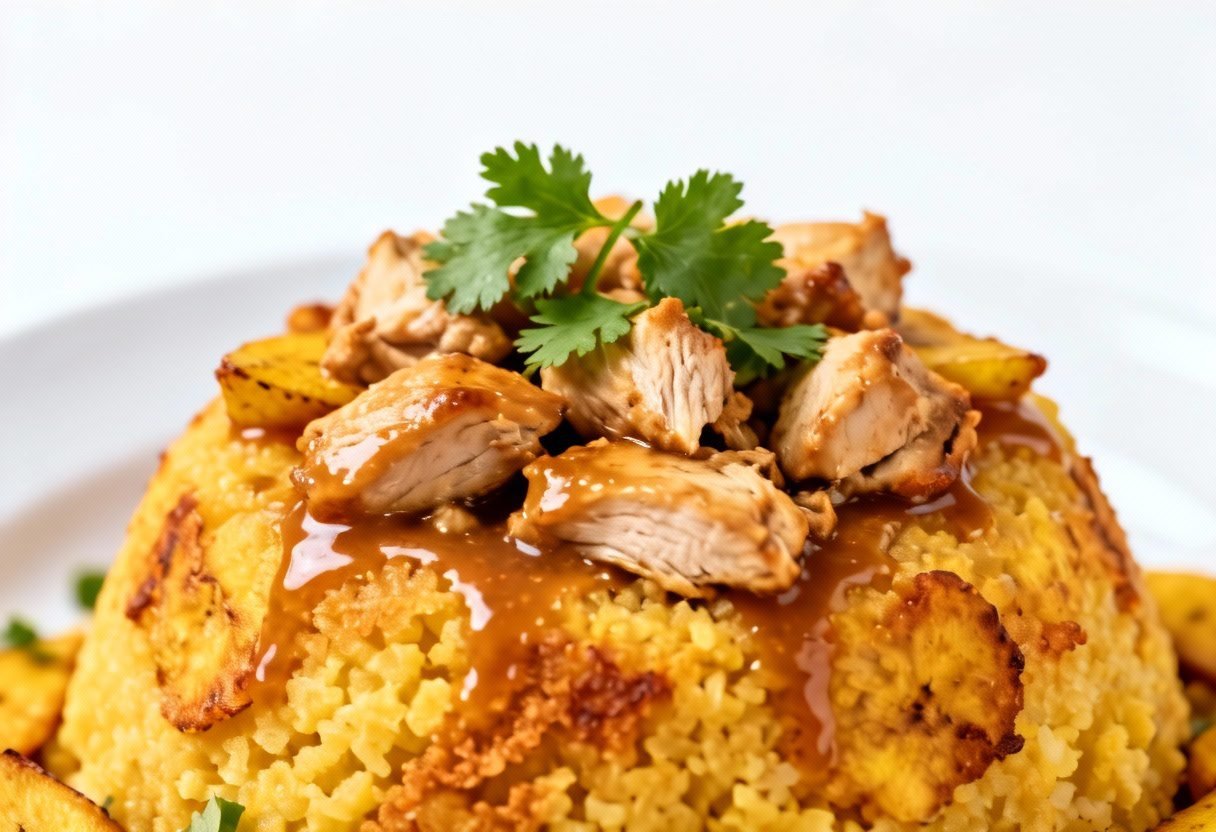
Mofongo. Just the name conjures images of vibrant Puerto Rican street food, bustling family gatherings, and the intoxicating aroma of garlic and fried plantains. This iconic dish, a symphony of savory flavors and textures, is more than just food; it’s a cultural experience. It’s a taste of home for Puerto Ricans around the world, and a delightful discovery for anyone eager to explore the island’s rich culinary heritage. This recipe will guide you through crafting a truly authentic mofongo, bringing the warmth and joy of Puerto Rico right to your kitchen.
Why This Recipe Works
This recipe isn’t just a list of ingredients and instructions; it’s a carefully crafted guide designed to help you achieve mofongo perfection. We’ve focused on several key elements:
- Authentic Flavors: We use traditional ingredients and techniques to capture the true essence of Puerto Rican mofongo.
- Detailed Instructions: Our step-by-step instructions, complete with helpful tips, ensure that even novice cooks can create a delicious and satisfying mofongo.
- Emphasis on Texture: Achieving the perfect mofongo texture – a balance of crispy edges and a slightly soft interior – is crucial. We’ll show you how.
- Versatile Base: This recipe provides a solid foundation for your mofongo. Feel free to customize it with your favorite protein and sauce.
- Troubleshooting Tips: We anticipate common challenges and offer solutions to help you overcome them.
Ingredients
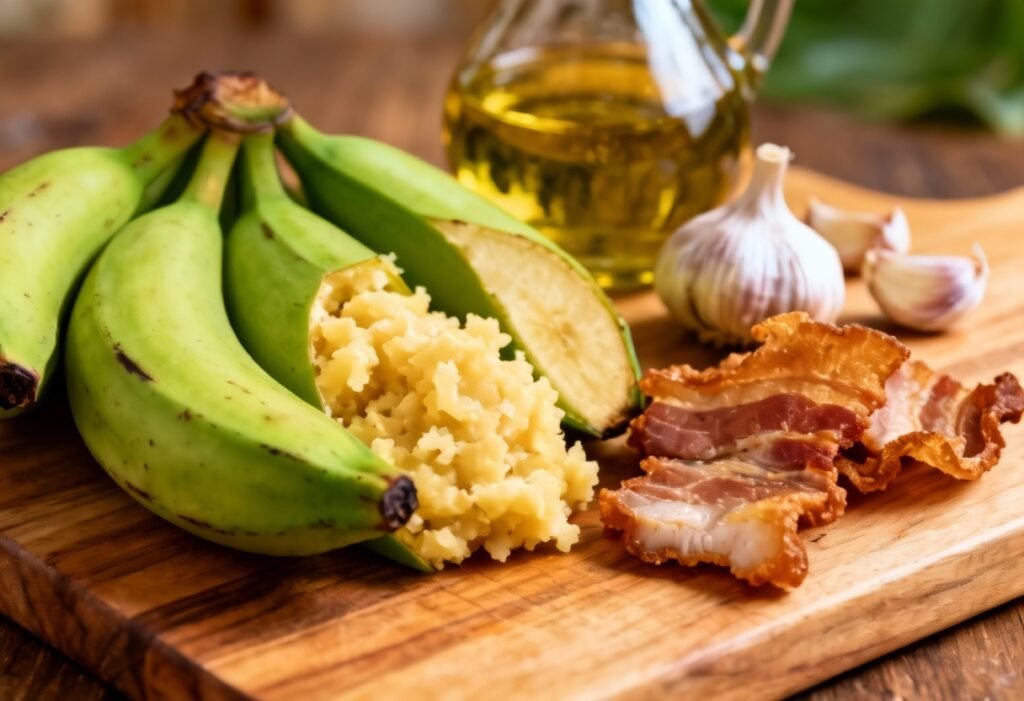
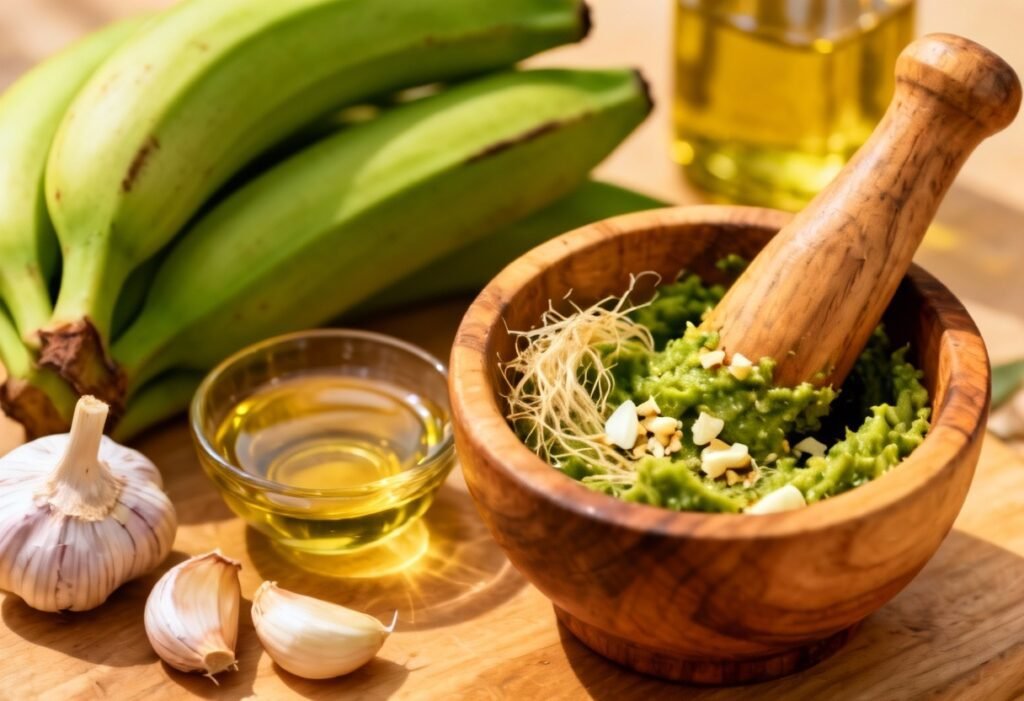
- 3 Green Plantains: These are the heart of mofongo. Look for firm, green plantains that are heavy for their size.
- 4-6 Cloves Garlic: Fresh garlic is essential for that signature mofongo aroma and flavor.
- 1/2 Cup Chicharrón (Pork Rinds): These add a crucial element of salty, crispy goodness. Look for them at Latin markets or make your own.
- 2-4 Tablespoons Olive Oil: For frying the plantains and adding richness.
- 1/4 Cup Chicken Broth: Adds moisture and flavor to the mofongo.
- Salt and Pepper: To taste.
Optional Additions:
- Sofrito: Adds a layer of complex flavor.
- Adobo Seasoning: For extra seasoning.
- Butter: For added richness.
For Serving (Choose your favorite):
- Garlic Shrimp (Camarones al Ajillo): A classic pairing.
- Stewed Chicken (Pollo Guisado): Another popular choice.
- Fried Pork Chunks (Masitas de Cerdo Fritas): For the ultimate pork lover.
- Mojo Sauce: A tangy garlic and citrus sauce.
Instructions
- Prepare the Plantains: Peel the green plantains. This can be a bit tricky, so here’s a tip: cut off both ends of the plantain. Make shallow slits lengthwise down the peel, being careful not to cut into the flesh. Use a knife or your fingers to pry the peel away. Cut the peeled plantains into 1-inch thick slices.
- Fry the Plantains: Heat the olive oil in a large skillet or deep fryer over medium-high heat. Fry the plantain slices in batches until golden brown and slightly softened, about 5-7 minutes per batch. Avoid overcrowding the pan.
- Drain the Plantains: Remove the fried plantains from the skillet and place them on a paper towel-lined plate to drain excess oil.
- Prepare the Garlic and Chicharrón: While the plantains are draining, mince the garlic. If using store-bought chicharrón, crush them slightly into smaller pieces. If making your own chicharrón, ensure they are crispy and broken into bite-sized pieces.
- Mash the Mofongo: This is where the magic happens! Using a pilón (mortar and pestle) is the traditional method, but a sturdy bowl and potato masher will also work. Place a few fried plantain slices, a pinch of minced garlic, and some chicharrón in the pilón or bowl. Mash vigorously until a coarse, slightly sticky mixture forms. Repeat this process, adding more plantains, garlic, and chicharrón until all ingredients are used.
- Add Moisture and Flavor: Gradually add the chicken broth to the mofongo mixture, mashing as you go. This will help bind the ingredients together and create a more cohesive texture. Season with salt and pepper to taste. You can also add sofrito or adobo seasoning at this stage, if desired.
- Shape the Mofongo: Once the mofongo is mashed to your desired consistency, shape it into a dome or ball. You can use your hands or a small bowl to help mold it.
- Serve Immediately: Mofongo is best served hot and fresh. Place the mofongo on a plate and top with your choice of protein and sauce.
Tips for Success
- Choose the Right Plantains: Green plantains are essential for mofongo. They should be firm and unripe. If they are too ripe, the mofongo will be too sweet and mushy.
- Don’t Overcrowd the Pan: Frying the plantains in batches ensures that they cook evenly and get crispy. Overcrowding the pan will lower the oil temperature and result in soggy plantains.
- Use Enough Garlic: Garlic is a key flavor component of mofongo. Don’t be afraid to use a generous amount!
- Adjust the Texture: The texture of mofongo is a matter of personal preference. Some people prefer it to be more coarse and chunky, while others prefer it to be smoother. Adjust the amount of chicken broth and the intensity of the mashing to achieve your desired texture.
- Get Creative with Fillings: Mofongo is a versatile dish that can be paired with a variety of proteins and sauces. Experiment with different combinations to find your favorite.
- Warm Your Serving Dish: Serving mofongo on a warm plate will help keep it hot longer.
Storage Instructions
Leftover mofongo can be stored in an airtight container in the refrigerator for up to 2 days. However, it’s best enjoyed fresh, as the texture can change upon reheating. To reheat, microwave in short intervals, adding a splash of chicken broth to prevent it from drying out. You can also reheat it in a skillet with a little olive oil.
FAQ
Q: Can I make mofongo ahead of time?
A: While mofongo is best served fresh, you can prepare the fried plantains ahead of time and store them in the refrigerator. Reheat them slightly before mashing.
Q: Where can I find chicharrón?
A: Chicharrón can usually be found at Latin markets or specialty grocery stores. You can also make your own by frying pork belly until crispy.
Q: Can I use a food processor to mash the mofongo?
A: While you can use a food processor, it’s not recommended. A pilón or potato masher will give you better control over the texture and prevent the mofongo from becoming too smooth.
Q: What if I don’t have chicken broth?
A: You can substitute chicken broth with vegetable broth or even water, but chicken broth adds the most flavor.
Q: Can I make mofongo without chicharrón?
A: Yes, you can omit the chicharrón if you prefer. However, it does add a significant amount of flavor and texture. You can try substituting it with bacon bits or fried pork belly.
Conclusion
Congratulations! You’ve now mastered the art of making authentic Puerto Rican mofongo. This dish is a true testament to the island’s vibrant culinary heritage, and we hope you enjoy sharing it with your family and friends. Remember to experiment with different fillings and sauces to create your own signature mofongo. Buen provecho!