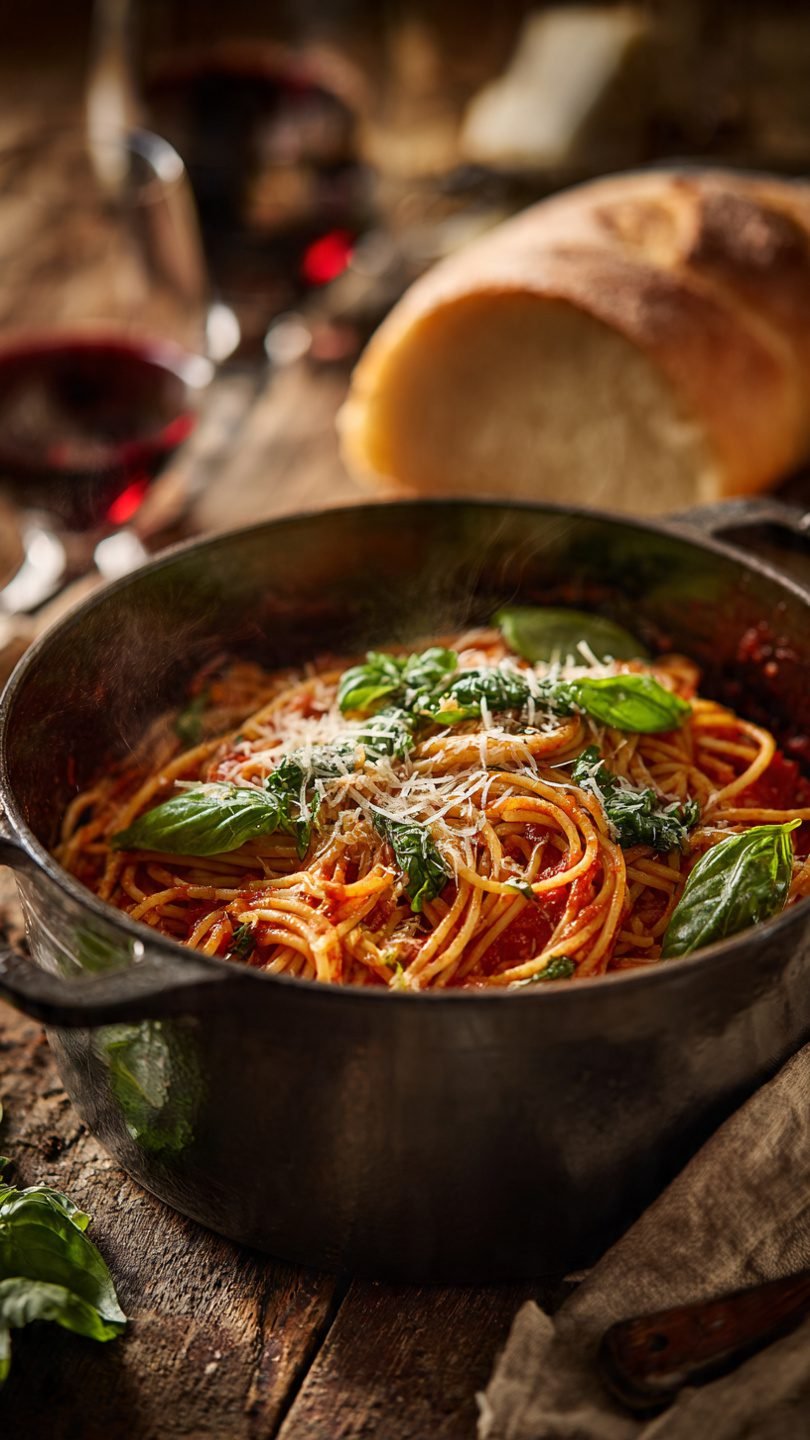
🍝 One Pot Spaghetti Recipe: Creamy, Easy & Minimal Cleanup!
So, you’re craving something tasty but you’re currently operating at about 5% energy levels and the idea of washing a colander, a saucepot, and a skillet makes you want to cry? Same. We’ve all been there. It’s 6 PM, you’re hungry, and your dishwasher is already full of yesterday’s regrets.
Enter the holy grail of lazy-but-genius cooking: The One Pot Spaghetti Recipe.
This isn’t just “dump and pray” cooking; this is a legitimate technique that turns a chaotic pantry raid into a silky, cohesive dinner. We are literally going to throw raw pasta into a pot with sauce ingredients and let physics do the rest. If you can chop an onion without weeping too much and stir a spoon, you are overqualified for this job. Let’s make some magic.
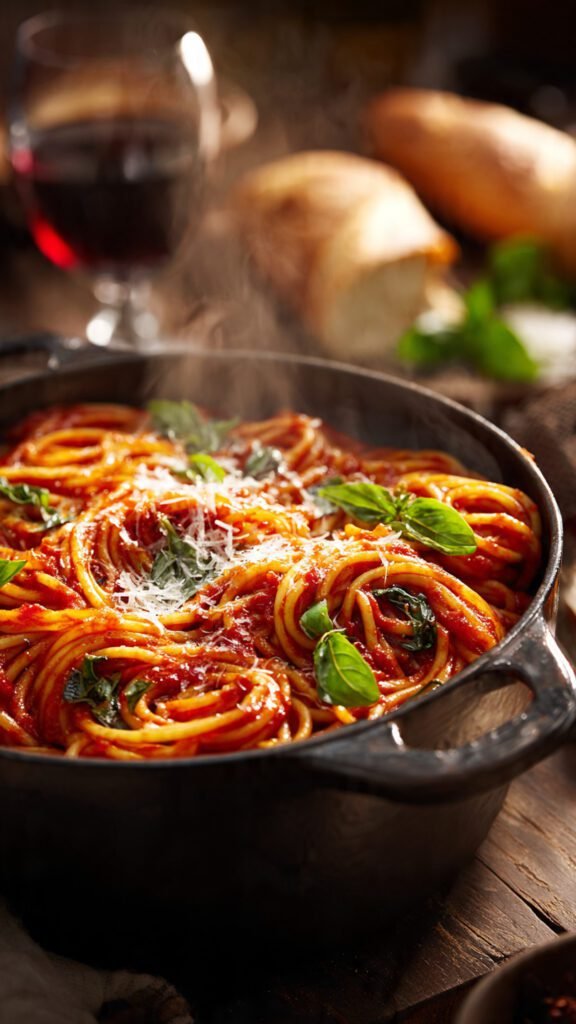
Why This Recipe is Awesome
Look, I could just say “fewer dishes” and drop the mic, but this method is actually superior for culinary reasons, not just laziness reasons. (Okay, mostly laziness reasons, but hear me out).
The Science of the Starch When you boil pasta the traditional way, you pour liters of salty, starchy water down the drain. That water is actually liquid gold. In the culinary world, starch is an emulsifier. By cooking the spaghetti directly in the tomato sauce and broth, the starch that leaches out of the pasta stays in the pot. It binds with the liquids and the fat (olive oil) to create a sauce that is naturally creamy, glossy, and clings to the noodles like a stage 5 clinger. It creates a texture you simply cannot replicate by boiling noodles separately.
Flavor Infusion Usually, pasta tastes like… well, boiled flour water, until you coat it in sauce. Here, the pasta acts like a sponge. As it rehydrates, it’s drinking up garlic, onion, basil, and tomato goodness from the inside out. Every bite is seasoned through to the core.
It’s Idiot-Proof (Mostly) This recipe is incredibly forgiving. If it looks dry? Add water. Looks too soupy? Keep simmering. It’s flexible, adaptable, and honestly, watching the hard noodles slump into the sauce is weirdly satisfying. It’s low-stress cooking for high-stress days.
Speed We are talking 20 minutes from “what’s for dinner?” to “mouth full of carbs.” No waiting for a massive stockpot of water to boil. No draining. Just cooking and eating.
Ingredients You’ll Need
We are keeping this classic, but feel free to raid your fridge for extras. Here is the base squad:
- Spaghetti: Standard durum wheat semolina. Avoid angel hair (it turns to mush) and avoid the fresh refrigerated stuff (it cooks too fast). Use the dried stuff from the box.
- The Aromatics (Onion & Garlic): One yellow onion and as much garlic as your soul tells you to use. If the recipe says 3 cloves, we all know that means 6.
- Olive Oil: Use a decent Extra Virgin Olive Oil. Since the ingredient list is short, the flavor of the oil actually matters here.
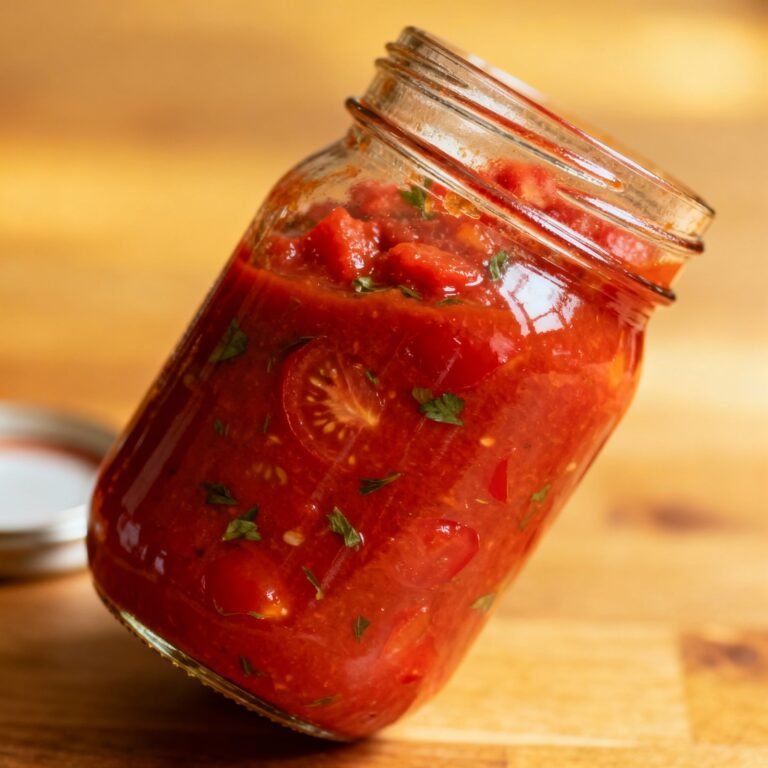
- Canned Tomatoes: I prefer a can of crushed tomatoes or tomato purée. You can use diced, but the texture won’t be as smooth. If you want to be fancy, splurge on San Marzano tomatoes.
- Liquid (Broth + Water): Chicken broth or vegetable broth adds depth that plain water lacks. We usually do a 50/50 split of broth and water so it isn’t too salty.
- Dried Herbs: Oregano, basil, and red pepper flakes (for that little kick). Dried herbs work better than fresh during the cooking process because they withstand the heat.
- Salt & Pepper: Crucial. You must season as you go.
- Fresh Basil & Parmesan: For the finish. Do not skip the cheese. The cheese is the glue that holds our lives together.
Step-by-Step Instructions
Ready to cook? Grab your favorite large pot (a Dutch oven is perfect if you have one) and let’s do this.
1. The Sauté Sizzle Place your pot over medium-high heat and drizzle in a generous amount of olive oil. Once it shimmers (don’t let it smoke!), toss in your diced onions. Sauté them for about 4-5 minutes until they look translucent and smell sweet.
- Sensory Check: You want that soft sizzling sound, not a loud crackle. If it’s too loud, turn the heat down. We aren’t burning down the house today. Add the minced garlic and red pepper flakes for the last 30 seconds. The moment you smell the garlic, move to step 2.
2. The Deglaze & Dump Pour in your canned tomatoes, broth, water, dried oregano, and a big pinch of salt. Stir it all together to combine the flavors. Scrape the bottom of the pot with your wooden spoon to get up any browned bits of onion—that’s pure flavor (fond) right there.

3. The Pasta Plunge Bring the liquid to a rolling boil. This is important—don’t add pasta to cold water. Once bubbling, add your spaghetti.
- Pro Tip: You might need to break the spaghetti in half to fit it in the pot. I know, I know, Italians just felt a disturbance in the force. But for one-pot cooking, it ensures even cooking. If you refuse to break it, fan the noodles out and push them down gently as they soften.
4. The “High Maintenance” Simmer Reduce the heat to medium-low so it’s at a gentle simmer. This is the part where you can’t just walk away and watch TikTok. You must stir.
- Why? Because the starch is releasing into a small amount of water. If you don’t move it, the pasta will stick to the bottom and clump together into a solid brick of sadness.
- Technique: Every 2 minutes, use tongs to lift and separate the strands. Ensure nothing is sticking to the corners of the pot.
5. The Transformation Cook for about 9–12 minutes (or whatever your package says, plus 2 minutes).
- Watch the Magic: Around the 8-minute mark, you’ll notice the liquid changing. It goes from “watery soup” to a thick, glossy, bubbling sauce. The sound will change from a splash to a thick “gloop-gloop.”
- The Taste Test: Bite into a noodle. It should be al dente—firm to the bite, but not chalky in the middle. If the liquid is gone but the pasta is still hard, add a splash (1/4 cup) of hot water and keep going.
6. The Glossy Finish Turn off the heat. It might look slightly runnier than you want—that’s okay! It tightens up significantly as it cools. Stir in a handful of fresh basil and a mountain of grated Parmesan cheese. Stir vigorously. The cheese emulsifies with the starch to create that restaurant-quality sheen.
Common Mistakes to Avoid
Even though this is easy, there are a few traps that rookies fall into. Avoid these, and you’re golden.
- Using a Pot That’s Too Small: If you crowd the pasta, it clumps. You need surface area for the water to evaporate and the noodles to swim. Go for a wide skillet or a large Dutch oven, not a tiny saucepan.
- Walking Away: I cannot stress this enough: Stir. The. Pot. If you leave this unattended for 10 minutes, you will return to a scorched disaster that requires a chisel to clean.
- Drowning the Pasta: Don’t treat this like boiling water. You aren’t draining this. If you add 2 liters of water, you will end up with tomato soup with noodles in it. Follow the liquid ratios carefully (usually about 4-5 cups of liquid for 1 lb of pasta).
- Forgetting to Season: Because we aren’t draining salty water away, people get scared to salt. But remember, the pasta absorbs the liquid. Taste the sauce before you add the raw noodles. It should taste good. If the liquid is bland, the pasta will be bland.
Alternatives & Substitutions
Cooking is an art, not a rigid set of laws. Customize this bad boy.
- The Carnivore Edition: Brown some Italian sausage or ground beef with the onions in Step 1. Drain the excess fat before adding the liquid. Boom, Bolognese-ish.
- The “I’m Being Healthy” Version: Throw in spinach or kale in the last 2 minutes of cooking. It will wilt down into nothing but adds some nice color and vitamins (so we can pretend we eat vegetables).
- Gluten-Free Warning: You can use GF pasta, but be careful. GF pasta releases starch differently (usually rice or corn starch) and can turn to mush faster than you can say “celiac.” Check it 3 minutes before the package instructions say it’s done.
- Spice It Up: Add a teaspoon of Calabrian chili paste or extra red pepper flakes.
- Dairy-Free: Skip the Parmesan at the end and use Nutritional Yeast, or just finish with a really high-quality olive oil.
FAQ (Frequently Asked Questions)
1. Can I use other pasta shapes? Absolutely. Penne, fusilli, and rigatoni work great (and are actually easier to stir than spaghetti). Just keep an eye on the liquid levels; tube shapes drink up sauce like crazy.
2. My sauce is too watery! What did I do? Relax. Take the lid off (if it’s on) and turn the heat up a tiny bit. Let it boil off. Also, let it sit for 5 minutes off the heat before serving. Pasta is a thirsty carb; it will soak up that excess liquid while it cools.
3. My sauce is too dry and the pasta is crunchy! Help! Easy fix. Add hot water or broth, 1/2 cup at a time, and keep stirring until the pasta surrenders.
4. Can I use fresh tomatoes instead of canned? You can, but you’ll need a lot of them, and the skin might get annoying unless you peel them first (and who has time for that?). Canned tomatoes provide a consistent acidity and liquid content that makes this recipe reliable.
5. Can I add wine? Now we’re talking. Yes! After sautéing the onions/garlic, pour in a splash of dry red or white wine. Let it bubble for a minute to burn off the alcohol smell before adding the tomatoes/broth. It adds a lovely complexity.
6. How are the leftovers? TBH, pasta is always best fresh. However, this reheats okay. The pasta will absorb all the remaining sauce in the fridge, so when you reheat it, add a splash of water or oil to loosen it back up.
7. Is this actually Italian? Is it authentic strictly traditional Italian? Probably not. Would an Italian Nonna chase me out of the kitchen with a wooden spoon? Maybe. Does it taste delicious? Yes. And that’s what matters.
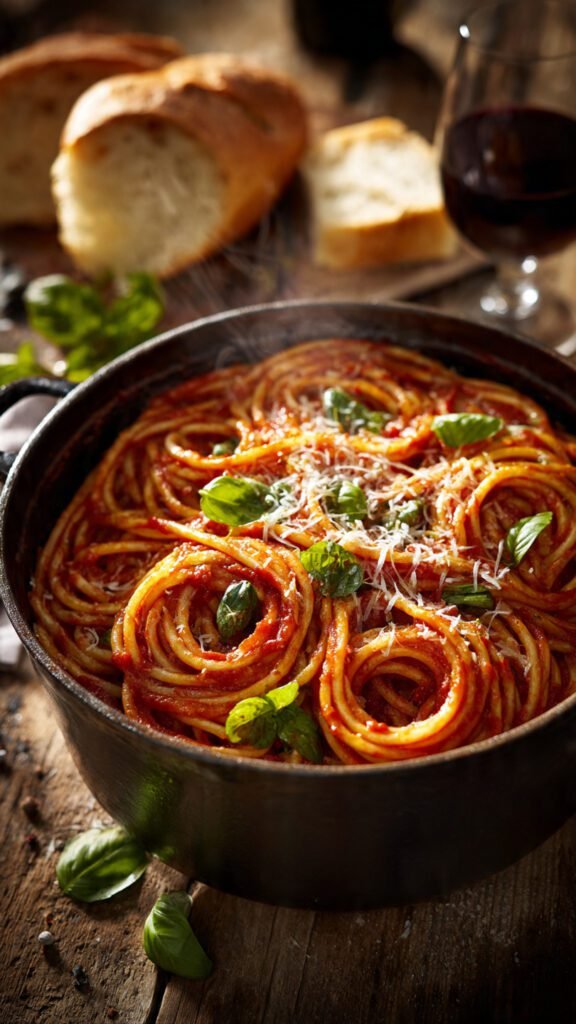
Final Thoughts
There you have it. You have successfully navigated the treacherous waters of dinner time without destroying your kitchen. You’ve created a One Pot Spaghetti Recipe that is creamy, savory, and deeply satisfying.
The best part? You only have one pot to wash. Maybe two if you count the wine glass you used while cooking (which is mandatory, in my opinion). Now go impress someone—or just yourself—with your new culinary efficiency. You’ve earned it!