Pad Thai Recipe Vegetarian: Authentic Flavor, Meat-Free Delight!
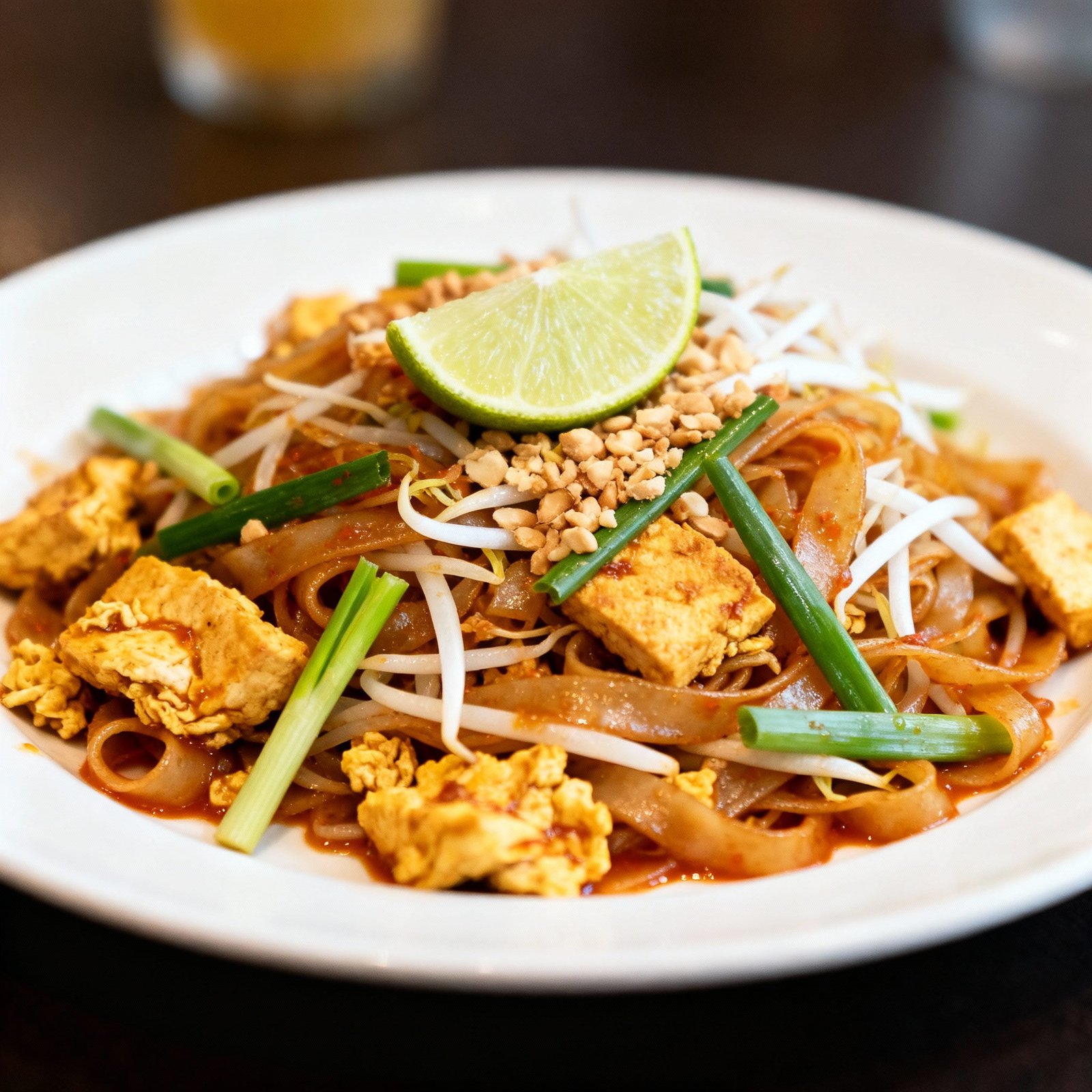
Craving that tangy, sweet, and savory explosion of flavor that is Pad Thai, but want a vegetarian version? Look no further! This recipe delivers all the authentic tastes you love, without any meat. We’re talking perfectly cooked rice noodles, a vibrant and flavorful sauce, crunchy peanuts, and fresh vegetables, all coming together in a symphony of textures and tastes. Get ready to experience Pad Thai bliss in your own kitchen, completely guilt-free and vegetarian-friendly!
Why This Recipe Works
Many vegetarian Pad Thai recipes fall short, lacking the depth and complexity of the traditional dish. This recipe, however, is meticulously crafted to capture the essence of authentic Pad Thai while remaining entirely plant-based. Here’s why it works:
- Tamarind Paste is Key: Tamarind paste provides the signature sourness that defines Pad Thai. Don’t skip it!
- Balanced Sweetness: Palm sugar (or brown sugar as a substitute) balances the sourness of the tamarind, creating a harmonious sweet and sour profile.
- Umami Boost: We use a combination of soy sauce and vegetarian fish sauce (made with mushrooms or seaweed) to replicate the umami depth traditionally provided by fish sauce.
- Textural Contrast: The combination of soft noodles, crunchy peanuts, crisp bean sprouts, and firm tofu creates a delightful textural experience.
- Freshness Matters: Fresh lime juice and cilantro add brightness and freshness, completing the dish.
Ingredients
- Rice Noodles: 8 ounces dried flat rice noodles (about 1/4 inch wide)
- Firm Tofu: 1 block (14-16 ounces), pressed and cubed
- Vegetable Oil: 2 tablespoons, divided
- Garlic: 3 cloves, minced
- Shallots: 2 small, thinly sliced
- Eggs: 2 large (optional, for a vegetarian version that includes eggs) – *Omit for Vegan*
- Bean Sprouts: 2 cups
- Chinese Chives (Garlic Chives): 1/2 cup, cut into 1-inch pieces (can substitute with scallions)
- Peanuts: 1/2 cup, roasted and chopped
- Lime: 2, cut into wedges
- Cilantro: 1/4 cup, chopped
- Pad Thai Sauce:
- Tamarind Paste: 3 tablespoons
- Palm Sugar: 3 tablespoons, grated (or brown sugar)
- Soy Sauce: 2 tablespoons
- Vegetarian Fish Sauce: 1 tablespoon (made with mushrooms or seaweed)
- Rice Vinegar: 1 tablespoon
- Water: 2-3 tablespoons, as needed to thin the sauce
- Red Pepper Flakes: 1/4 teaspoon (or more to taste)
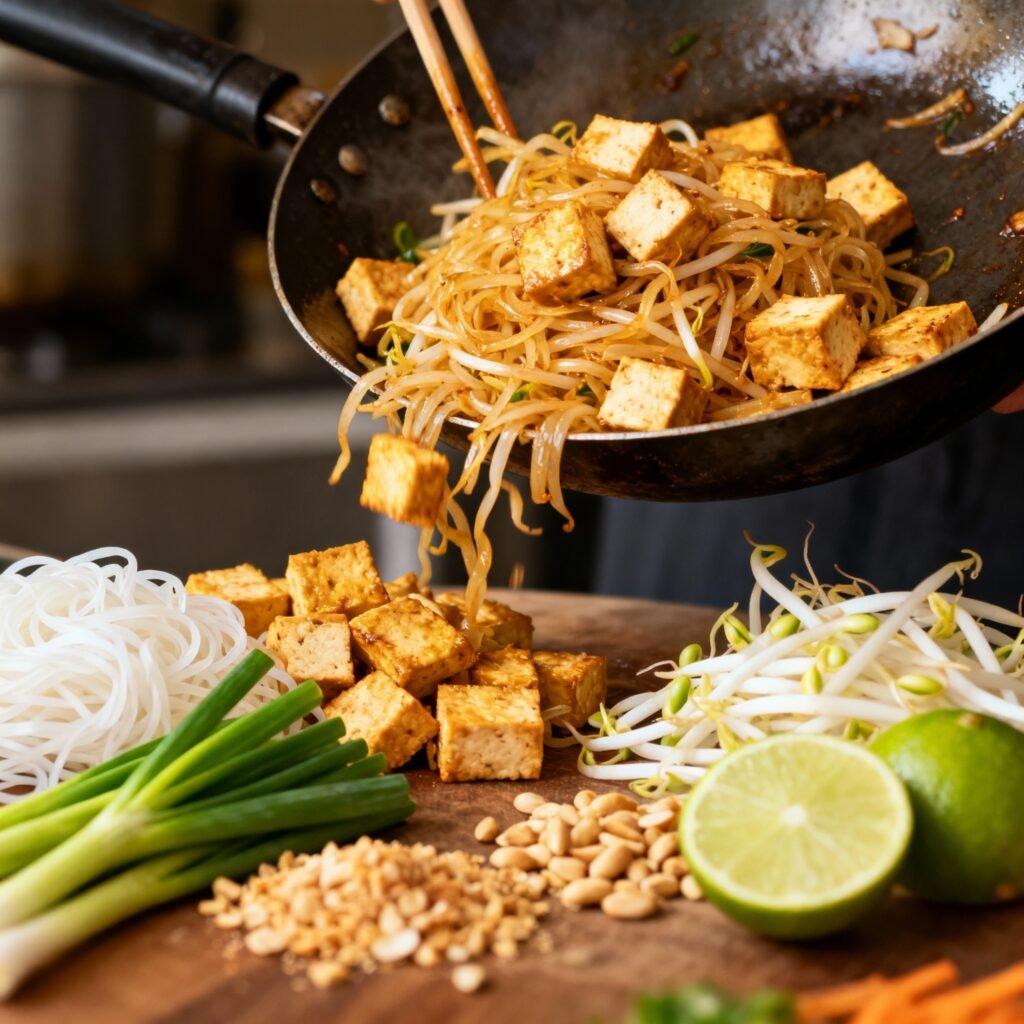
Instructions
- Prepare the Noodles: Soak the rice noodles in warm water for 20-30 minutes, or until pliable but not fully cooked. Drain well.
- Press the Tofu: Wrap the tofu in paper towels and place a heavy object on top for at least 30 minutes to remove excess water. This will help it crisp up when stir-fried. Cut into 1/2-inch cubes.
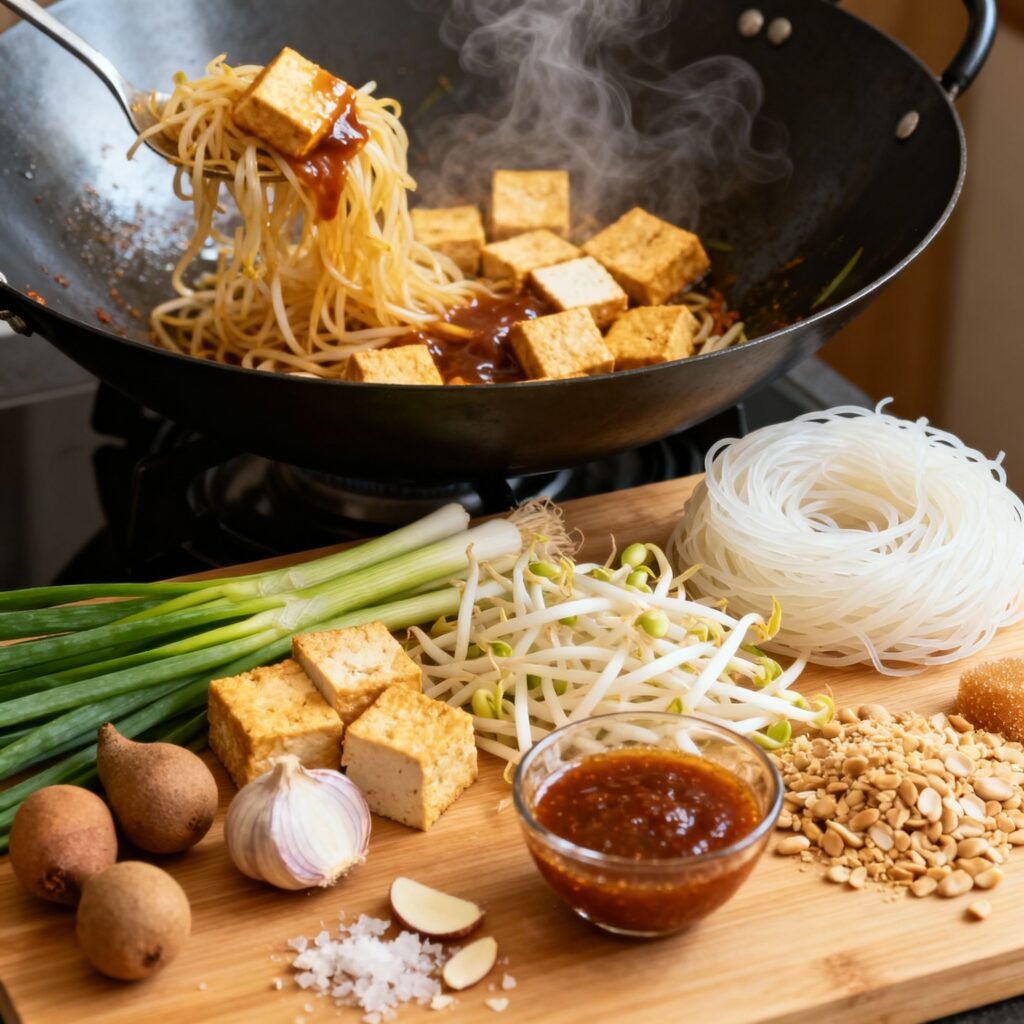
- Make the Pad Thai Sauce: In a small bowl, whisk together the tamarind paste, palm sugar (or brown sugar), soy sauce, vegetarian fish sauce, rice vinegar, red pepper flakes, and 2 tablespoons of water. Taste and adjust seasonings as needed. Add more water if the sauce is too thick.
- Stir-Fry the Tofu: Heat 1 tablespoon of vegetable oil in a large wok or skillet over medium-high heat. Add the tofu and stir-fry until golden brown and crispy on all sides, about 5-7 minutes. Remove from the wok and set aside.
- Cook the Aromatics: Add the remaining 1 tablespoon of vegetable oil to the wok. Add the minced garlic and sliced shallots and stir-fry until fragrant, about 1 minute. Be careful not to burn them.
- Add the Eggs (Optional): If using eggs, push the garlic and shallots to one side of the wok. Crack the eggs into the empty space and scramble them lightly.
- Cook the Noodles: Add the soaked and drained rice noodles to the wok. Pour the Pad Thai sauce over the noodles and toss to coat evenly. Cook for 3-5 minutes, stirring frequently, until the noodles are tender and have absorbed the sauce. Add a tablespoon of water if the noodles start to stick.
- Combine and Finish: Add the cooked tofu, bean sprouts, and Chinese chives (or scallions) to the wok. Toss everything together until well combined and heated through, about 1 minute.
- Serve: Divide the Pad Thai among serving plates. Garnish with chopped peanuts, fresh cilantro, and lime wedges. Serve immediately.
Tips for Success
- Don’t Overcook the Noodles: Overcooked noodles will become mushy. Soak them until pliable, but still slightly firm. They will continue to cook in the wok.
- Adjust the Sauce to Your Taste: Taste the Pad Thai sauce and adjust the seasonings as needed. If you prefer a sweeter Pad Thai, add more palm sugar. If you prefer a more sour Pad Thai, add more tamarind paste.
- High Heat is Key: Use high heat to stir-fry the ingredients quickly. This will help to create a smoky flavor and prevent the noodles from becoming soggy.
- Work in Batches: If you are making a large batch of Pad Thai, it is best to cook it in batches. This will prevent overcrowding the wok and ensure that the noodles cook evenly.
- Use a Wok (If Possible): A wok is ideal for making Pad Thai because its sloped sides allow for even heat distribution and easy tossing. However, a large skillet will also work.
- Prepare Ingredients in Advance: Chop all the vegetables, press the tofu, and make the sauce before you start cooking. This will make the cooking process much smoother.
Storage Instructions
Leftover Pad Thai can be stored in an airtight container in the refrigerator for up to 2 days. Reheat in a skillet over medium heat, adding a splash of water if necessary to prevent the noodles from drying out. The texture of the noodles may change slightly upon reheating.
FAQ
Q: Can I make this recipe vegan?
A: Yes! Simply omit the eggs. Ensure your vegetarian fish sauce is also vegan, made from mushrooms or seaweed.
Q: Where can I find tamarind paste?
A: Tamarind paste can be found in most Asian grocery stores. It is also available online.
Q: Can I use a different type of noodle?
A: While flat rice noodles are traditional, you can experiment with other types of noodles, such as thin rice noodles or even wheat noodles. However, the texture and flavor will be slightly different.
Q: Can I add other vegetables?
A: Absolutely! Feel free to add other vegetables such as carrots, bell peppers, or broccoli.
Q: What can I use instead of vegetarian fish sauce?
A: If you can’t find vegetarian fish sauce, you can use a little extra soy sauce or a few drops of mushroom soy sauce to add umami flavor.
Conclusion
This vegetarian Pad Thai recipe is a delicious and satisfying way to enjoy a classic Thai dish. By using high-quality ingredients and following these simple instructions, you can create a flavorful and authentic Pad Thai experience in your own kitchen. So, gather your ingredients, fire up your wok, and get ready to savor the taste of Thailand!