🥕 The Best Ever Peas and Carrots Recipe (Not Mushy!)
Look, I get it. You’re staring into the abyss of your refrigerator, craving something that resembles a vegetable, but you absolutely do not have the energy for a twelve-step culinary project. You see a bag of frozen peas. You see a couple of lonely carrots in the crisper drawer. Your brain goes, “Eh, peas and carrots?” followed immediately by a traumatic flashback to dull, gray, boiled cafeteria mush.
Stop right there. We are deleting that memory.
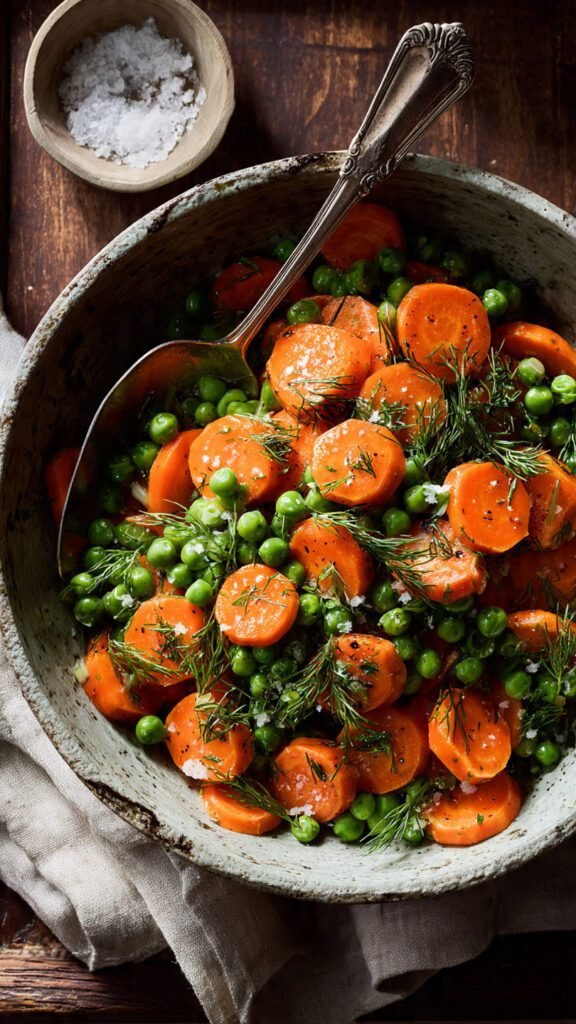
Today, we’re reclaiming the humble peas and carrots recipe. We’re taking two of the most basic, often-ignored veggies and turning them into a side dish that actually tastes like something. It’s vibrant, it’s buttery, it’s got a little garlic kick, and it’s ready before you can decide what Netflix show you aren’t going to actually watch tonight. Let’s make vegetables okay again.
Why This Recipe is Awesome
Okay, so why are we dedicating an entire blog post to peas and carrots? Because, my friend, when treated with just a tiny shred of respect, this combo is actually practically perfect in every way.
It’s the Ultimate “Oops I Forgot a Side Dish” Savior You’ve spent all your energy marinating the chicken or searing the steak. Suddenly, you realize the plate looks incredibly beige. This recipe is the answer. It goes from “zero” to “on the table” in about 15 minutes flat. It doesn’t require any fancy equipment—just a skillet and a knife. It’s the culinary equivalent of throwing on a nice blazer over a t-shirt; suddenly, you look put together with minimal effort.
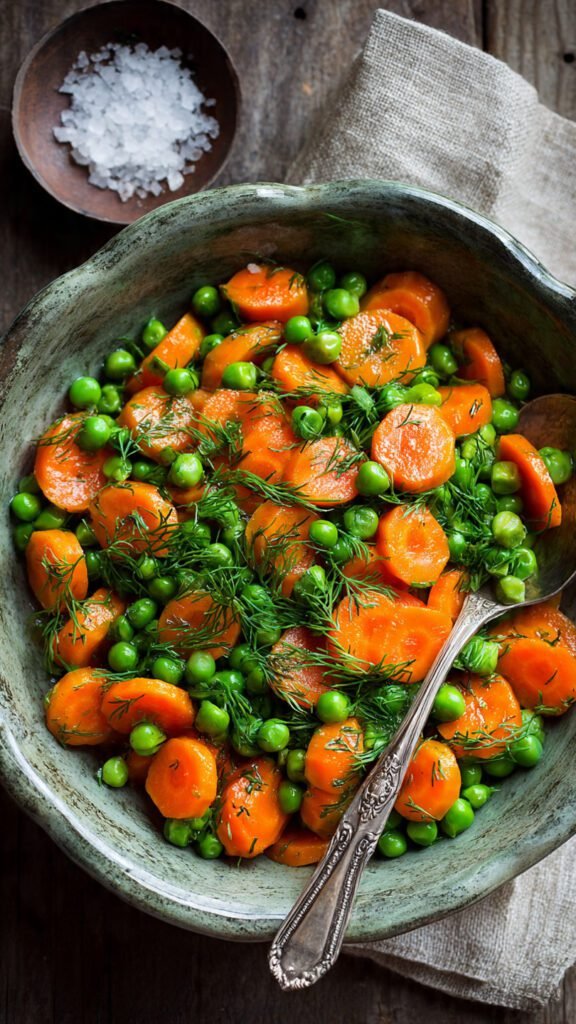
Texture that Actually Doesn’t Suck The biggest crime against peas and carrots is overcooking them until they are a homogeneous paste. Not today, Satan. The magic here is in the timing. We are aiming for carrots that are tender but still possess a little bit of bite (what the fancy chefs call al dente), and peas that literally pop in your mouth with sweet, grassy flavor. By sautéing in butter rather than drowning them in boiling water, we preserve their dignity—and their texture.
The Flavor Profile is Surprisingly Legit We aren’t just heating up veggies here; we are building flavor. We’re using butter (because life is too short for plain steamed veggies), a hit of garlic to wake up the palate, and a splash of broth to create a savory, glossy glaze that coats everything perfectly. It’s a balance of savory, sweet (natural sweetness from the carrots and peas), and rich. It turns a “have to eat” veggie into a “want to eat” veggie. It’s nostalgia, but upgraded for your adult palate.
Ingredients You’ll Need
Don’t panic, you probably have all of this right now. If you don’t, a quick corner store run will fix it.
- Carrots: You’ll need about 3 medium-sized carrots. You want fresh ones here that snap when you break them. Those limp, bendy guys at the bottom of the drawer? Maybe save those for stock. We are peeling them and chopping them into bite-sized rounds or half-moons.
- Frozen Peas: Honestly, frozen peas are superb. They are flash-frozen at peak ripeness, meaning they are often sweeter than “fresh” peas that have been sitting on a truck for a week. You need about a cup and a half. No need to thaw them first; they love the shock of the hot pan.
- Butter: Salted or unsalted, whatever you have. We are using a solid two tablespoons. Don’t look at me like that; this is why it tastes good. It’s the vehicle for flavor here.
- Garlic: Two cloves, minced fine. This adds that savory background note that stops the dish from being overly sweet.
- Vegetable or Chicken Broth: Just about 1/4 cup. This creates steam to cook the carrots through and then reduces down with the butter to create that gorgeous, glossy sauce I mentioned earlier. Water works in a pinch, but broth adds way more depth.
- Salt and Pepper: Essential. Veggies love salt. Be generous with freshly cracked pepper.
- Optional Glaziers: A tiny pinch of sugar or a drizzle of honey can really help the carrots caramelize and highlight their natural sweetness, especially if your carrots are a bit older.
- The “Fancy” Finish (Optional but Recommended): Fresh herbs. A sprinkle of chopped fresh dill, parsley, or chives at the very end makes you look like a professional chef.
Step-by-Step Instructions
Okay, let’s do this. It’s fast, so have your carrots chopped before you turn on the heat.
1. The Carrot Head Start Because carrots are dense root vegetables and peas are delicate little flowers, they cannot be cooked for the same amount of time. Melt your butter in a large skillet over medium heat. Once it’s foaming and smelling like heaven, toss in your chopped carrots. Sauté them for about 4–5 minutes. You want to hear a gentle sizzle. We are looking for them to get just a little bit shiny and start softening around the edges.
2. The Garlic Bloom & Steam Chamber Toss in your minced garlic and cook for literally 30 seconds until you can smell it. Don’t let it burn, or it will taste bitter and sad. Immediately pour in the broth (it will hiss loudly—that’s good drama). Add your pinch of sugar/honey if using, plus a solid pinch of salt and pepper. Turn the heat down slightly to medium-low and pop a lid on the skillet. We are steaming the carrots now to get them tender through to the center. Let them hang out covered for about 3–5 minutes.
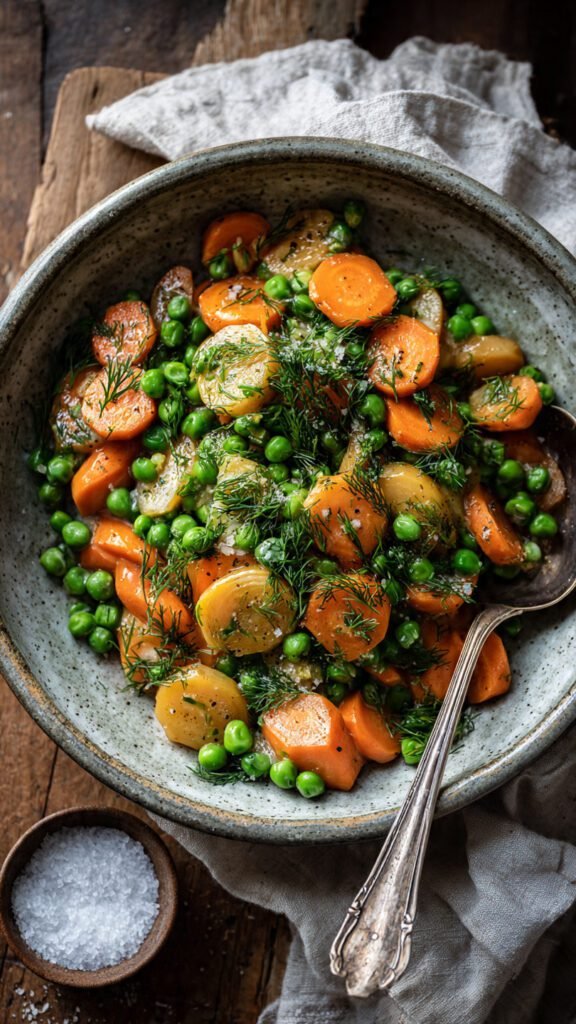
3. The Pea Drop Remove the lid. The liquid should be mostly reduced, and the carrots should be fork-tender (test one—don’t burn your mouth). Now, dump in the frozen peas. Stir everything together. Turn the heat back up to medium. The cold peas will lower the pan temperature temporarily.
4. The Glaze and Finish Cook uncovered for just another 2–3 minutes. We are doing two things here: heating the peas through until they are bright green and plump, and evaporating the rest of that liquid so the butter and broth form a tight glaze around the veggies. When the liquid is gone and everything is glistening, pull the pan off the heat. This is crucial. If you keep cooking, the peas turns gray.
5. Season and Serve Taste it. Does it need more salt? More pepper? Now is the time to stir in your fresh herbs if you’re feeling fancy. Serve immediately while hot and glorious.
Common Mistakes to Avoid
Listen, it’s an easy recipe, but you can still mess it up if you try hard enough. Avoid these rookie moves.
- The Uneven Chop: Try to cut your carrots into roughly the same size pieces. If you have some gigantic chunks and some paper-thin slices, the thin ones will turn to mush before the big dudes are even warm in the middle. Uniformity is key to texture nirvana.
- The Canned Veggie Trap: Please, for the love of all that is holy, do not use canned carrots or canned peas for this. They are already cooked to death in the canning process. You cannot save them. Fresh carrots and frozen peas only, please.
- Adding Peas Too Early: I cannot stress this enough. Peas need practically zero cooking time. If you add them at the beginning with the carrots, you will end up with drab, olive-green, wrinkly little pellets. We want bright, vibrant green pops of sweetness. Add them last!
- Fear of Salt: Vegetables are mostly water. They need salt to wake up their flavor. If you taste it at the end and it tastes “flat” or boring, it almost certainly just needs another pinch of kosher salt.
Alternatives & Substitutions
Customize this bad boy based on what’s currently rotting in your fridge.
- Dairy-Free / Vegan: Easy swap. Ditch the butter and use a good quality olive oil or a plant-based butter substitute. It won’t have that distinct buttery richness, but it will still be good.
- Add Some Crunch: Want to texture max? Toss in some sliced almonds or pine nuts during the last minute of cooking for a nutty crunch that contrasts nicely with the soft veggies.
- The Retro Vibe: Want to really lean into the 1950s nostalgia? Add some frozen pearl onions in with the carrots during step one.
- Switch up the Herbs: Dill is classic with carrots and peas, but fresh mint is surprisingly amazing (it gives it an English garden vibe). Thyme gives it a deeper, more savory roast-dinner feel.
- Make it creamy: If you’re feeling extra indulgent, stir in a tablespoon of heavy cream or crème fraîche right at the end when you pull it off the heat. Oh baby.
FAQ (Frequently Asked Questions)
Can I use a bag of frozen mixed peas and carrots? Ugh. Okay, look. You can. But those cubed frozen carrots never have the same sweetness or texture as fresh ones sliced up. It will work in a pinch, just skip the steaming step and sauté the whole frozen bag in butter until heated through. But FYI, fresh carrots are way better.
Is this recipe healthy? I mean, it’s vegetables. So yes. We are adding butter, which adds fat, but fats are essential for absorbing the fat-soluble vitamins (like Vitamin A) in the carrots. IMO, if a little butter gets you to eat a plate of veggies, it’s a net win for your health.
What can I serve this with? Literally almost anything Western-style. Roast chicken, seared steak, pork chops, meatloaf (the ultimate pairing), or a nice piece of baked salmon. It’s the universal donor of side dishes.
Can I make this ahead of time? Technically yes, but it’s 100% better fresh. When you reheat it, you risk overcooking those delicate peas. Since it only takes 15 minutes, try to make it right before serving. If you must reheat, do it gently in a pan, not the microwave nuke-box.
My kids hate green things. Will they eat this? The million-dollar question. The sweetness of the carrots and the butter glaze is usually enough to win over picky eaters. Try calling it “confetti veggies” or something equally cute. No guarantees, but this has a higher success rate than steamed broccoli.
Final Thoughts
See? That wasn’t so painful. You’ve successfully taken the most boring vegetable combination on the planet and turned it into something vibrant, tasty, and actually enjoyable. You didn’t boil anything into gray sludge, and you used butter like a responsible adult.
This peas and carrots recipe is proof that you don’t need hours in the kitchen or expensive ingredients to make good food. Sometimes you just need good technique and a little bit of love (and garlic). Now go impress someone—or just yourself—with your newfound ability to make a side dish that doesn’t taste like sadness. You’ve earned it!