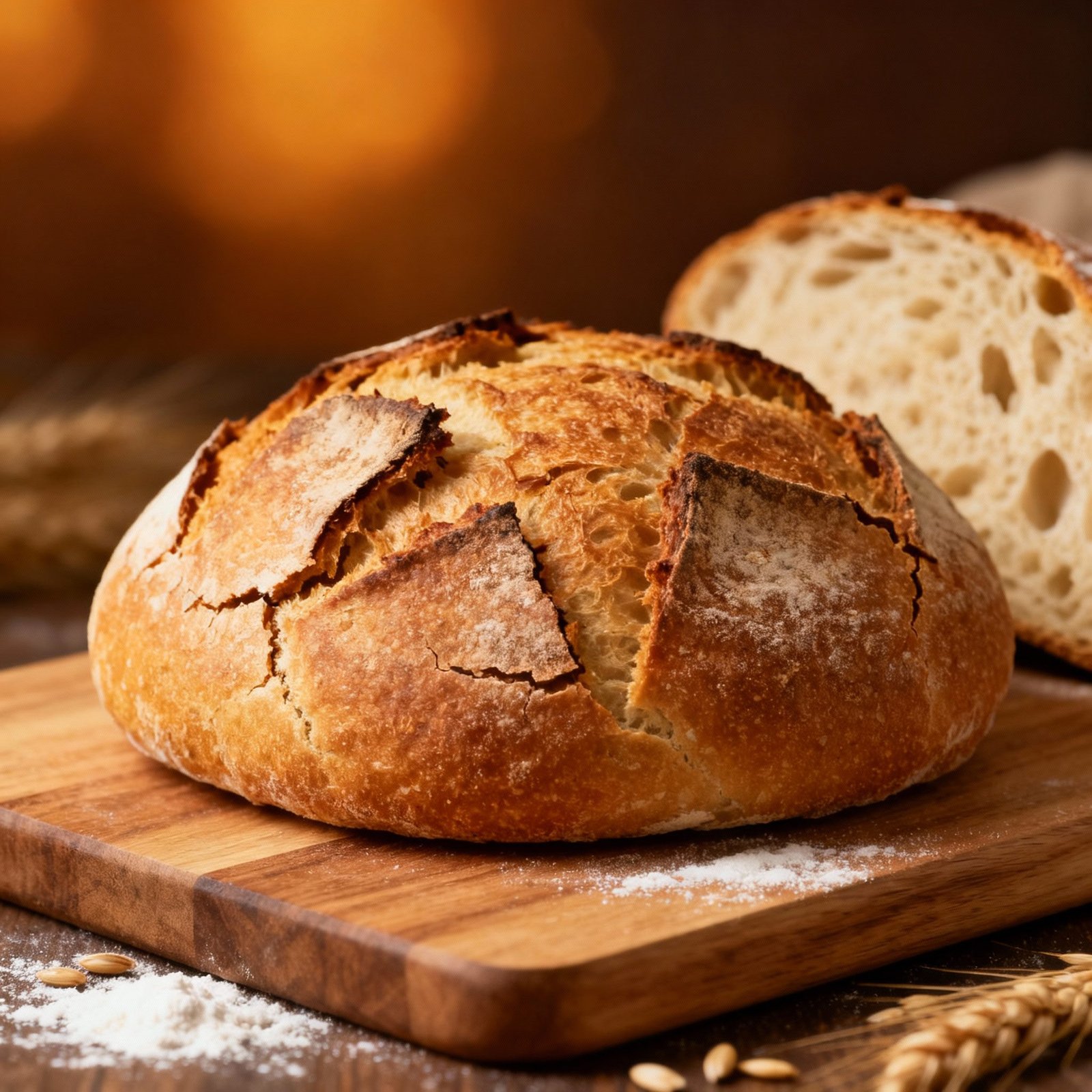
Rustic Bread Recipe Easy: No-Knead Perfection!
Imagine sinking your teeth into a crusty, flavorful loaf of bread, the kind that makes you close your eyes and savor every bite. Now, imagine making that bread yourself, with minimal effort and maximum reward. This rustic bread recipe is your ticket to homemade bread bliss, without the fuss of kneading or complicated techniques. Forget store-bought loaves – this is bread baking simplified, delivering bakery-quality results from your own kitchen.
Why This Recipe Works
This recipe is all about simplicity and harnessing the power of time. The no-knead method allows gluten to develop slowly over a long period, resulting in a chewy interior and a beautifully crusty exterior. Here’s why it’s a winner:
- No Kneading Required: Seriously! The long fermentation process does all the work, developing gluten without any elbow grease.
- Minimal Ingredients: Just four basic ingredients are all you need: flour, water, salt, and yeast.
- Incredibly Flavorful: The extended fermentation time develops a complex, slightly tangy flavor that’s far superior to quick-rise breads.
- Impressive Crust: Baking in a Dutch oven traps steam, creating a moist environment that results in a perfectly crisp and golden-brown crust.
- Easy to Adapt: Feel free to experiment with different flours, add-ins like herbs or seeds, or adjust the baking time to your preference.
- Beginner-Friendly: This recipe is perfect for novice bakers who want to experience the satisfaction of making their own bread.
Ingredients
- 3 cups (384g) all-purpose flour, plus more for dusting
- 1 ½ cups (360ml) lukewarm water (around 105-115°F or 40-46°C)
- 1 ½ teaspoons (9g) salt
- ¼ teaspoon (1g) instant dry yeast

Instructions
- Combine Ingredients: In a large bowl, whisk together the flour, salt, and yeast. Add the lukewarm water and stir until just combined. The dough will be shaggy and sticky – that’s perfectly normal!
- First Rise (12-18 hours): Cover the bowl tightly with plastic wrap or a lid. Let the dough rise at room temperature for 12-18 hours. The longer it rises, the more flavor it will develop. You’ll know it’s ready when it has doubled or tripled in size and is covered in bubbles.
- Shape the Dough: Generously flour a clean surface. Gently turn the dough out onto the floured surface. It will be very sticky, so be generous with the flour. Using floured hands, gently shape the dough into a round or oval. Try not to deflate the dough too much.
- Second Rise (1-2 hours): Line a bowl with a clean kitchen towel and dust it generously with flour. Place the shaped dough in the bowl, seam-side down. Cover with the edges of the towel and let rise for 1-2 hours.
- Preheat the Oven: About 30 minutes before the end of the second rise, preheat your oven to 450°F (232°C). Place a Dutch oven (with its lid) in the oven while it preheats. This is crucial for creating that perfect crust.
- Bake the Bread: Carefully remove the hot Dutch oven from the oven. Remove the lid. Gently invert the bowl with the dough over the Dutch oven, allowing the dough to drop into the pot. Score the top of the dough with a sharp knife or lame. This allows the bread to expand properly during baking.
- Covered Bake (30 minutes): Cover the Dutch oven with the lid and bake for 30 minutes.
- Uncovered Bake (15-20 minutes): Remove the lid and continue baking for another 15-20 minutes, or until the crust is deep golden brown and the internal temperature reaches 200-210°F (93-99°C).
- Cool Completely: Carefully remove the bread from the Dutch oven and place it on a wire rack to cool completely before slicing. This is important! Cutting into the bread while it’s still hot will result in a gummy texture.
Tips for Success
- Use Lukewarm Water: The water temperature is important for activating the yeast. Too hot, and you’ll kill the yeast. Too cold, and the yeast won’t activate properly.
- Don’t Overmix: Just stir the ingredients until they are combined. Overmixing will develop the gluten too much and result in a tough bread.
- Be Patient: The long fermentation time is key to developing flavor and texture. Don’t rush the process.
- Flour Generously: The dough is very sticky, so be generous with the flour when shaping it.
- Use a Sharp Knife: When scoring the bread, use a sharp knife or lame to make clean cuts.
- Don’t Skip the Dutch Oven: The Dutch oven is essential for creating a steamy environment that results in a crispy crust. If you don’t have a Dutch oven, you can try baking the bread on a baking stone with a pan of water in the oven to create steam. However, the results may not be as good.
- Cool Completely: Resist the urge to cut into the bread while it’s still hot. Let it cool completely on a wire rack to allow the crumb to set properly.
- Experiment! Once you’ve mastered the basic recipe, feel free to experiment with different flours, add-ins, and baking times.
Storage Instructions
Store the cooled bread in a paper bag or a bread box at room temperature for up to 3 days. For longer storage, slice the bread and freeze it in an airtight container. Thaw the slices at room temperature or toast them directly from frozen.
FAQ
Q: Can I use bread flour instead of all-purpose flour?
A: Yes, you can use bread flour. It will result in a slightly chewier bread.
Q: Can I use active dry yeast instead of instant dry yeast?
A: Yes, but you’ll need to proof the active dry yeast first. Dissolve the yeast in the lukewarm water with a teaspoon of sugar and let it sit for 5-10 minutes, or until it becomes foamy. Then, add it to the flour and salt.
Q: My dough didn’t rise. What happened?
A: There are a few possible reasons. The water may have been too hot or too cold, killing the yeast. The yeast may have been old or inactive. The room temperature may have been too cold. Make sure your yeast is fresh and your water is the correct temperature.
Q: My bread is too dense. What did I do wrong?
A: The dough may not have risen long enough. Make sure to let it rise until it has doubled or tripled in size. You may also have deflated the dough too much when shaping it.
Q: Can I add herbs or seeds to the dough?
A: Absolutely! Add your favorite herbs, seeds, or dried fruits to the dough after the first rise.
Conclusion
This rustic bread recipe is a game-changer. It’s simple, satisfying, and delivers incredible results every time. With just a few basic ingredients and minimal effort, you can enjoy homemade bread that’s far superior to anything you can buy in a store. So, ditch the store-bought loaves and embrace the joy of baking your own rustic bread. Your taste buds (and your kitchen) will thank you!