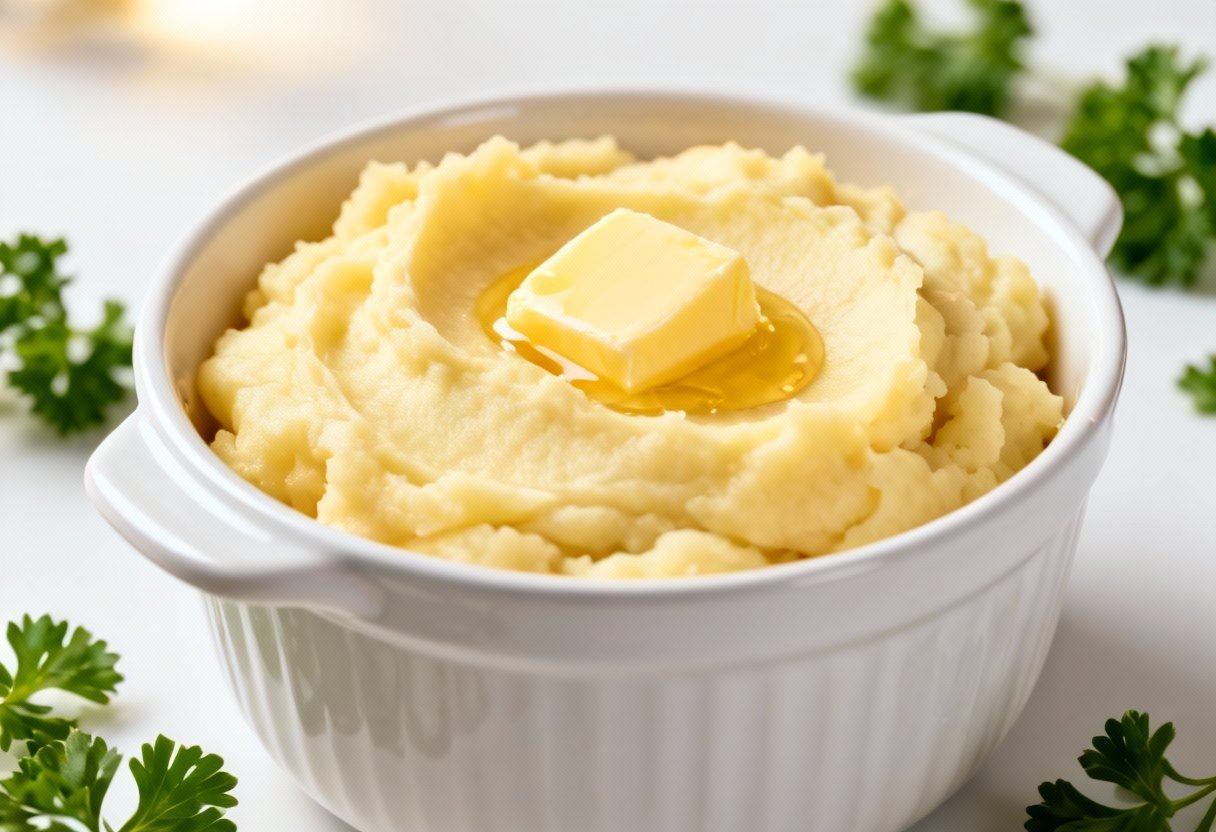
Simple Mashed Potatoes Recipe: Creamy Perfection in Minutes!
Mashed potatoes. Is there anything more comforting? A classic side dish, a blank canvas for delicious flavors, and a guaranteed crowd-pleaser. But let’s be honest, sometimes the simplest things are the hardest to perfect. Lumpy, gluey, or bland mashed potatoes are a culinary tragedy. But fear not! This recipe guarantees fluffy, creamy, and utterly delicious mashed potatoes every single time. We’re stripping away the fuss and focusing on the fundamentals, so you can whip up a batch of perfect mashed potatoes, even on a busy weeknight. Get ready to experience mashed potato nirvana!
Why This Recipe Works
This recipe isn’t just about throwing potatoes in a pot and hoping for the best. It’s built on a foundation of understanding the science behind perfect mashed potatoes. Here’s why this recipe works so well:
- Potato Choice Matters: We recommend using Yukon Gold potatoes because they have a naturally buttery flavor and creamy texture. They’re also less starchy than Russets, which helps prevent a gluey consistency. However, we also offer guidance on using Russets if that’s what you have on hand.
- Cold Water Start: Starting the potatoes in cold water ensures even cooking. This allows the potatoes to cook from the inside out, preventing the outside from becoming mushy while the inside remains undercooked.
- Gentle Cooking: Boiling the potatoes at a gentle simmer, rather than a rapid boil, helps prevent them from breaking apart and absorbing too much water.
- Draining Thoroughly: This is crucial! Excess water is the enemy of fluffy mashed potatoes. We’ll show you how to drain them properly.
- Warming the Dairy: Adding cold milk or butter can lower the temperature of the potatoes and lead to a gummy texture. Warming the dairy beforehand ensures a smooth and creamy result.
- Proper Mashing Technique: Over-mashing releases too much starch, resulting in gluey potatoes. We’ll guide you on how to mash them gently but effectively.
Ingredients
- 2 pounds Yukon Gold potatoes, peeled and quartered
- 1 teaspoon salt, plus more to taste
- 1/2 cup milk (whole milk or half-and-half recommended)
- 4 tablespoons (1/2 stick) unsalted butter, cut into pieces
- Optional: 1/4 teaspoon garlic powder, pinch of white pepper, chopped chives for garnish
Instructions
- Prepare the Potatoes: Place the peeled and quartered potatoes in a large pot. Cover with cold water, ensuring the potatoes are fully submerged. Add 1 teaspoon of salt to the water.
- Cook the Potatoes: Bring the water to a boil over medium-high heat. Once boiling, reduce the heat to a gentle simmer and cook for 15-20 minutes, or until the potatoes are fork-tender. A fork should easily slide into the center of a potato piece.
- Warm the Dairy: While the potatoes are cooking, warm the milk and butter in a small saucepan over low heat or in the microwave in 30-second intervals, stirring occasionally, until the butter is melted and the milk is warmed through. Do not boil.
- Drain the Potatoes: Once the potatoes are fork-tender, drain them thoroughly in a colander. Return the potatoes to the pot and place the pot back on the stovetop over low heat for 1-2 minutes to dry out any remaining moisture. This step is crucial for preventing soggy mashed potatoes.
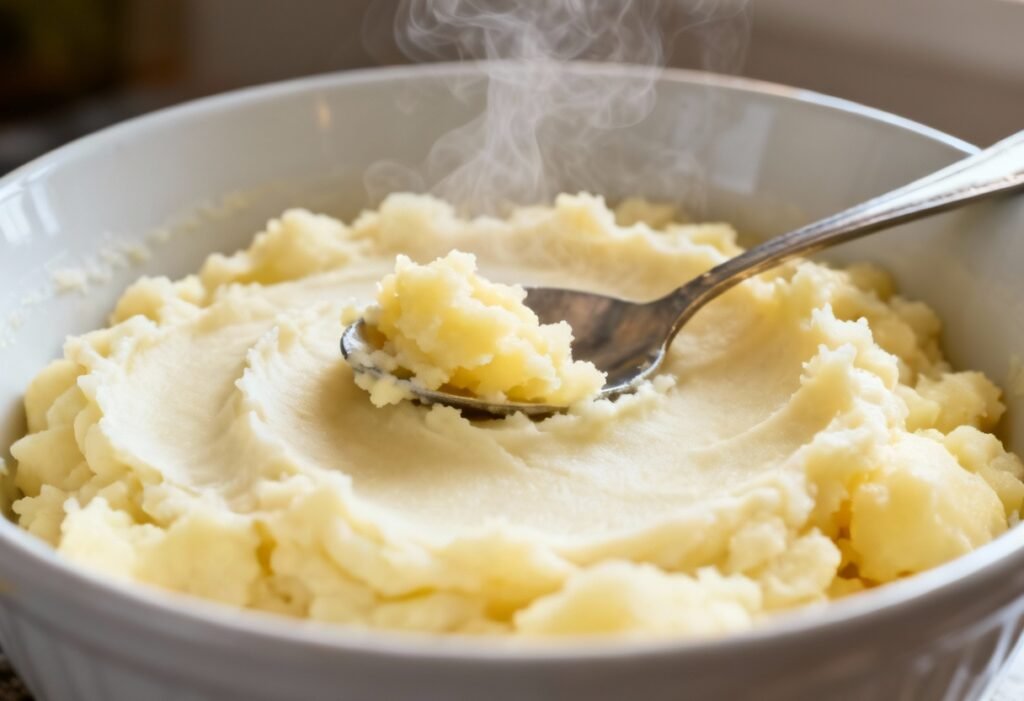
- Mash the Potatoes: Remove the pot from the heat. Using a potato masher or ricer, mash the potatoes until smooth. Avoid over-mashing, as this can make them gluey. If using a ricer, rice the potatoes directly back into the pot.
- Incorporate the Dairy: Gradually add the warmed milk and butter to the mashed potatoes, mixing until smooth and creamy. Be careful not to overmix.
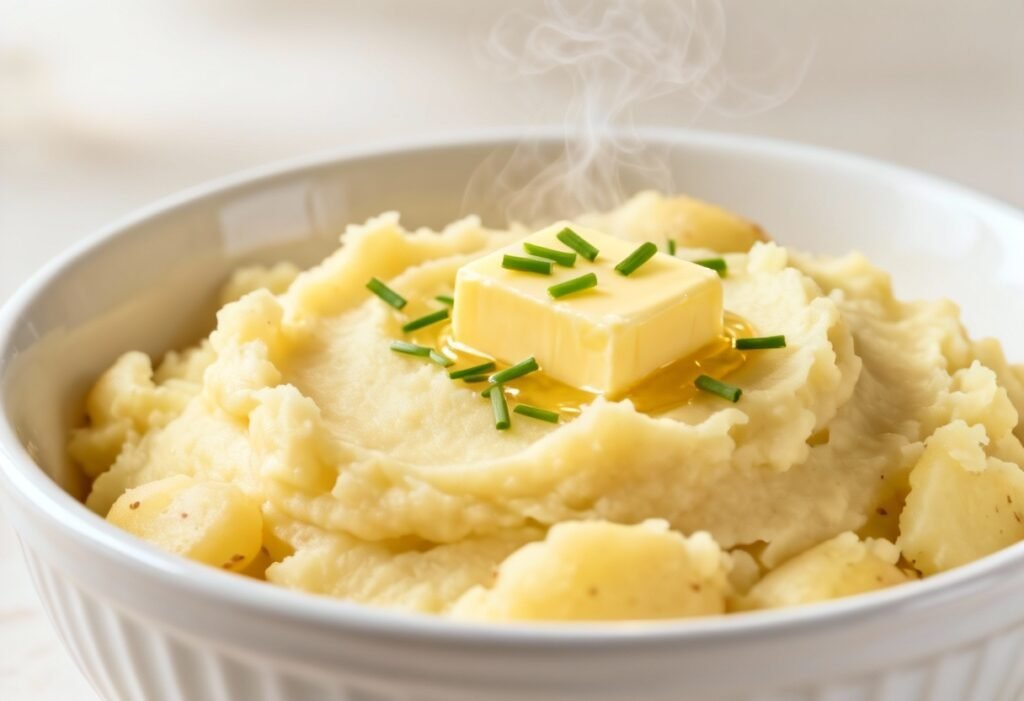
- Season and Serve: Season the mashed potatoes with salt to taste. If desired, add garlic powder and white pepper for extra flavor. Garnish with chopped chives, if desired. Serve immediately and enjoy!
Tips for Success
- Don’t Overcook: Overcooked potatoes absorb too much water and can become waterlogged and gluey. Cook them until they are just fork-tender.
- Use a Potato Ricer: For the absolute smoothest mashed potatoes, use a potato ricer. This tool gently pushes the cooked potatoes through small holes, resulting in a light and fluffy texture.
- Adjust the Liquid: The amount of milk needed will vary depending on the potatoes and your desired consistency. Start with the recommended amount and add more gradually until you reach the perfect creamy texture.
- Don’t Use a Blender or Food Processor: These appliances will overwork the potatoes and release too much starch, resulting in a gummy texture. Stick to a potato masher or ricer.
- Add Flavor: Get creative with your mashed potatoes! Try adding roasted garlic, herbs like rosemary or thyme, or a dollop of sour cream or cream cheese for extra richness.
- Using Russet Potatoes: If you’re using Russet potatoes, which are higher in starch, rinse them thoroughly after peeling and cutting to remove excess starch. Also, be extra careful not to overmix them.
Storage Instructions
Leftover mashed potatoes can be stored in an airtight container in the refrigerator for up to 3-4 days. To reheat, microwave in 30-second intervals, stirring occasionally, until heated through. You may need to add a splash of milk or cream to restore their creamy texture. Mashed potatoes can also be frozen for up to 2 months. Thaw them in the refrigerator overnight before reheating.
FAQ
- Can I use margarine instead of butter? While you can, butter provides a richer flavor and creamier texture. We recommend using butter for the best results.
- Can I use skim milk? Whole milk or half-and-half will result in a creamier texture. Skim milk can be used, but the potatoes may be less rich.
- My mashed potatoes are too thick. What can I do? Add more warmed milk or cream, a tablespoon at a time, until you reach your desired consistency.
- My mashed potatoes are too thin. What can I do? Unfortunately, there’s not much you can do to thicken mashed potatoes after they’ve been made. However, you can try adding a tablespoon of instant mashed potato flakes at a time until they thicken slightly.
- Can I make these ahead of time? Yes, you can make mashed potatoes ahead of time and keep them warm in a slow cooker on low heat. Add a splash of milk or cream to prevent them from drying out.
Conclusion
Congratulations! You’re now equipped with the knowledge and skills to create perfect, creamy mashed potatoes every time. This simple recipe is a foundation for countless variations and flavor combinations. So, get in the kitchen, experiment with different herbs and spices, and enjoy the comforting deliciousness of homemade mashed potatoes. Happy mashing!