Sourdough Challah Bread Recipe: A Tangy Twist on Tradition
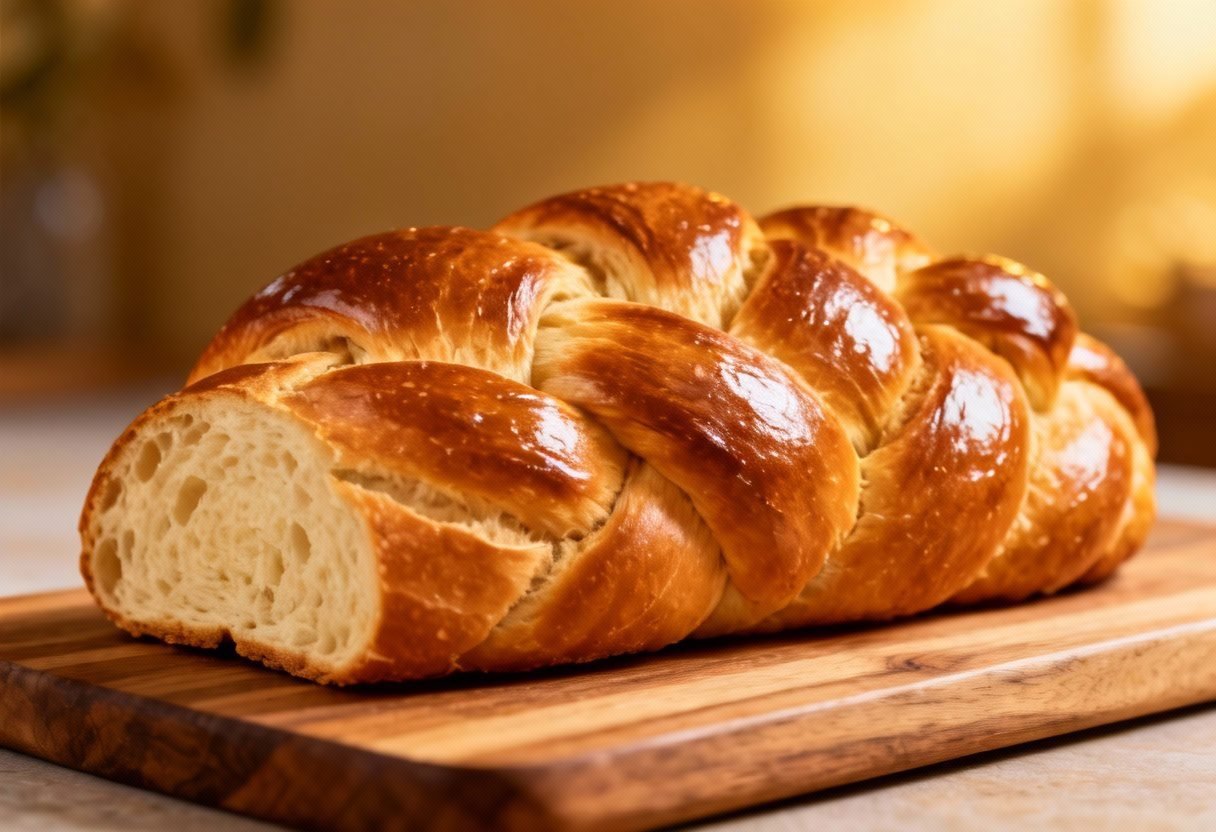
Challah, with its rich, eggy flavor and beautifully braided crust, is a staple for many celebrations. But what if you could elevate this classic bread to new heights? Enter: Sourdough Challah! This recipe combines the comforting familiarity of challah with the subtle tang and complex flavor of sourdough, creating a truly unforgettable bread that’s perfect for holidays, Shabbat, or simply a special weekend brunch.
This sourdough challah recipe might seem intimidating at first, but trust me, it’s well worth the effort. The active sourdough starter adds depth of flavor and a delightful chewiness that you won’t find in traditional challah. Plus, the long fermentation process allows the flavors to develop beautifully, resulting in a bread that’s both satisfying and delicious.
Why This Recipe Works
This recipe is carefully crafted to balance the unique characteristics of sourdough with the traditional elements of challah. Here’s why it works:
- Sourdough Starter Balance: The amount of sourdough starter used is carefully calibrated to provide the right amount of tang and rise without overpowering the challah’s signature sweetness.
- Enriched Dough: The addition of eggs, oil, and honey creates a rich and tender crumb, characteristic of challah.
- Long Fermentation: The extended fermentation period (both bulk fermentation and proofing) allows the sourdough starter to work its magic, developing complex flavors and improving the bread’s texture.
- Hydration Level: The hydration level is optimized for sourdough baking, ensuring a moist and chewy crumb while still maintaining a manageable dough consistency for braiding.
- Clear Instructions: The step-by-step instructions are designed to guide even novice bakers through the process, from activating the starter to achieving a beautifully braided loaf.
Ingredients
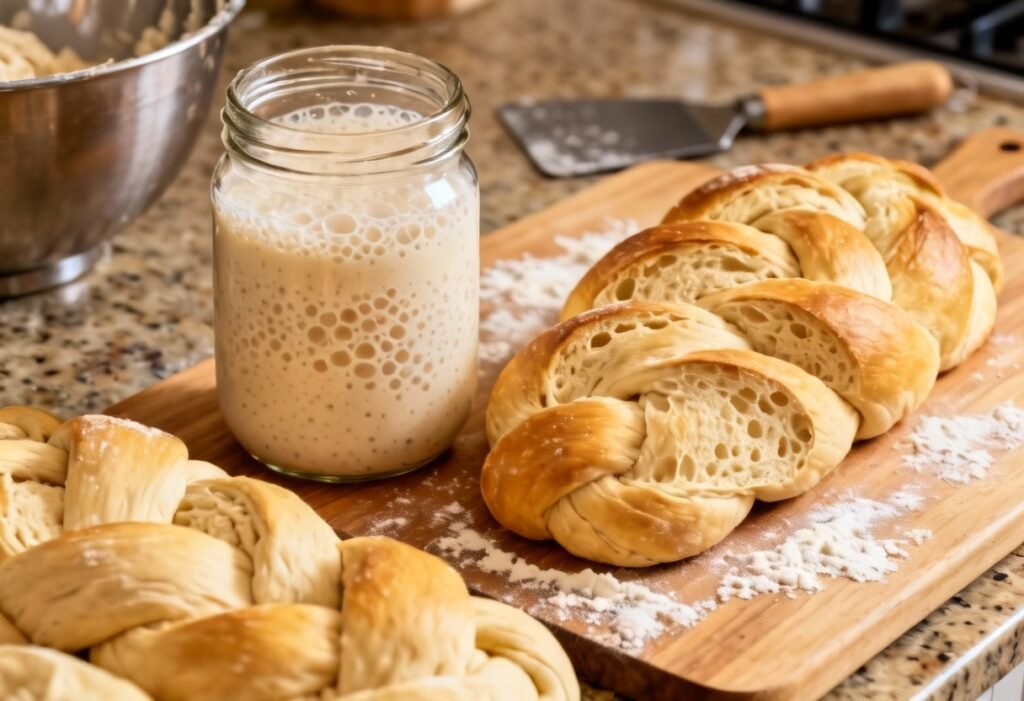
- Sourdough Starter (Active): 150g (about 2/3 cup). Use a starter that has doubled in size after feeding and is bubbly and active.
- Warm Water: 240g (1 cup). The water should be lukewarm, around 105-115°F (40-46°C).
- All-Purpose Flour: 500g (about 4 cups), plus extra for dusting. Bread flour can also be used for a chewier texture.
- Granulated Sugar: 50g (1/4 cup).
- Honey: 30g (2 tablespoons).
- Salt: 10g (2 teaspoons).
- Eggs: 2 large, plus 1 for egg wash.
- Vegetable Oil: 60g (1/4 cup).
- Sesame Seeds or Poppy Seeds (optional): For topping.
Instructions
- Combine Starter and Water: In a large bowl, whisk together the active sourdough starter and warm water until the starter is mostly dissolved.
- Add Flour, Sugar, and Honey: Add the flour, sugar, and honey to the bowl. Mix until a shaggy dough forms. Let the dough rest, covered, for 30 minutes (autolyse). This allows the flour to fully hydrate.
- Add Salt, Eggs, and Oil: Add the salt, eggs, and vegetable oil to the dough. Mix until everything is well combined. The dough will be sticky at this point.
- Knead the Dough: Turn the dough out onto a lightly floured surface and knead for 8-10 minutes, or until the dough is smooth and elastic. Alternatively, use a stand mixer with a dough hook on medium speed for 6-8 minutes.
- Bulk Fermentation: Place the dough in a lightly oiled bowl, turning to coat. Cover the bowl with plastic wrap or a damp towel. Let the dough rise in a warm place for 4-6 hours, or until doubled in size. This is the bulk fermentation stage. The timing will depend on the strength of your starter and the room temperature.
- Divide and Shape the Dough: Gently deflate the dough and turn it out onto a lightly floured surface. Divide the dough into 6 equal pieces. Roll each piece into a long strand, about 12-14 inches long.
- Braid the Challah: There are many ways to braid challah. A simple 6-strand braid is a good starting point. Pinch the ends of the strands together at the top. Braid the strands as follows:
- Take the rightmost strand and bring it over two strands.
- Take the leftmost strand and bring it over two strands.
- Repeat this process until you reach the end. Pinch the ends together to seal.
- Proof the Challah: Place the braided challah on a baking sheet lined with parchment paper. Cover loosely with plastic wrap or a damp towel. Let it proof for 2-3 hours, or until nearly doubled in size.
- Preheat Oven: Preheat the oven to 350°F (175°C).
- Egg Wash: In a small bowl, whisk together the remaining egg with a tablespoon of water. Brush the challah with the egg wash.
- Add Toppings (Optional): Sprinkle sesame seeds or poppy seeds over the challah.
- Bake: Bake for 30-35 minutes, or until the challah is golden brown and the internal temperature reaches 200-210°F (93-99°C).
- Cool: Let the challah cool on a wire rack before slicing and serving.
Tips for Success
- Use an Active Starter: A strong and active sourdough starter is crucial for a successful rise. Make sure your starter has doubled in size and is bubbly before using it.
- Be Patient: Sourdough baking requires patience. Don’t rush the fermentation process. Allow the dough to rise properly for the best flavor and texture.
- Adjust Fermentation Time: The fermentation time will vary depending on the temperature of your kitchen and the strength of your starter. Keep an eye on the dough and adjust the timing accordingly.
- Don’t Overproof: Overproofed dough will deflate during baking. Gently poke the dough. If it slowly springs back, it’s ready to bake. If it deflates, it’s overproofed.
- Use a Thermometer: A digital thermometer is your best friend when baking bread. It ensures that the challah is fully cooked.
- Experiment with Braids: There are many beautiful challah braiding techniques. Explore different options to create a visually stunning loaf.
Storage Instructions
Store leftover sourdough challah at room temperature in an airtight bag or container for up to 3 days. For longer storage, freeze the challah, tightly wrapped, for up to 2 months. To reheat, thaw the challah at room temperature and then warm it in a low oven (300°F or 150°C) for 10-15 minutes.
FAQ
Q: Can I use bread flour instead of all-purpose flour?
A: Yes, bread flour will result in a chewier texture.
Q: Can I make this recipe without honey?
A: You can substitute the honey with an equal amount of sugar or maple syrup, but the flavor will be slightly different.
Q: My dough is too sticky. What should I do?
A: Resist the urge to add too much extra flour. A slightly sticky dough is normal for sourdough. If it’s unmanageable, add flour one tablespoon at a time until it becomes easier to handle.
Q: My challah didn’t rise enough. What went wrong?
A: Possible causes include a weak starter, cold room temperature, or insufficient proofing time. Make sure your starter is active and the dough is kept in a warm place to rise.
Q: Can I make this recipe vegan?
A: It will require significant modifications to replace the eggs and honey. While possible, the texture and flavor will be quite different from traditional challah.
Conclusion
This sourdough challah recipe is a rewarding baking project that will impress your family and friends. The combination of sourdough tang and challah sweetness creates a unique and delicious bread that’s perfect for any occasion. So, gather your ingredients, activate your starter, and get ready to bake a loaf of unforgettable sourdough challah!