Tsatsiki Recipe Greek Yogurt: The Creamiest, Dreamiest Dip You’ll Ever Make!
Tsatsiki, that cool and refreshing Greek yogurt dip, is a staple in Mediterranean cuisine. It’s incredibly versatile, pairing perfectly with grilled meats, vegetables, pita bread, or even as a spread on sandwiches. But let’s be honest, not all tsatsiki is created equal. Some are watery, some lack flavor, and some are just plain disappointing. This recipe, however, guarantees a creamy, tangy, and utterly addictive tsatsiki that will transport you straight to a sun-drenched taverna in Greece. We’re using the power of Greek yogurt, a few simple ingredients, and some insider tips to unlock the secrets to tsatsiki perfection. Get ready to impress your friends and family with this easy-to-make and incredibly delicious dip!
Why This Recipe Works
This tsatsiki recipe isn’t just another collection of ingredients; it’s a carefully crafted method designed to deliver the best possible results. Here’s why it stands out:
- Greek Yogurt is Key: Using thick, strained Greek yogurt is non-negotiable. It provides the creamy base and characteristic tang that defines authentic tsatsiki. Full-fat Greek yogurt is preferred for the richest flavor and texture, but a reduced-fat option can also work.
- Salting the Cucumber: This crucial step draws out excess moisture from the cucumber, preventing the tsatsiki from becoming watery. Nobody wants a watery dip!
- Garlic Infusion: We’re not just throwing in raw garlic. Grating the garlic and letting it sit for a few minutes allows its pungent flavor to mellow slightly and infuse the yogurt evenly.
- Lemon Juice Brightness: Fresh lemon juice adds a vital acidity that balances the richness of the yogurt and enhances the other flavors.
- Fresh Herbs: Fresh dill is the classic choice for tsatsiki, providing a bright and herbaceous aroma. A touch of mint can also be added for an extra layer of freshness.
- Resting Time: Allowing the tsatsiki to sit in the refrigerator for at least 30 minutes (or even longer) allows the flavors to meld together and intensify.
Ingredients
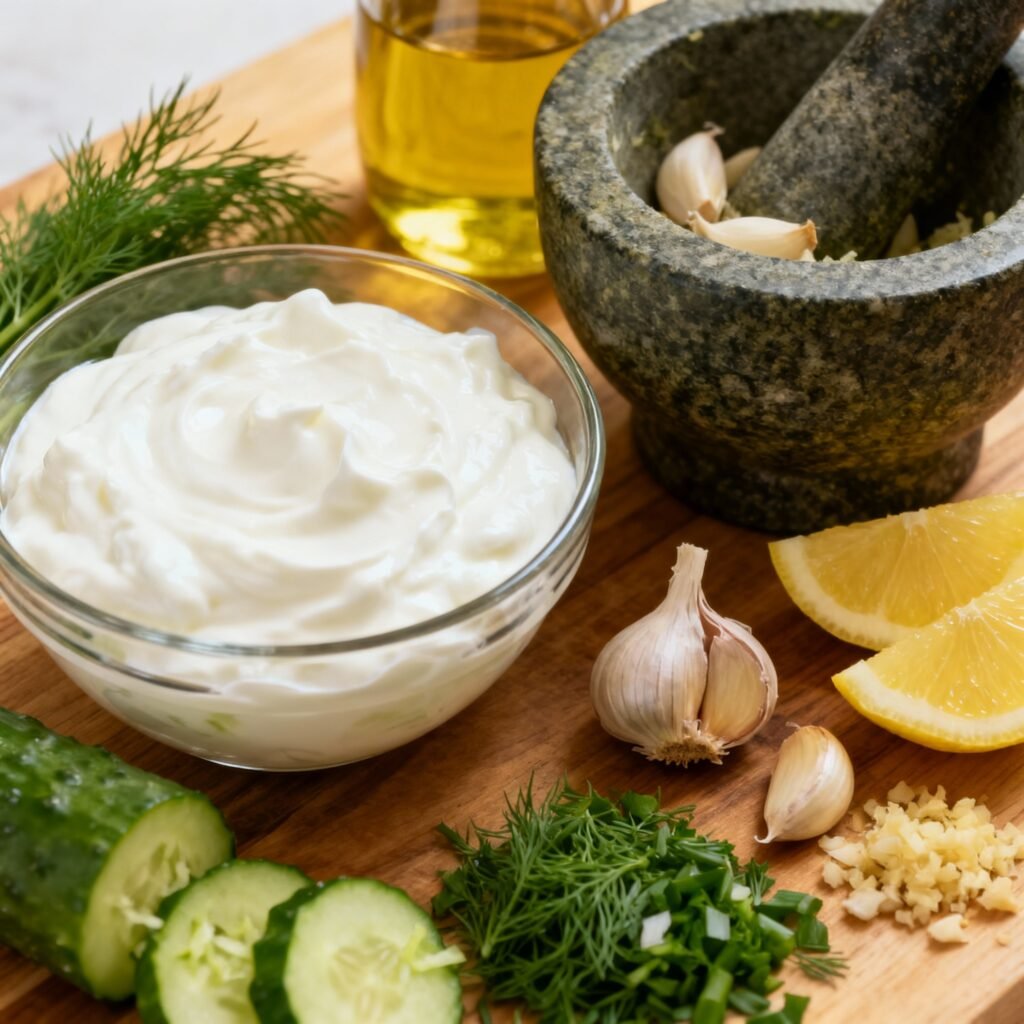
- 2 cups plain Greek yogurt (full-fat preferred)
- 1 medium cucumber, peeled, seeded, and grated
- 1 teaspoon salt, plus more to taste
- 2 cloves garlic, grated
- 1 tablespoon fresh lemon juice
- 2 tablespoons chopped fresh dill
- 1 tablespoon extra virgin olive oil
- Pinch of black pepper
Instructions
- Prepare the Cucumber: Peel, seed, and grate the cucumber using a box grater or food processor. Place the grated cucumber in a colander lined with a clean kitchen towel or cheesecloth. Sprinkle with 1 teaspoon of salt and toss to combine. Let it sit for at least 15 minutes, or up to 30 minutes, to draw out the excess moisture.
- Squeeze Out Excess Moisture: After the cucumber has rested, gather the edges of the towel or cheesecloth and squeeze out as much liquid as possible. This is a crucial step to prevent watery tsatsiki. You’ll be surprised how much water comes out!
- Prepare the Garlic: Grate the garlic cloves using a microplane or garlic press. Let the grated garlic sit for 5-10 minutes to mellow the flavor.
- Combine Ingredients: In a medium bowl, combine the Greek yogurt, squeezed cucumber, grated garlic, lemon juice, chopped dill, and olive oil. Stir well to combine.
- Season to Taste: Season with a pinch of black pepper and salt to taste. Remember that you already salted the cucumber, so start with a small amount and add more if needed.
- Chill and Serve: Cover the bowl with plastic wrap and refrigerate for at least 30 minutes to allow the flavors to meld. The longer it sits, the better it will taste.
- Serve: Serve the tsatsiki chilled with pita bread, grilled meats, vegetables, or as a spread on sandwiches. Enjoy!
Tips for Success
Here are a few extra tips to ensure your tsatsiki is a resounding success:
- Don’t Skip the Salting and Squeezing: This is the most important step for preventing watery tsatsiki. Be thorough in squeezing out as much moisture as possible from the cucumber.
- Use Fresh Ingredients: Fresh dill and lemon juice are essential for the best flavor. Dried dill simply won’t provide the same bright, herbaceous aroma.
- Adjust the Garlic to Your Taste: If you’re not a big fan of garlic, you can reduce the amount or even use roasted garlic for a milder flavor.
- Add a Touch of Mint (Optional): For a slightly different flavor profile, add a tablespoon of chopped fresh mint along with the dill.
- Taste and Adjust: Before serving, always taste the tsatsiki and adjust the seasoning as needed. You may want to add more salt, pepper, or lemon juice to suit your preferences.
- Use a Good Quality Olive Oil: The flavor of the olive oil will shine through in the finished dish, so use a good quality extra virgin olive oil.
Storage Instructions
Store leftover tsatsiki in an airtight container in the refrigerator for up to 3-4 days. The flavor may intensify slightly over time. If any liquid separates from the yogurt, simply stir it back in before serving. It is not recommended to freeze tsatsiki, as the texture of the yogurt will change and become grainy.
FAQ
Q: Can I use regular yogurt instead of Greek yogurt?
A: While you can technically use regular yogurt, the results won’t be the same. Greek yogurt is thicker and tangier than regular yogurt, which is essential for the texture and flavor of authentic tsatsiki. If you do use regular yogurt, you’ll need to strain it through cheesecloth for several hours to remove excess liquid and achieve a thicker consistency.
Q: Can I make this recipe vegan?
A: Yes, you can easily make this recipe vegan by using a plant-based Greek-style yogurt alternative. Look for options made from coconut milk, almond milk, or soy milk. Be sure to choose an unsweetened and unflavored variety.
Q: Can I add other vegetables to the tsatsiki?
A: While cucumber is the traditional vegetable used in tsatsiki, you can experiment with adding other grated vegetables, such as carrots or zucchini. Just be sure to salt and squeeze them to remove excess moisture before adding them to the yogurt.
Q: How can I make the tsatsiki spicier?
A: If you like a little heat, you can add a pinch of red pepper flakes to the tsatsiki or a few drops of your favorite hot sauce.
Q: What are some ways to use tsatsiki?
A: Tsatsiki is incredibly versatile! Here are just a few ideas:
- Serve it as a dip with pita bread, vegetables, or crackers.
- Use it as a sauce for grilled meats, such as chicken, lamb, or fish.
- Spread it on sandwiches or wraps.
- Top your favorite salads with a dollop of tsatsiki.
- Use it as a marinade for chicken or lamb.
Conclusion
There you have it – a foolproof recipe for the creamiest, dreamiest tsatsiki you’ll ever make! With just a few simple ingredients and a little bit of patience (especially when salting the cucumber!), you can whip up a batch of this delicious dip that will transport you to the sunny shores of Greece. So, gather your ingredients, follow these tips, and get ready to enjoy the taste of authentic homemade tsatsiki. Kali Orexi! (Bon appétit!)