Yeast Rolls Recipe Homemade: The 1-Hour Fluffy Cloud Rolls You’ll Brag About
👩🍳 The Home Chef's Essential Kitchen
Consistently cooking incredible, healthy meals at home is so much easier when you aren't fighting with cheap tools. These are the 5 absolute powerhouse kitchen essentials that professional chefs and serious home cooks rely on every single day to get perfect results.
🍳 Lodge 10.25" Cast Iron Skillet
The single greatest value in all of cookware. It retains heat infinitely better than cheap non-stick pans, allowing you to get a restaurant-quality crust on steaks or perfect crispy edges on cornbread. With proper care, this $20 pan will literally outlive you.
🔪 Victorinox Fibrox Pro 8" Chef's Knife
A dull knife makes cooking a frustrating chore. This specific blade is the undisputed champion of the culinary world—it holds a terrifyingly sharp edge, features a comfortable non-slip grip, and performs identical to German knives that cost quadruple the price.
🌡️ ThermoPro Instant Read Thermometer
Never serve dry chicken or undercooked pork again. An instant-read thermometer is the secret difference between amateur cooks who 'guess' when protein is done, and professionals who know exactly when to pull meat off the heat for maximum juiciness.
🍲 Lodge Enameled Cast Iron Dutch Oven
The ultimate workhorse for soups, stews, braised short ribs, and baking crusty artisanal bread. The enameled interior provides incredible heat distribution for slow-cooking while eliminating the intense seasoning maintenance required by bare cast iron.
🥄 Bpa-Free Silicone Utensil Set
Throw away those melting plastic spatulas and bacteria-harboring wooden spoons. This pure silicone set is heat-resistant up to 600°F, won't scratch your expensive pans, and features seamless designs that make cleaning out thick sauces and batters effortless.
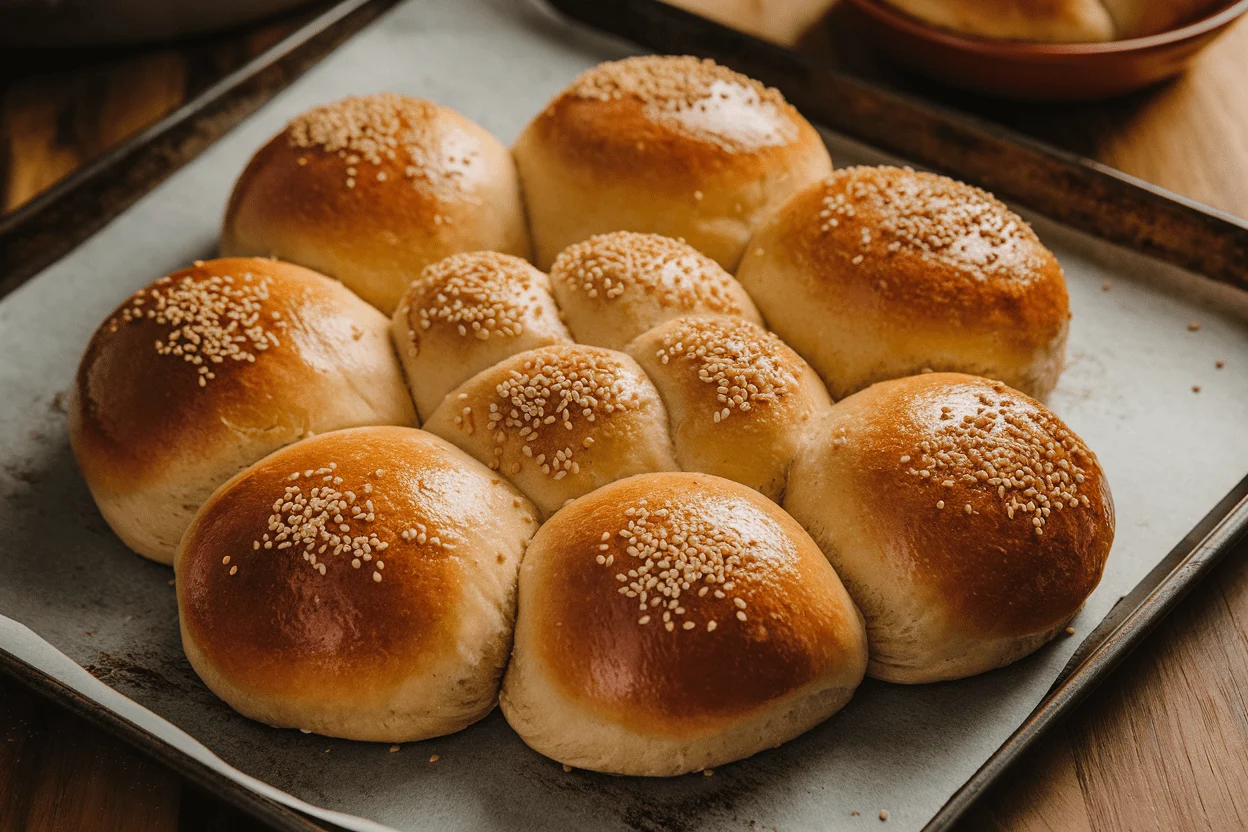
You’re one batch of warm, buttery rolls away from becoming everyone’s favorite person. Not exaggerating. This yeast rolls recipe homemade hits that sweet spot: fast, foolproof, and ridiculously fluffy.
No culinary degree required—just a bowl, some yeast, and the confidence of a person who knows carbs fix almost everything. Ready to turn simple dough into bakery-level greatness?
What Makes This Recipe So Good
- Soft, pillowy texture: These rolls bake up light and airy, with that signature pull-apart tenderness.
- Fast but legit: One rise, one bake, done in about an hour. Your future self says thanks.
- Everyday ingredients: Nothing weird.
Just flour, yeast, milk, butter, sugar, and salt doing the heavy lifting.
- Flavor that actually pops: A touch of sugar and butter layers in bakery-level taste without complexity.
- Customizable: Make them sweet, savory, garlicky, herbed, or slider-ready. Choose your own adventure.
Ingredients Breakdown
- Whole milk (1 cup, warmed to 105–110°F): Adds tenderness and flavor. Warm, not hot, so the yeast doesn’t freak out.
- Active dry yeast (2 1/4 teaspoons, one packet): The lift.
Instant yeast also works—see FAQs.
- Granulated sugar (3 tablespoons): Feeds the yeast and gives a lightly sweet bakery vibe.
- Unsalted butter (6 tablespoons, melted and slightly cooled): Richness and softness. Save extra for brushing.
- Egg (1 large, room temperature): Structure and color.
- All-purpose flour (3 to 3 1/4 cups): Start with 3 cups, add as needed. You want a soft, slightly tacky dough.
- Fine sea salt (1 1/2 teaspoons): Balances sweetness and boosts flavor.
Don’t skimp.
- Optional finishing: Melted butter for brushing, flaky salt, honey, or garlic butter.
The Method – Instructions
- Proof the yeast: In a large bowl, combine warm milk, sugar, and yeast. Let sit 5–8 minutes until foamy. If nothing happens, your yeast is ghosting you—start over with fresh yeast and properly warmed milk.
- Add the wet stuff: Whisk in the melted butter and egg until smooth and creamy-looking.
- Build the dough: Stir in 2 1/2 cups flour and the salt.
Mix with a wooden spoon until shaggy. Add more flour, a few tablespoons at a time, until the dough is soft and slightly tacky, not sticky.
- Knead: Turn onto a lightly floured surface and knead 6–8 minutes (or use a stand mixer with dough hook, 5–6 minutes on medium-low). You’re looking for a smooth dough that springs back when poked.
- First (and only) rise: Shape dough into a ball, place back in the bowl, cover with a towel or plastic wrap, and let rise in a warm spot 25–35 minutes, or until nearly doubled.
Warm oven (off) or a sunny window = hero move.
- Shape the rolls: Grease a 9×13-inch pan. Turn the dough out, pat into a rectangle, and divide into 12 equal pieces (or 15 for smaller rolls). Tuck edges under each piece to form tight balls.
- Second rest (short proof): Arrange in the pan, cover, and let puff 15–20 minutes while the oven preheats to 375°F (190°C).
- Bake: Brush tops with melted butter.
Bake 16–20 minutes until golden on top and 195–200°F internally. Rotate the pan if browning unevenly.
- Finish strong: Brush hot rolls with more butter. Sprinkle flaky salt or drizzle honey if you’re feeling extra.
Cool 5–10 minutes and serve warm.
Storage Tips
- Room temp: Keep in an airtight container up to 2 days. Refresh in a 300°F oven for 5–7 minutes.
- Freezer: Freeze baked, cooled rolls up to 2 months. Thaw at room temp, then warm in the oven.
- Make-ahead: After shaping, cover and refrigerate overnight.
Bake straight from cold, adding 2–3 minutes to the bake time.
- Reheating tip: Brush with a touch of water or butter before warming to revive that soft, fresh-baked feel.
What’s Great About This
- Beginner-friendly: The dough is forgiving. Even if it’s a little sticky or a tad firm, it still bakes up great.
- Restaurant-worthy texture: Tender crumb, golden tops, and a satisfying pull-apart structure.
- Flexible schedule: Quick rise when you’re in a hurry, or chill the shaped rolls if life gets chaotic (because it will).
- Universal pairing: Soup, BBQ, holiday spreads, weeknight pasta—these rolls never feel out of place.
Don’t Make These Errors
- Overheating the milk: If it’s too hot, you’ll kill the yeast. Aim for warm bathwater, not lava (105–110°F).
- Adding too much flour: Dry, dense rolls happen when you panic and over-flour.
Slightly tacky dough equals soft rolls.
- Skipping the rest after shaping: Those 15–20 minutes let the gluten relax and the rolls puff. Don’t rush greatness.
- Underbaking: Pale rolls look cute but taste doughy. Golden brown and 195–200°F internal temp is the sweet spot.
- Neglecting salt: Low-salt dough tastes flat.
Use the full amount unless your doc says otherwise, IMO.
Recipe Variations
- Honey-butter rolls: Add 1 extra tablespoon sugar to the dough. Brush baked rolls with melted butter mixed with honey and a pinch of salt.
- Garlic-herb: Mix 2 tablespoons chopped fresh herbs (parsley, chives, rosemary) into the dough. Finish with garlic butter: 2 tablespoons butter + 1 minced garlic clove + pinch of salt.
- Cheddar-jalapeño: Fold in 1 cup shredded sharp cheddar and 1–2 tablespoons finely diced jalapeño.
Serve with chili and try not to inhale them all.
- Whole wheat boost: Swap 1 cup all-purpose with whole wheat flour. Add 1 tablespoon milk if the dough feels stiff; whole wheat drinks water like it’s its job.
- Dinner slider rolls: Shape into 15–18 smaller pieces and bake 14–16 minutes. Perfect for mini sandwiches.
- Cinnamon-sugar finish: Brush hot rolls with butter and dust with cinnamon sugar for brunch vibes.
FAQ
Can I use instant yeast instead of active dry?
Yes.
Use the same amount (2 1/4 teaspoons). Skip the proofing step and mix instant yeast directly with the flour and salt. Warm milk still matters.
Why didn’t my dough rise?
Common issues: milk too hot or too cold, expired yeast, or a chilly kitchen.
Make sure the milk is 105–110°F, the yeast is fresh, and the dough rests in a warm, draft-free spot. Give it more time if your room is cool.
How sticky should the dough be?
Slightly tacky but not clinging like glue. If it sticks aggressively to your fingers, sprinkle in a tablespoon of flour at a time.
If it’s stiff and dry, knead in a teaspoon or two of milk.
Can I knead by hand without a mixer?
Absolutely. It’s great stress relief. Hand-knead 6–8 minutes until smooth, elastic, and bouncy—think gently resilient, not rubbery.
How do I get super shiny tops?
Brush rolls with melted butter right out of the oven.
For extra gloss, whisk a splash of milk into the butter. If you want a deeper color, brush with egg wash before baking.
What pan besides 9×13 can I use?
Two 8- or 9-inch round cake pans work well. Space the rolls evenly and bake a minute or two less if they brown faster near the edges.
Can I make the dough ahead and freeze it?
Yes.
Shape the rolls, quick-freeze on a tray, then bag. Thaw overnight in the fridge, proof at room temp until puffy, and bake. FYI, baked-then-frozen rolls are the easiest option for predictable results.
How do I know when they’re done without a thermometer?
Look for well-golden tops and sides that pull slightly from the pan.
Tap the top—if it sounds hollow and feels light, you’re there.
The Bottom Line
This yeast rolls recipe homemade is your new party trick: minimal effort, maximum applause. With one rise and everyday ingredients, you get bakery-style rolls that are soft, golden, and dangerously snackable. Master the milk temp, keep the dough soft, and finish with butter.
Then stand back and accept compliments like it’s your full-time job.