Christmas Cake Recipe Traditional: The Ultimate Festive Bake
Christmas cake. The very words conjure images of twinkling lights, crackling fires, and the comforting aroma of spices filling the air. This isn’t just a cake; it’s a tradition, a centerpiece, a labor of love that graces holiday tables around the world. For generations, families have passed down their cherished Christmas cake recipes, each with its own unique twist. This recipe aims to capture the essence of that tradition, offering a rich, moist, and deeply flavorful cake that will be the star of your Christmas celebrations. Forget the store-bought versions – this year, create a Christmas cake that will truly impress your loved ones and become a treasured family heirloom.
Why This Recipe Works
This traditional Christmas cake recipe is built on time-tested techniques that ensure a consistently delicious result. Here’s why it shines:
- The Soak: The extended soaking of dried fruits in alcohol (or fruit juice for a non-alcoholic version) is crucial. It rehydrates the fruit, plumping it up and infusing it with flavor, preventing it from drying out the cake during baking.
- The Molasses and Brown Sugar: These ingredients contribute to the cake’s characteristic dark color, rich flavor, and moist texture. They also help to keep the cake fresh for longer.
- The Spices: A carefully balanced blend of spices, such as cinnamon, nutmeg, cloves, and mixed spice, creates that quintessential Christmas cake aroma and flavor.
- The Low and Slow Bake: Baking the cake at a low temperature for a long time ensures that it cooks evenly and prevents the edges from burning while the center is still raw.
- The Feeding: Regularly feeding the baked cake with alcohol (or fruit juice) keeps it moist and intensifies the flavors over time. This is what truly transforms the cake into a festive masterpiece.
Ingredients
- Dried Fruits: 1 kg (2.2 lbs) mixed dried fruits (raisins, sultanas, currants, candied peel, glacé cherries)
- Alcohol (or Fruit Juice): 150 ml (5 fl oz) brandy, rum, or sherry (or apple juice, orange juice, or grape juice for a non-alcoholic version)
- Butter: 225g (8 oz) unsalted butter, softened
- Brown Sugar: 225g (8 oz) dark brown sugar, packed
- Molasses: 2 tablespoons
- Eggs: 4 large eggs, lightly beaten
- Flour: 275g (9.7 oz) all-purpose flour
- Mixed Spice: 2 teaspoons
- Cinnamon: 1 teaspoon ground cinnamon
- Nutmeg: ½ teaspoon ground nutmeg
- Cloves: ¼ teaspoon ground cloves
- Black Treacle: 1 tablespoon (optional, for extra dark color and flavor)
- Almonds: 50g (1.7 oz) ground almonds (almond flour)
- Zest: Zest of 1 orange
- Zest: Zest of 1 lemon
- Cherry Glacé: Extra glacé cherries for decoration (optional)
- Almonds: Whole almonds for decoration (optional)
Instructions
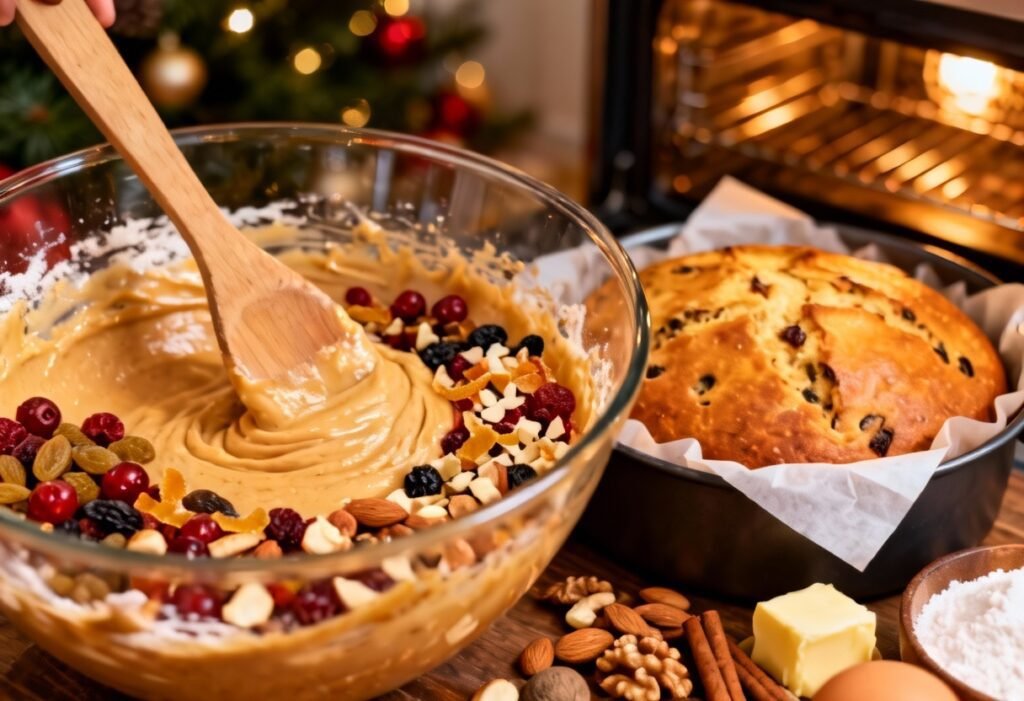
- Soak the Fruit: In a large bowl, combine the mixed dried fruits with the alcohol (or fruit juice). Stir well to ensure all the fruit is coated. Cover the bowl tightly with plastic wrap and let it soak for at least 3 days, or up to several weeks, at room temperature, stirring occasionally. The longer it soaks, the richer the flavor will be.
- Preheat and Prepare: Preheat your oven to 150°C (300°F/Gas Mark 2). Grease and line a 20cm (8 inch) round or square cake tin with a double layer of parchment paper. The paper should extend a few inches above the rim of the tin to protect the cake from burning.
- Cream Butter and Sugar: In a large mixing bowl, cream together the softened butter and brown sugar until light and fluffy. Add the molasses (and black treacle, if using) and beat until well combined.
- Add Eggs: Gradually add the beaten eggs, one at a time, beating well after each addition. If the mixture looks like it’s curdling, add a spoonful of flour to help bind it together.
- Combine Dry Ingredients: In a separate bowl, whisk together the flour, mixed spice, cinnamon, nutmeg, cloves, and ground almonds.
- Combine Wet and Dry: Gradually add the dry ingredients to the wet ingredients, mixing on low speed until just combined. Do not overmix.
- Add Fruit and Zest: Fold in the soaked fruit, orange zest, and lemon zest until evenly distributed throughout the batter.
- Bake: Pour the batter into the prepared cake tin, spreading it evenly. Make a slight indentation in the center of the cake to ensure it rises evenly. Cover the top of the tin with a double layer of parchment paper.
- Bake: Bake for 2-3 hours, or until a skewer inserted into the center of the cake comes out clean. Check the cake after 1.5 hours. If it’s browning too quickly, cover the top with another layer of parchment paper or aluminum foil.
- Cool: Once baked, remove the cake from the oven and let it cool completely in the tin.
- Feed the Cake: Once the cake is cool, use a skewer to poke holes all over the top. Slowly drizzle 2-3 tablespoons of alcohol (or fruit juice) over the cake, allowing it to soak in.
- Wrap and Store: Wrap the cooled cake tightly in a double layer of parchment paper and then in a layer of aluminum foil. Store in an airtight container in a cool, dark place.
- Feed Regularly: For the next few weeks (or months), unwrap the cake once a week and feed it with another 1-2 tablespoons of alcohol (or fruit juice). Rewrap the cake tightly after each feeding.
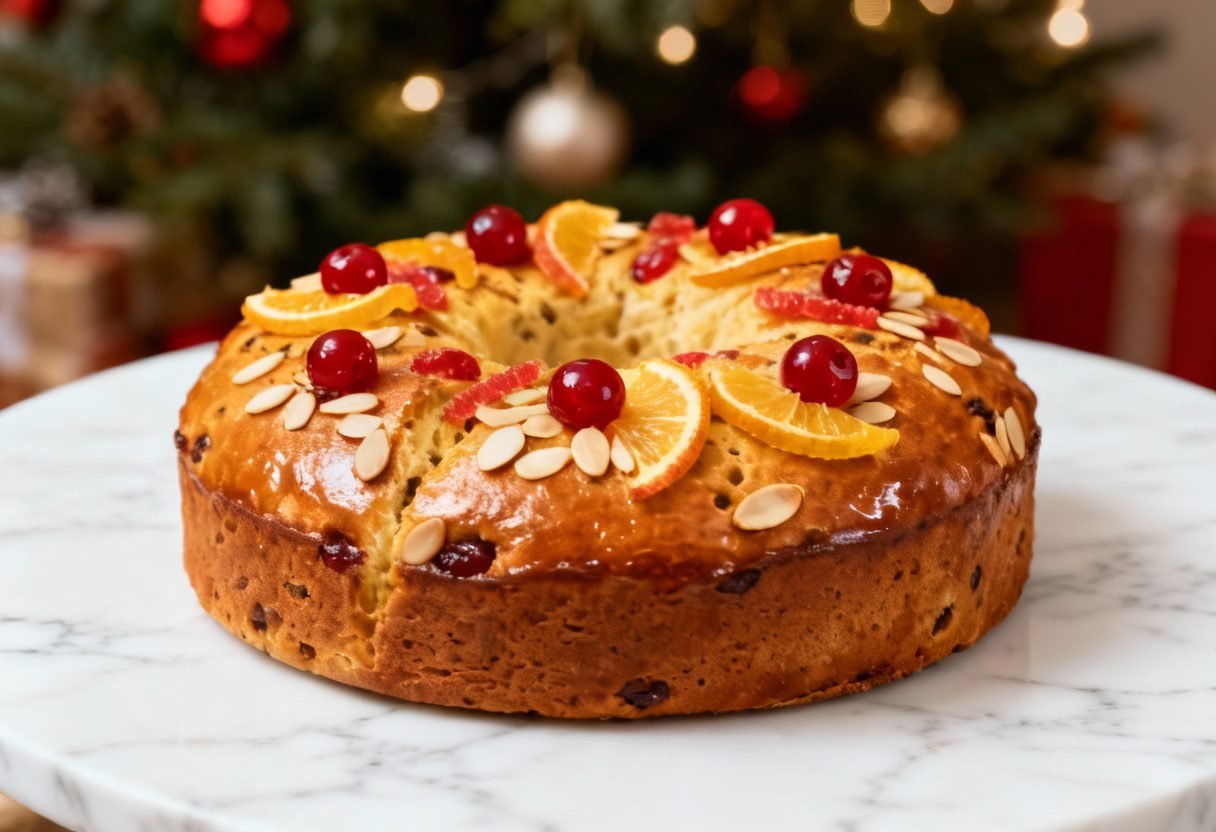
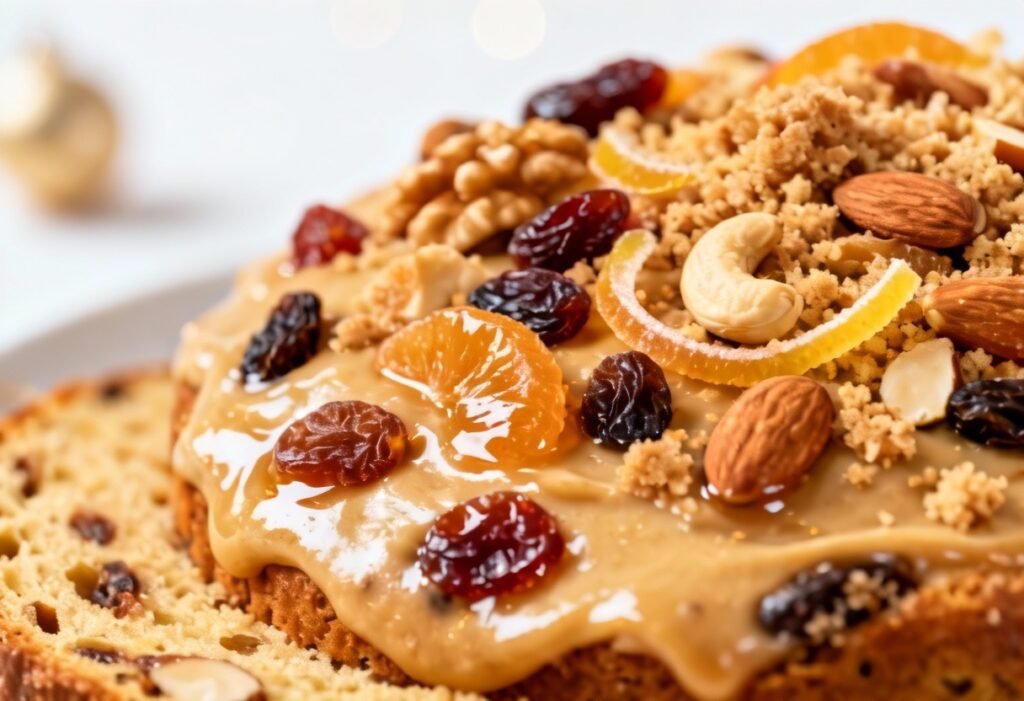
- Decorate (Optional): Before serving, decorate the cake with marzipan, fondant, royal icing, glacé cherries, and almonds, as desired.
Tips for Success
- Quality Ingredients: Use the best quality dried fruits, spices, and alcohol you can afford. The better the ingredients, the better the flavor of the cake.
- Don’t Overmix: Overmixing the batter can result in a tough cake. Mix until just combined.
- Patience is Key: The longer you soak the fruit and feed the cake, the richer and more flavorful it will be.
- Prevent Burning: If the cake is browning too quickly, lower the oven temperature slightly or cover the top with parchment paper or aluminum foil.
- Test for Doneness: Use a skewer to check for doneness. The skewer should come out clean or with just a few moist crumbs attached.
- Adjust Sweetness: If you prefer a less sweet cake, reduce the amount of brown sugar slightly.
- Nuts: Feel free to add chopped nuts, such as walnuts or pecans, to the batter for added texture and flavor.
Storage Instructions
Store the wrapped and fed Christmas cake in an airtight container in a cool, dark place. The cake will keep for several months, improving in flavor over time. Continue to feed the cake with alcohol (or fruit juice) every week or two to keep it moist and flavorful.
FAQ
Can I make this cake without alcohol?
Yes, you can substitute the alcohol with fruit juice, such as apple juice, orange juice, or grape juice. The flavor will be slightly different, but the cake will still be delicious.
How long can I store the Christmas cake?
When properly stored and regularly fed, a traditional Christmas cake can last for several months, even up to a year.
Can I freeze the Christmas cake?
Yes, you can freeze the Christmas cake. Wrap it tightly in a double layer of plastic wrap and then in a layer of aluminum foil. Freeze for up to 3 months. Thaw overnight in the refrigerator before serving.
What can I do if my cake is dry?
If your cake is dry, you can try feeding it with extra alcohol (or fruit juice) and wrapping it tightly to help it retain moisture. You can also serve it with a dollop of cream or custard to add extra moisture.
Can I use different dried fruits?
Yes, you can customize the dried fruits to your liking. Try adding dried cranberries, apricots, or figs.
Conclusion
Making a traditional Christmas cake is a rewarding experience that connects you to generations of bakers. While it requires some time and effort, the result is a truly special cake that will be cherished by your family and friends. This recipe provides a solid foundation for creating your own family tradition. So, gather your ingredients, put on some festive music, and enjoy the process of creating a Christmas cake that will be remembered for years to come. Happy baking and Merry Christmas!