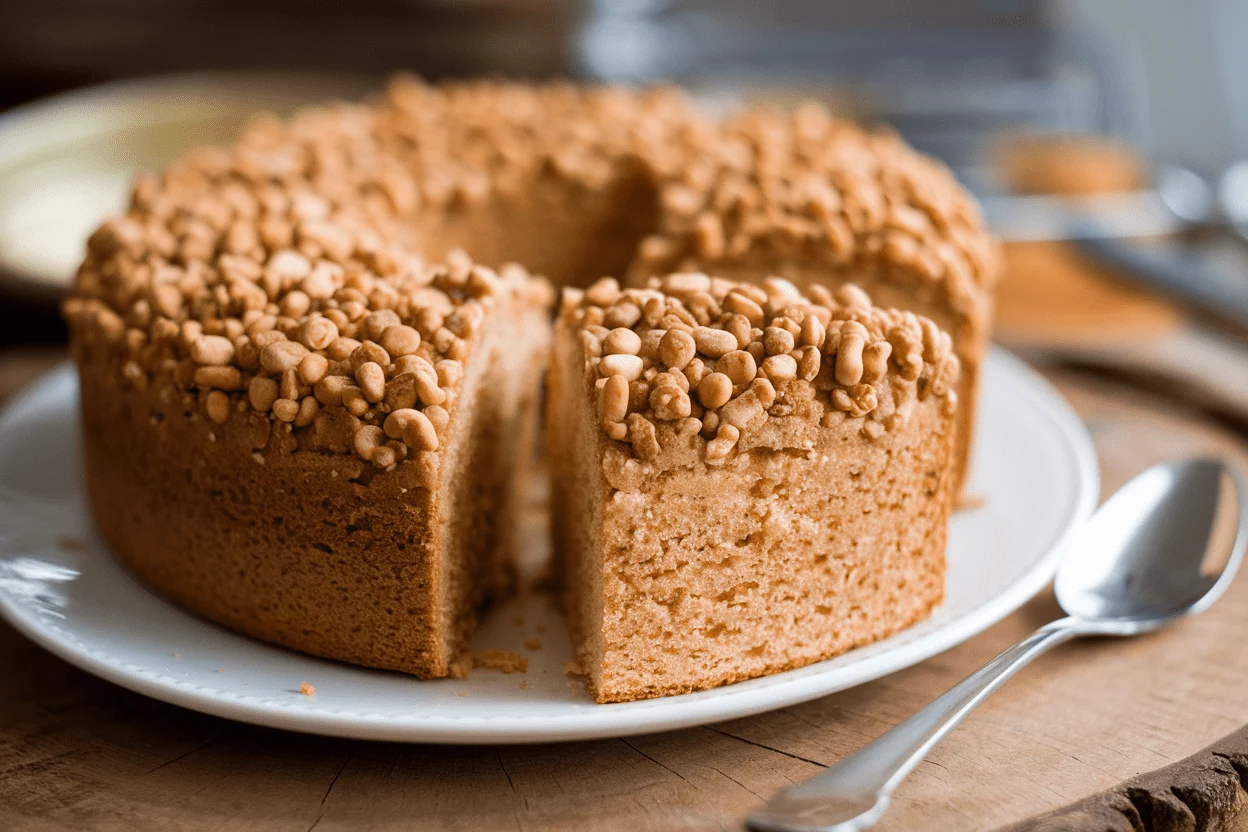
This Crunchy Top Pound Cake Recipe Is the Bakery Flex Your Oven’s Been Waiting For
👩🍳 The Home Chef's Essential Kitchen
Consistently cooking incredible, healthy meals at home is so much easier when you aren't fighting with cheap tools. These are the 5 absolute powerhouse kitchen essentials that professional chefs and serious home cooks rely on every single day to get perfect results.
🍳 Lodge 10.25" Cast Iron Skillet
The single greatest value in all of cookware. It retains heat infinitely better than cheap non-stick pans, allowing you to get a restaurant-quality crust on steaks or perfect crispy edges on cornbread. With proper care, this $20 pan will literally outlive you.
🔪 Victorinox Fibrox Pro 8" Chef's Knife
A dull knife makes cooking a frustrating chore. This specific blade is the undisputed champion of the culinary world—it holds a terrifyingly sharp edge, features a comfortable non-slip grip, and performs identical to German knives that cost quadruple the price.
🌡️ ThermoPro Instant Read Thermometer
Never serve dry chicken or undercooked pork again. An instant-read thermometer is the secret difference between amateur cooks who 'guess' when protein is done, and professionals who know exactly when to pull meat off the heat for maximum juiciness.
🍲 Lodge Enameled Cast Iron Dutch Oven
The ultimate workhorse for soups, stews, braised short ribs, and baking crusty artisanal bread. The enameled interior provides incredible heat distribution for slow-cooking while eliminating the intense seasoning maintenance required by bare cast iron.
🥄 Bpa-Free Silicone Utensil Set
Throw away those melting plastic spatulas and bacteria-harboring wooden spoons. This pure silicone set is heat-resistant up to 600°F, won't scratch your expensive pans, and features seamless designs that make cleaning out thick sauces and batters effortless.
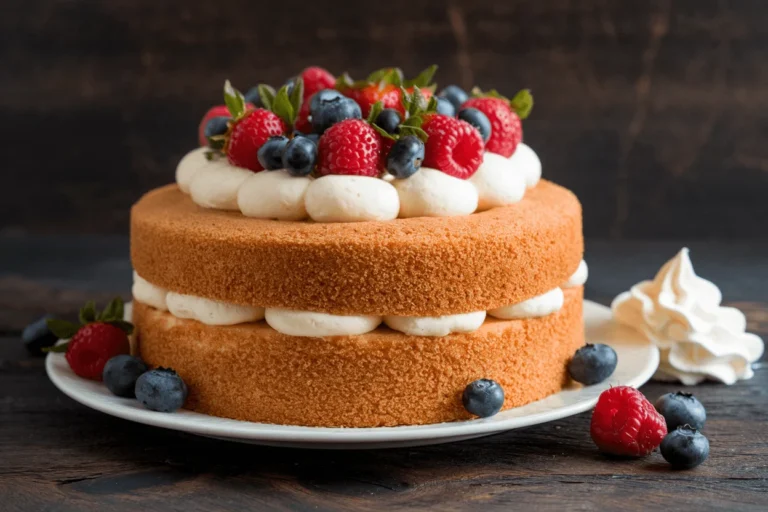
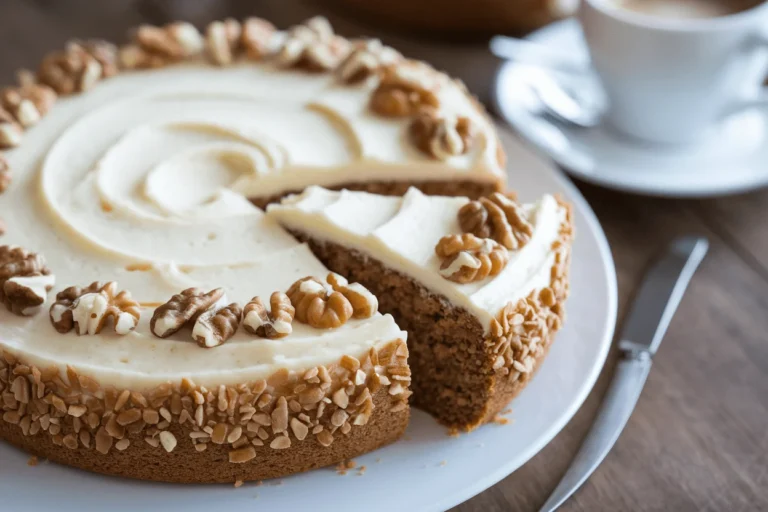
Forget bland cakes that disappear into the plate. This one hits like a mic drop—rich, buttery crumb underneath a shatteringly crisp, caramelized crown. It’s the pound cake people cut “just a sliver” of and then mysteriously return for three more.
The secret? A few pro moves that weaponize texture and flavor. If you’ve got butter, sugar, and an oven, you’re dangerously close to dessert domination.
The Secret Behind This Recipe
The magic lives in the contrast: a dense, velvety crumb capped with a glassy, crackly top.
We engineer that contrast on purpose. First, we cream butter and sugar longer than you think necessary to trap air for lift. Then we use a touch of fine cornmeal and granulated sugar on top to create that legendary crunch without burning.
A low-and-slow bake keeps the bottom tender and prevents the crust from overbrowning. A final kiss of melted butter and sugar in the last 15 minutes forms a thin, caramelized shell. It’s basically a cheat code for texture.
Bonus: a whisper of almond extract wakes up the vanilla and makes the whole kitchen smell like “I meant to do that.”
What Goes Into This Recipe – Ingredients
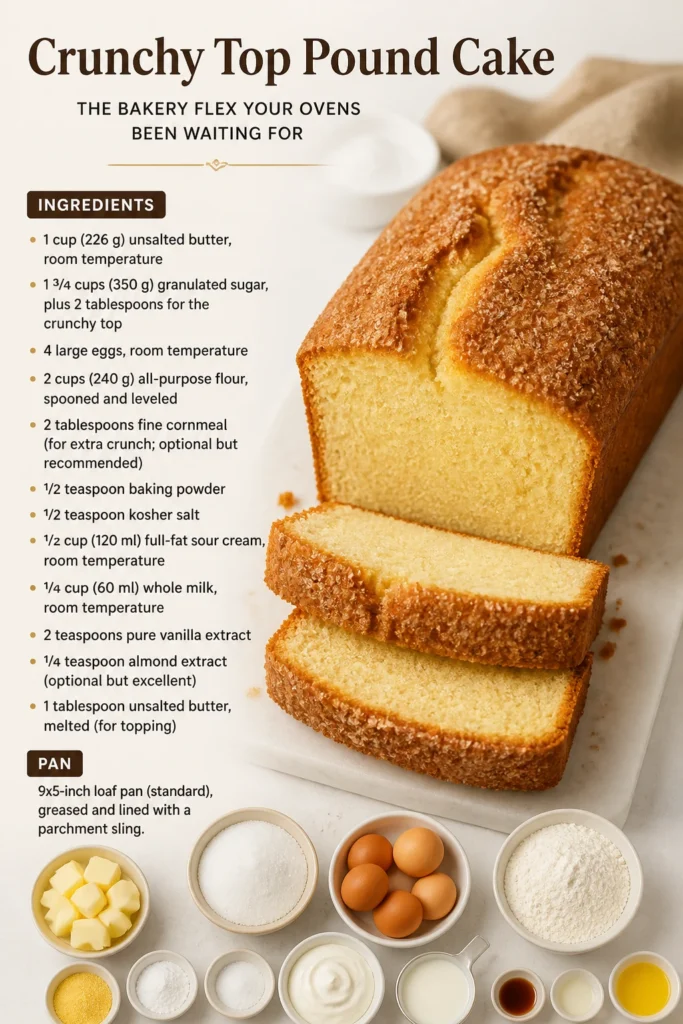
- 1 cup (226 g) unsalted butter, room temperature
- 1 3/4 cups (350 g) granulated sugar, plus 2 tablespoons for the crunchy top
- 4 large eggs, room temperature
- 2 cups (240 g) all-purpose flour, spooned and leveled
- 2 tablespoons fine cornmeal (for extra crunch; optional but recommended)
- 1/2 teaspoon baking powder
- 1/2 teaspoon kosher salt
- 1/2 cup (120 ml) full-fat sour cream, room temperature
- 1/4 cup (60 ml) whole milk, room temperature
- 2 teaspoons pure vanilla extract
- 1/4 teaspoon almond extract (optional but excellent)
- 1 tablespoon unsalted butter, melted (for topping)
Pan: 9×5-inch loaf pan (standard), greased and lined with a parchment sling.
How to Make It – Instructions
- Prep the pan and oven. Preheat to 325°F (163°C). Grease the loaf pan and line with parchment with overhang for easy lift. Lightly grease the parchment too.
- Whisk dry ingredients. In a bowl, whisk flour, cornmeal, baking powder, and salt.
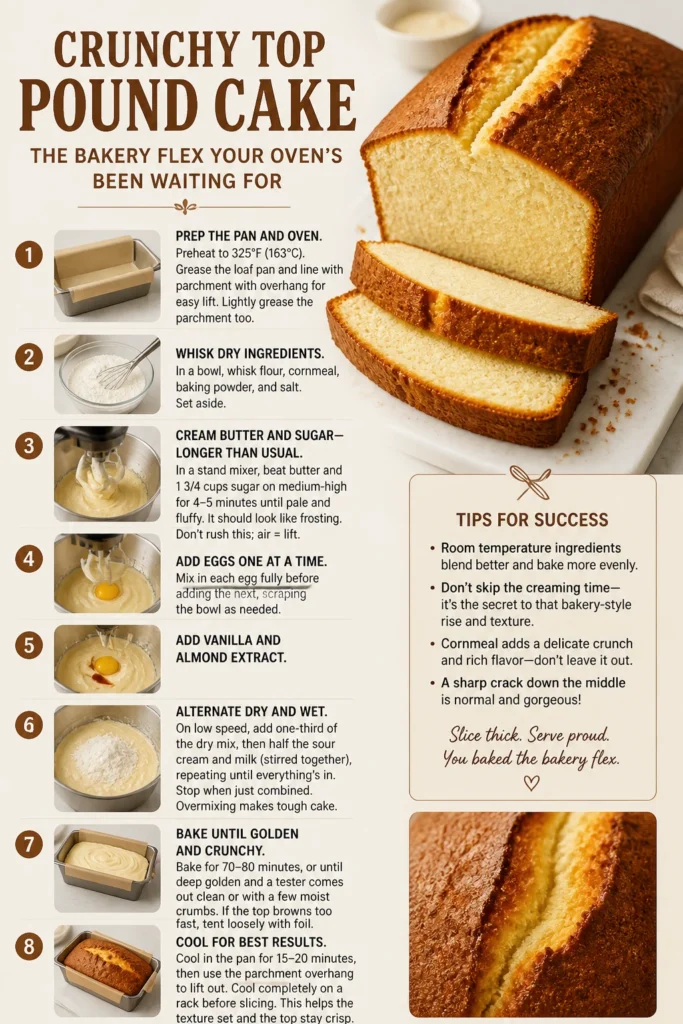
Set aside.
- Cream butter and sugar—longer than usual. In a stand mixer, beat butter and 1 3/4 cups sugar on medium-high for 4–5 minutes until pale and fluffy. It should look like frosting. Don’t rush this; air = lift.
- Add eggs one at a time. Mix in each egg fully before adding the next, scraping the bowl as needed.
Add vanilla and almond extract.
- Alternate dry and wet. On low speed, add one-third of the dry mix, then half the sour cream and milk (stirred together), repeating until everything’s in. Stop when just combined. Overmixing makes tough cake—no thanks.
- Pan it and smooth. Scrape batter into the pan and smooth the top with an offset spatula.
Tap the pan once to settle.
- Top for the crunch. Stir the melted butter with 2 tablespoons sugar. Drizzle and gently brush over the surface. Sprinkle a pinch more sugar if you’re feeling bold.
- Bake low and slow. Bake for 65–80 minutes, until the top is a deep golden brown and a tester comes out with a few moist crumbs (not wet batter).
If the top browns too quickly, tent with foil at the 50-minute mark.
- Cool like a pro. Cool in the pan 15 minutes, then lift out and cool fully on a rack. The crunchy top sets as it cools—worth the wait, promise.
- Slice with intention. Use a serrated knife to keep that crust intact. Wipe the blade between cuts for clean slices.
Storage Instructions
- Room temperature: Wrap tightly or store in an airtight container for up to 3 days.
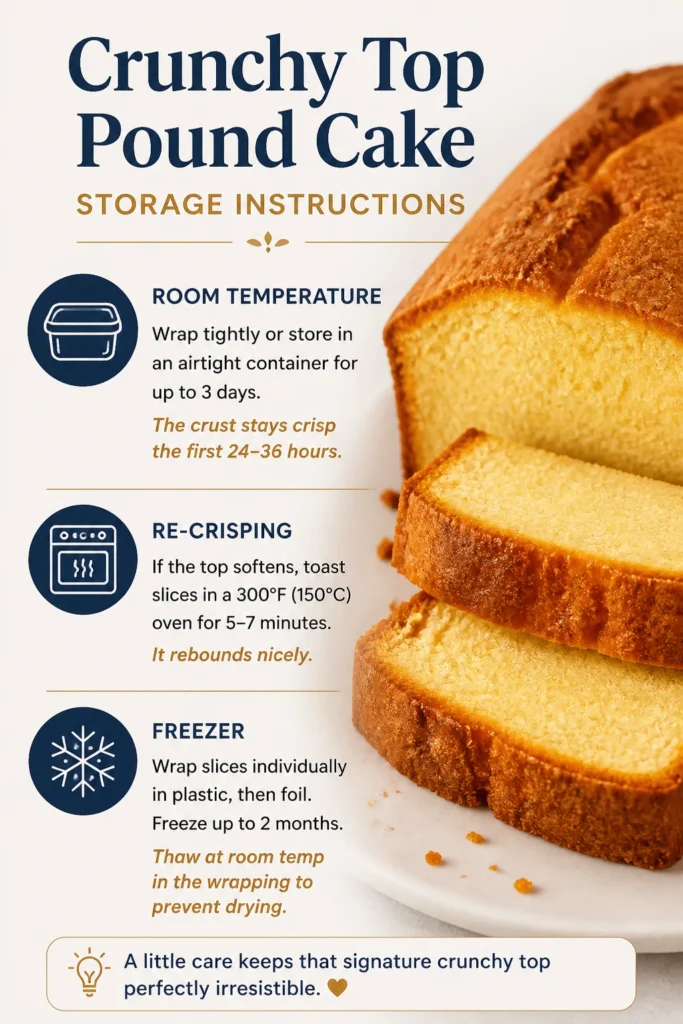
The crust stays crisp the first 24–36 hours.
- Re-crisping: If the top softens, toast slices in a 300°F (150°C) oven for 5–7 minutes. It rebounds nicely.
- Freezer: Wrap slices individually in plastic, then foil. Freeze up to 2 months.
Thaw at room temp in the wrapping to prevent drying.
Health Benefits
Let’s be real: this is dessert, not a kale salad. But there’s still value here. The cake delivers steady energy from carbs, and the eggs provide protein and choline for brain health.
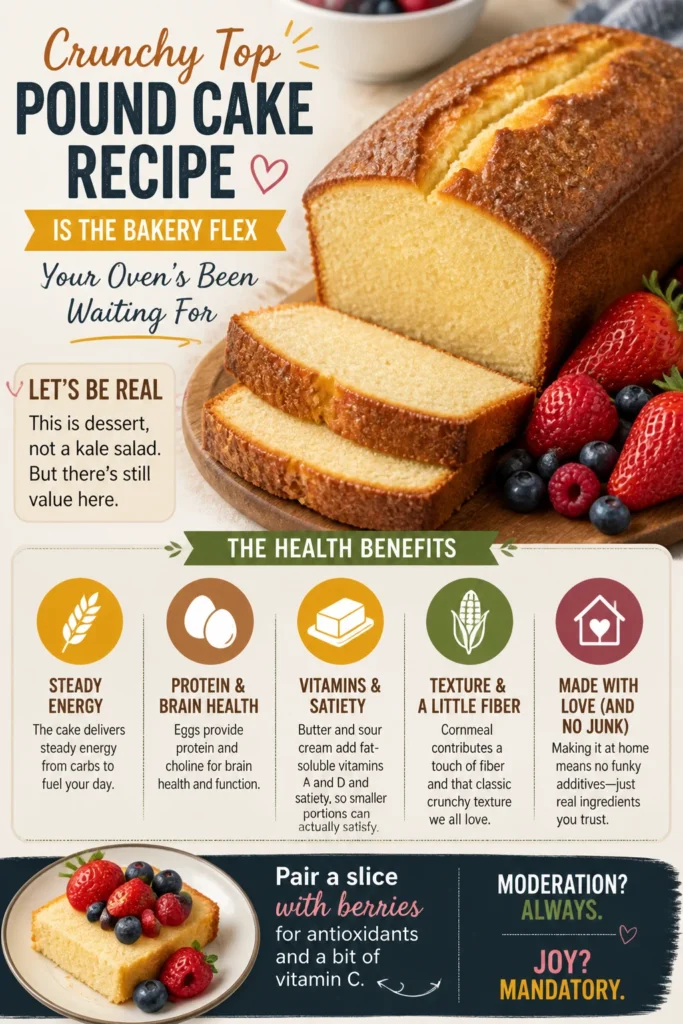
Butter and sour cream add fat-soluble vitamins A and D and satiety, so smaller portions can actually satisfy. Cornmeal contributes a touch of fiber and texture, and making it at home means no funky additives. Pair a slice with berries for antioxidants and a bit of vitamin C.
Moderation? Always. Joy?
Mandatory.
Avoid These Mistakes
- Cold ingredients. If butter, eggs, or dairy are cold, the batter curdles and bakes dense. Room temp is non-negotiable.
- Under-creaming. Skimp on the 4–5 minutes and you’ll lose lift. The mixture should look light and billowy.
- Overmixing flour. Once flour goes in, keep it gentle.
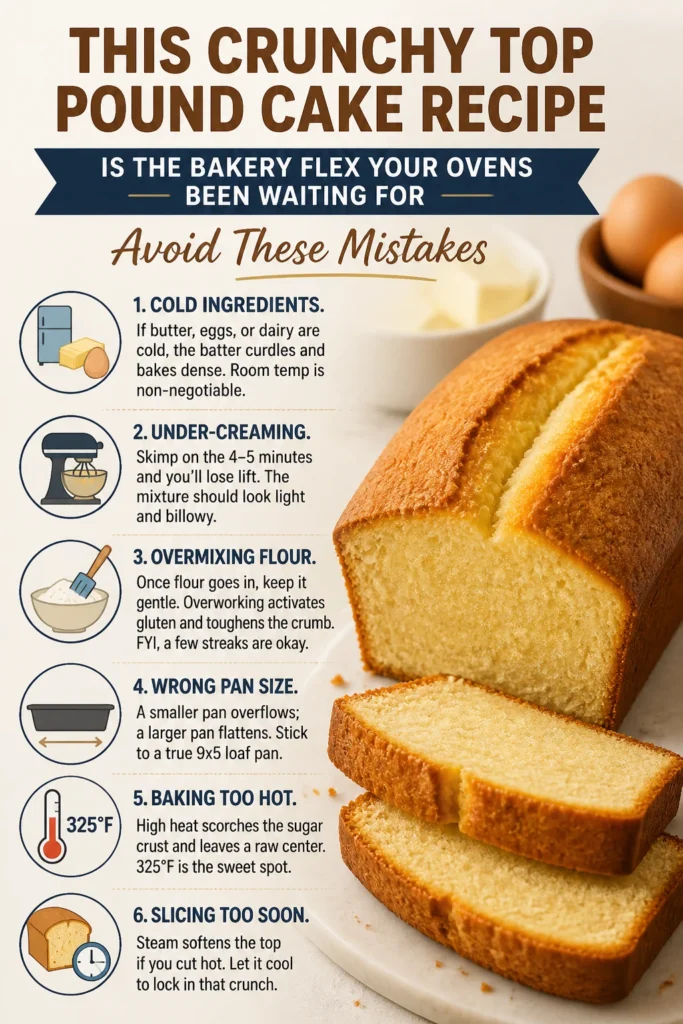
Overworking activates gluten and toughens the crumb. FYI, a few streaks are okay.
- Wrong pan size. A smaller pan overflows; a larger pan flattens. Stick to a true 9×5 loaf pan.
- Baking too hot. High heat scorches the sugar crust and leaves a raw center. 325°F is the sweet spot.
- Slicing too soon. Steam softens the top if you cut hot.
Let it cool to lock in that crunch.
Recipe Variations
- Lemon Crunch Pound Cake: Add 1 tablespoon lemon zest to sugar before creaming. Swap milk for lemon juice (2 tablespoons) plus 2 tablespoons milk. Finish with a lemon-sugar sprinkle on top.
- Cinnamon Sugar Crown: Mix 2 tablespoons sugar with 1 teaspoon cinnamon and 1 teaspoon turbinado sugar; sprinkle over batter with the melted butter for a snickerdoodle vibe.
- Brown Butter Nutty: Brown the butter, cool to room temp, then cream with sugar.
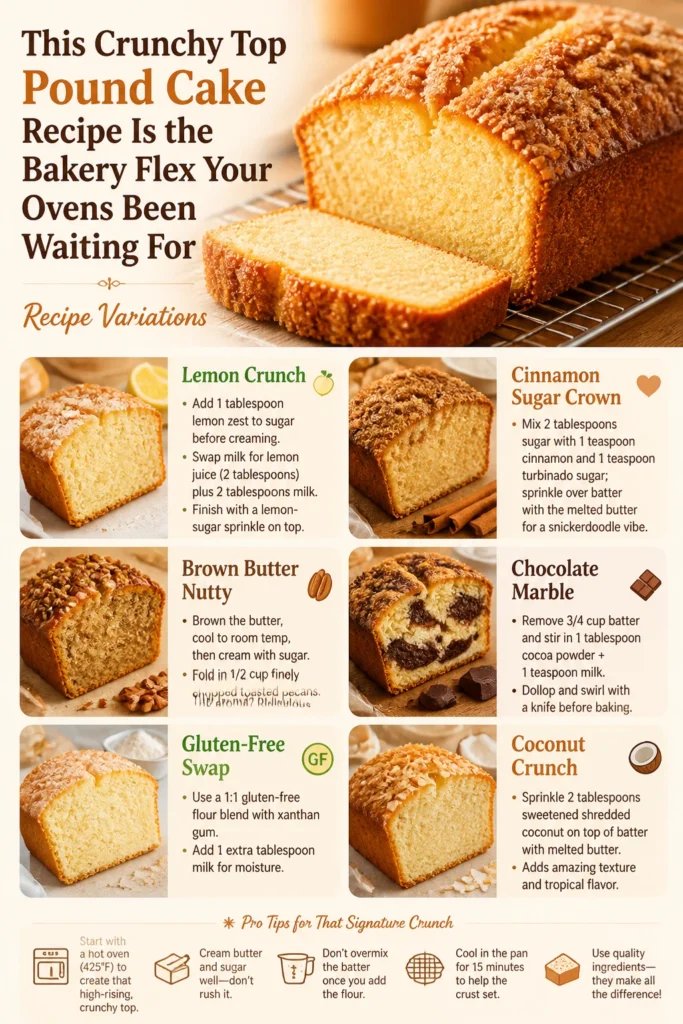
Fold in 1/2 cup finely chopped toasted pecans. The aroma? Ridiculous.
- Chocolate Marble: Remove 3/4 cup batter and stir in 1 tablespoon cocoa powder + 1 teaspoon milk.
Dollop and swirl with a knife before baking.
- Gluten-Free Swap: Use a 1:1 gluten-free flour blend with xanthan gum. Add 1 extra tablespoon milk for moisture.
- Coconut Crunch: Sprinkle 2 tablespoons unsweetened shredded coconut with the topping sugar for a toasty, tropical crust.
FAQ
Can I use yogurt instead of sour cream?
Yes. Use full-fat Greek yogurt in equal measure.
It keeps the crumb moist but slightly tangier, which pairs nicely with the sweet crust.
Why did my pound cake sink in the middle?
Usually underbaking or too much leavening. Check oven temperature with an oven thermometer and bake until a tester comes out with moist crumbs. Also, don’t open the oven door in the first 45 minutes—heat loss can make it collapse.
Can I make this in a bundt pan?
Absolutely.
Double the recipe for a standard 10–12 cup bundt. Bake at 325°F for 70–90 minutes. The crunchy top will be on the outside, and it’s glorious.
What sugar works best for the crust?
Granulated sugar is ideal.
For extra texture, mix in a teaspoon or two of turbinado sugar. Avoid powdered sugar—it melts and won’t crunch.
How do I know it’s done without drying it out?
Look for a deep golden top, edges pulling slightly from the pan, and an internal temp around 205–210°F (96–99°C) in the center. A digital thermometer removes all guesswork, IMO.
Can I reduce the sugar?
You can cut up to 1/4 cup from the batter without wrecking texture, but the crust may be less crunchy.
Keep the topping sugar for best results.
Is the almond extract necessary?
No, but it adds a bakery-level aroma. If skipping, bump vanilla to 2 1/2 teaspoons to keep the flavor bold.
Wrapping Up
This crunchy top pound cake recipe is a masterclass in contrast: tender, buttery crumb under a caramelized, crackly lid. With a few smart tweaks—long creaming, low bake, sugar-butter finish—you get bakery results at home.
Slice it thick, add berries, maybe a dollop of whipped cream, and prepare for compliments that sound suspiciously like requests for seconds. Go preheat that oven; your flex awaits.