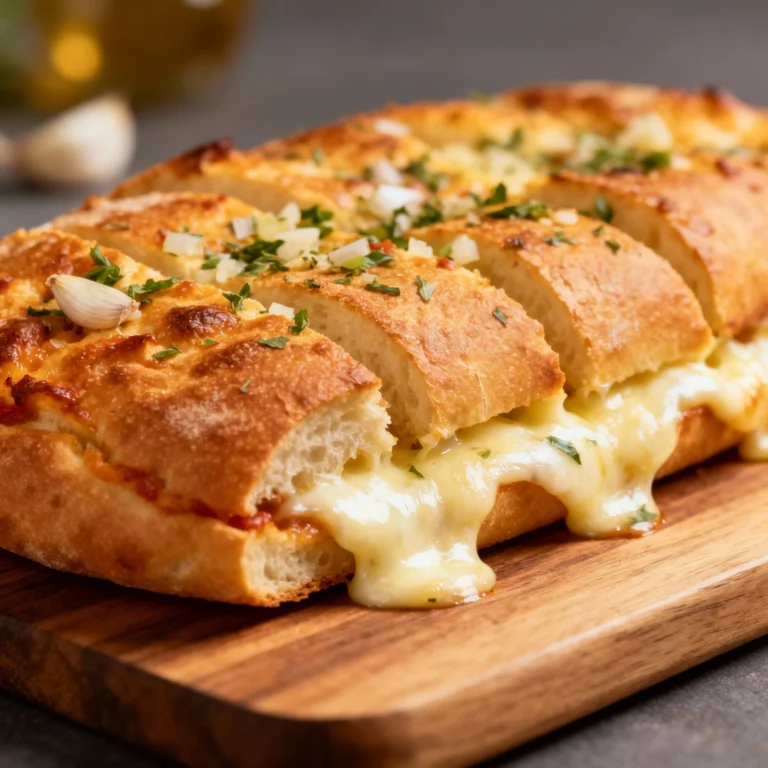
The “Pizza Dough Recipe Active Dry Yeast” You’ll Brag About: Crispy Edges, Chewy Center, Zero Fuss
👩🍳 The Home Chef's Essential Kitchen
Consistently cooking incredible, healthy meals at home is so much easier when you aren't fighting with cheap tools. These are the 5 absolute powerhouse kitchen essentials that professional chefs and serious home cooks rely on every single day to get perfect results.
🍳 Lodge 10.25" Cast Iron Skillet
The single greatest value in all of cookware. It retains heat infinitely better than cheap non-stick pans, allowing you to get a restaurant-quality crust on steaks or perfect crispy edges on cornbread. With proper care, this $20 pan will literally outlive you.
🔪 Victorinox Fibrox Pro 8" Chef's Knife
A dull knife makes cooking a frustrating chore. This specific blade is the undisputed champion of the culinary world—it holds a terrifyingly sharp edge, features a comfortable non-slip grip, and performs identical to German knives that cost quadruple the price.
🌡️ ThermoPro Instant Read Thermometer
Never serve dry chicken or undercooked pork again. An instant-read thermometer is the secret difference between amateur cooks who 'guess' when protein is done, and professionals who know exactly when to pull meat off the heat for maximum juiciness.
🍲 Lodge Enameled Cast Iron Dutch Oven
The ultimate workhorse for soups, stews, braised short ribs, and baking crusty artisanal bread. The enameled interior provides incredible heat distribution for slow-cooking while eliminating the intense seasoning maintenance required by bare cast iron.
🥄 Bpa-Free Silicone Utensil Set
Throw away those melting plastic spatulas and bacteria-harboring wooden spoons. This pure silicone set is heat-resistant up to 600°F, won't scratch your expensive pans, and features seamless designs that make cleaning out thick sauces and batters effortless.
You want pizza that tastes like a weekend in Naples without having to pretend you’re a pizzaiolo. Here’s the move: a lean dough, active dry yeast, and a few tiny tweaks that make a massive difference. No wood-fired oven?
No problem. We’re going to weaponize your home oven like it owes you money. By the time you finish this, you’ll have a dough that’s light, blistered, and deeply flavor-packed—and yes, it’s easier than your third attempt at sourdough.
Why You’ll Love This Recipe
- Restaurant-level chew at home: This dough builds gluten like a pro, so you get a crisp exterior and a tender, airy crumb.
- Fast or slow—your call: Use a quick 2-hour rise or cold-ferment for 24–72 hours for flavor that hits different.
- Minimal ingredients, maximum payoff: Flour, water, salt, yeast, oil.
That’s it. No mystery powders.
- Foolproof technique: Clear steps for mixing, proofing, shaping, and baking so your dough works with you, not against you.
- Flexible for any setup: Pizza stone, steel, or a basic sheet pan—this dough adapts.
Ingredients Breakdown
- 3 1/2 cups (440 g) bread flour — Higher protein equals stronger gluten and better chew. All-purpose works in a pinch.
- 1 1/3 cups (315 g) warm water — Aim for 105–110°F.
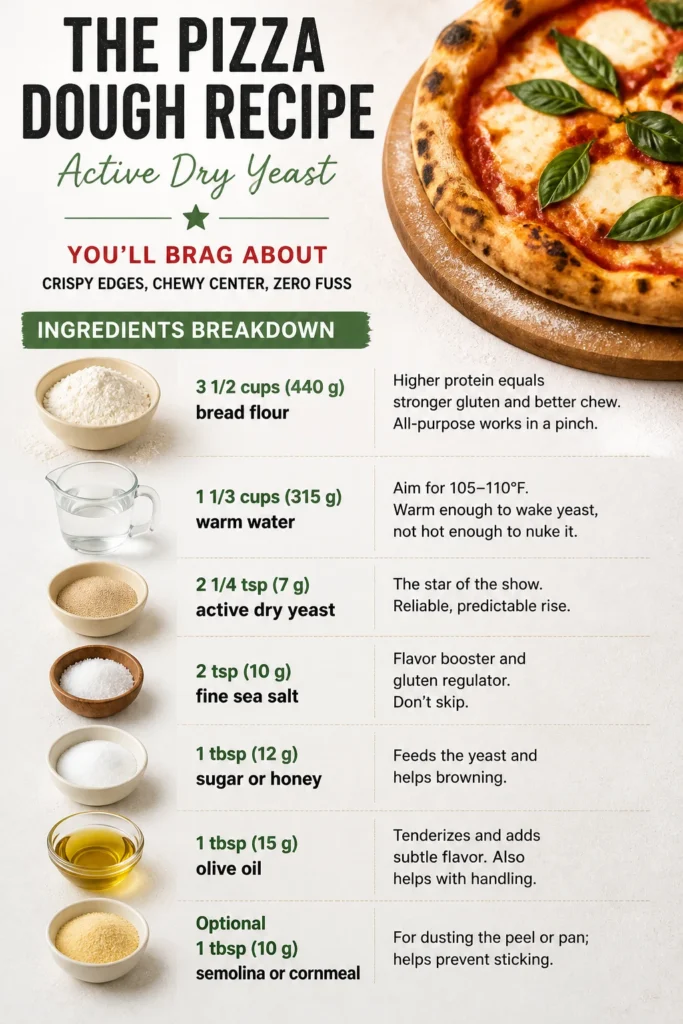
Warm enough to wake yeast, not hot enough to nuke it.
- 2 1/4 tsp (7 g) active dry yeast — The star of the show. Reliable, predictable rise.
- 2 tsp (10 g) fine sea salt — Flavor booster and gluten regulator. Don’t skip.
- 1 tbsp (12 g) sugar or honey — Feeds the yeast and helps browning.
- 1 tbsp (15 g) olive oil — Tenderizes and adds subtle flavor.
Also helps with handling.
- Optional: 1 tbsp (10 g) semolina or cornmeal — For dusting the peel or pan; helps prevent sticking.
Instructions
- Proof the yeast: In a bowl, combine warm water, sugar (or honey), and active dry yeast. Stir and let sit 5–8 minutes until foamy. If it’s flat, your yeast is probably dead—start over with fresh yeast.
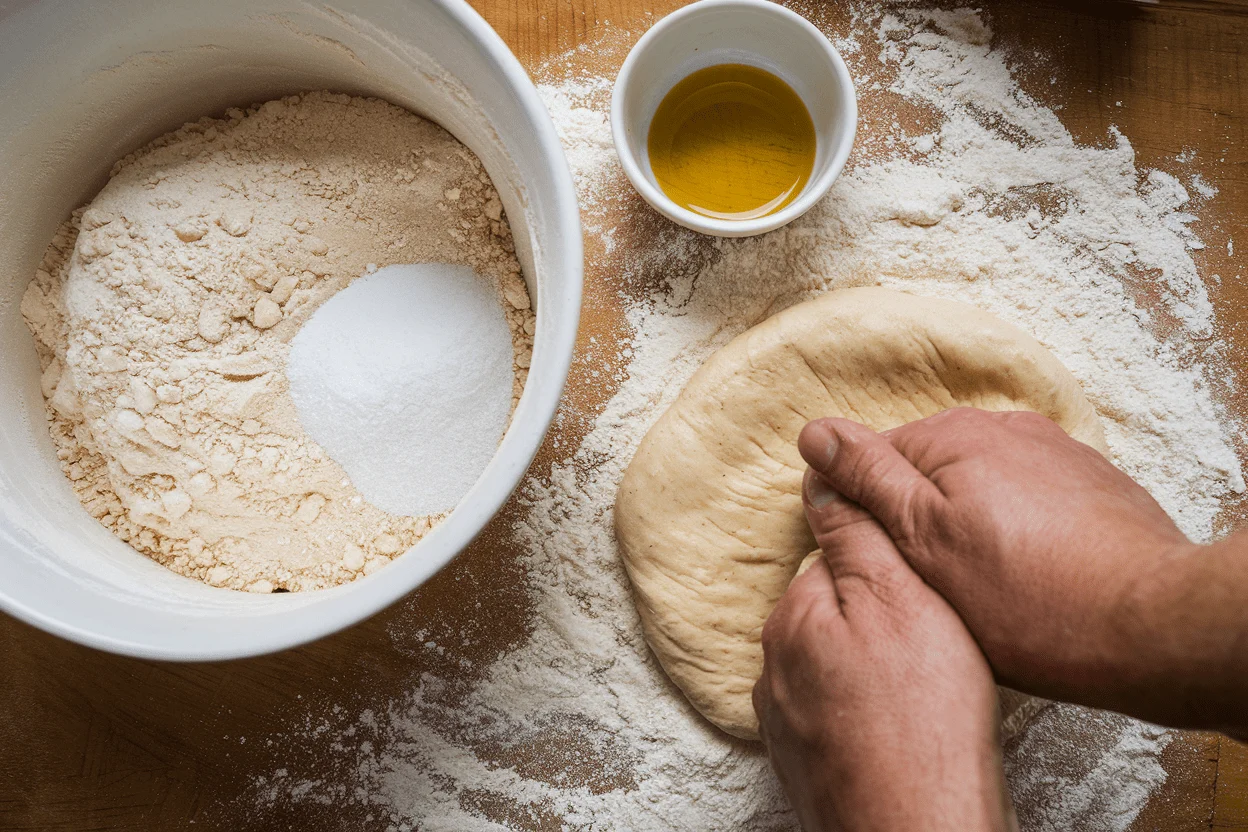
- Combine dry ingredients: In a large mixing bowl, whisk flour and salt.
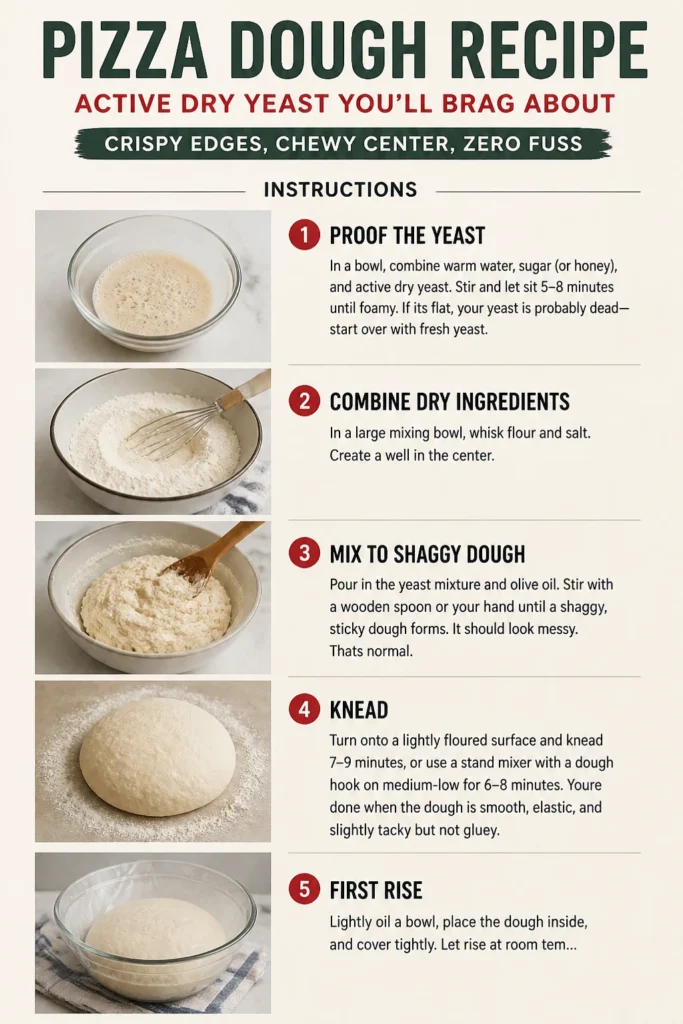
Create a well in the center.
- Mix to shaggy dough: Pour in the yeast mixture and olive oil. Stir with a wooden spoon or your hand until a shaggy, sticky dough forms. It should look messy.
That’s normal.
- Knead: Turn onto a lightly floured surface and knead 7–9 minutes, or use a stand mixer with a dough hook on medium-low for 6–8 minutes. You’re done when the dough is smooth, elastic, and slightly tacky but not gluey.
- First rise: Lightly oil a bowl, place the dough inside, and cover tightly. Let rise at room temp until doubled, about 60–90 minutes, depending on kitchen temp.
- Divide and pre-shape: Turn dough out, gently degas, and divide into 2 balls for large pizzas (12–14 inches) or 3 for smaller ones.
Tuck edges under to create tight, smooth balls.
- Rest (bench proof): Place dough balls on a floured tray, cover, and rest 20–30 minutes. This relaxes gluten and makes shaping 10x easier.
- Optional cold ferment for flavor: For next-level taste, refrigerate dough balls 24–72 hours in lightly oiled containers, loosely covered. Remove from fridge 60–90 minutes before shaping.
- Preheat like you mean it: Place a pizza stone or steel on the top-third rack.
Preheat oven to its max (500–550°F) for at least 45 minutes. If using a sheet pan, preheat the oven but no need to preheat the pan.
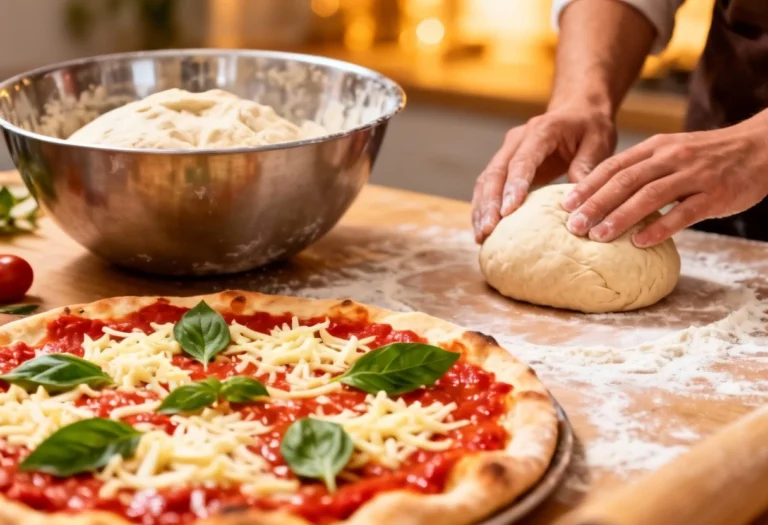
- Shape: Dust your surface and hands with flour. Press the dough from the center outward, leaving a thicker rim.
Lift and stretch over knuckles, rotating, letting gravity help. Avoid rolling pins—unless you enjoy sad crusts.
- Top strategically: Transfer to a floured peel or oiled pan. Add sauce sparingly, a light layer of cheese, and minimal toppings.
More toppings = soggier crust, FYI.
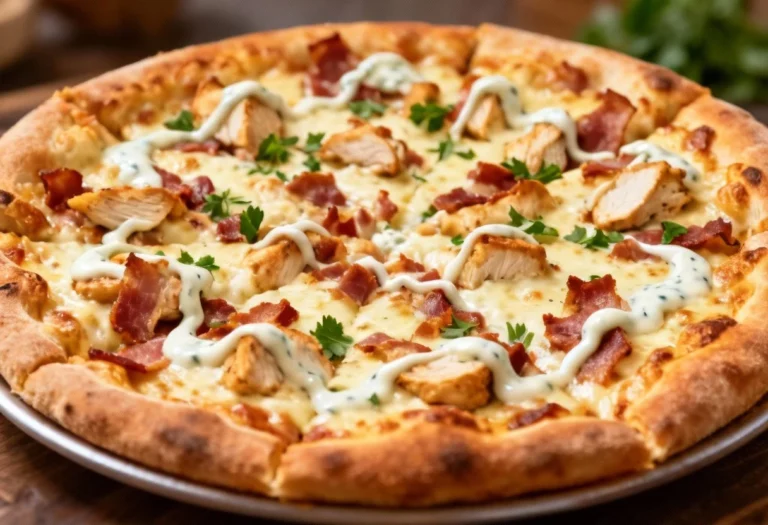
- Bake: Slide onto the stone/steel and bake 6–8 minutes, or 10–14 minutes on a sheet pan, until the crust is puffed with leopard spots and cheese bubbles.
- Finish: Rest 2 minutes, then slice. Add a drizzle of olive oil, fresh basil, or chili flakes. Pretend you’re modest about it.
Storage Tips
- Short-term: Refrigerate dough balls up to 72 hours in closed containers.
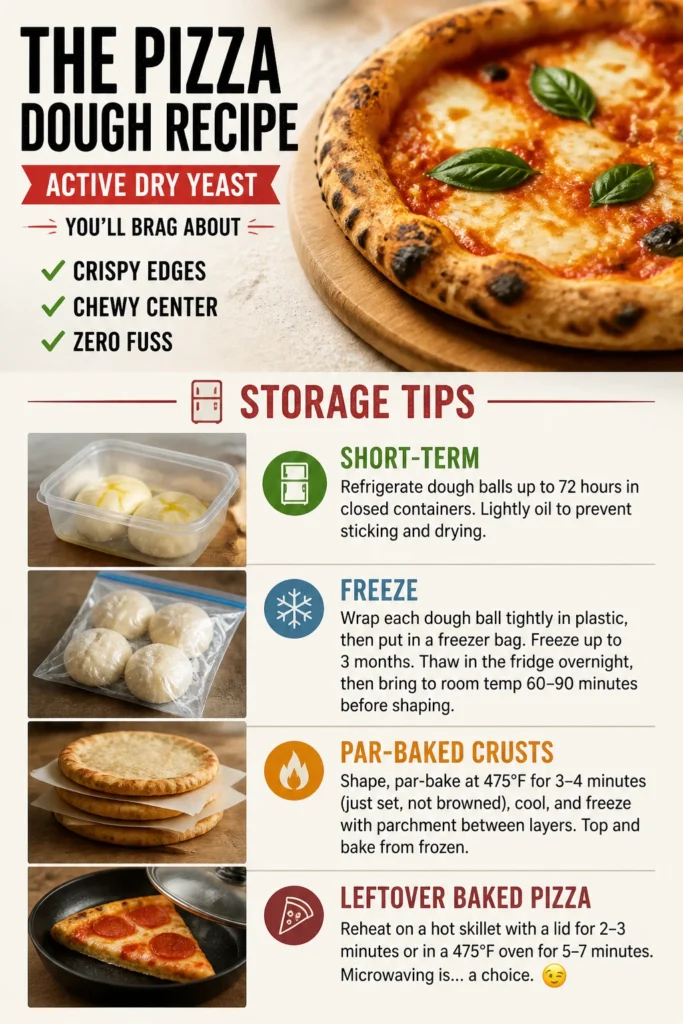
Lightly oil to prevent sticking and drying.
- Freeze: Wrap each dough ball tightly in plastic, then put in a freezer bag. Freeze up to 3 months. Thaw in the fridge overnight, then bring to room temp 60–90 minutes before shaping.
- Par-baked crusts: Shape, par-bake at 475°F for 3–4 minutes (just set, not browned), cool, and freeze with parchment between layers.
Top and bake from frozen.
- Leftover baked pizza: Reheat on a hot skillet with a lid for 2–3 minutes or in a 475°F oven for 5–7 minutes. Microwaving is… a choice.
What’s Great About This
- Predictable rise: Active dry yeast is consistent and forgiving. You’ll get repeatable results without guesswork.
- Texture you can control: Knead a bit more for chewier crust, a bit less for softer.
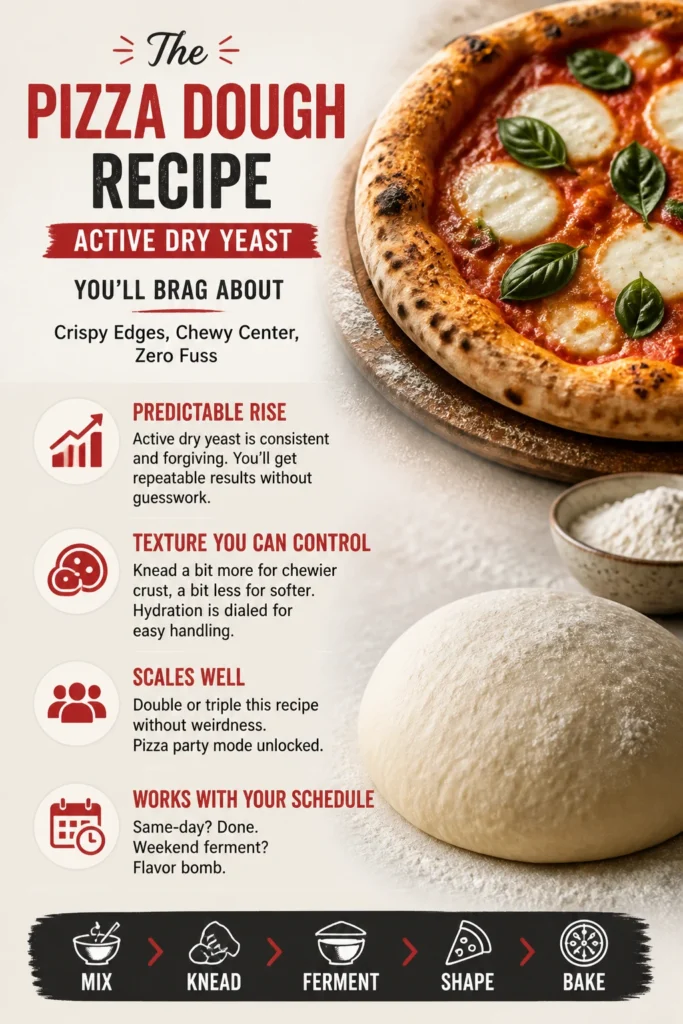
Hydration is dialed for easy handling.
- Scales well: Double or triple this recipe without weirdness. Pizza party mode: unlocked.
- Works with your schedule: Same-day? Done.
Weekend ferment? Flavor bomb.
What Not to Do
- Don’t kill the yeast: Water hotter than 115°F will end your dough’s hopes and dreams.
- Don’t overload toppings: Wet ingredients and mountain-high cheese lead to a soggy center. Keep it balanced.
- Don’t skip the preheat: A blazing-hot surface is non-negotiable for oven spring and char.
- Don’t fight the dough: If it snaps back while shaping, let it rest 5–10 minutes.
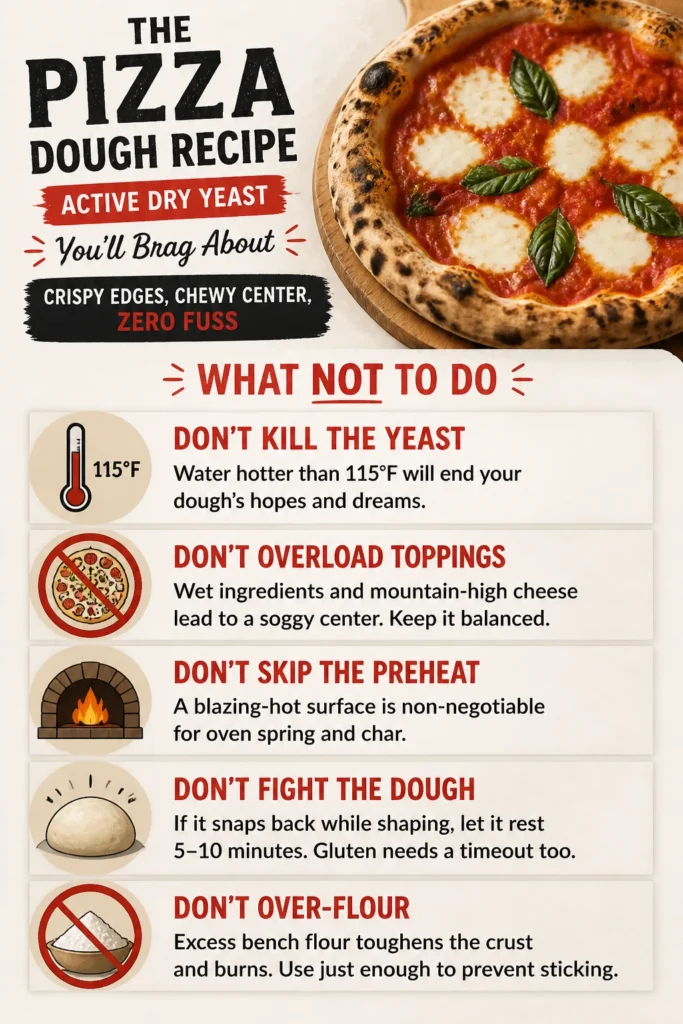
Gluten needs a timeout too.
- Don’t over-flour: Excess bench flour toughens the crust and burns. Use just enough to prevent sticking.
Mix It Up
- Flour swap: Use 50% bread flour + 50% 00 flour for a softer, silkier bite. Or 10–20% whole wheat for nuttiness.
- Garlic-herb dough: Add 1 tsp garlic powder and 1 tsp dried oregano to the flour.
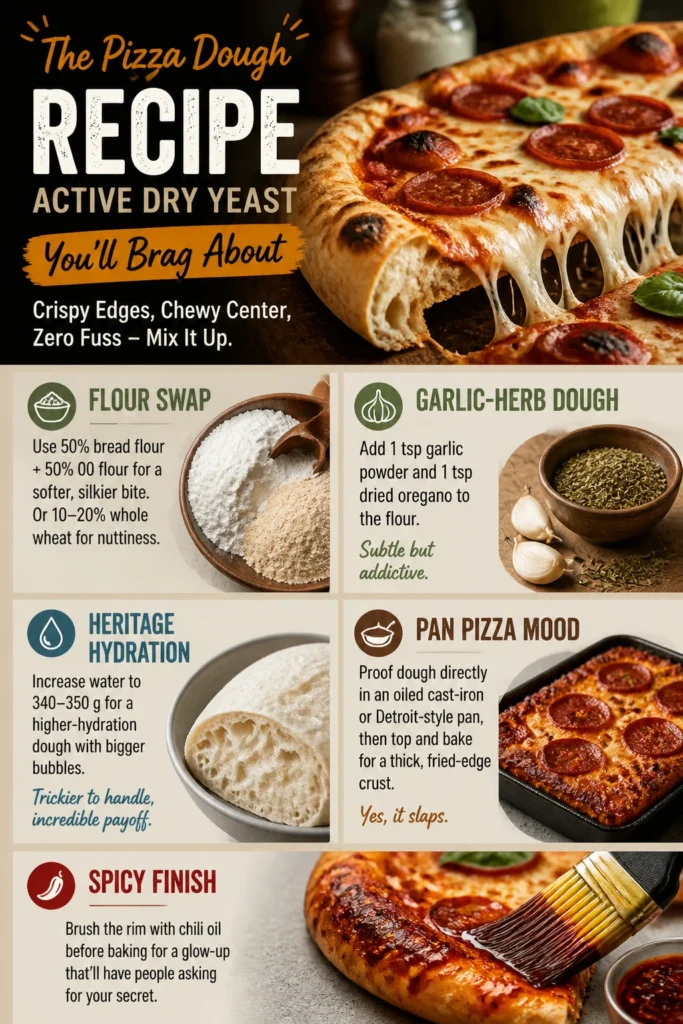
Subtle but addictive.
- Heritage hydration: Increase water to 340–350 g for a higher-hydration dough with bigger bubbles. Trickier to handle, incredible payoff.
- Pan pizza mood: Proof dough directly in an oiled cast-iron or Detroit-style pan, then top and bake for a thick, fried-edge crust. Yes, it slaps.
- Spicy finish: Brush the rim with chili oil before baking for a glow-up that’ll have people asking for your “secret.”
FAQ
Can I use instant yeast instead of active dry yeast?
Yes.
Use the same amount by weight (7 g) and mix it directly into the flour with the salt and sugar. Skip the proofing step, but keep the water warm for best results.
Why didn’t my dough rise?
Likely culprits: dead yeast, water too hot or too cold, or a chilly room. Check that your yeast foams during proofing, use water around 105–110°F, and allow enough time.
In winter, give it more patience or use a slightly warmer spot.
How do I prevent a soggy middle?
Go lighter on sauce and watery toppings, preheat thoroughly, and bake on a stone/steel if possible. Also, don’t overload the center—spread toppings outward and keep the rim clean.
Do I need sugar in the dough?
No, but it helps with browning and kickstarts yeast activity. If omitting, expect slightly paler crust unless your oven runs hot.
What oven rack should I use?
Top third of the oven gives better radiant heat and faster browning.
If your oven runs hot on top, switch to the middle rack to avoid scorched cheese.
How many pizzas does this make?
Two large 12–14 inch pizzas or three smaller 10–11 inch pizzas. Hungry crowd? Double it.
No one will complain—promise.
Can I make this gluten-free?
A 1:1 gluten-free flour blend won’t behave the same. Look for a dedicated gluten-free pizza dough recipe using psyllium husk or specific binders for structure.
Is a pizza stone or steel worth it?
Absolutely. A steel gets hotter faster and delivers aggressive browning; a stone is a solid budget upgrade.
Either one beats a bare rack, IMO.
🍰 The Master Baker & Prep Kit
Baking is a science, and meal prep requires efficiency. If you want consistently flaky pie crusts, perfectly risen cakes, and healthy meals ready for the week, these are the 5 upgrade tools that take your execution to the next level.
⚖️ OXO Good Grips 11lb Food Scale
The secret to why bakery bread and cookies are always perfect while home batches vary wildly. Measuring by weight (grams) instead of volume (cups) guarantees precise hydration and flawlessly consistent results every single time you bake.
🧑🍳 KitchenAid Classic Stand Mixer
The undisputed holy grail of the kitchen. From aggressively kneading heavy pizza doughs to whipping meringues into stiff peaks, this powerful motor saves your arms from exhaustion and cuts your hands-on prep time in half.
🍪 Silpat Premium Silicone Baking Mats
Stop wasting money on rolls of parchment paper or agonizing over cookies permanently fused to your metal pans. These reusable, professional-grade silicone mats ensure completely even heat distribution and instantly release even the stickiest caramel.
🌪️ Braun MultiQuick Immersion Blender
The ultimate shortcut tool for creamy tomato soups, lump-free gravies, and rapid smoothies. Avoid the burns and mess of dangerously transferring boiling liquids in batches to a traditional blender by simply blending right inside your cooking pot.
🍱 Premium Glass Meal Prep Containers
If you want to bake and cook healthier, batch preparation is required. These durable glass containers transition safely from freezer to microwave, never absorb tomato sauce stains, and feature airtight seals to keep your hard work fresh all week.
In Conclusion
This pizza dough recipe with active dry yeast is your reliable, repeatable path to great pizza: crisp crust, airy crumb, rich flavor, and no drama. Keep your water warm, your oven hot, and your toppings sensible, and you’ll get pro-level results from a home kitchen. Next time someone suggests takeout, just smile, preheat, and let this dough do the talking.