Dal Bati Recipe Rajasthani: A Taste of the Desert Feast!
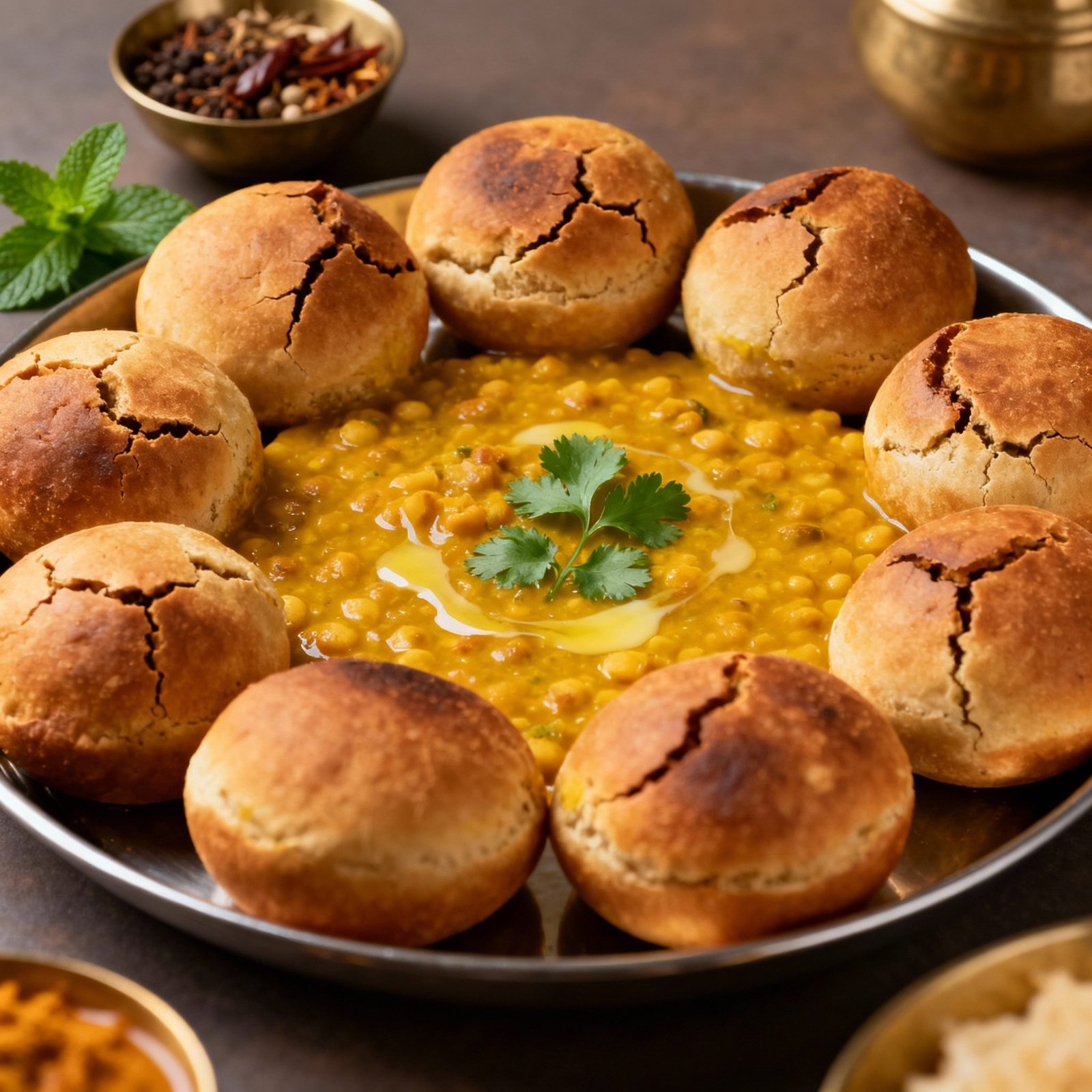
Imagine biting into a crisp, golden sphere of baked wheat, its earthy flavor enhanced by a generous dousing of fragrant ghee. Then, picture yourself scooping up a spoonful of creamy, spiced lentils, the dal, its warmth perfectly complementing the bati. This is Dal Bati, a quintessential Rajasthani dish that embodies the spirit of the desert – hearty, flavorful, and deeply satisfying. More than just a meal, Dal Bati is an experience, a celebration of textures and tastes that will transport you to the vibrant land of kings.
This recipe brings the authentic flavors of Rajasthan to your kitchen. While it might seem intimidating at first glance, breaking it down into manageable steps makes it surprisingly achievable. Get ready to embark on a culinary journey and impress your family and friends with this iconic Indian dish!
Why This Recipe Works
This recipe is meticulously crafted to ensure an authentic and delicious Dal Bati experience. Here’s why it works:
- Balanced Flavors: The recipe uses a blend of lentils (toor dal, chana dal, and moong dal) for a complex and nuanced flavor profile in the dal. The spices are carefully selected to complement the lentils and create a harmonious taste.
- Perfect Bati Texture: The addition of sooji (semolina) and ghee to the bati dough ensures a crisp exterior and a soft, crumbly interior. The baking process is crucial for achieving the desired texture, and the recipe provides clear instructions to guide you.
- Traditional Techniques: We employ traditional techniques like adding ajwain (carom seeds) to the bati dough for its digestive properties and characteristic flavor. The generous use of ghee is also a hallmark of authentic Rajasthani cuisine.
- Detailed Instructions: The step-by-step instructions are clear and concise, making it easy for even novice cooks to follow along. Each step is explained thoroughly, ensuring success every time.
- Adaptable Spice Level: The recipe provides a base spice level that can be easily adjusted to suit your personal preferences. Feel free to add more or less chili powder to achieve your desired level of heat.
Ingredients
For the Bati:
- 2 cups whole wheat flour (atta)
- 1/4 cup semolina (sooji)
- 1/4 cup ghee, melted
- 1/2 teaspoon ajwain (carom seeds)
- 1/2 teaspoon baking soda
- 1/4 teaspoon salt
- Warm water, as needed to form a dough
- Ghee, for drizzling
For the Dal:
- 1/2 cup toor dal (split pigeon peas)
- 1/4 cup chana dal (split chickpeas)
- 1/4 cup moong dal (split yellow lentils)
- 4 cups water
- 1 teaspoon turmeric powder
- 1 teaspoon red chili powder
- 1 teaspoon coriander powder
- 1/2 teaspoon cumin powder
- 1/4 teaspoon asafoetida (hing)
- 1 tablespoon ginger-garlic paste
- 1-2 green chilies, slit
- 1 tablespoon lemon juice
- Salt to taste
For the Tempering (Tadka):
- 2 tablespoons ghee
- 1 teaspoon cumin seeds
- 1/2 teaspoon mustard seeds
- 1-2 dry red chilies, broken
- A pinch of asafoetida (hing)
- Fresh coriander leaves, chopped, for garnish
Instructions
Making the Bati:
- Prepare the Dough: In a large bowl, combine the whole wheat flour, semolina, melted ghee, ajwain, baking soda, and salt. Mix well until the ghee is evenly distributed.
- Add Water: Gradually add warm water, kneading the mixture to form a firm, but not too stiff, dough. The dough should be similar in consistency to roti dough.
- Rest the Dough: Cover the dough with a damp cloth and let it rest for at least 30 minutes. This allows the gluten to relax, resulting in softer bati.
- Shape the Bati: Preheat your oven to 375°F (190°C). Divide the dough into equal-sized portions (about 1.5-2 inches in diameter). Roll each portion into a smooth ball and then slightly flatten it into a disc shape. You can make a small indentation in the center of each bati with your thumb.
- Bake the Bati: Arrange the bati on a baking sheet lined with parchment paper. Bake for 25-30 minutes, or until they are golden brown and cooked through. Flip them halfway through baking to ensure even cooking.
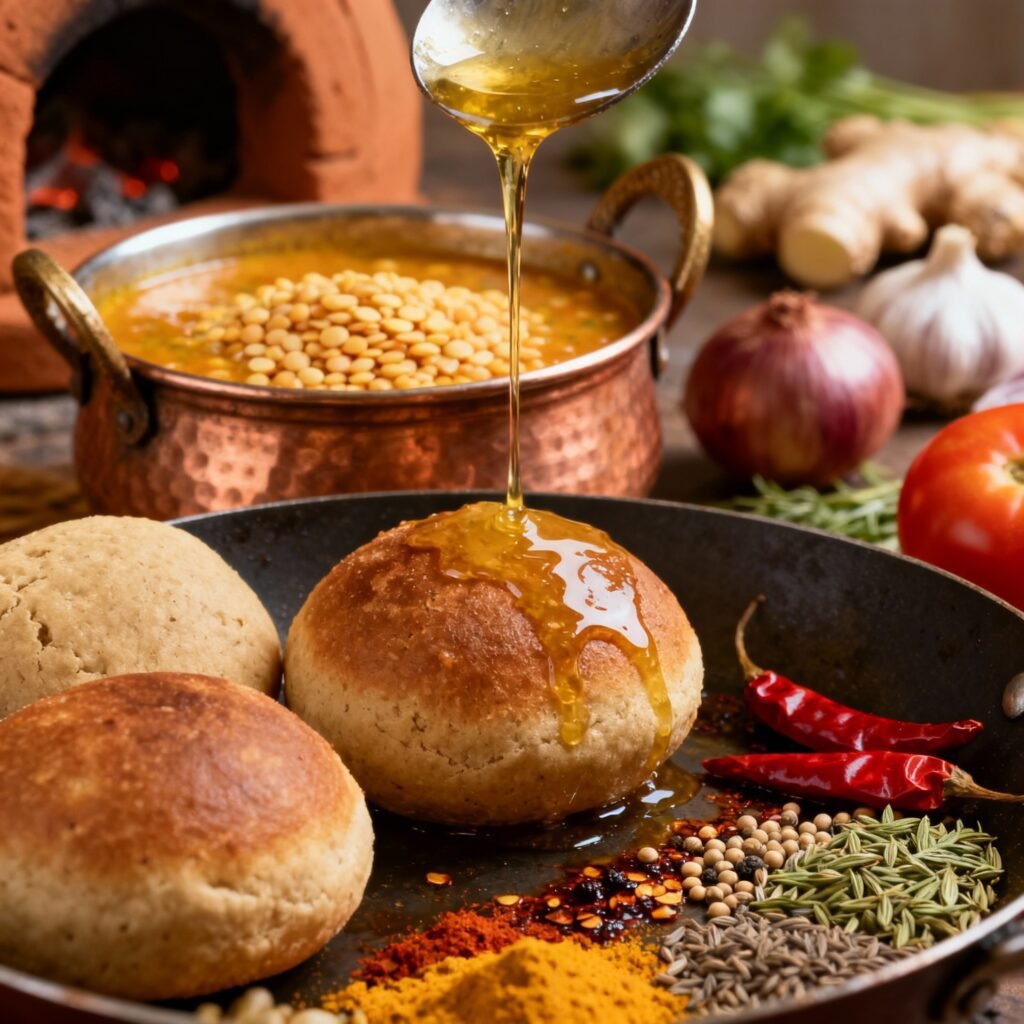
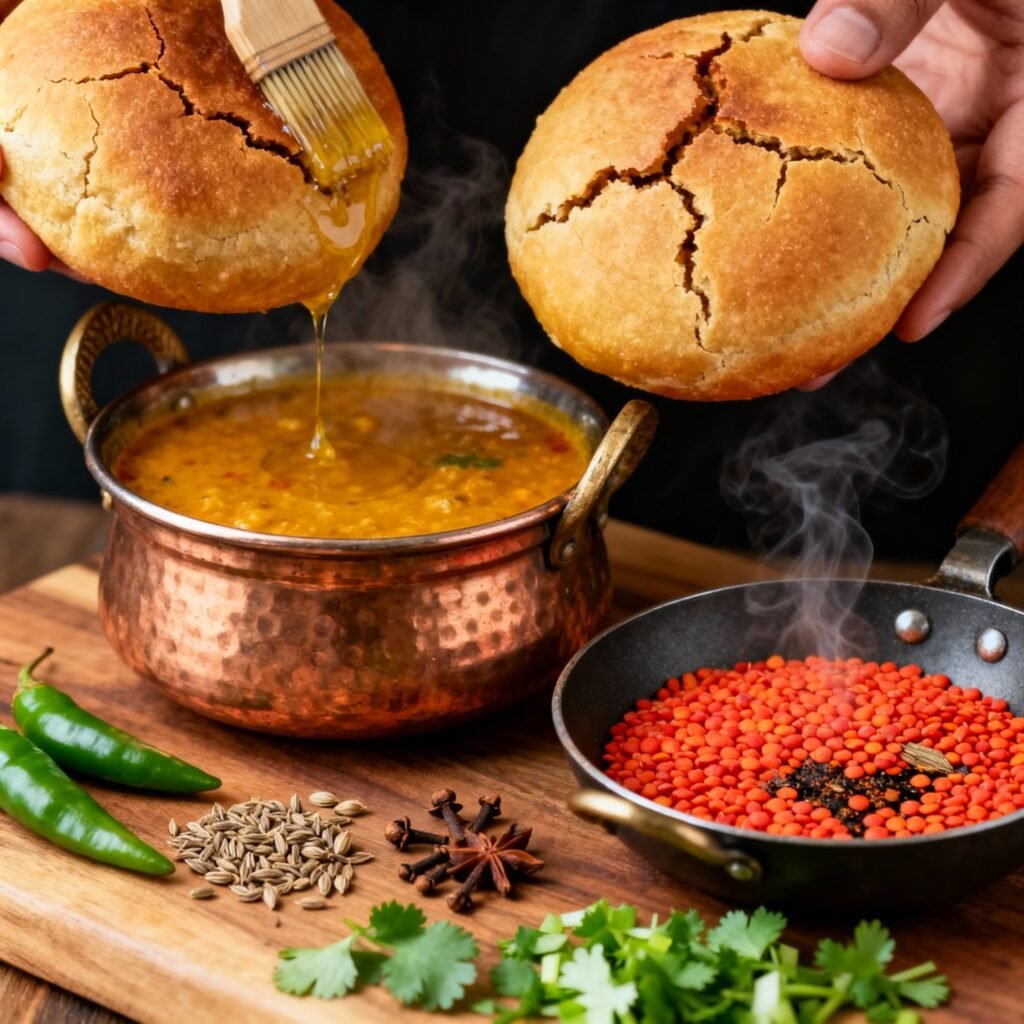
- Drizzle with Ghee: Once the bati are baked, remove them from the oven and immediately drizzle generously with melted ghee. This is crucial for the authentic flavor and texture.
Making the Dal:
- Wash the Lentils: Wash the toor dal, chana dal, and moong dal thoroughly under running water until the water runs clear.
- Pressure Cook the Lentils: In a pressure cooker, combine the washed lentils, water, turmeric powder, red chili powder, coriander powder, cumin powder, asafoetida, ginger-garlic paste, green chilies, and salt. Close the lid and cook for 3-4 whistles, or until the lentils are completely cooked and mushy.
- Mash the Dal: Once the pressure has released naturally, open the cooker and lightly mash the dal with a spoon or a whisk. This will give it a smooth and creamy consistency.
- Add Lemon Juice: Stir in the lemon juice and mix well.
Making the Tempering (Tadka):
- Heat the Ghee: In a small pan, heat the ghee over medium heat.
- Add Spices: Add the cumin seeds and mustard seeds. Allow them to splutter.
- Add Dry Red Chilies and Hing: Add the broken dry red chilies and a pinch of asafoetida. Fry for a few seconds until fragrant.
- Pour over Dal: Immediately pour the tempering over the dal.
- Garnish: Garnish with fresh coriander leaves.
Serving:
- Serve the hot dal with the ghee-drenched bati.
- Traditionally, the bati are broken into smaller pieces and dipped into the dal.
- Enjoy the authentic taste of Rajasthan!
Tips for Success
- Use Good Quality Ghee: Ghee is a key ingredient in Dal Bati, so using good quality ghee will significantly enhance the flavor.
- Don’t Over-knead the Dough: Over-kneading the dough can result in tough bati. Knead just until the ingredients are combined and the dough is smooth.
- Adjust the Spice Level: Feel free to adjust the amount of red chili powder to suit your personal preference.
- Bake the Bati Evenly: Ensure that the bati are baked evenly by flipping them halfway through baking.
- Soak the Bati in Ghee: Drizzling the bati generously with ghee while they are still hot allows the ghee to soak in, making them incredibly flavorful.
- Pressure Cook the Dal Properly: Make sure the lentils are completely cooked and mushy before mashing them. This will ensure a smooth and creamy dal.
- Fresh Ingredients: Using fresh ingredients, especially the ginger, garlic, and coriander leaves, will elevate the flavor of the dish.
Storage Instructions
- Bati: Baked bati can be stored in an airtight container at room temperature for up to 3-4 days. You can reheat them in the oven or microwave before serving.
- Dal: Dal can be stored in an airtight container in the refrigerator for up to 2-3 days. Reheat it thoroughly before serving. You may need to add a little water while reheating to adjust the consistency.
- Freezing: While not ideal, both bati and dal can be frozen. Freeze the bati after they have cooled completely. Freeze the dal in portion-sized containers. Thaw both in the refrigerator overnight before reheating. The texture of the bati may change slightly after freezing, but they will still be edible.
FAQ
Q: Can I make Dal Bati without a pressure cooker?
A: Yes, you can cook the dal in a regular pot on the stovetop. However, it will take longer for the lentils to cook. You may need to add more water as they cook and simmer until they are soft and mushy.
Q: Can I use different lentils?
A: While the combination of toor dal, chana dal, and moong dal is traditional, you can experiment with other lentils like masoor dal (red lentils) or urad dal (black lentils). Just be aware that the flavor and texture of the dal may vary.
Q: Can I bake the bati in a tandoor?
A: Yes, baking the bati in a tandoor will give them a more authentic smoky flavor. However, most home cooks don’t have access to a tandoor, so the oven method is a convenient alternative.
Q: Can I add vegetables to the dal?
A: Yes, you can add vegetables like tomatoes, onions, or spinach to the dal for added flavor and nutrition. Add them while pressure cooking the lentils.
Q: Is Dal Bati gluten-free?
A: No, Dal Bati is not gluten-free as the bati are made with whole wheat flour.
Conclusion
Dal Bati is more than just a recipe; it’s a journey into the heart of Rajasthani cuisine. With its delightful combination of textures and flavors, it’s a dish that’s sure to impress. This recipe provides a comprehensive guide to creating authentic Dal Bati in your own kitchen. So, gather your ingredients, follow the steps, and prepare to experience the magic of this iconic Indian delicacy. Enjoy the taste of the desert feast!