English Muffin Sourdough Recipe: The Tangy Breakfast Upgrade
Forget store-bought English muffins! Once you taste these homemade sourdough English muffins, you’ll never go back. This recipe combines the delightful tang of sourdough with the nooks and crannies you crave, creating a breakfast experience that’s both satisfying and incredibly delicious. We’re talking crispy edges, a chewy interior, and that unmistakable sourdough flavor that elevates everything from eggs benedict to a simple buttered muffin.
This recipe might seem intimidating at first, but it’s surprisingly straightforward. We’ll guide you through each step, from preparing your sourdough starter to mastering the griddle technique. Get ready to impress your family and friends with these golden-brown beauties!
Why This Recipe Works
This recipe is designed for success, even if you’re new to sourdough baking. Here’s why it works:
- Sourdough Starter: The heart of this recipe is your active sourdough starter. The fermentation process not only contributes to the signature tangy flavor but also helps develop a lighter, more digestible crumb.
- High Hydration: A higher hydration dough ensures a soft and airy interior. Don’t be afraid of the stickiness! We’ll show you how to handle it.
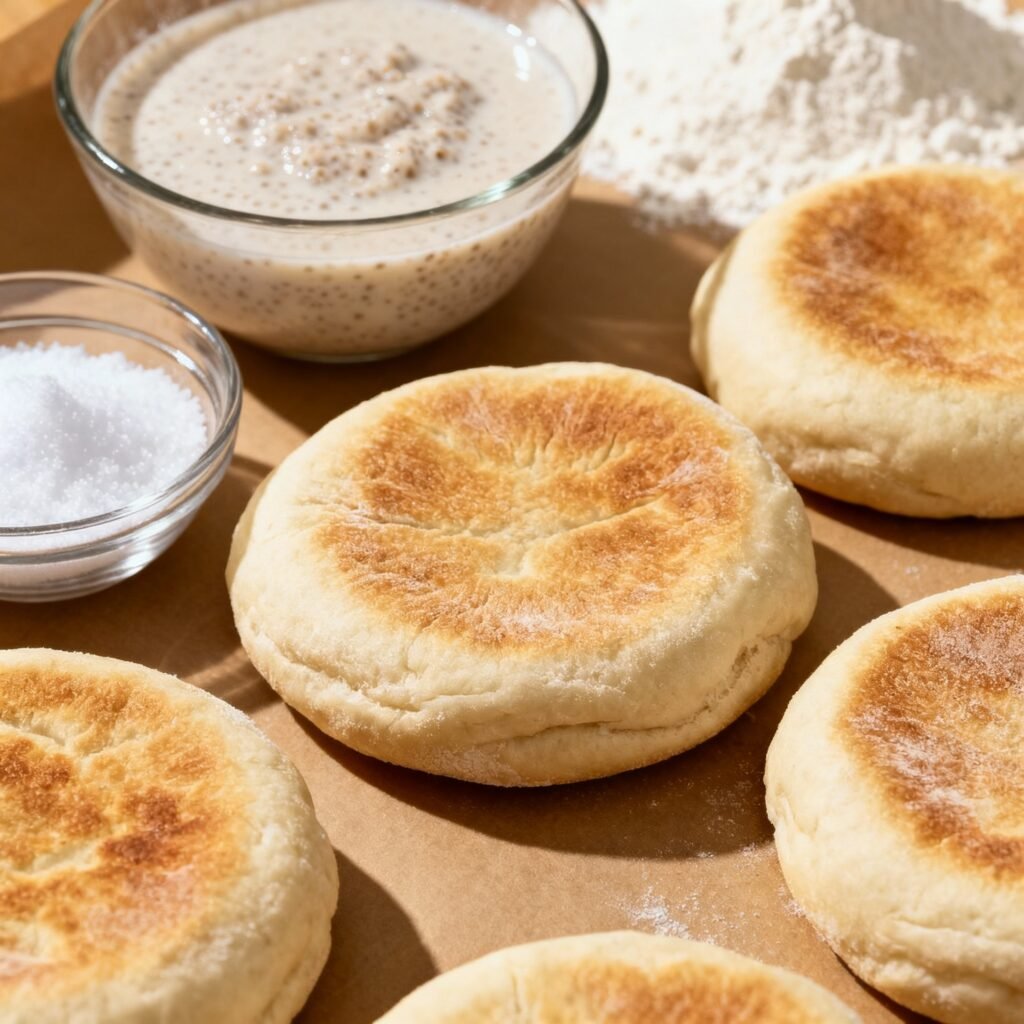
- Griddle Technique: Cooking these muffins on a griddle creates the perfect balance of crispy exterior and soft interior. The even heat distribution is key.
- Resting Period: Allowing the dough to rest after mixing and before cooking allows the gluten to relax, resulting in a tender muffin.
- Fork Splitting: The signature nooks and crannies are achieved by splitting the cooked muffins with a fork instead of a knife. This creates a rough surface that’s perfect for catching butter and jam.
Ingredients
- 150g active sourdough starter (100% hydration)
- 350g warm water (about 95-105°F)
- 500g bread flour (or all-purpose flour)
- 10g salt
- 2 tablespoons olive oil (for greasing)
- Cornmeal or semolina flour (for dusting)

Instructions
- Prepare the Dough: In a large bowl, combine the warm water and sourdough starter. Whisk until the starter is mostly dissolved.
- Add Flour and Salt: Add the bread flour and salt to the bowl. Mix with a wooden spoon or your hands until a shaggy dough forms.
- Rest (Autolyse): Cover the bowl with plastic wrap or a damp cloth and let the dough rest for 30 minutes. This allows the flour to fully hydrate and the gluten to begin developing.
- Knead (Stretch and Folds): After the rest, lightly wet your hands and perform a series of stretch and folds in the bowl. Grab a portion of the dough, stretch it upwards, and fold it over onto itself. Rotate the bowl and repeat this process 4-5 times. Cover the bowl and let it rest for 30 minutes. Repeat this stretch and fold process 2-3 more times over the next 1-2 hours. This develops the gluten without the need for traditional kneading.
- Bulk Fermentation: Cover the bowl and let the dough bulk ferment at room temperature for 4-6 hours, or until it has nearly doubled in size. The exact time will depend on the temperature of your kitchen and the activity of your starter.
- Shape the Muffins: Lightly flour a clean surface. Gently turn the dough out onto the floured surface. Use a bench scraper or knife to divide the dough into 10-12 equal pieces.
- Form Rounds: Gently shape each piece into a round. You can do this by pulling the edges of the dough towards the center and then flipping it over to create a smooth top.
- Proof: Line a baking sheet with parchment paper and sprinkle generously with cornmeal or semolina flour. Place the shaped muffins on the prepared baking sheet, leaving some space between them. Sprinkle the tops of the muffins with more cornmeal or semolina flour. Cover loosely with plastic wrap or a clean kitchen towel and let them proof for 1-2 hours, or until they have puffed up slightly.
- Preheat Griddle: Preheat a lightly oiled griddle or large skillet over medium-low heat. It’s important to use a low heat to ensure the muffins cook through evenly without burning.
- Cook the Muffins: Carefully transfer the muffins to the preheated griddle. Cook for 8-12 minutes per side, or until they are golden brown and cooked through. You can test for doneness by inserting a thermometer into the center of a muffin; it should register around 200°F (93°C).
- Cool and Split: Transfer the cooked muffins to a wire rack to cool completely. Once cooled, use a fork to split the muffins horizontally. Insert the tines of the fork into the side of the muffin and gently pull apart. This creates the characteristic nooks and crannies.
- Enjoy! Toast the split muffins and serve with your favorite toppings.
Tips for Success
- Use an Active Starter: A bubbly and active starter is crucial for achieving the right rise and flavor. Feed your starter regularly for several days before making the dough.
- Don’t Overmix: Overmixing can lead to tough muffins. Use the stretch and fold technique to develop the gluten gently.
- Patience is Key: Sourdough baking requires patience. Don’t rush the fermentation or proofing process.
- Control the Heat: Cooking the muffins over low heat is essential for even cooking. Adjust the heat as needed to prevent burning.
- Use a Griddle or Skillet: A griddle provides even heat distribution, but a large skillet will also work.
- Don’t Be Afraid of Sticky Dough: Sourdough dough is often sticky. Use wet hands and a lightly floured surface to handle it.
- Experiment with Toppings: Get creative with your toppings! Try different cheeses, meats, vegetables, and spreads.
Storage Instructions
Store cooled English muffins in an airtight container at room temperature for up to 3 days. For longer storage, freeze them in a freezer-safe bag or container for up to 2 months. To reheat, toast them directly from frozen.
FAQ
Q: Can I use all-purpose flour instead of bread flour?
A: Yes, you can use all-purpose flour, but the muffins may be slightly less chewy. Bread flour has a higher protein content, which helps develop a stronger gluten network.
Q: My dough is too sticky. What should I do?
A: Sourdough dough is naturally sticky. Use wet hands and a lightly floured surface to handle it. Avoid adding more flour unless the dough is completely unmanageable, as this can result in dry muffins.
Q: My muffins are not rising. What could be the problem?
A: There are several reasons why your muffins might not be rising: your starter may not be active enough, the dough may not have fermented long enough, or the oven may not be hot enough. Make sure your starter is bubbly and active, allow the dough to ferment for the recommended time, and preheat your oven thoroughly.
Q: Can I add other ingredients to the dough?
A: Yes, you can add other ingredients to the dough, such as seeds, nuts, or dried fruit. Add them after the autolyse and before the bulk fermentation.
Q: Can I make this recipe without a sourdough starter?
A: This recipe is specifically designed for sourdough. While you can find recipes for English muffins that use commercial yeast, you won’t achieve the same tangy flavor and chewy texture.
Conclusion
Congratulations! You’ve just unlocked the secret to making incredibly delicious sourdough English muffins at home. The tangy flavor, the perfect nooks and crannies, and the satisfaction of baking something from scratch make this recipe a winner. So, fire up your griddle, grab your starter, and get ready to enjoy the best English muffins you’ve ever tasted. Happy baking!