Homemade Pasta Dough Recipe: The Silkiest, Most Delicious Pasta You’ll Ever Make!
Imagine twirling perfectly cooked, glistening strands of pasta around your fork, each bite bursting with fresh, vibrant flavor. Forget the boxed stuff – we’re talking about pasta made entirely from scratch, with just a few simple ingredients and a little bit of love. Making homemade pasta might seem intimidating, but trust me, it’s a rewarding experience that will elevate your weeknight dinners and impress your guests. This recipe is designed to be foolproof, offering clear instructions and helpful tips to guide you every step of the way. Get ready to experience pasta like never before!
Why This Recipe Works
This recipe focuses on achieving the perfect balance of hydration and gluten development. Here’s why it works so well:
- Simple Ingredients: We use just flour, eggs, and a touch of salt. No fancy equipment or hard-to-find ingredients required.
- Precise Hydration: The ratio of flour to eggs is carefully calculated to create a dough that’s pliable but not sticky, easy to work with, and yields a tender final product.
- Proper Kneading: Kneading is crucial for developing the gluten, which gives the pasta its structure and chew. We’ll guide you through the process to ensure optimal gluten development.
- Resting Time: Resting the dough allows the gluten to relax, making it easier to roll out and preventing it from snapping back. This step is essential for achieving a smooth, even texture.
- Detailed Instructions: Each step is explained clearly and concisely, with helpful visuals (if you’re watching a video – which we recommend searching for alongside this recipe!) to ensure success.
Ingredients
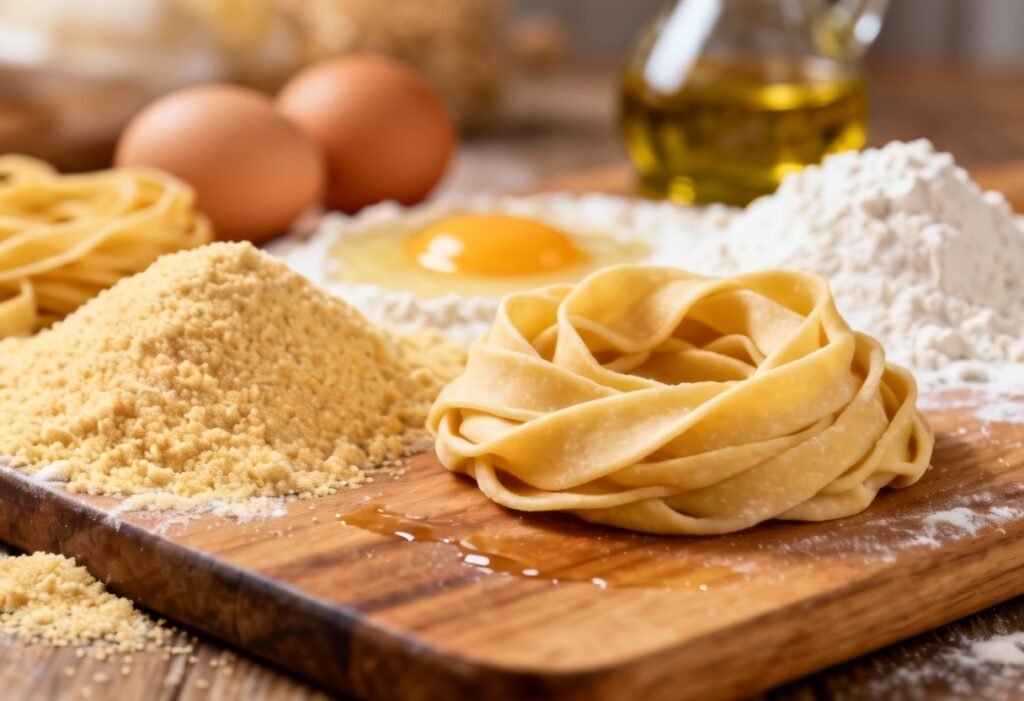
- 2 cups (250g) All-Purpose Flour, plus more for dusting: All-purpose flour works well for a slightly chewier pasta. For a more delicate pasta, use 00 flour.
- 3 large Eggs: Use fresh, high-quality eggs for the best flavor and color.
- 1/2 teaspoon Salt: Salt enhances the flavor of the pasta and helps to tighten the gluten structure.
- 1 tablespoon Olive Oil (optional): A touch of olive oil can add richness and improve the dough’s elasticity.
Instructions
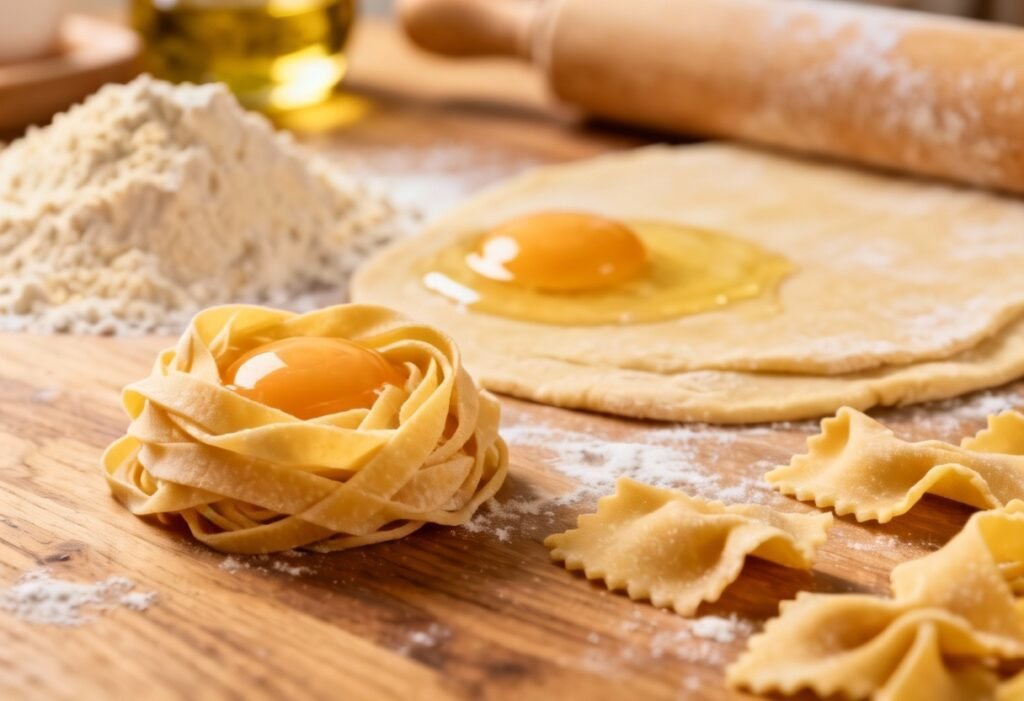
- Create a Well: On a clean work surface, mound the flour and create a well in the center, like a volcano.
- Add the Wet Ingredients: Crack the eggs into the well, add the salt, and the olive oil (if using).
- Incorporate the Flour: Using a fork, gently whisk the eggs and salt together. Gradually begin to incorporate the flour from the inner walls of the well, working slowly and carefully to prevent the eggs from spilling out.
- Form a Dough: Continue incorporating the flour until a shaggy dough forms. At this point, switch from the fork to your hands.
- Knead the Dough: Knead the dough for 8-10 minutes, or until it becomes smooth, elastic, and slightly tacky. To knead, push the dough away from you with the heel of your hand, fold it in half, and rotate 90 degrees. Repeat this process, adding a little flour if the dough is too sticky.
- Rest the Dough: Form the dough into a ball, wrap it tightly in plastic wrap, and let it rest at room temperature for at least 30 minutes, or up to 2 hours. This allows the gluten to relax, making the dough easier to roll out.
- Roll Out the Dough (by hand): On a lightly floured surface, roll out the dough to your desired thickness, using a rolling pin. Start from the center and roll outwards, rotating the dough as you go. For best results, aim for a thickness of about 1/16 inch (about 1.5mm).
- Roll Out the Dough (with a pasta machine): Divide the rested dough into smaller portions. Flatten one portion into a rectangular shape. Set your pasta machine to the widest setting. Feed the dough through the machine. Fold the dough in thirds, and feed it through the widest setting again. Repeat this process several times to develop the gluten. Then, gradually decrease the setting on the machine, feeding the dough through each setting until you reach your desired thickness.
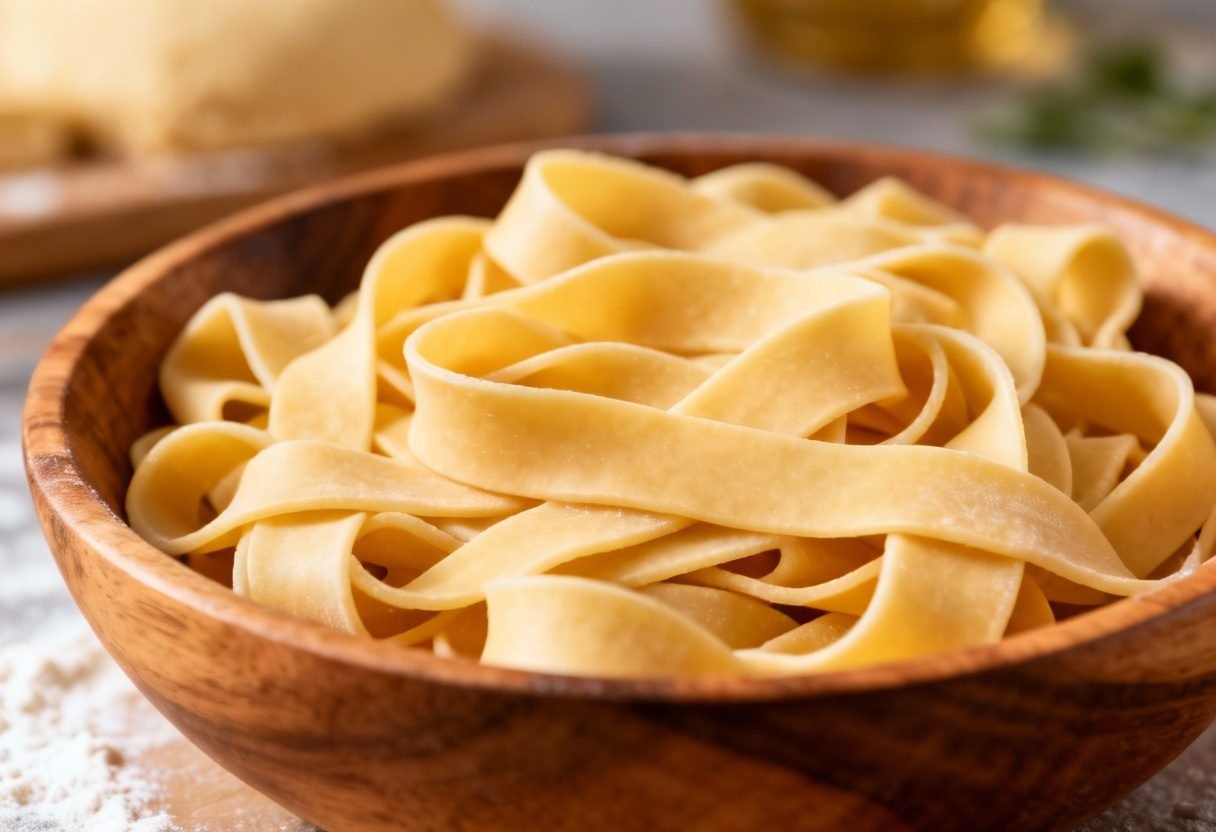
- Cut the Pasta: Once the dough is rolled out to your desired thickness, cut it into your desired shape. You can use a sharp knife to cut the dough into tagliatelle, fettuccine, or pappardelle. Alternatively, you can use a pasta cutter to create ravioli, tortellini, or other shaped pasta.
- Cook the Pasta: Bring a large pot of salted water to a rolling boil. Add the pasta and cook for 2-4 minutes, or until al dente. Fresh pasta cooks much faster than dried pasta, so keep a close eye on it.
- Serve and Enjoy: Drain the pasta and toss it with your favorite sauce. Serve immediately and enjoy!
Tips for Success
- Use High-Quality Ingredients: The quality of your ingredients will directly impact the flavor of your pasta. Use fresh, high-quality eggs and good-quality flour.
- Don’t Overwork the Dough: Over-kneading the dough can result in tough pasta. Knead the dough until it is smooth and elastic, but avoid overworking it.
- Rest the Dough Properly: Resting the dough is crucial for achieving a tender final product. Don’t skip this step!
- Roll the Dough Thinly: The thinner you roll the dough, the more delicate and flavorful the pasta will be.
- Dust with Flour Liberally: Dust the dough with flour as needed to prevent it from sticking to your work surface or the pasta machine.
- Don’t Overcook the Pasta: Fresh pasta cooks quickly, so keep a close eye on it to prevent it from becoming mushy. Aim for al dente, which means “to the tooth” in Italian.
Storage Instructions
Fresh Pasta: Freshly made pasta can be cooked immediately or stored for later use. To store fresh pasta, dust it lightly with flour and arrange it in a single layer on a baking sheet lined with parchment paper. Cover the pasta with plastic wrap and refrigerate for up to 24 hours. Alternatively, you can freeze the pasta for up to 2 months. To freeze, arrange the pasta in a single layer on a baking sheet and freeze until solid. Then, transfer the frozen pasta to a freezer bag or container.
Cooked Pasta: Cooked pasta can be stored in an airtight container in the refrigerator for up to 3 days. Reheat the pasta in a saucepan with a little bit of water or sauce.
FAQ
- Can I use a stand mixer to make the dough? Yes, you can use a stand mixer with a dough hook attachment. Combine the ingredients in the bowl of the mixer and knead on low speed for 8-10 minutes.
- Can I use gluten-free flour? Yes, you can use gluten-free flour, but the texture of the pasta will be different. You may need to add more liquid to the dough.
- Why is my dough too sticky? If your dough is too sticky, add a little more flour, one tablespoon at a time, until it reaches the desired consistency.
- Why is my dough too dry? If your dough is too dry, add a little more water, one teaspoon at a time, until it reaches the desired consistency.
- What kind of sauce goes well with homemade pasta? Homemade pasta pairs well with a variety of sauces, from simple tomato sauce to rich cream sauces. Experiment and find your favorite combination!
Conclusion
Making homemade pasta is a rewarding and delicious experience. With this recipe and a little practice, you’ll be creating restaurant-quality pasta in your own kitchen in no time. So gather your ingredients, put on some music, and get ready to enjoy the satisfying process of transforming simple ingredients into a culinary masterpiece. Buon appetito!