Korean Fish Cake Recipe: The Ultimate Guide to Deliciousness
Korean fish cakes, or eomuk (어묵) and odeng (오뎅), are a beloved street food and versatile ingredient in Korean cuisine. From simmering in flavorful broths to stir-frying with vegetables, these chewy, savory cakes are a delicious and satisfying treat. This recipe will guide you through creating authentic Korean fish cakes at home, allowing you to enjoy this popular snack whenever you crave it. Get ready to impress your friends and family with your newfound culinary skills! We’ll cover everything from ingredient selection to cooking techniques, ensuring your fish cakes turn out perfectly every time.
Why This Recipe Works
This recipe is designed for success, even if you’re new to Korean cooking. We’ve carefully considered the key factors that contribute to authentic-tasting and perfectly textured fish cakes:
- Authentic Flavor Profile: We use a blend of fish paste, vegetables, and seasonings that replicates the traditional taste of Korean fish cakes.
- Texture Perfection: The ratio of ingredients and the kneading technique are crucial for achieving the characteristic chewy and slightly bouncy texture.
- Versatile Cooking Methods: We provide guidance on how to cook your fish cakes in various ways, from simmering in broth to pan-frying.
- Clear and Concise Instructions: The step-by-step instructions are easy to follow, even for beginner cooks.
- Troubleshooting Tips: We address potential challenges and offer solutions to ensure your fish cakes turn out perfectly.
Ingredients
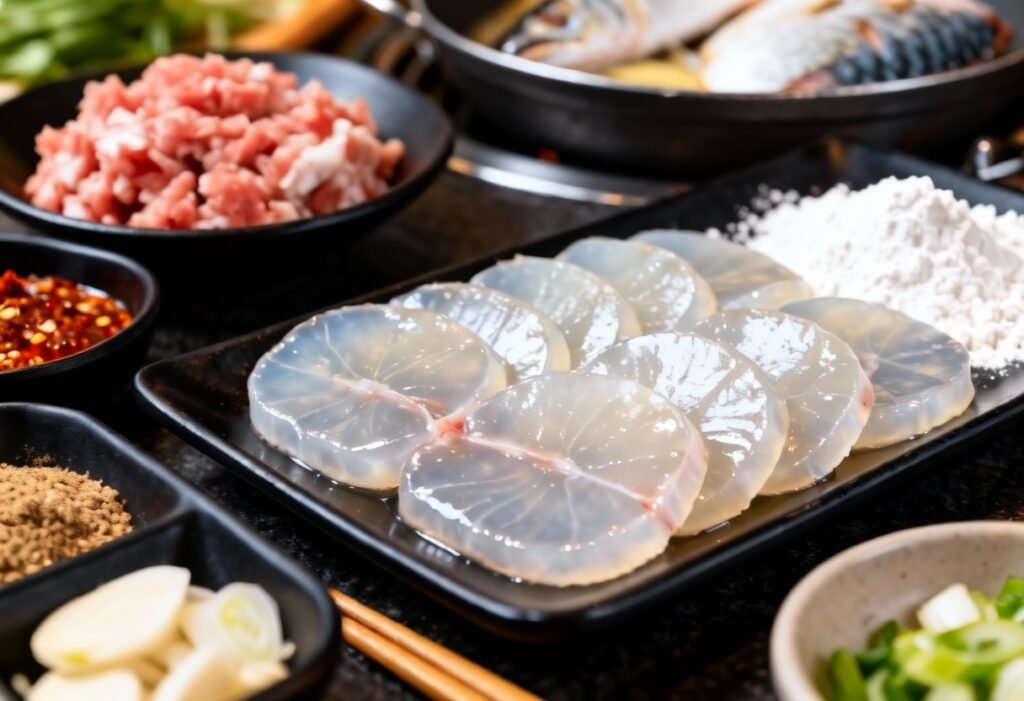
- 1 lb White Fish Fillets (Cod, Pollock, or Tilapia): Ensure they are skinless and boneless.
- 1/2 cup Potato Starch: This is crucial for the chewy texture.
- 1/4 cup All-Purpose Flour: Helps bind the ingredients together.
- 1/4 cup Carrot, finely diced: Adds sweetness and color.
- 1/4 cup Onion, finely diced: Contributes to the savory flavor.
- 2 Scallions, thinly sliced: Provides a fresh, mild onion flavor.
- 1 tbsp Soy Sauce: Adds umami and saltiness.
- 1 tbsp Fish Sauce: Enhances the savory flavor; can be omitted for a milder taste.
- 1 tsp Sugar: Balances the flavors.
- 1/2 tsp Salt: Adjust to taste.
- 1/4 tsp White Pepper: Adds a subtle spice.
- 1 Egg White: Helps bind the mixture.
- Vegetable Oil, for frying (optional): For pan-frying the fish cakes.
- Water, for simmering (optional): For making fish cake soup or skewers.
Instructions
- Prepare the Fish: Cut the fish fillets into smaller pieces. Place them in a food processor and process until a smooth paste forms. This may take a few minutes, and you might need to scrape down the sides of the food processor occasionally.
- Combine Ingredients: In a large bowl, combine the fish paste, potato starch, all-purpose flour, carrot, onion, scallions, soy sauce, fish sauce (if using), sugar, salt, white pepper, and egg white.
- Knead the Mixture: Knead the mixture thoroughly for about 5-7 minutes. This is a crucial step to develop the gluten and create the desired chewy texture. The mixture should be sticky and elastic.
- Shape the Fish Cakes: There are several ways to shape the fish cakes:
- Flat Sheets: Spread the mixture thinly onto a baking sheet lined with parchment paper. You can use a spatula to create a smooth and even layer.
- Individual Cakes: Use a spoon to scoop out portions of the mixture and shape them into small, oval-shaped cakes.
- Skewers: Spread a thin layer of the fish cake mixture on nori seaweed sheets, roll it up, and cut into smaller pieces. These can be placed on skewers after cooking.
- Cook the Fish Cakes:
- Steaming: If you spread the mixture on a baking sheet, steam it for 15-20 minutes, or until cooked through. If you shaped individual cakes, steam them for 10-15 minutes.
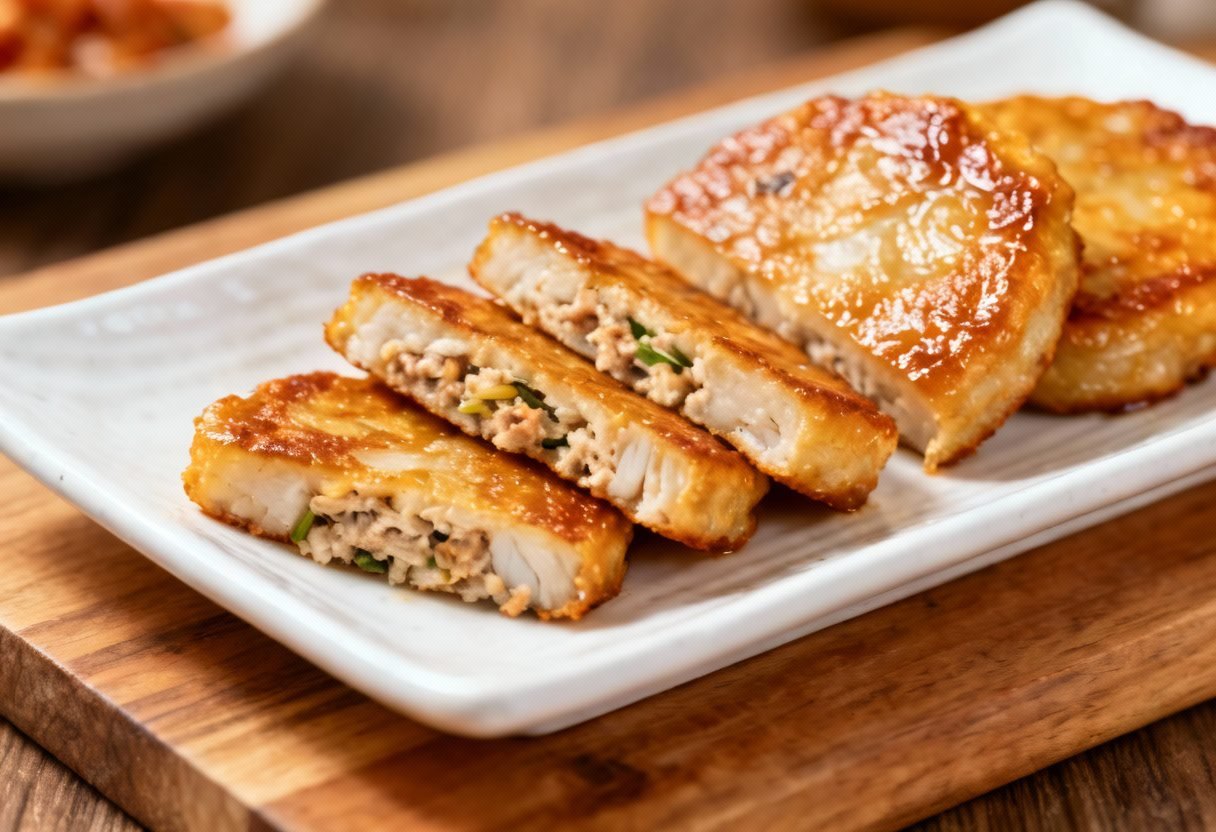
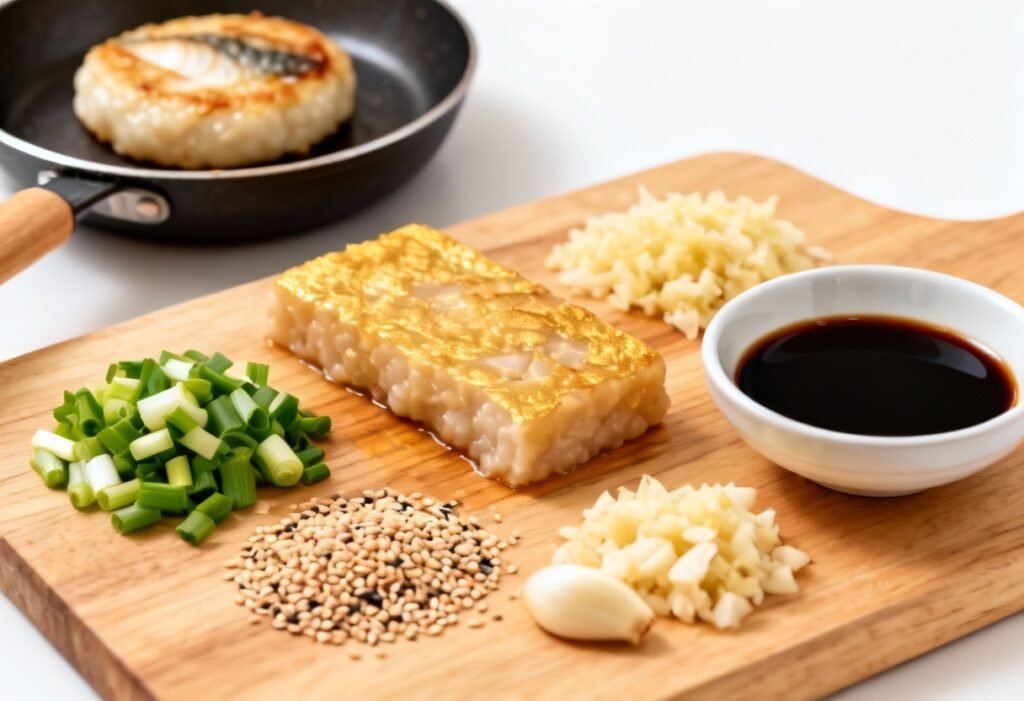
- Pan-Frying (Optional): Heat a small amount of vegetable oil in a skillet over medium heat. Fry the fish cakes for 2-3 minutes per side, or until golden brown. This adds a crispy texture.
- Simmering (Optional): Simmer the fish cakes in a broth (such as anchovy broth or dashi) for 10-15 minutes. This is ideal for making fish cake soup or skewers.
- Serve: Serve the fish cakes hot. They can be enjoyed as a snack, side dish, or ingredient in various Korean dishes.
Tips for Success
- Use Fresh Fish: Fresh fish will result in the best flavor and texture. If using frozen fish, thaw it completely and pat it dry before processing.
- Don’t Over-Process the Fish: Over-processing the fish can make it rubbery. Process it just until it forms a smooth paste.
- Kneading is Key: Kneading the mixture thoroughly is essential for developing the chewy texture. Don’t skip this step!
- Adjust Seasoning to Taste: Taste the mixture before cooking and adjust the seasoning as needed. You may want to add more salt, soy sauce, or sugar to suit your preferences.
- Prevent Sticking: To prevent the fish cakes from sticking to the steamer or skillet, use parchment paper or lightly oil the surface.
- Experiment with Flavors: Feel free to add other ingredients to the mixture, such as chopped chili peppers, garlic, or ginger, for a more complex flavor.
Storage Instructions
Refrigerating: Cooked fish cakes can be stored in an airtight container in the refrigerator for up to 3-4 days.
Freezing: Cooked fish cakes can be frozen for up to 2 months. Wrap them individually in plastic wrap or place them in a freezer-safe bag to prevent freezer burn. Thaw them in the refrigerator before reheating.
Reheating: Reheat fish cakes in a skillet, microwave, or by simmering them in broth. They are best enjoyed warm.
FAQ
Q: Can I use frozen fish?
A: Yes, you can use frozen fish. Make sure to thaw it completely and pat it dry before processing.
Q: Can I make this recipe without fish sauce?
A: Yes, you can omit the fish sauce for a milder flavor. You may want to add a pinch more salt or soy sauce to compensate.
Q: What can I serve with Korean fish cakes?
A: Korean fish cakes are incredibly versatile! They can be enjoyed as a snack, side dish, or ingredient in various Korean dishes. Try them with dipping sauces like soy sauce with vinegar and sesame oil, gochujang, or ssamjang. They’re also delicious in tteokbokki, kimbap, and fish cake soup.
Q: My fish cakes are too soft. What did I do wrong?
A: This could be due to several factors. Make sure you’re using enough potato starch and flour, and that you’re kneading the mixture thoroughly. Also, avoid over-processing the fish, as this can make it rubbery. If you are steaming them, avoid over-steaming.
Q: Can I bake these instead of steaming or frying?
A: While baking is possible, the texture will be slightly different. If baking, preheat your oven to 350°F (175°C) and bake for 20-25 minutes, or until cooked through. The texture will be less chewy compared to steaming or frying.
Conclusion
Congratulations! You’ve now mastered the art of making delicious Korean fish cakes at home. With this recipe and the tips provided, you can confidently create this popular snack whenever you crave it. Experiment with different flavors and cooking methods to find your perfect fish cake creation. Enjoy!