Mango Sago Dessert Recipe: The Creamy, Tropical Cheat Code Your Summer Needs
👩🍳 The Home Chef's Essential Kitchen
Consistently cooking incredible, healthy meals at home is so much easier when you aren't fighting with cheap tools. These are the 5 absolute powerhouse kitchen essentials that professional chefs and serious home cooks rely on every single day to get perfect results.
🍳 Lodge 10.25" Cast Iron Skillet
The single greatest value in all of cookware. It retains heat infinitely better than cheap non-stick pans, allowing you to get a restaurant-quality crust on steaks or perfect crispy edges on cornbread. With proper care, this $20 pan will literally outlive you.
🔪 Victorinox Fibrox Pro 8" Chef's Knife
A dull knife makes cooking a frustrating chore. This specific blade is the undisputed champion of the culinary world—it holds a terrifyingly sharp edge, features a comfortable non-slip grip, and performs identical to German knives that cost quadruple the price.
🌡️ ThermoPro Instant Read Thermometer
Never serve dry chicken or undercooked pork again. An instant-read thermometer is the secret difference between amateur cooks who 'guess' when protein is done, and professionals who know exactly when to pull meat off the heat for maximum juiciness.
🍲 Lodge Enameled Cast Iron Dutch Oven
The ultimate workhorse for soups, stews, braised short ribs, and baking crusty artisanal bread. The enameled interior provides incredible heat distribution for slow-cooking while eliminating the intense seasoning maintenance required by bare cast iron.
🥄 Bpa-Free Silicone Utensil Set
Throw away those melting plastic spatulas and bacteria-harboring wooden spoons. This pure silicone set is heat-resistant up to 600°F, won't scratch your expensive pans, and features seamless designs that make cleaning out thick sauces and batters effortless.
You don’t need a pastry degree to impress people—just mangoes, sago, and a blender. This mango sago dessert recipe delivers that silky, chilled, can’t-stop-eating-it vibe in 20 minutes flat. It’s the kind of dessert that makes guests think you “know a guy” at a fancy hotel buffet.
Spoiler: the guy is you. Creamy, cold, fruity, and wildly refreshing—this is what dessert should be.
What Makes This Special
This dessert nails the sweet spot between light and decadent. The chewy sago pearls add texture without heaviness, while the mango puree brings bright tropical flavor that tastes like sunshine.
Coconut milk and cream unify everything into a luscious, scoopable situation. It’s also naturally gluten-free and easily dairy-free, which means everybody gets a bowl. And honestly, when was the last time a dessert made you feel like you were on vacation?
Ingredients
- Fresh ripe mangoes – 3 large (Ataulfo, Alphonso, or Kent preferred), divided (2 for puree, 1 for cubes)
- Sago (tapioca pearls) – 1/2 cup small pearls
- Coconut milk – 1 cup (full-fat for creaminess)
- Evaporated milk or cream – 1/2 cup (use coconut cream for dairy-free)
- Sweetener – 2–4 tablespoons sugar, honey, or condensed milk (to taste)
- Pinch of salt – enhances flavor
- Vanilla extract – 1/2 teaspoon (optional, but great)
- Lime juice – 1–2 teaspoons (optional, for brightness)
- Ice cubes – a handful (for rapid chilling)
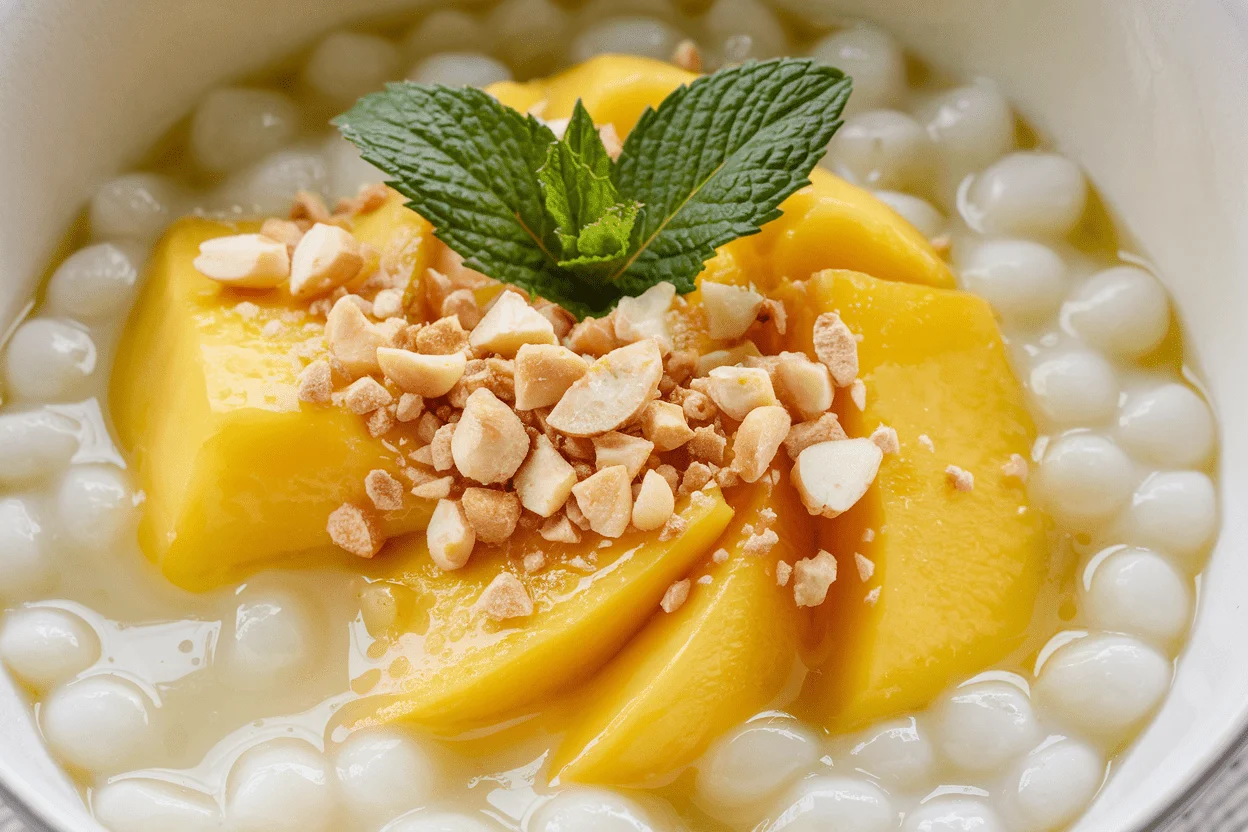
- Toppings (optional): diced mango, pomelo segments, mint leaves, toasted coconut flakes, chia seeds
Instructions
- Cook the sago: Bring a pot of water to a rolling boil.
Add the sago and stir so it doesn’t clump. Boil 12–15 minutes until the pearls are mostly translucent with tiny white centers.
- Rest and rinse: Turn off heat, cover, and let sit 10 minutes. Drain and rinse under cold water to stop cooking.
The pearls should be fully translucent and pleasantly chewy.
- Sweeten the pearls (pro move): Toss the drained sago with 1 tablespoon sugar or a splash of coconut milk so they don’t stick and taste better on their own. Set aside.
- Blend the mango base: In a blender, add flesh from 2 mangoes, coconut milk, evaporated milk or cream, 2 tablespoons sweetener, salt, and vanilla. Blend until velvety.
Adjust sweetness to your mango’s mood.
- Brighten it up: Add lime juice if your mangoes lean extra sweet. It sharpens the flavor without turning it sour.
- Chill fast: Blend in a few ice cubes or refrigerate the mango base for 20–30 minutes until cold. Cold base = better texture and more refreshing.
- Assemble: Fold the cooled sago into the mango mixture.
Add diced mango from the remaining fruit and gently stir. You want pearls in every spoonful, not pearl overload.
- Serve smart: Spoon into chilled bowls or glasses. Top with extra mango, pomelo, mint, or toasted coconut.
Snap a pic—because this is Instagram bait.
- Optional set-and-scoop: For a thicker, pudding-ish texture, chill the finished dessert 1–2 hours before serving.
Keeping It Fresh
Store the mango sago in an airtight container in the fridge for up to 2 days. Stir before serving because the starch can settle and thicken. If it gets too thick, add a splash of cold coconut milk to loosen it back to that silky, slurpy consistency we all signed up for.
Keep the fruit toppings separate until serving so they don’t water the party down.
What’s Great About This
- Fast and forgiving: Not a lot can go wrong here unless you burn water. You’re blending fruit and folding in pearls—easy.
- Texture heaven: Creamy base + bouncy sago + juicy mango chunks = elite mouthfeel.
- Flexible sweetness: Use sugar, honey, or condensed milk. Your mango’s ripeness sets the tone; you just nudge it.
- Scales effortlessly: Feeding two or twenty?
Double or triple the recipe. Your blender can handle it.
- Make-ahead friendly: Cook sago and make the base ahead, then combine before serving. Host mode: activated.
Avoid These Mistakes
- Undercooking sago: If the centers stay chalky, you’ll get chewy in a bad way.
Boil until nearly translucent, then rest.
- Overcooking sago: Mushy pearls vanish into sludge. Set a timer and rinse promptly.
- Using fibrous or bland mangoes: Stringy mango = gritty texture. Go for ripe, fragrant varieties like Ataulfo or Alphonso.
If all you have is meh mango, compensate with a touch of lime and a bit more sweetener.
- Serving warm: This dessert lives and dies by temperature. Chill the base. Chill the bowls.
Be the chill.
- Heavy hand with liquid: Too much coconut milk turns it soupy. Add liquid gradually and aim for a drinkable-but-spoonable consistency.
Different Ways to Make This
- Classic Hong Kong-style: Add pomelo segments (or grapefruit) for tangy pops. Use evaporated milk and a touch of condensed milk for that signature richness.
- Dairy-free tropical: Use only coconut milk and coconut cream.
Finish with toasted coconut and passion fruit pulp. It slaps, IMO.
- Light and bright: Swap half the coconut milk for chilled almond milk and add extra lime juice. Great post-dinner palate cleanser.
- Ice-blended version: Add more ice and blend into a thick smoothie.
Stir in sago at the end for a drink/dessert crossover.
- Cheat day deluxe: Fold in small cubes of mango jelly or grass jelly. Add a drizzle of condensed milk on top. Zero regrets.
- Kid-friendly cups: Portion into small jars, top with rainbow jelly cubes.
Suddenly they like fruit—who knew?
- Spiced twist: A pinch of cardamom or ginger in the base plays ridiculously well with mango.
FAQ
Can I use frozen mango?
Yes. Thaw it fully, drain excess liquid, and blend. Frozen mango is often picked ripe, so the flavor is solid.
You may need a touch more sweetener.
What’s the difference between sago and tapioca pearls?
In most markets, “sago” pearls are actually tapioca (cassava) pearls, which is fine. Real sago comes from palm pith. For this dessert, use small tapioca pearls—the texture is spot on.
How do I fix bitter or bland mangoes?
Add a squeeze of lime, a pinch of salt, and more sweetener.
A dash of vanilla also rounds out flavor. When the fruit underdelivers, seasoning saves the day.
Can I make this ahead?
Absolutely. Cook sago and blend the base up to a day ahead.
Store separately and combine close to serving for best texture. If premixed, stir and adjust thickness before serving.
Why did my sago turn hard in the fridge?
Starch firms up when cold. Stir in a splash of coconut milk or warm the mixture slightly and chill again.
It’ll relax back to silky.
What if I only have large boba pearls?
You can use them, but the vibe changes. Cook until fully chewy, rinse, and serve immediately for best texture. The dessert becomes more of a mango-boba hybrid—still delicious.
How sweet should this be?
Sweetness should be just below milkshake-level.
Taste as you go. The chill dulls sweetness slightly, so aim a hair sweeter than perfect at room temp.
Is there a low-sugar version?
Use ultra-ripe mangoes, swap sugar for a small amount of maple syrup or a zero-cal sweetener, and thin with unsweetened almond milk. Still creamy, still craveable.
Can I add other fruits?
Yes—passion fruit, lychee, pineapple, or banana all work.
Keep mango as the star, and use others as accents so the flavor doesn’t get chaotic.
How do I make it thicker?
Use more coconut cream, less liquid overall, and chill longer. You can also blend in a few soaked cashews for body. Thick, spoonable, and luxurious.
My Take
This mango sago dessert recipe is the definition of low-effort, high-reward.
It’s refreshing, elegant, and playful—like a vacation in a bowl that didn’t cost you airfare. Keep good mangoes on standby, a bag of small pearls in the pantry, and you’re always 20 minutes away from a flex. FYI: once you serve this, people will request it forever.
Consider yourself warned—in the best way.