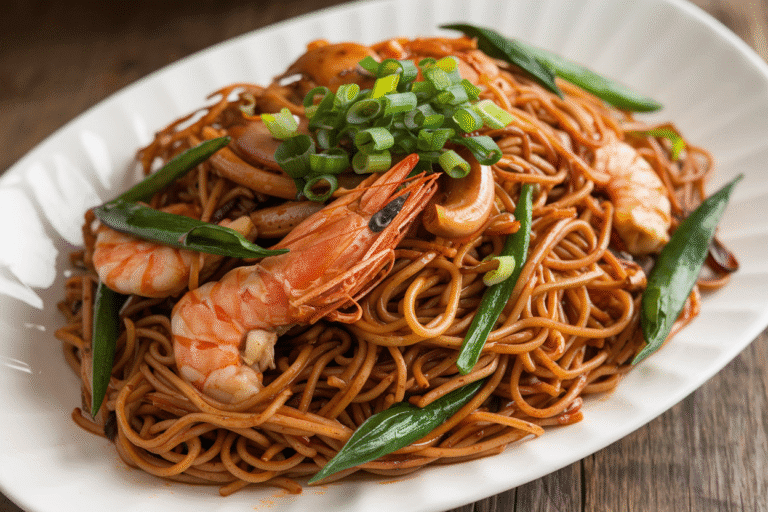
🌶️ Better-Than-Takeout Pad Kee Mao Recipe (Drunken Noodles)
So, you’re craving something ridiculously tasty, spicy enough to clear your sinuses, but you’re way too lazy to put on “outside pants” and wait 45 minutes for lukewarm delivery.
Same here. I feel that deeply.
Look, we’ve all been there. It’s 7 PM on a Tuesday, your soul is tired, and the only thing that will fix it is carbs covered in a savory, spicy, umami-bomb sauce. Enter: Pad Kee Mao, otherwise known as Drunken Noodles.
Why “Drunken Noodles”? There are legends about this. Some say it’s because it’s the ultimate hangover cure. Others say it’s so spicy you have to be drunk to handle it. My personal favorite theory is that it’s just the best thing to shovel into your face after a night out. Regardless of the origin story, this pad kee mao recipe is about to become your new weeknight obsession.
Forget the sad, clumpy takeout version. We are making the real deal right in your kitchen. It’s fast, it’s furious, and honestly, it’s way easier than you think. Let’s get cooking before the hangry sets in.
Why This Recipe is Awesome
Okay, besides the obvious fact that noodles are life, here’s why you need this specific recipe in your repertoire.
First off, it’s fast. Once you have your prep done (do not skip the prep, I mean it), the actual cooking time is like, ten minutes max. It’s a stir-fry; it waits for no one.
Secondly, the flavor profile is insane. It’s not just “spicy.” It has that incredible savory depth from the soy sauces, a funky umami kick from the fish sauce, and that distinct, slightly peppery, anise-like flavor from the holy basil. It’s a symphony of flavors that takeout rarely gets right.
Third, it is delightfully customizable. I’m using chicken here, but if you want to use shrimp, beef, pork, or crispy tofu because you’re feeling virtuous, go for it. It’s a very forgiving canvas for whatever protein is hanging out in your fridge desperately needing to be used.
Finally, it just makes you feel like a culinary rockstar. There’s something about tossing noodles in a hot pan with aromatics sizzling that makes you feel like you should have your own cooking show. Just try not to fling a noodle onto the ceiling fan.
Ingredients You’ll Need
Don’t panic when you see the list. A lot of this is just sauces you probably already have if you do any Asian cooking.
The Core:
- Wide Rice Noodles (Sen Yai): This is crucial. You want fresh wide rice noodles if you can find them (usually in the refrigerated section of an Asian market). If you have to use dried rice noodles, get the widest ones possible (XL width) and soak them according to the package directions until they are pliable but still firm. Do not over-soak them or you will have noodle mush.
- Protein of Choice: About 1 lb of chicken breast or thighs, thinly sliced. Shrimp is also amazing here.
- The Greens: A cup or two of Chinese broccoli (Gai Lan), chopped. If you can’t find it, regular broccoli florets or even baby bok choy work just fine.
- The Aromatics:
- Garlic: Like 6-8 cloves. Measure with your heart, people. There is no such thing as too much garlic in this recipe.
- Thai Chilies (Bird’s Eye): This is where the heat lives. Use 3-5 for “sensible heat,” or 8-10 if you want to see through time.
- Shallot: One medium shallot, thinly sliced. It adds a nice sweetness.
The “Holy” Grail Ingredient:
- Holy Basil (Tulsi): Okay, listen up. This is what makes Pad Kee Mao taste like Pad Kee Mao. It’s different from regular Italian basil and different from Thai sweet basil. It has a peppery, slightly numbing, clove-like flavor. If you can find it at an Asian market, BUY IT. If you absolutely cannot find it, use Thai sweet basil, or in a dire emergency, regular basil with a pinch of dried mint. It won’t be identical, but it will still be tasty.
The Sauce (The Magic Potion):
- Oyster Sauce: 2 tablespoons. The backbone of the savory flavor. (Use mushroom “oyster” sauce for vegetarian).
- Light Soy Sauce: 1.5 tablespoons. For saltiness.
- Dark Soy Sauce: 1 tablespoon. This is mostly for that gorgeous dark caramel color. It’s thicker and less salty than light soy.
- Fish Sauce: 1 tablespoon. Do not skip this unless you are vegan. It smells funky in the bottle but tastes like heaven cooked down.
- Sugar: 1 teaspoon of palm sugar or brown sugar to balance the heat.

Step-by-Step Instructions
This moves fast. If you try to chop garlic while the chicken is cooking, you will burn something. Don’t be a hero; prep everything first.
1. The Prep Work (Crucial!) Combine all your sauce ingredients (oyster sauce, both soy sauces, fish sauce, sugar) in a small bowl and whisk it up. Set aside. Slice your chicken. Chop your veggies. Pluck those basil leaves.
2. Making the Flavor Paste Grab a mortar and pestle. Toss in your garlic cloves and Thai chilies. Smash them into a rough, chunky paste. You aren’t looking for a smooth puree; you want explosive little chunks of garlic and fire. FYI: If you don’t have a mortar and pestle, just mince them finely with a knife, but the smashing really releases the oils.
3. Sear the Protein Heat a large wok or your biggest skillet over high heat. Add a tablespoon of neutral oil (canola, vegetable, avocado). Once it’s shimmering hot, toss in your sliced chicken. Spread it out and let it get a nice sear. Flip it, cook until just about done (about 3-4 minutes), and remove it from the pan. Set it aside.
4. Aromatics and Veggies Add a little more oil to the hot pan if needed. Toss in the shallots and your smashed chili-garlic paste. Stir-fry constantly for about 30 seconds. Do NOT inhale deeply over the pan right now unless you want to mace yourself in your own kitchen. Toss in the Chinese broccoli stems (they take longer) and cook for a minute, then add the leafy parts.
5. The Main Event: Noodles and Sauce Crank that heat as high as it goes. Toss the chicken back in. Dump in your rice noodles. immediately pour that magical sauce mixture all over everything.
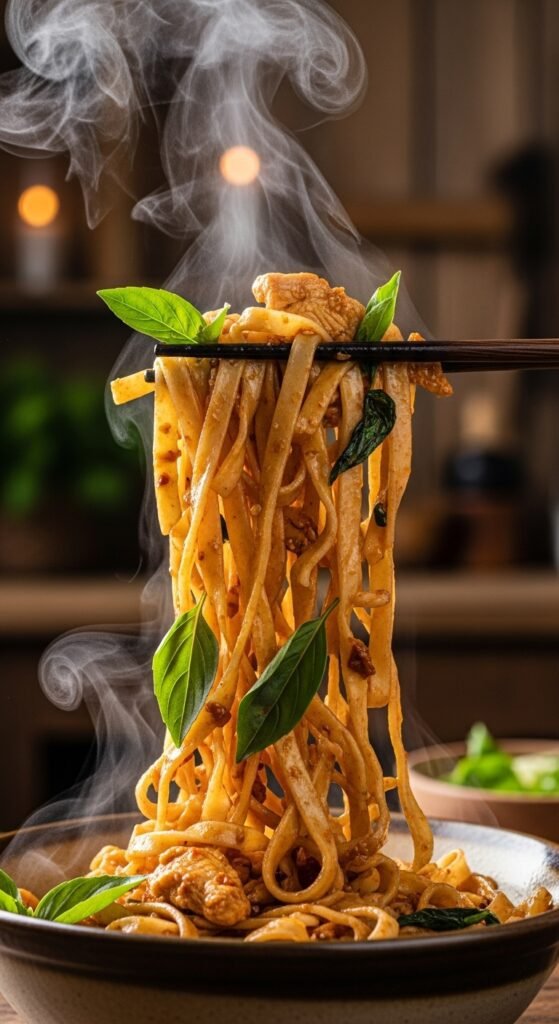
Here is the trick: Toss everything together gently but quickly to coat the noodles in the sauce. Let the noodles sit undisturbed for about 30-45 seconds so they can get a little bit of char from the hot pan. That smoky flavor is key. Toss again.
6. The Holy Finish Once the noodles are cooked and coated in that glossy dark sauce, turn off the heat. Immediately throw in that giant handful of holy basil. Toss it through just until the basil wilts from the residual heat. The smell right now should be intoxicating.
Serve immediately. Maybe with an ice-cold beer. You’ve earned it.
Common Mistakes to Avoid
Look, even I mess up sometimes. Here’s how to avoid the sadness of failed noodles.
- Overcrowding the Pan: If you dump too many ingredients into a pan that isn’t hot enough, the temperature drops rapidly. Instead of frying, your food steams in its own juices. The result? Soggy, sad noodles. If you’re cooking for a crowd, do it in batches.
- Burning the Garlic: There’s a fine line between golden, fragrant garlic and bitter, black burnt garlic. When you add that garlic/chili paste, keep it moving. It only needs about 30 seconds.
- Being Afraid of Heat (Temperature): Wok cooking requires high heat. You want that wok hei (breath of the wok)—that smoky flavor you get from high heat searing the sugars and oils. Don’t be scared to crank up your stove burner.
- Mushing the Noodles: Fresh rice noodles are delicate little flowers. If you stir them aggressively with a metal spatula, they will break into confetti. Use a gentle folding motion, preferably with wooden spatulas or tongs.
Alternatives & Substitutions
Don’t have everything? No worries. We can improvise.
- The Noodle Crisis: Cannot find wide rice noodles? Honestly, spaghetti works surprisingly well. It’s a fusion vibe, but it carries the sauce nicely. Udon noodles are another sturdy option that holds up well to stir-frying.
- Vegetarian/Vegan Vibes: Swap the chicken for extra-firm tofu (fry it first so it’s crispy) or just load up on veggies like bell peppers, baby corn, and snap peas. Use mushroom stir-fry sauce instead of oyster sauce, and a vegan fish sauce alternative (or just a pinch more salt/soy).
- The Basil Dilemma: As mentioned, if Holy Basil is impossible to find, use Thai Sweet Basil. If that’s impossible, use regular Italian Genovese basil and add a tiny pinch of dried mint flakes to mimic that cooling, peppery kick. It’s a hack, but it works in a pinch.
- Dialing Back the Heat: If you want the flavor without the pain, remove the seeds from the Thai chilies before smashing them. Or just use one chili. Or use a squirt of Sriracha in the sauce instead of fresh chilies. No judgment here. (Okay, maybe a little judgment).
FAQ (Frequently Asked Questions)
Q: Can I make this ahead of time for meal prep? A: Ehhh. Technically yes, but rice noodles tend to get weirdly brittle and then mushy when reheated in a microwave. This dish is 100% best eaten fresh out of the wok. If you must meal prep, store the sauce, veggies, and protein separately and stir-fry it fresh.
Q: Do I really need a wok to make this? A: No. While a carbon steel wok over a flame thrower is ideal, a large, wide stainless steel or non-stick skillet works perfectly fine on a home stove. Just make sure it’s big enough so you don’t overcrowd it.
Q: Why do my noodles stick together in a giant clump? A: Usually because they weren’t separated before hitting the pan, or the pan wasn’t hot enough. If using fresh noodles, gently peel them apart before cooking. If using dried, make sure they are rinsed in cold water after soaking to stop the starch from acting like glue.
Q: What is the difference between Pad Thai and Pad Kee Mao? A: Totally different vibes. Pad Thai is generally sweeter, nuttier (thanks to peanuts), and uses tamarind paste for a sour tang. It usually uses thinner rice noodles. Pad Kee Mao is savory, salty, much spicier, relies heavily on basil, and typically uses the extra-wide noodles.
Q: Is this dish gluten-free? A: It can be. The rice noodles are naturally gluten-free. However, most standard soy sauces and oyster sauces contain wheat. You need to buy specifically labeled “Gluten-Free” tamari, oyster sauce, and fish sauce to ensure it’s safe.

Final Thoughts
There you have it. You have successfully conquered the mighty Pad Kee Mao recipe. Your kitchen probably smells like garlic and chilies for the next three days, but that’s just the scent of success.
Don’t worry if it wasn’t picture-perfect the first time. Maybe it was a little too spicy, or maybe your noodles broke a bit. Who cares? It probably still tasted amazing. The more you make stir-fries, the better you get at managing the heat and timing.
Now go impress someone—or just impress yourself—with your new culinary skills. And seriously, wash your hands thoroughly before rubbing your eyes. Don’t say I didn’t warn you.