Sourdough Naan Bread Recipe: The Tangy Twist You’ll Love!
Naan, that soft, pillowy flatbread, is a staple in Indian and Middle Eastern cuisine. Its versatility knows no bounds – perfect for scooping up flavorful curries, wrapping around grilled meats, or simply enjoying on its own. But what if we could elevate this already amazing bread with the subtle tang and complex flavors of sourdough? This recipe does just that, bringing together the best of both worlds: the comforting familiarity of naan with the satisfying depth of sourdough.
Why This Recipe Works
This sourdough naan recipe isn’t just about adding sourdough starter to a standard naan dough. It’s about understanding how sourdough interacts with the other ingredients and adjusting accordingly to achieve the perfect texture and flavor. Here’s why this recipe is a winner:
- Sourdough Starter Focus: We prioritize a well-fed, active starter. This ensures a good rise and that signature sourdough tang.
- Yogurt’s Magic: Yogurt contributes to the naan’s soft texture and adds a subtle tang that complements the sourdough.
- Balanced Hydration: The hydration level is carefully calibrated to create a dough that’s easy to handle and yields a tender, chewy naan.
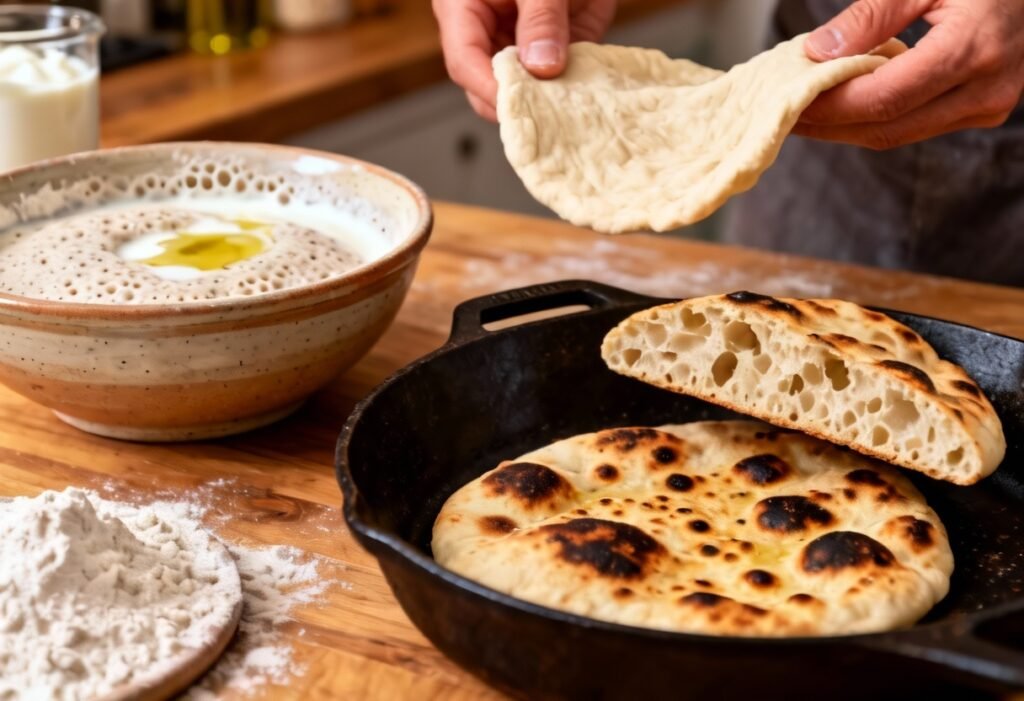
- Hot Cooking Surface: Cooking the naan on a hot cast iron skillet (or tawa) mimics the high heat of a tandoor oven, resulting in those beautiful charred spots and a puffed-up texture.
- Ghee Finish: A brush of melted ghee after cooking adds richness and a beautiful sheen, taking the naan to the next level.
Ingredients
- 100g active sourdough starter (100% hydration)
- 250g all-purpose flour (plus extra for dusting)
- 1 tsp salt
- 1 tsp sugar
- 1 tbsp olive oil (or other neutral oil)
- 120ml warm water
- 60g plain yogurt
- 2 tbsp melted ghee (for brushing after cooking)
- Optional: Nigella seeds or chopped cilantro for garnish
Instructions
- Combine Ingredients: In a large bowl, combine the active sourdough starter, flour, salt, sugar, and olive oil. Mix well using your hands or a stand mixer with a dough hook.
- Add Liquids: Gradually add the warm water and yogurt to the bowl, mixing until a shaggy dough forms.
- Knead the Dough: Turn the dough out onto a lightly floured surface and knead for 8-10 minutes, or until smooth and elastic. Alternatively, knead in a stand mixer for 6-8 minutes. The dough should be slightly sticky but manageable.
- First Rise (Bulk Fermentation): Place the dough in a lightly oiled bowl, turning to coat. Cover the bowl with plastic wrap or a damp towel and let it rise in a warm place for 4-6 hours, or until doubled in size. The exact time will depend on the temperature of your environment and the activity of your starter.
- Divide the Dough: Gently punch down the dough to release the air. Turn it out onto a lightly floured surface and divide it into 6-8 equal pieces.
- Shape the Naan: Roll each piece of dough into an oval shape, about ¼ inch thick. You can use a rolling pin or stretch it with your hands. Don’t worry about perfect shapes; rustic is beautiful!
- Cook the Naan: Heat a cast iron skillet (or tawa) over medium-high heat until it’s very hot. A drop of water should sizzle and evaporate almost immediately.
- Cook the First Side: Carefully place one naan bread onto the hot skillet. Cook for 1-2 minutes, or until bubbles start to form and the bottom is lightly browned and charred in spots.
- Cook the Second Side: Flip the naan and cook for another 1-2 minutes, or until the second side is also lightly browned and charred. The naan should puff up nicely.
- Brush with Ghee: Remove the naan from the skillet and brush it generously with melted ghee.
- Repeat: Repeat steps 7-10 with the remaining dough.
- Garnish (Optional): Sprinkle with nigella seeds or chopped cilantro for added flavor and visual appeal.
- Serve Immediately: Serve the sourdough naan bread warm, with your favorite curries, dips, or grilled meats.
Tips for Success
- Active Starter is Key: Make sure your sourdough starter is active and bubbly before using it in this recipe. A sluggish starter will result in a dense, under-risen naan.
- Warm Environment for Rising: A warm environment is crucial for the dough to rise properly. If your kitchen is cold, you can place the dough in a proofing oven or near a warm appliance.
- Don’t Overcook: Overcooking the naan will make it tough and dry. Cook it just until it’s lightly browned and charred in spots.
- Adjust Hydration as Needed: The amount of water needed may vary depending on the humidity and the type of flour you use. If the dough is too sticky, add a little more flour, one tablespoon at a time. If it’s too dry, add a little more water, one teaspoon at a time.
- Hot Skillet is Essential: A hot skillet is essential for achieving the characteristic puffed-up texture and charred spots. Make sure the skillet is preheated properly before cooking the naan.
- Experiment with Flavors: Feel free to experiment with different flavors by adding garlic, herbs, or spices to the dough.
Storage Instructions
Sourdough naan bread is best enjoyed fresh, but leftovers can be stored in an airtight container at room temperature for up to 2 days. To reheat, wrap the naan in foil and warm it in a 350°F (175°C) oven for 5-10 minutes, or until heated through. You can also reheat it in a dry skillet over medium heat for a minute or two per side.

FAQ
Q: Can I use whole wheat flour in this recipe?
A: Yes, you can substitute up to 50% of the all-purpose flour with whole wheat flour. Keep in mind that whole wheat flour absorbs more water, so you may need to adjust the hydration slightly.
Q: Can I make this recipe without yogurt?
A: While yogurt contributes to the texture and flavor, you can substitute it with an equal amount of milk or buttermilk. The result will be slightly different, but still delicious.
Q: Can I freeze the naan bread?
A: Yes, you can freeze the naan bread after it has been cooked and cooled completely. Wrap each naan individually in plastic wrap and then place them in a freezer bag. Freeze for up to 2 months. To reheat, thaw the naan completely and then warm it in a 350°F (175°C) oven or in a dry skillet.
Q: My naan isn’t puffing up. What am I doing wrong?
A: Several factors can contribute to naan not puffing up. Make sure your skillet is hot enough, the dough is properly proofed, and you’re not overcooking the naan. Also, ensure that the dough is rolled out to an even thickness.
Conclusion
This sourdough naan bread recipe is a delightful twist on a classic. The addition of sourdough starter adds a depth of flavor and a satisfying chew that you won’t find in traditional naan. It’s a bit more involved than a standard naan recipe, but the results are well worth the effort. So, fire up your skillet, get your sourdough starter bubbling, and prepare to enjoy the best naan you’ve ever tasted!