Sourdough Wheat Bread Recipe: Rustic Flavor in Every Slice!
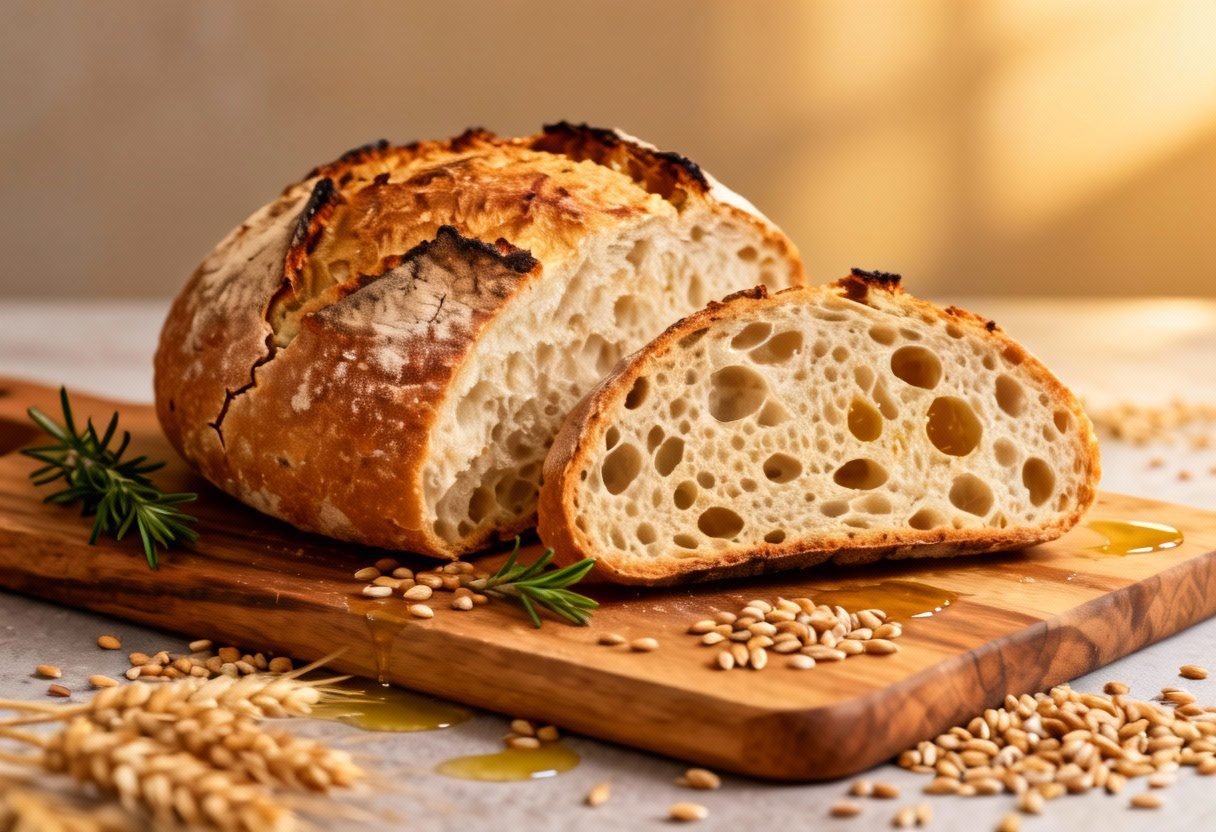
There’s nothing quite like the aroma of freshly baked bread filling your kitchen. And when that bread is a hearty, flavorful sourdough wheat bread, the experience is elevated to a whole new level. This recipe brings together the tangy complexity of sourdough with the wholesome goodness of whole wheat, resulting in a loaf that’s both satisfying and delicious. This isn’t just a recipe; it’s an invitation to slow down, connect with the process of breadmaking, and create something truly special. Prepare to be amazed by the depth of flavor and the incredible texture you can achieve with just a few simple ingredients and a little bit of patience.
Why This Recipe Works
This recipe is designed to be approachable for both experienced bakers and those new to the world of sourdough. Here’s why it works:
- Balanced Flour Blend: The combination of bread flour and whole wheat flour provides the perfect balance of structure and flavor. Bread flour offers the gluten strength needed for a good rise, while whole wheat flour contributes a nutty, earthy taste and added nutrients.
- Proper Hydration: The hydration level (the ratio of water to flour) is crucial for a good sourdough. This recipe uses a hydration level that allows for a moist, open crumb without being too difficult to handle.
- Autolyse: The autolyse step, where the flour and water are mixed together before adding the starter and salt, allows the flour to fully hydrate. This results in a more extensible dough that’s easier to work with and produces a better texture.
- Bulk Fermentation: The bulk fermentation process, where the dough rises for several hours, allows the sourdough starter to work its magic, developing flavor and creating the characteristic tangy taste.
- Shaping Technique: The shaping technique helps to create tension on the surface of the dough, which results in a beautiful, well-risen loaf.
- Oven Temperature and Steaming: Baking at a high temperature with steam creates a crisp crust and allows the bread to expand fully during baking.
Ingredients
- 150g Active Sourdough Starter (100% hydration)
- 350g Warm Water (85-90°F)
- 250g Bread Flour
- 250g Whole Wheat Flour
- 10g Salt
Instructions
- Autolyse: In a large bowl, combine the bread flour, whole wheat flour, and warm water. Mix until just combined, forming a shaggy dough. Cover the bowl and let it rest for 30-60 minutes.
- Incorporate Starter: Add the active sourdough starter to the autolysed dough. Use your hands or a dough scraper to gently incorporate the starter until it’s evenly distributed.
- Add Salt: Sprinkle the salt over the dough. Use your hands to dimple the dough and then gently fold the salt in.
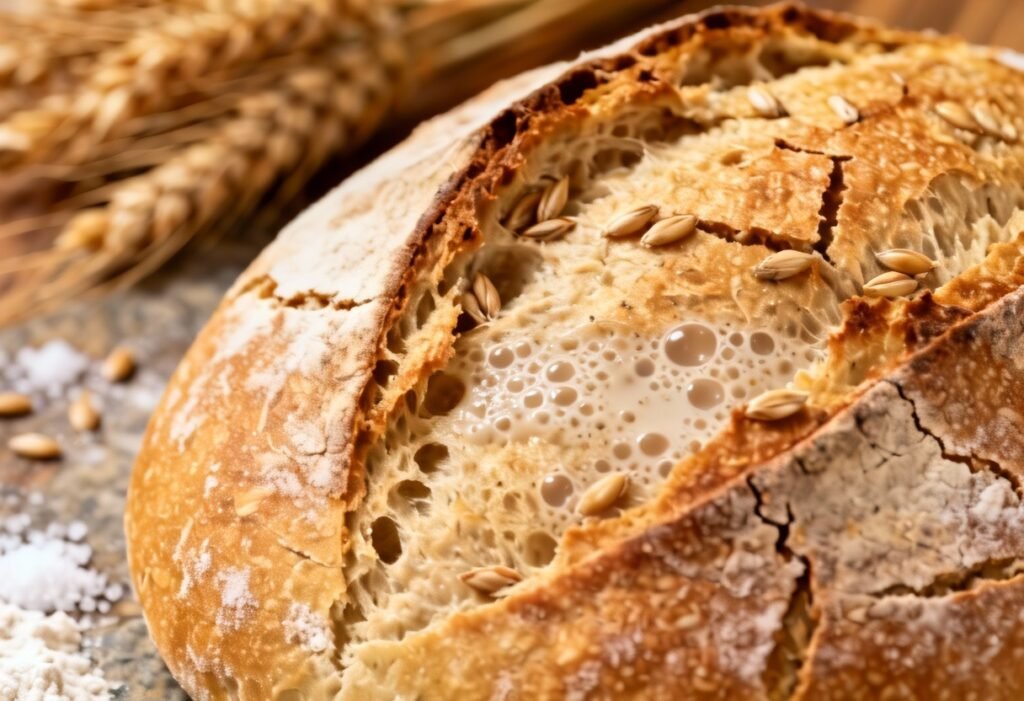
- Bulk Fermentation (First Rise): Cover the bowl and let the dough bulk ferment for 4-6 hours at room temperature (70-75°F). Perform stretch and folds every 30-60 minutes for the first 2-3 hours. To do a stretch and fold, gently grab one side of the dough, stretch it upwards, and fold it over the center. Rotate the bowl and repeat this process until you’ve stretched and folded all four sides of the dough. This helps to develop strength and structure. The dough should approximately double in size and show signs of activity (bubbles).
- Pre-Shape: Gently turn the dough out onto a lightly floured surface. Shape it into a round or oval. Cover the dough and let it rest for 20-30 minutes (bench rest).
- Final Shape: After the bench rest, gently shape the dough into its final shape (round or oblong) depending on the shape of your banneton basket or proofing bowl. Ensure there is good surface tension.
- Proofing (Second Rise): Place the shaped dough in a well-floured banneton basket or a bowl lined with a floured cloth. Cover the dough and refrigerate for 12-24 hours. This cold proofing allows for further flavor development and makes the dough easier to score.
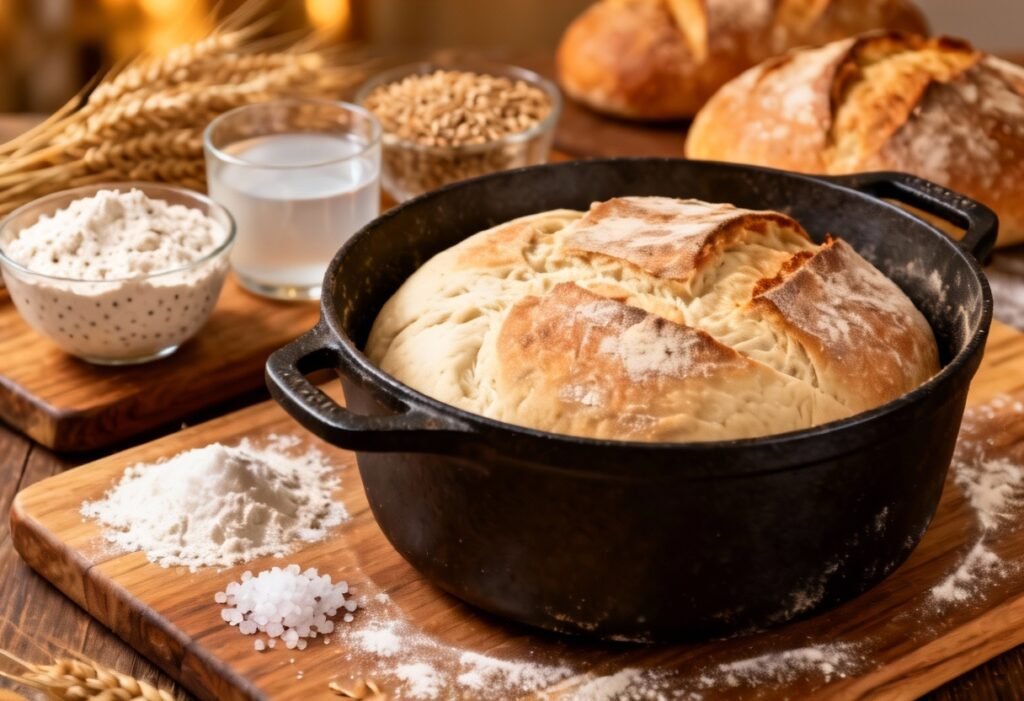
- Preheat Oven: Preheat your oven to 450°F (232°C) with a Dutch oven inside for at least 30 minutes. The Dutch oven is crucial for creating steam and a crispy crust.
- Score the Dough: Carefully remove the hot Dutch oven from the oven. Remove the lid. Gently invert the dough from the banneton basket onto a piece of parchment paper. Use a sharp knife or lame (a specialized bread scoring tool) to score the top of the dough. Scoring allows the bread to expand properly during baking and prevents it from bursting in unpredictable places. A simple slash down the center is a good starting point.
- Bake: Carefully lower the parchment paper with the dough into the hot Dutch oven. Cover with the lid and bake for 20 minutes.
- Remove Lid and Finish Baking: Remove the lid from the Dutch oven and continue baking for another 25-35 minutes, or until the crust is a deep golden brown and the internal temperature reaches 205-210°F (96-99°C).
- Cool: Carefully remove the bread from the Dutch oven and place it on a wire rack to cool completely before slicing. This is crucial for preventing a gummy interior. Resist the urge to cut into it right away!
Tips for Success
- Use a Kitchen Scale: Baking is a science, and accurate measurements are essential. A kitchen scale will ensure consistent results.
- Active Starter is Key: Your sourdough starter should be active and bubbly before using it in this recipe. If it’s not, feed it regularly for a few days until it doubles in size within 4-8 hours after feeding.
- Adjust Bulk Fermentation Time: The bulk fermentation time will vary depending on the temperature of your kitchen. Keep an eye on the dough and adjust the time accordingly. Look for signs of activity, such as bubbles and a slight increase in volume.
- Don’t Overproof: Overproofed dough will be flat and dense. If you’re unsure, it’s better to underproof slightly than to overproof.
- Get Creative with Scoring: Experiment with different scoring patterns to create beautiful designs on your bread.
- Steam is Essential: The steam created by the Dutch oven is crucial for a crispy crust. If you don’t have a Dutch oven, you can create steam by placing a baking sheet filled with hot water on the bottom rack of your oven.
- Be Patient: Sourdough breadmaking takes time and patience. Don’t be discouraged if your first loaf isn’t perfect. Keep practicing, and you’ll improve with each bake.
Storage Instructions
Store your sourdough wheat bread at room temperature in a bread box or wrapped in a clean kitchen towel. For longer storage, you can freeze the bread. Slice the bread before freezing for easy access to individual slices. Wrap the slices tightly in plastic wrap and then place them in a freezer bag. Frozen bread can be stored for up to 2-3 months. To thaw, simply remove the desired number of slices and let them thaw at room temperature or toast them directly from frozen.
FAQ
Q: Can I use all bread flour instead of whole wheat flour?
A: Yes, you can substitute bread flour for the whole wheat flour, but the flavor and texture will be different. The bread will be lighter and less earthy.
Q: My dough is too sticky. What should I do?
A: Sourdough dough can be sticky, especially with higher hydration levels. Make sure your hands and work surface are well-floured. Avoid adding too much extra flour, as this can make the bread dry. With practice, you’ll learn to handle the dough more easily.
Q: My bread is dense and gummy. What went wrong?
A: This could be due to several factors, including underproofing, overproofing, or not baking the bread long enough. Make sure your starter is active, follow the recipe carefully, and allow the bread to cool completely before slicing.
Q: Can I use a different type of flour?
A: While this recipe is specifically designed for bread flour and whole wheat flour, you can experiment with other types of flour, such as rye or spelt. Keep in mind that different flours have different gluten content and water absorption properties, so you may need to adjust the recipe accordingly.
Q: How do I know when my starter is ready to use?
A: An active starter will have doubled in size within 4-8 hours after feeding and will be bubbly and have a slightly sour aroma. A float test (dropping a small amount of starter into water – if it floats, it’s ready) is sometimes used, but it’s not always reliable. The best indicator is consistent doubling.
Conclusion
This sourdough wheat bread recipe is your gateway to creating delicious, homemade bread that will impress your friends and family. While it may seem daunting at first, the process is incredibly rewarding. Embrace the challenge, experiment with different techniques, and enjoy the satisfaction of baking your own wholesome, flavorful sourdough wheat bread. Happy baking!