The Shockingly Easy Tuna Poke Bowl Recipe That Tastes Like a $20 Takeout (But Costs Way Less)
👩🍳 The Home Chef's Essential Kitchen
Consistently cooking incredible, healthy meals at home is so much easier when you aren't fighting with cheap tools. These are the 5 absolute powerhouse kitchen essentials that professional chefs and serious home cooks rely on every single day to get perfect results.
🍳 Lodge 10.25" Cast Iron Skillet
The single greatest value in all of cookware. It retains heat infinitely better than cheap non-stick pans, allowing you to get a restaurant-quality crust on steaks or perfect crispy edges on cornbread. With proper care, this $20 pan will literally outlive you.
🔪 Victorinox Fibrox Pro 8" Chef's Knife
A dull knife makes cooking a frustrating chore. This specific blade is the undisputed champion of the culinary world—it holds a terrifyingly sharp edge, features a comfortable non-slip grip, and performs identical to German knives that cost quadruple the price.
🌡️ ThermoPro Instant Read Thermometer
Never serve dry chicken or undercooked pork again. An instant-read thermometer is the secret difference between amateur cooks who 'guess' when protein is done, and professionals who know exactly when to pull meat off the heat for maximum juiciness.
🍲 Lodge Enameled Cast Iron Dutch Oven
The ultimate workhorse for soups, stews, braised short ribs, and baking crusty artisanal bread. The enameled interior provides incredible heat distribution for slow-cooking while eliminating the intense seasoning maintenance required by bare cast iron.
🥄 Bpa-Free Silicone Utensil Set
Throw away those melting plastic spatulas and bacteria-harboring wooden spoons. This pure silicone set is heat-resistant up to 600°F, won't scratch your expensive pans, and features seamless designs that make cleaning out thick sauces and batters effortless.
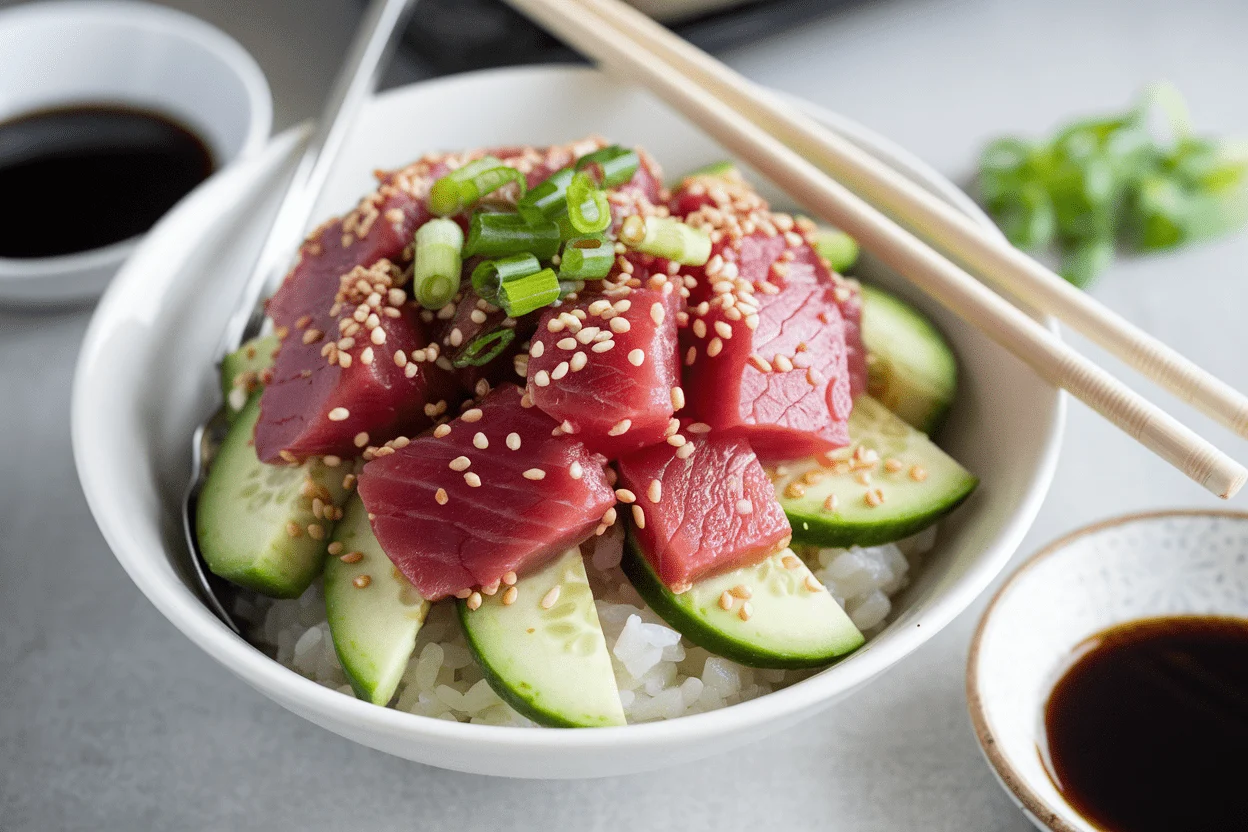
You don’t need a sushi chef, a blowtorch, or a trust fund to eat like a pro. This tuna poke bowl recipe turns a handful of simple ingredients into a restaurant-level win in under 20 minutes. It’s fresh, fast, and ridiculously satisfying—the kind of meal that makes you feel like you “have it together,” even if the dishwasher begs to differ.
The flavors punch: sweet, salty, spicy, tangy. And yes, it’s as photogenic as it is craveable.
What Makes This Special
This poke bowl leans big into contrast: silky tuna meets crunchy cucumber, warm rice meets cool toppings, salty umami dressing meets bright citrus. The sauce is balanced with just enough heat to keep things interesting—no bland bowls allowed.
It’s also highly customizable, so whether you’re paleo-ish, carb-loading, or just hungry, you’re covered. Bonus: it’s a zero-stress weeknight move that still impresses guests. Strategic?
Absolutely.
What You’ll Need (Ingredients)
- Sushi-grade ahi tuna (yellowfin or bigeye): 12–16 oz, diced into 1/2-inch cubes
- Short-grain rice: 2 cups cooked (sushi rice preferred); sub brown rice or cauliflower rice
- Soy sauce or tamari: 3 tablespoons
- Toasted sesame oil: 2 teaspoons
- Rice vinegar: 1 tablespoon
- Lime juice: 1 teaspoon (freshly squeezed)
- Honey or maple syrup: 1–2 teaspoons
- Sriracha or chili-garlic sauce: 1–2 teaspoons (adjust to heat tolerance)
- Fresh ginger: 1 teaspoon, finely grated
- Garlic: 1 small clove, minced
- Green onions: 2, thinly sliced
- Sesame seeds: 1 tablespoon (mix of white and black if you have them)
- Avocado: 1, diced
- Cucumber: 1/2 cup, diced or thinly sliced (Persian or English)
- Edamame: 1/2 cup, shelled (thawed if frozen)
- Nori sheets or furikake: to garnish
- Pickled ginger: optional, for serving
- Optional extras: radish, mango, jalapeño, cilantro, microgreens
- Optional spicy mayo: 2 tablespoons mayo + 1 teaspoon sriracha + tiny squeeze of lime
How to Make It – Instructions
- Prep the rice like a pro: Cook short-grain rice per package instructions. While warm, splash 1–2 teaspoons rice vinegar and a pinch of salt, then fluff. Warm rice + cool tuna = elite texture.
- Chill your bowl: Pop your serving bowls in the fridge for 5 minutes.
Cold bowls keep the tuna pristine. Overkill? Maybe.
Worth it? Yes.
- Make the poke sauce: In a medium bowl, whisk soy, sesame oil, rice vinegar, lime juice, honey, sriracha, ginger, and garlic until smooth. Taste and adjust: more soy for salt, more honey for balance, more lime for brightness.
- Dice the tuna: Pat tuna dry, then cut into 1/2-inch cubes with a sharp knife.
Clean slices prevent mush. If the tuna feels soft, chill 10 minutes to firm up.
- Marinate smartly: Toss tuna with half to two-thirds of the sauce. Add green onions and sesame seeds.
Marinate 10–15 minutes in the fridge. Longer isn’t better—too long and it gets mealy.
- Prep toppings: Dice avocado, slice cucumber and radish, thaw edamame, crumble nori, and mix spicy mayo if using. Keep it colorful; your eyes eat first.
- Assemble the base: Add warm rice to your chilled bowl.
Spoon a tiny drizzle of the remaining sauce over the rice for flavor insurance.
- Top like you mean it: Add the marinated tuna, then arrange avocado, cucumber, edamame, and any extras. Finish with more sesame seeds and nori (or furikake). Spicy mayo zigzag for flair.
- Serve immediately: Poke waits for no one.
Once assembled, eat right away for best texture and flavor. Snap a pic if you must, but don’t let the rice get cold.
Storage Instructions
Short-term: Store marinated tuna in an airtight container in the coldest part of your fridge for up to 24 hours. After that, quality drops fast.
Keep rice and toppings separate for best texture.
Meal prep approach: Pre-cook rice and chop veggies up to 2 days ahead. Mix the sauce and refrigerate. Buy and cube the tuna the day you plan to eat.
Assemble just before serving.
Freezer note: Do not freeze assembled poke bowls. Frozen-then-thawed tuna is fine only if it was originally sashimi-grade and frozen correctly by the supplier; don’t refreeze once thawed.
Nutritional Perks
- High-quality protein: Tuna delivers lean protein that keeps you full without the food coma.
- Omega-3 fats: Supports heart and brain health, and yes, your skin will thank you.
- Complex carbs + fiber: Rice (or brown rice) plus veggies and edamame keep energy steady, not spiky.
- Micronutrient boost: Avocado adds potassium; seaweed brings iodine; ginger and garlic add anti-inflammatory compounds.
- Calorie snapshot (estimate): About 550–700 calories per bowl depending on rice, avocado, and sauces. Easy to lighten by using cauliflower rice and skipping spicy mayo, FYI.
Don’t Make These Errors
- Buying the wrong fish: Use sushi-grade ahi from a reputable fishmonger. “Looks fresh” is not a safety plan.
- Over-marinating: More than 20 minutes and the texture goes from silky to sad.
This isn’t ceviche.
- Waterlogged ingredients: Pat tuna and veggies dry. Excess water dilutes the sauce and tastes like meh.
- Old rice: Day-old rice is fine if rewarmed and rehydrated with a splash of water. Cold, clumpy rice?
Hard pass.
- Skipping acid/sugar balance: The lime and honey aren’t optional fluff. They balance salt and heat so every bite slaps.
Variations You Can Try
- Spicy Volcano: Add diced jalapeño, extra sriracha, and a sprinkle of togarashi. For heat chasers only.
- Tropical Twist: Swap cucumber for mango and add a squeeze of orange juice to the sauce.
Sweet-savory magic.
- Hawaiian Classic: Keep it simple: tuna, soy, sesame oil, sweet onion, green onion, and limu/seaweed if available.
- Low-Carb: Use cauliflower rice and extra avocado. Keep the sauce the same so flavor doesn’t suffer.
- Brown Rice + Miso: Add 1 teaspoon white miso to the sauce for deeper umami and pair with nutty brown rice.
- Crunch Factor: Top with crispy shallots or roasted seaweed snacks broken into shards. Texture wins hearts.
FAQ
How do I know if tuna is safe to eat raw?
Look for sushi-grade tuna from a trusted fishmonger who handles fish for raw consumption.
It should smell clean (not fishy), feel firm, and look vibrant. If in doubt, ask directly how it was handled and when it was cut.
Can I use canned tuna for poke?
You can, but it becomes a different dish—delicious, but not poke. If using canned, keep the sauce, add avocado and cucumber, and treat it like a “poke-inspired bowl.” Cheap, cheerful, and still satisfying.
What rice works best?
Short-grain sushi rice gives that classic sticky, chewy base.
Jasmine works in a pinch. For a lighter bowl, use cauliflower rice; for more fiber, go brown rice and add an extra teaspoon of sesame oil for richness.
Is there a soy-free option?
Yes—swap soy sauce with coconut aminos and reduce the honey slightly since aminos are sweeter. Add a pinch of salt to balance.
How spicy is this?
Medium by default.
Dial it up with more sriracha or sliced jalapeños, or keep it mild by skipping the chili and focusing on sesame and lime. Your bowl, your rules.
Can I make this ahead for lunch?
Partially. Prep rice, sauce, and toppings in advance.
Cube and marinate tuna no more than 15 minutes before eating, then assemble. If you must pack it, keep tuna and rice separate and combine right before lunch.
What if I can’t find ahi?
Use sashimi-grade salmon as a swap. Same method, slightly richer flavor.
Just ensure it’s rated safe for raw consumption.
How do I avoid a fishy taste?
Buy fresh, high-quality tuna and keep it cold. A touch more lime and ginger also brightens flavor. If it smells off, it is off—don’t risk it.
Any tips for perfect cubing?
Chill the tuna 10–15 minutes to firm, then use a long, sharp knife in clean, single strokes.
Wipe the blade between cuts to keep edges neat and the texture intact.
What toppings are non-negotiable?
Strongly recommend avocado, green onion, sesame seeds, and something crunchy (cucumber or radish). The rest is negotiable, but texture variety is not, IMO.
The Bottom Line
This tuna poke bowl recipe is your shortcut to bold flavor with minimal fuss. Fresh fish, a balanced sauce, and a few crisp toppings do all the heavy lifting.
It’s fast enough for a Tuesday night and impressive enough for guests. Keep it cold, keep it balanced, and don’t overthink it—just build, eat, repeat.